The search for the right pontoon boat is about so much more than a simple transaction. It’s really an investment in future memories—those perfect, sun-drenched days on the water with family and friends. If you're ready to find your own, consider this your personal guide to the world of pontoon boats for sale.
Let's cut through the noise. Think of a pontoon boat as your own private island, a stable, floating platform ready for just about any adventure you can dream up. It’s the vessel for quiet morning fishing trips, lively afternoons of swimming and tubing, and those unforgettable sunset cruises. The right pontoon makes it all happen.
We’ll walk you through the key differences between various models, from laid-back cruisers to powerful watersports machines, making sure you understand every step of the process.
Honestly, it comes down to incredible versatility and comfort. Traditional V-hull boats can feel restrictive, but a pontoon’s flat, open deck is like a floating living room. This design isn’t just spacious; it’s exceptionally stable, creating a safe and comfortable space for everyone from small children to grandparents. That unique blend of roominess and stability is exactly why they've become so popular.
The real magic of a pontoon boat is its ability to be whatever you need it to be: a quiet fishing spot, a powerful tow boat for watersports, or a comfortable social lounge for entertaining on the water.
This incredible adaptability hasn't gone unnoticed. The global pontoon boat market was valued at USD 8.68 billion in 2023 and is projected to skyrocket to USD 17.27 billion by 2032. This growth isn't just a fluke; it's fueled by a worldwide appreciation for leisure activities and the boat's solid reputation for being stable, spacious, and just plain fun.
Looking at all the pontoon boats for sale can feel like a lot to take in, but we're here to simplify it. By the time you finish this guide, you’ll have the confidence to choose the perfect boat that fits your vision for life on the lake.
We’ll cover everything you need to know:
-
Matching a boat to your lifestyle: Are you a luxury cruiser or a dedicated angler? We'll help you decide.
-
Choosing the right features: How to prioritize horsepower, seating, and other must-have amenities.
-
Setting a realistic budget: Looking beyond the sticker price to understand the true cost of ownership.
-
Nailing the purchase process: From inspections and sea trials all the way to financing.
Our goal is to give you all the tools you need to make a fantastic decision. Getting familiar with the available features is a great first step. You can start exploring what's out there by checking out some of the latest 2025 Godfrey Pontoon Boats for sale to see these options in the real world.
Not all pontoon boats are cut from the same cloth. Think of it like walking onto an RV lot; you wouldn't grab a massive Class A motorhome for quick weekend getaways when a nimble camper van is all you really need. The same idea holds true when you’re looking at pontoon boats for sale. The single most important thing you can do is match the boat’s design to what you actually plan to do on the water.
Your pontoon should feel like a natural extension of how you like to spend your time. Before you get swept away by fancy colors and the number of cup holders, take a minute to decide how you'll really use it. That one decision will point you toward the right category of boat and make your entire search much smoother.
To get started, let's break down the main categories. This table gives you a quick overview of how they stack up.
|
Pontoon Type
|
Primary Use
|
Key Features
|
Best For
|
|
Luxury/Cruising
|
Socializing & Relaxation
|
Plush seating, premium sound systems, bimini tops, bar areas
|
Hosts, families, and anyone who loves leisurely sunset cruises.
|
|
Fishing
|
Angling
|
Livewells, rod holders, swivel fishing chairs, vinyl flooring
|
Dedicated anglers who need a functional, easy-to-clean platform.
|
|
Performance (Tritoon)
|
Watersports & Speed
|
Third pontoon tube, powerful engine, ski tow bar, high speeds
|
Active families, adrenaline seekers, waterskiers, and wakeboarders.
|
Now, let's dive a little deeper into what makes each type tick, so you can figure out which one sounds like you.
Do you see yourself as the ultimate host, gliding across the lake with a boat full of friends and family, with the perfect playlist setting the mood? If your idea of a perfect day on the water involves more chilling than reeling, a luxury or cruising pontoon is probably your best bet. People often call these the "floating living rooms" of the boating world, and for good reason.
They are built from the ground up for comfort and entertainment. You’ll find:
-
Plush, expansive seating: We're talking deep-cushioned loungers and comfy bench seats arranged to make conversation easy.
-
Premium amenities: It’s common to see high-end stereos, built-in coolers or small fridges, and even stylish bar setups.
-
Focus on ambiance: Features like soft, integrated lighting for evening cruises and huge Bimini tops for maximum shade are pretty much standard.
These boats are all about a smooth, stable ride at a relaxed pace. They are absolutely perfect for those sunset cruises, cocktail hours on the water, or just giving your guests a comfortable, first-class experience without needing blistering speed.
The photo below really captures the heart of what these boats deliver—a perfect platform for relaxing and connecting with people while enjoying your favorite lake.

This is the essence of cruising pontoons: a space to unwind, connect, and explore your favorite waterways in total comfort.
For anyone who dreams of casting a line into a quiet cove at sunrise, a dedicated fishing pontoon is a no-brainer. These boats are less about the plush upholstery and more about pure, uncut function. They are meticulously designed to be the ultimate angler’s tool, transforming the pontoon concept into a seriously effective fishing machine.
What really sets them apart is their purpose-built gear. You can expect to find:
-
Integrated livewells: These aerated tanks are essential for keeping your bait lively and your catch healthy.
-
Strategic rod holders: They're placed all around the boat for easy access, whether you're trolling or anchored.
-
Swivel fishing chairs: Usually found at the bow or stern, giving you a comfortable perch with a great vantage point.
-
Easy-to-clean flooring: Durable vinyl is the go-to here because you can just hose it down after a successful day.
Many fishing models also offer a hybrid "fish and cruise" layout, which gives you a great mix of comfy lounge seating and dedicated fishing stations. This makes them a fantastic compromise for families who want to do a little bit of everything. To see how these features come together, check out this 2025 Berkshire Pontoons 24 RFC LE Fish & Cruise model for sale; it's a perfect example of a versatile design.
If your perfect day involves the thrill of watersports, a standard two-tube pontoon might not have the muscle you need. This is where the tritoon steals the show. A tritoon, just as the name implies, adds a third aluminum tube, or "log," right down the center of the deck. This one addition completely changes the boat's personality.
The third tube dramatically increases buoyancy, stability, and structural rigidity. This allows for much larger engines, higher speeds, and superior handling, especially in choppy water.
This makes tritoons the go-to choice for active families and adrenaline junkies. They have the power and agility you need for things like:
Performance tritoons often come rigged with ski tow bars, lots of in-floor storage for all your gear, and powerful engines that can pop a skier out of the water in a flash. They give you all the space and comfort of a pontoon but with the heart and soul of a sport boat. It's truly the best of both worlds.
Alright, once you've settled on the general type of pontoon you’re after, the real fun begins. Now you get to shift from the big picture to the nitty-gritty details—the features that will truly define your days on the water. It’s a lot like outfitting a new RV; the chassis is set, but the layout and amenities are what make it feel like your home away from home.
When you start browsing pontoon boats for sale, you'll be hit with a dizzying list of options and packages. Don't worry. We'll walk through what's essential versus what's just nice to have, helping you dial in the perfect setup for your family.
The single most important decision you'll make is the engine's horsepower (HP). This choice dictates everything your pontoon can (and can't) do. It's the difference between a lazy cocktail cruise and a day of thrilling watersports.
If your idea of a perfect day is hosting happy hour while watching the sunset or just exploring the lake at a leisurely pace, a lower-horsepower engine is your best friend. Something in the 50 to 90 HP range will be quiet, sip fuel, and have plenty of juice for relaxed cruising.
But what if you see tubing, wakeboarding, or even waterskiing in your future? You're going to need more muscle. An engine between 115 and 150 HP is a fantastic all-around choice, giving you the power for most watersports without being overkill. For the serious performance junkies, especially on a heavier tritoon, engines can easily climb to 200 HP and beyond.
Think of a pontoon's deck as a blank canvas. The seating arrangement you choose is the masterpiece that will define the boat's social flow and overall comfort.
How do you want your family and friends to interact? Are you looking to create a central hub for conversation, or do you prefer separate little nooks for relaxing? The right seating plan makes all the difference.
Here are the most common layouts you'll come across:
-
L-Group Seating: This is a classic for a reason. A big, L-shaped couch in the back of the boat, usually with a table, creates an amazing social zone where everyone can gather and chat.
-
Dual Rear-Facing Loungers: You might hear these called "swingback" or "sun lounger" models. They feature two long couches at the stern that are absolutely perfect for sunbathing, kicking back with a book, or watching the kids splash around behind the boat.
-
Quad Seating: This setup puts comfy benches or loungers in all four corners of the boat. It creates several distinct zones for smaller groups to hang out, offering great versatility and making it easy to move around the deck.
The demand for these comfortable, personalized layouts is a huge reason the pontoon market is so strong. In fact, North America leads the way, accounting for roughly 61% of the global revenue share. This growth is all about boaters wanting more luxurious and tailored experiences. You can dive deeper into these trends in this pontoon industry report.
What's under your feet might seem like a minor detail, but it has a huge impact on comfort and cleanup. Your main decision will come down to marine-grade carpet or vinyl flooring.
Marine-Grade Carpet feels soft and plush. It's comfy on bare feet, cuts down on sun glare, and gives the boat a cozy vibe. The downside? It holds moisture, is prone to stains (think spilled drinks or fish guts), and can be a real chore to keep clean.
Vinyl Flooring, on the other hand, is the undisputed king of convenience. It’s incredibly tough, dries in a flash, and you can clean the entire deck with a quick hose-down. Modern woven vinyls even have a softer, more textured feel, giving you the best of both worlds—comfort and practicality. If you have kids, pets, or plan on fishing, vinyl is almost always the better choice.
Beyond the "big three" of engine, seats, and flooring, a handful of other features can make or break your boating experience. As you look at pontoon boats for sale, keep an eye out for these valuable additions.
Must-Have Features:
-
Bimini Top: This is non-negotiable. A large bimini provides crucial shade from the sun, making those long summer days safer and far more enjoyable for everyone on board.
-
Boarding Ladder: A sturdy ladder that's easy to use is absolutely essential for safely getting in and out of the water. Look for one with deep, comfortable steps.
-
Docking Lights: Built right into the boat's fence, these forward-facing lights are a lifesaver when you're trying to navigate back to the dock after dark.
Game-Changing Upgrades:
-
Changing Room/Privacy Curtain: Often hidden inside a lounge seat, this pop-up curtain gives you a private spot to change out of a wet swimsuit. It’s a simple feature that adds a ton of convenience.
-
Upgraded Stereo System: If you can't imagine a day on the water without a good playlist, investing in a quality sound system with Bluetooth and multiple speakers is well worth it.
-
Ski Tow Bar or Arch: For any serious watersports, a dedicated tow bar is a must. It gives you a higher, more stable anchor point for the tow rope, which makes for a much better and safer pull for tubers and skiers.
Alright, let's get down to brass tacks: the money. When you start scrolling through listings of pontoon boats for sale, it's all too easy to fixate on the sticker price. But I’ve learned from years of experience that the asking price is just the first chapter of the financial story, not the whole book.
Truly understanding the total cost of ownership is what separates a happy boater from one facing a heap of unexpected bills. If you map out a realistic budget from the get-go, you can shop with confidence, knowing your new boat will be a source of fun, not financial headaches.
That price tag you see isn't just a random number. It's a direct reflection of the boat's size, power, and all the goodies it comes with. The biggest drivers are almost always the boat's length and the horsepower of its engine. It’s simple, really—a big, powerful tritoon built for performance will naturally have a higher price than a smaller, more basic cruising model.
A brand's reputation also carries a lot of weight. You'll often pay a premium for well-known builders who have a track record for quality construction and solid warranties. Then come the upgrades. Things like a premium sound system, fancy navigation electronics, or plush, high-end upholstery can add a significant amount to the final tally. A well-outfitted model like this 2025 Harris Cruiser 210 CS for sale is a great example of how all these features come together to create the final price.
The purchase price is just the down payment on your new lifestyle. To get a true sense of the investment, you have to account for all the other costs—some you'll pay once, and some that will pop up every year. Thinking about these as part of the total package from the beginning is the smartest move you can make.
The smartest boat buyers don't just ask, "How much is the boat?" They ask, "How much will it cost me to own and run this boat for a year?" This simple shift in mindset is the secret to a successful, stress-free purchase.
Let’s unpack these extra expenses you'll want to bake into your budget.
Initial, One-Time Costs:
-
Trailer: Unless you're lucky enough to have a slip waiting for you at a marina, you'll need a way to haul your boat. A new pontoon trailer will set you back anywhere from $3,000 to $7,000, depending on its size and features like tandem axles or brakes.
-
Safety Gear: Don’t even think about launching without the essentials. We're talking life jackets for everyone on board, a fire extinguisher, flares, a throwable cushion, an anchor, and dock lines. Plan on spending a few hundred dollars to get fully outfitted and legal.
-
Taxes and Registration: Ah, taxes. Just like buying a car or an RV, you’ll pay sales tax on the purchase, plus fees to register the boat and trailer with your state. These costs can vary wildly depending on where you live, so be sure to check your local regulations.
Once you’ve handled the big upfront costs, the next step is planning for the recurring expenses that come with keeping your pontoon on the water. These are the costs you can expect to see year after year.
Here's what that annual budget should cover:
-
Insurance: Protecting your new pride and joy is non-negotiable. Pontoon boat insurance policies generally run between $300 and $800 a year, influenced by the boat’s value, where you live, and your personal boating record.
-
Storage or Slip Fees: If you can't keep the boat at home, you'll need to pay for storage. Renting a slip at a marina for the season can cost anywhere from $1,500 to over $5,000. Off-season winter storage is usually more affordable, often just a few hundred dollars.
-
Maintenance: Every boat needs regular TLC. You’ll need to set money aside for routine work like engine oil changes, winterization, and general upkeep. A good rule of thumb is to budget roughly 1-2% of the boat's total value for annual maintenance costs.
Alright, you’ve done the fun part. You’ve waded through the different types, cherry-picked your must-have features, and have a solid budget in mind. Now for the really exciting part—making that pontoon boat officially yours.
This is where the rubber meets the road, or in this case, where the pontoon meets the water. It’s all about dotting the i's and crossing the t's. A little prep work here goes a long way, making the entire experience feel less like a transaction and more like the start of a great adventure. We'll break down how to handle the money side of things and then walk you through a final checklist to make sure you're getting exactly what you've dreamed of.
Unless you’ve got a pile of cash ready to go, you’ll be looking at financing. A boat loan is a lot like a car or RV loan, but with one key difference: the terms can be much longer. It's not uncommon to see loan terms stretching out to 15 or even 20 years. This can make the monthly payments surprisingly low and manageable.
You've really got two main avenues for securing a loan:
-
Go Through the Dealer: This is usually the path of least resistance. The dealership has relationships with a network of lenders who specialize in boats, RVs, and other "toys." They handle the paperwork and can often find you a good rate without much effort on your part.
-
Use Your Own Bank or Credit Union: Here’s a pro move: get pre-approved for a loan before you start talking numbers with the dealer. Walking in with that pre-approval letter is like holding a winning hand. It effectively makes you a cash buyer in their eyes, giving you some serious negotiating leverage.
My advice? Do both. Let the dealer see what kind of rate they can find for you, but also talk to your own bank. Having two offers on the table lets you compare them directly and pick the one that will save you the most money over the long haul.
There’s a reason financing has gotten so streamlined. The global pontoon boat market was valued at around USD 2.83 billion recently and is on track to nearly double to about USD 5.35 billion by 2030. That’s a whole lot of people discovering the joy of pontooning, and lenders are eager to help make it happen. You can see the full breakdown of these trends in this detailed industry analysis.
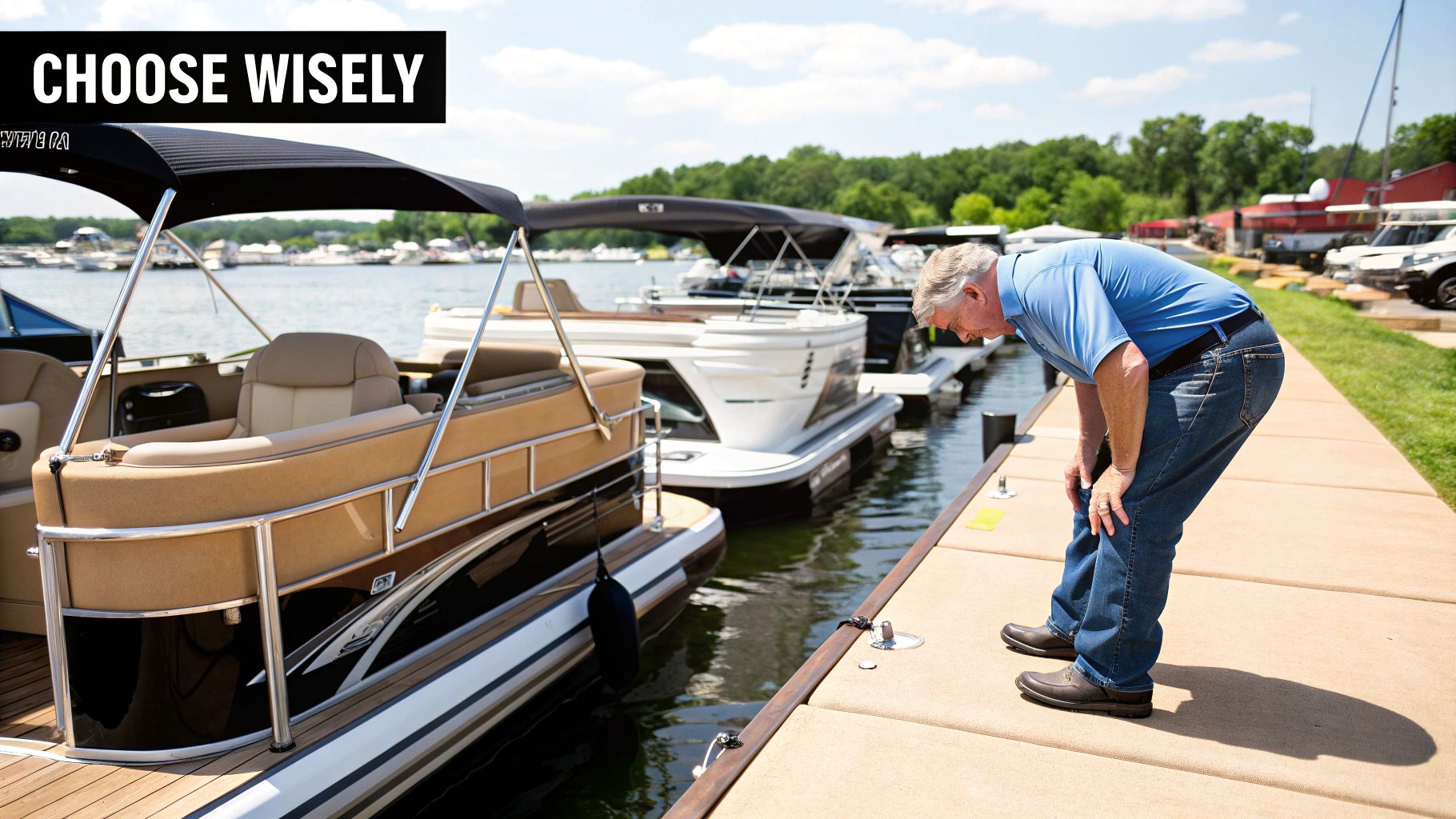
Before you sign on the dotted line, it's time to play detective. A thorough inspection is your best defense against future headaches and buyer's remorse. This isn’t just for used boats; even brand-new models can have issues that need to be addressed.
What to Look For:
-
The Pontoons (Tubes): Get up close and personal with the aluminum tubes. Are there any big dents, deep gouges, or sloppy-looking weld repairs? On a used boat, this is your first clue to its history.
-
The Deck & Floor: Walk the entire deck, from bow to stern. Pay attention to how it feels under your feet. Any soft, spongy, or bouncy spots could signal water damage and rot in the plywood underneath—a major repair job.
-
The Furniture: Don't just look at the seats—lift every single cushion. Check for mildew, mold, ripped seams, or vinyl that's cracking from sun damage. Open and close all the storage hatches to make sure they latch securely.
-
The Engine: If it’s a used boat, paying a marine mechanic for an engine survey is the best money you'll spend. For a new boat, simply confirm it’s the exact model and horsepower you agreed to in the sales contract.
-
The Electronics: Now for the fun part. Flip every switch. Turn on the navigation lights, docking lights, and courtesy lights. Honk the horn. Fire up the stereo. Test every single thing that runs on electricity.
Looking at a boat on a trailer is one thing. You wouldn't buy a car or RV without a test drive, and a boat is no different. A sea trial—getting the boat out on the water—is completely non-negotiable.
This is your only chance to feel how the boat handles. How does it turn? How quickly does it get up on plane? Listen for any weird clunks, whines, or rattles from the engine. Watch the gauges to make sure everything reads correctly. This is your moment to confirm that the boat performs the way you expect it to.
Once you’re satisfied, the last step is to carefully read every word of the sales agreement and warranty papers. Triple-check that all the numbers, options, and terms match what you discussed. With your financing locked in and your final inspection passed, you’re finally ready to sign that paperwork and start your life on the water.
Even after you've done all the research, a few practical questions almost always come up right before you’re ready to pull the trigger. Getting these final details sorted out can give you that last bit of confidence to make a great decision.
We get these questions all the time from folks looking at pontoon boats for sale. Here are some clear, straightforward answers to help you fill in any remaining gaps and feel ready for ownership.
Think of it this way: a standard pontoon boat floats on two big aluminum tubes. This design is what gives it that classic, stable feel perfect for leisurely cruises and just relaxing on the water.
A tritoon, just like the name hints, adds a third tube right down the middle. This isn't just for extra flotation—it completely changes the boat's dynamics. That third tube beefs up the whole structure, letting it handle a much more powerful engine. The result? Tritoons can hit higher speeds, handle choppy water more smoothly, and are far better for high-energy fun like waterskiing or tubing. If watersports are high on your list, you'll want to seriously consider a tritoon.
How Much Maintenance Does a Pontoon Boat Require?
One of the best things about pontoons is how low-maintenance they are, especially when you compare them to other types of boats. For the most part, you'll just need to keep up with routine engine service, like oil changes and proper winterization, following the manufacturer’s schedule.
Beyond that, your regular to-do list is pretty simple:
-
Clean the Tubes: A quick spray-down with a hose after each trip helps prevent algae and grime from building up.
-
Check Electrical Systems: Every now and then, just flip on your lights and toot the horn to make sure the battery and connections are solid.
-
Upholstery and Deck Care: Wiping down the seats and floor keeps mildew away and makes your furniture last much, much longer.
Here’s a simple pro tip: if you can store the boat out of the water on a trailer or a lift, do it. It will dramatically cut down on how often you need to clean the tubes and protects the entire boat from the constant exposure to water and weather.
This is a big one, and the honest answer is: it really depends on your specific setup. You have to match your SUV's towing capacity with the pontoon's total weight. And don't forget to include the trailer, the engine, a full tank of gas, and all the gear you plan to bring along.
As a general rule, smaller pontoons in the 18 to 22-foot range often have a combined weight of around 3,000-4,000 lbs. A lot of mid-size SUVs and pickup trucks can handle that just fine. But once you get into larger tritoons, the weight can easily climb over 5,000 lbs, and for that, you'll need a full-size truck or a big, powerful SUV. Always, always check your SUV's owner's manual for its specific towing limit before you buy.
Absolutely! A well-cared-for used pontoon can be a fantastic deal, offering you years of fun for a fraction of the cost of a new one. The key, of course, is "well-cared-for." That's why a thorough inspection is non-negotiable.
When you're looking at a used boat, pay close attention to the tubes—look for any big dents, patched-up spots, or signs of corrosion. Walk around on every inch of the
On a used pontoon, those aluminum tubes are the most important thing to inspect carefully. Dents, patches, or corrosion on the tubes are expensive to fix and affect both performance and resale value. Always do a thorough walk-around before committing. Find inspected, well-documented pontoon listings at SearchShop.com.