Buying a used boat is an exhilarating step toward freedom on the water, but it's also a significant investment fraught with potential pitfalls. Whether you're a seasoned mariner or transitioning from RV life to the marine world, the process demands diligence. Hidden issues with the engine, hull, or electrical systems can quickly turn your dream vessel into a financial nightmare, requiring costly and time-consuming repairs that keep you docked instead of cruising. That's why a methodical, structured approach to inspection is non-negotiable.
This comprehensive used boat buying checklist is your strategic guide to navigating the purchase process with confidence. It is designed to empower you, transforming you from a hopeful buyer into a savvy inspector capable of identifying both red flags and green lights. We will guide you through eight critical inspection areas, providing the actionable insights and expert tips needed to accurately assess a boat's true condition and value.
From the complex machinery in the engine room to the structural integrity of the hull, and through the often-confusing maze of legal paperwork, this guide ensures you cover every essential checkpoint. Think of it as your pre-launch sequence, a systematic procedure to verify that your potential new boat is not just appealing at the dock but genuinely seaworthy and ready for adventure. Following this checklist will help you avoid common mistakes, negotiate from a position of knowledge, and ultimately make a well-informed decision that protects your investment and maximizes your time on the water.
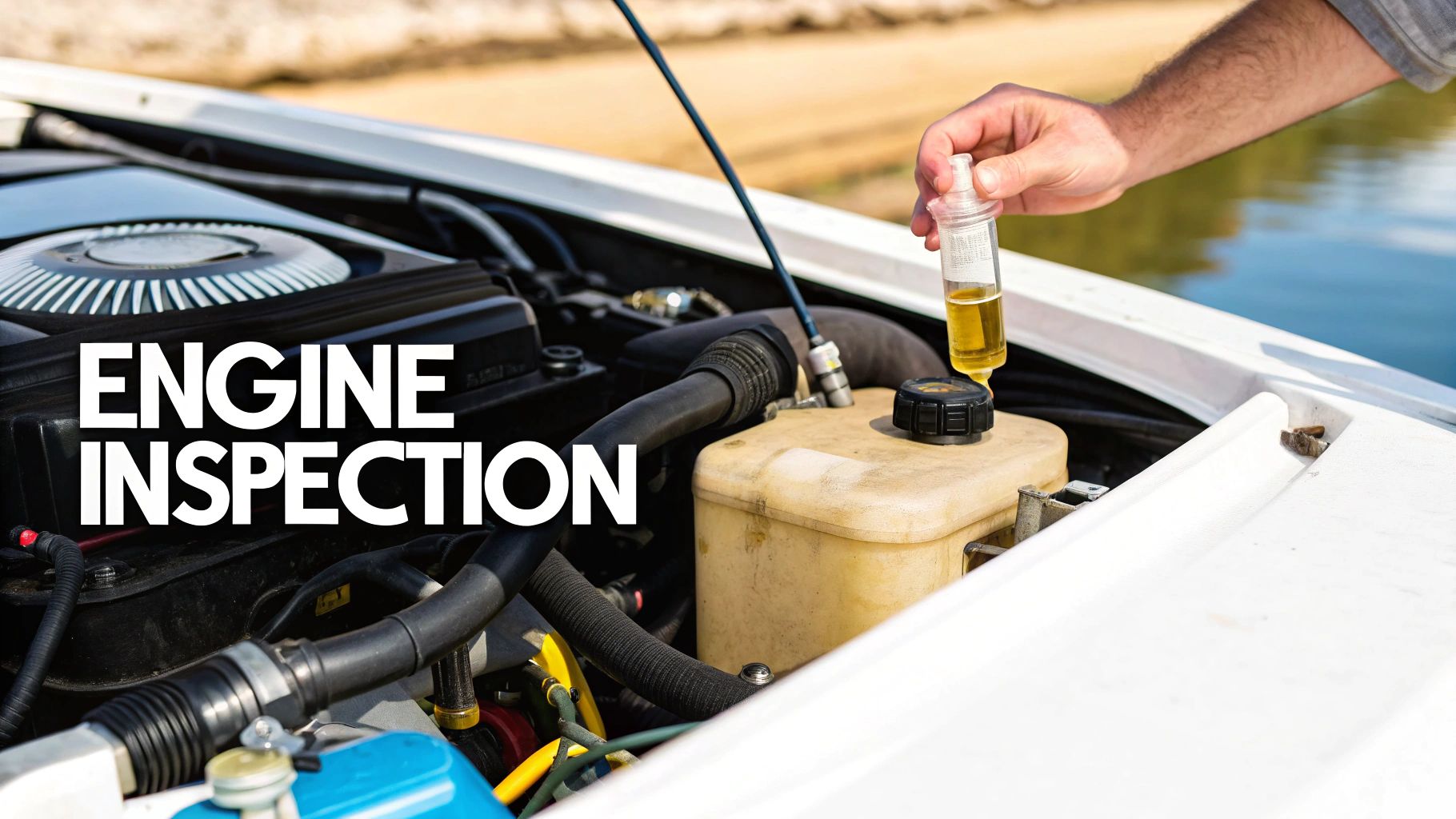
1. Engine and Mechanical Systems Inspection
The engine is the heart of any boat, and a thorough mechanical inspection is arguably the most critical step in a used boat buying checklist. Unlike an RV, where a breakdown might leave you on the side of the road, a catastrophic engine failure on the water can create a dangerous and expensive situation. A comprehensive evaluation of the engine, transmission, steering, fuel, and cooling systems is non-negotiable, as repairs can easily run into the tens of thousands of dollars, far exceeding the cost of a professional inspection.
This process goes far beyond a simple cold start at the dock. A qualified marine mechanic or surveyor will perform diagnostic tests, assess the physical condition of all components, and look for signs of neglect or impending failure.
What to Look For
A meticulous mechanical inspection should cover several key areas to give you a complete picture of the boat's health.
Engine Hours vs. Condition: The engine hour meter can be misleading. A 200-hour engine that was poorly maintained or run hard can be in worse shape than a well-serviced 800-hour engine. The surveyor will assess the overall condition relative to the stated hours.
Compression and Oil Analysis: A compression test on each cylinder is essential to gauge the internal health of the engine. Low or uneven compression can indicate serious issues like worn piston rings or bad valves, a fix that could cost over $15,000. Oil analysis can reveal metal shavings or contaminants, signaling excessive internal wear.
Leaks and Corrosion: Meticulously check for any oil, fuel, or coolant leaks around hoses, gaskets, and fittings. Pay close attention to signs of corrosion, especially on the engine block, exhaust manifolds, and risers, as these are costly to replace.
Actionable Tips
To protect your investment, approach the mechanical inspection with a clear strategy.
Hire a Certified Professional: Always hire an independent, certified marine surveyor from an organization like SAMS (Society of Accredited Marine Surveyors) or NAMS (National Association of Marine Surveyors). Their expertise is invaluable.
Scrutinize Maintenance Records: Request and review all service logs. Look for consistent, preventative maintenance like regular oil changes, impeller replacements, and winterization records. Gaps in service history are a major red flag.
Evaluate Outboard Motors Carefully: Outboard engines have their own unique set of inspection points. For a deeper dive into evaluating the powerplant, consider consulting a smart buyer guide specifically for used outboard boat motors for specialized advice.
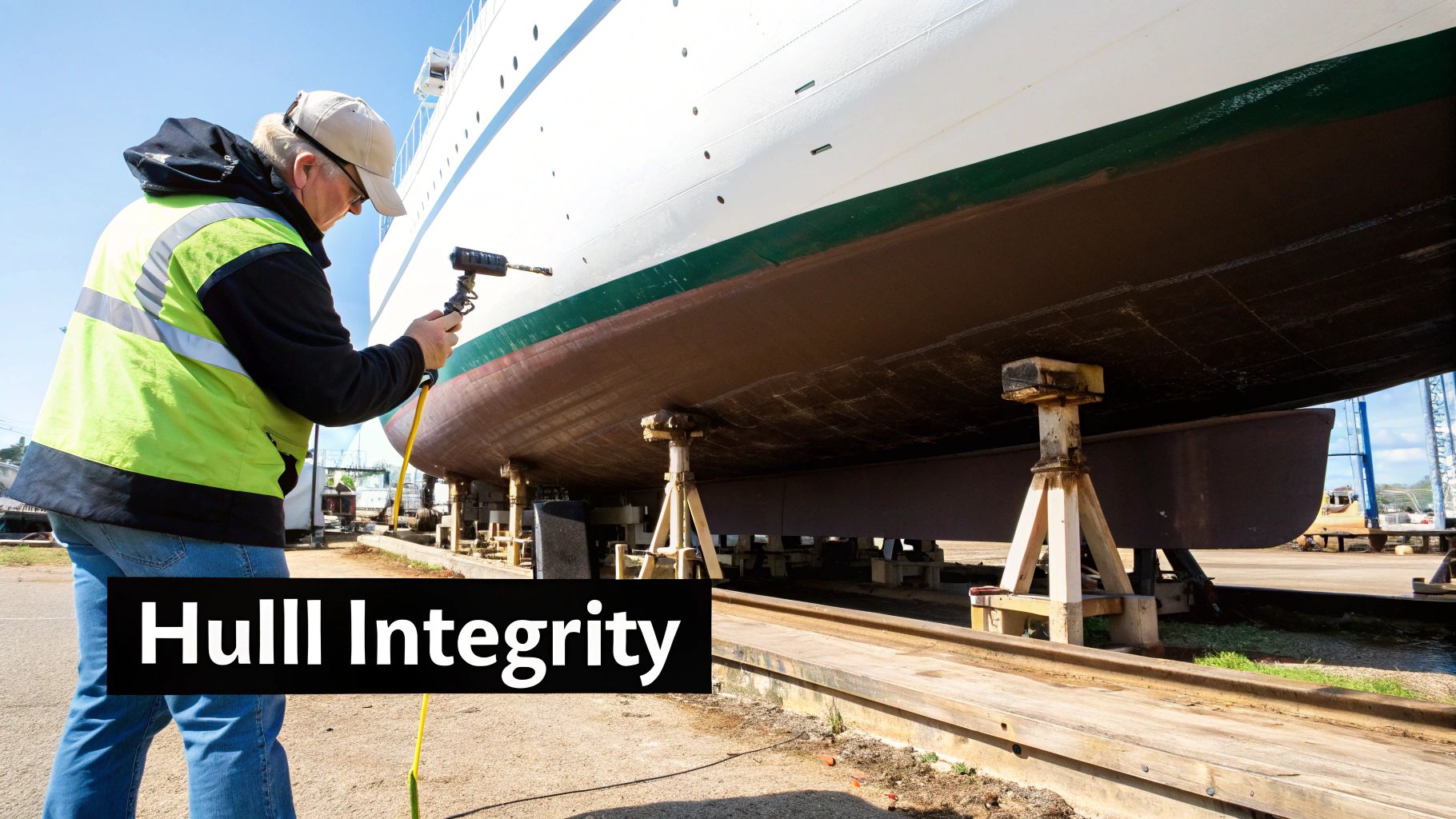
2. Hull Condition and Structural Integrity
The hull is the boat's foundation, and its structural integrity is paramount to safety and long-term value. While a powerful engine gets you there, a sound hull ensures you stay afloat. Issues like delamination, osmotic blistering, or hidden damage from past accidents can compromise the vessel's safety and lead to catastrophic failures. A thorough hull inspection is a non-negotiable part of any used boat buying checklist, as repairs can be incredibly invasive and costly, often exceeding the boat's value.
Evaluating the hull requires more than just a glance while the boat is in the water. A comprehensive out-of-water inspection, known as a haul-out, is essential. This allows a surveyor to see every inch of the hull below the waterline, where some of the most serious and expensive problems often hide.
What to Look For
A meticulous hull inspection will uncover potential deal-breakers and give you powerful negotiation leverage.
Osmotic Blisters and Delamination: For fiberglass boats, look for blisters or bubbles on the hull's surface, which indicate water has penetrated the gelcoat. Tapping the hull with a rubber mallet can reveal hollow-sounding "soft spots," a sign of delamination where fiberglass layers have separated. For example, a pre-purchase survey might detect widespread blistering, leading to a negotiation for an $8,000 price reduction to cover the cost of an epoxy barrier coat treatment.
Stress Cracks and Past Repairs: Examine high-stress areas like the transom, deck-to-hull joint, and around fittings for spider-web-like cracks. These can indicate structural flexing and potential weakness. Look for mismatched paint or gelcoat, which can signal poorly executed past repairs.
Thru-Hulls and Keel Condition: Inspect all thru-hull fittings below the waterline for proper sealing, corrosion, and functioning seacocks. Check the keel for any signs of grounding damage, such as deep gouges, chips, or evidence of major repairs.
Actionable Tips
Protect yourself from buying a boat with a compromised foundation by taking these proactive steps.
Always Haul the Boat Out: Insist on an out-of-water inspection as a condition of the sale. This is the only way to properly inspect the entire hull, rudder, and running gear. The cost of a haul-out is a small price to pay for peace of mind.
Use a Moisture Meter: A surveyor will use a moisture meter to detect elevated moisture levels within the hull's core, a problem invisible to the naked eye. High readings can signify water intrusion that leads to rot in cored hulls or delamination.
Investigate the Boat’s History: Ask the seller direct questions about any past accidents, groundings, or major hull repairs. Cross-reference this information with maintenance records and the findings of your professional survey to ensure you have the full story.
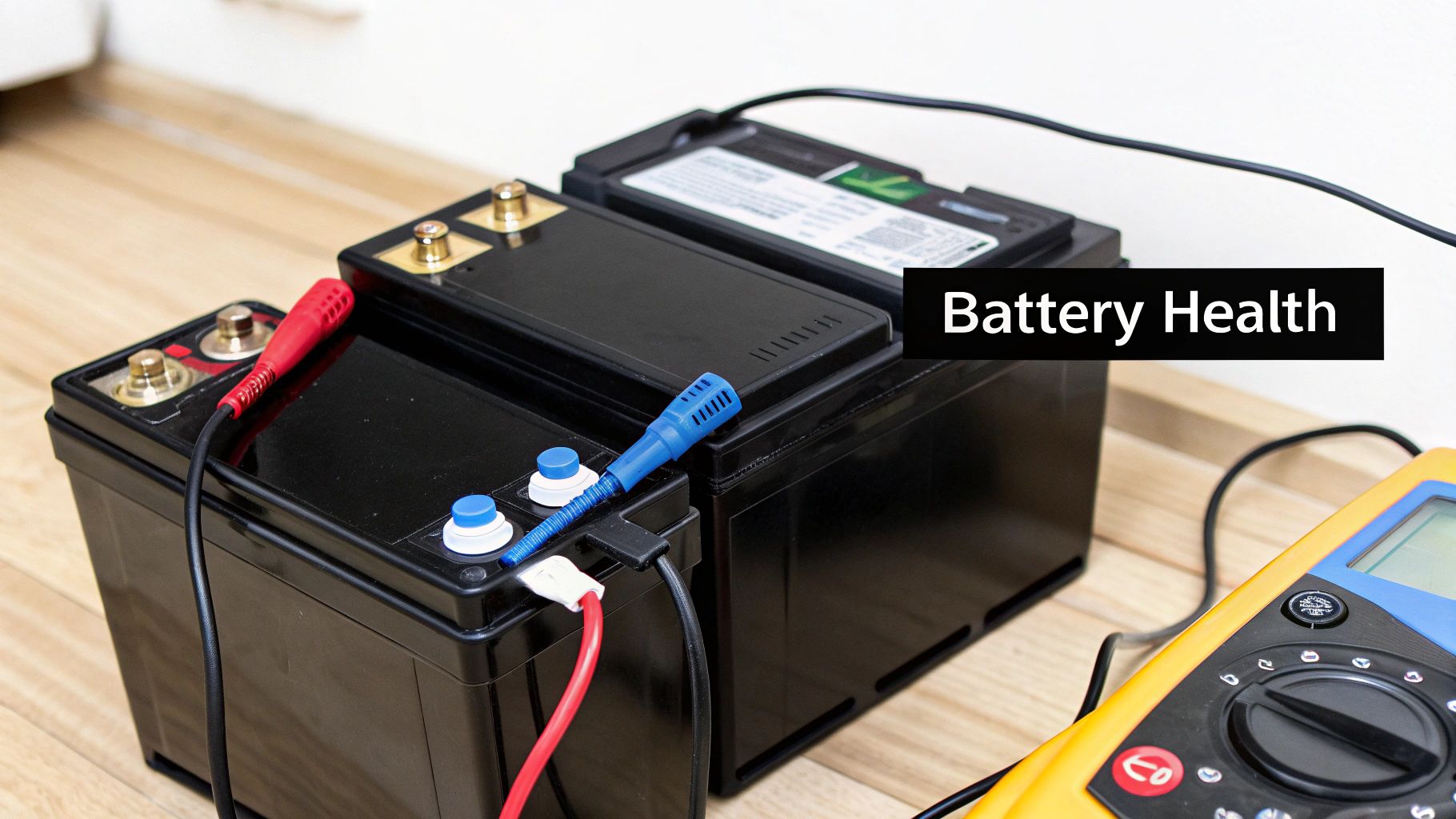
3. Electrical System and Battery Health
A boat's electrical system is its central nervous system, controlling everything from navigation lights and bilge pumps to engine ignition and onboard electronics. On the water, a failure isn't just an inconvenience; it can lead to a critical loss of safety equipment when you need it most. Faulty wiring is a leading cause of boat fires, making a thorough electrical inspection a non-negotiable part of any used boat buying checklist. Diagnosing and repairing old, corroded, or poorly installed electrical systems can be a complex and expensive undertaking, often costing thousands.
This evaluation must go beyond simply flipping a few switches. A qualified marine surveyor or electrician will trace wiring, test connections, and assess the overall health of the batteries and charging systems to uncover hidden dangers and potential failures that could leave you stranded.
What to Look For
A detailed electrical inspection is essential for ensuring both functionality and safety, focusing on signs of wear, corrosion, and improper installation.
Wiring and Connections: The surveyor will look for cracked, brittle, or chafe-damaged insulation on wires. A "rat's nest" of unlabeled, disorganized wiring behind the helm or in the engine room is a significant red flag, indicating amateur work. All connections should be secure and free of corrosion.
Battery Condition and Charging: Batteries should be securely mounted in dedicated boxes. A marine electrician will check for corrosion on the terminals and perform a load test to assess their true health, as a voltage meter alone can be misleading. The alternator's output will also be tested to ensure it's properly charging the batteries while underway.
System Functionality: Every electrical component must be tested. This includes navigation lights, anchor lights, bilge pumps (including the float switch), horn, VHF radio, and any 110V AC shore power systems. Malfunctioning circuit breakers that fail to trip are a serious fire hazard.
Actionable Tips
To avoid buying a boat with a looming electrical disaster, take these proactive steps during your inspection.
Test Every Switch and Breaker: Personally flip every single switch on the boat and ensure the corresponding device works. At the main panel, test each circuit breaker to confirm it trips and resets correctly, cutting power to the circuit.
Inspect for Corrosion: Pay close attention to battery terminals, bus bars, and wiring connections, especially in the bilge and engine compartment. Green or white powdery corrosion indicates moisture intrusion and a poor connection that can generate heat.
Hire an ABYC-Certified Technician: For a comprehensive evaluation, hire a marine electrician certified by the American Boat and Yacht Council (ABYC). They have the specialized tools and knowledge to perform load tests and identify non-compliant wiring that could jeopardize your safety and insurance coverage.
4. Plumbing and Sanitation Systems Inspection
Often overlooked by first-time buyers, the plumbing and sanitation systems are vital to a boat's safety and comfort. A failure in these systems can range from a minor inconvenience to a catastrophic event, such as sinking due to a faulty through-hull fitting or facing environmental fines for improper waste discharge. For anyone accustomed to RV hookups, understanding a boat's self-contained systems is critical. A comprehensive inspection ensures all water enters and exits the vessel as intended, a crucial part of any used boat buying checklist.
This inspection involves more than just turning on a faucet. A marine surveyor will examine every hose, clamp, seacock, and tank to verify its integrity and compliance with standards set by organizations like the American Boat and Yacht Council (ABYC). Neglecting this area can lead to hidden, expensive repairs and serious safety hazards.
What to Look For
A thorough plumbing and sanitation inspection focuses on identifying potential failures before they occur. A surveyor will meticulously check several key components.
Through-Hulls and Seacocks: These are fittings that allow water to pass through the hull. They must be made of marine-grade materials (like bronze) and equipped with a functional seacock (valve) that can be easily closed in an emergency. A seized or corroded seacock is a major safety failure.
Hose and Clamp Condition: Hoses should be inspected for cracks, brittleness, or soft spots, which indicate deterioration. A surveyor will confirm that all hoses below the waterline are double-clamped with marine-grade stainless steel clamps, as a single clamp failure can lead to rapid flooding.
Sanitation System Integrity: The inspection will verify that the head (toilet), holding tank, and all associated plumbing are free of leaks and odors. A failed holding tank is a foul and expensive problem, with replacement costs often exceeding $4,000.
Actionable Tips
To ensure the boat you're considering is seaworthy and sanitary, take a proactive approach to the plumbing inspection.
Operate Every Seacock: During your initial walkthrough, personally attempt to open and close every seacock. They should operate smoothly without excessive force. If a handle breaks off or the valve is frozen, it must be replaced.
Inspect All Accessible Hoses: Squeeze hoses to check for softness or crunchiness, and look for any weeping or signs of salt creep around fittings, indicating slow leaks. Confirm that double clamps are used on all critical connections below the waterline.
Test All Water and Waste Systems: Run all faucets, showers, and pumps to check for proper pressure and function. Flush the toilets to ensure they operate correctly and check the entire sanitation system for any signs of leakage or unpleasant odors.
5. Rigging, Sails, and Standing Equipment (Sailboats)
For sailboats, the rigging and sails are the equivalent of a powerboat's engine; they are the powerplant. A catastrophic failure of the standing rigging (the wires supporting the mast) at sea can be just as dangerous and costly as an engine explosion. This part of the used boat buying checklist demands meticulous attention, as a complete re-rig can cost well over $10,000, and a new suit of sails can easily match that figure. Even for powerboats, this principle extends to inspecting antennas, radar domes, and other topside hardware for structural integrity.
This inspection is far more than a casual glance up the mast from the deck. A surveyor with specific sailing expertise will assess the mast, boom, standing and running rigging, sails, and all associated hardware for signs of stress, fatigue, and environmental degradation that could lead to a sudden, critical failure under load.
What to Look For
A comprehensive rigging and sail inspection is a top-down process, focusing on the components that bear the most stress.
Mast and Standing Rigging: The surveyor will look for corrosion, especially where stainless steel fittings meet aluminum, and hairline cracks at stress points like spreader bases or mast tangs. A professional will often discover a hidden crack that is invisible from the deck but could lead to the mast coming down in a strong wind.
Sail Condition: Sails are expensive consumables. The inspection must evaluate the fabric for UV damage (indicated by brittleness or faded color), check the integrity of stitching along seams, and examine high-wear areas like batten pockets and leech lines. A sail that appears fine on the boom might reveal extensive UV rot upon closer inspection.
Hardware and Running Rigging: All winches, blocks, and pulleys should be tested under load to ensure they operate smoothly and are free of corrosion. Running rigging (the ropes) should be checked for chafe, UV degradation, and stiffness, as worn lines can fail unexpectedly.
Actionable Tips
To ensure the sailboat's rig is sound and seaworthy, take these specific steps.
Hire a Surveyor Willing to Go Aloft: Insist on a surveyor with deep sailboat experience who will physically ascend the mast. Many critical issues, like cracked fittings or broken wire strands, can only be identified up close.
Request Rigging Records: Ask for logs detailing the last time the standing rigging was replaced (typically recommended every 10-15 years, depending on use and location) and when the mast was last unstepped for a thorough service.
Unfurl and Inspect Every Sail: Don't just look at the sails neatly folded in their bags. Have the owner or broker lay out the mainsail, genoa, and any other key sails. Feel the cloth, check the seams, and look for signs of repairs or excessive wear.
6. Documentation, Title, and Legal Status Verification
Overlooking the paperwork is a mistake that can transform your dream boat into a legal and financial nightmare. This step in the used boat buying checklist ensures the vessel you are considering has a clean, unencumbered title and is legally the seller's to transfer. Without proper verification, you could unknowingly purchase a stolen boat, a vessel with thousands of dollars in hidden liens, or a craft with a salvage title that makes it uninsurable and potentially unseaworthy.
Verifying the legal status is not just a formality; it is a critical safeguard against fraud and significant financial loss. A clear title is the only way to guarantee you will become the rightful, sole owner of the boat after the sale. Imagine discovering a $45,000 lien from a previous owner's loan after you’ve paid for the boat; that debt could legally become your responsibility.
What to Look For
A thorough documentation review protects you from inheriting someone else's problems. Focus on these critical details to confirm the boat's legal standing.
Clean and Clear Title: The single most important document is the boat's title. Ensure it is free of any listed lienholders. If a loan was recently paid off, demand a copy of the official lien release letter from the financial institution.
HIN and Registration Consistency: The Hull Identification Number (HIN) on the boat’s transom must perfectly match the HIN listed on the title, state registration, and any other official documents. A discrepancy is a major red flag indicating potential theft or fraud.
Seller Identity Verification: The name of the seller on the bill of sale must exactly match the name on the title and a government-issued ID. Do not proceed if the person selling the boat is not the legally registered owner.
Actionable Tips
Take these proactive steps to ensure a legally sound and secure transaction.
Run a Comprehensive Title Search: Hire a marine title company or use a reputable online service to perform a thorough title and lien search. They can check state databases and the U.S. Coast Guard's national vessel registry for any outstanding claims.
Verify Coast Guard Documentation: For larger vessels (typically over five net tons), check the USCG's National Vessel Documentation Center database. This can reveal the vessel's ownership history, lien information, and any building specifications.
Insist on a Proper Bill of Sale: Use a detailed bill of sale that includes the boat’s HIN, make, model, year, and the names and signatures of both buyer and seller. This is your legal proof of purchase and a vital part of your own used boat buying checklist.
7. Interior Condition, Accommodations, and Systems
While the hull and engine command initial attention, the interior condition and systems directly impact your enjoyment, comfort, and the boat's overall usability. A pristine exterior can easily mask a neglected cabin filled with costly problems. Just like inspecting a used RV, assessing the accommodations is a crucial part of any used boat buying checklist, as it reveals the true history of the boat's care and determines its suitability for your intended use, whether for day trips or extended cruises.
This inspection involves a sensory and functional check of every aspect of the boat's living space. Neglected interior systems like HVAC, plumbing, or refrigeration can lead to expensive repairs and significant downtime, turning your dream boat into a frustrating project.
What to Look For
A thorough interior inspection goes beyond surface aesthetics to uncover hidden issues that affect both value and safety.
Signs of Water Intrusion and Mold: The most common and destructive interior problem is water damage. Look for staining on headliners, around windows, and inside cabinets. A musty, damp odor is a major red flag for hidden mold, which can require professional remediation costing $2,000 to $5,000.
Appliance and System Functionality: Test every single system. Run the air conditioning and heating, flush the toilets, turn on the faucets (both hot and cold), and check the refrigerator and freezer. A non-operational galley refrigeration unit could mean a compressor replacement, a fix that often exceeds $1,500.
Upholstery and Woodwork Condition: Examine all cushions and fabrics for signs of rot, mildew, or compression. Worn-out upholstery can be expensive to replace. Check all wood joinery, veneers, and flooring for signs of delamination, water damage, or cracking, which indicates excessive flexing or moisture.
Actionable Tips
To ensure the interior meets your standards and is free from hidden defects, follow a systematic approach.
Trust Your Senses: Your nose is one of your best tools. A persistent musty smell is a clear warning sign of moisture problems. Use a flashlight to inspect dark corners, lockers, and behind panels for any evidence of leaks or mildew.
Operate Everything: Do not take the seller's word that something "just needs a minor fix." Turn on every light, switch, and appliance. Run the generator to power all AC systems and ensure they function correctly under a full load.
Assess for Your Lifestyle: Consider how you plan to use the boat. Is there enough headroom for you to move comfortably? Is storage adequate for your gear? A layout that seems great on paper might feel cramped and impractical in person, so spend time in the space to see if it truly fits your needs.
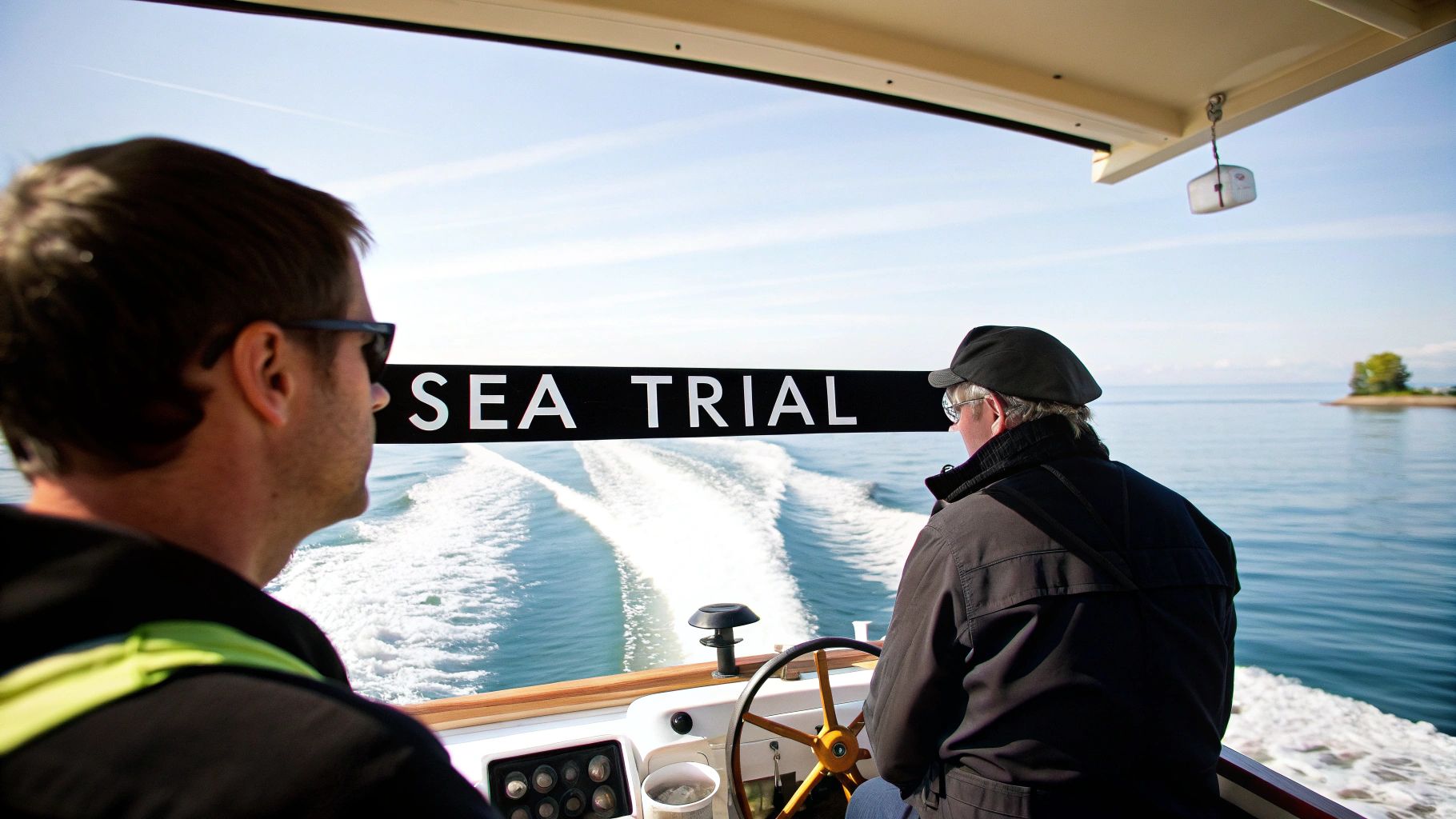
8. Sea Trial and Performance Evaluation
The sea trial is where theoretical inspections meet practical reality, transitioning your used boat buying checklist from the dock to open water. This comprehensive test run is non-negotiable, as it evaluates the boat's engine performance, handling, and overall seaworthiness under real-world conditions. Many critical issues, such as poor handling, excessive vibration, or engine overheating under load, are impossible to detect while the boat is tied to the pier.
During a sea trial, you and your surveyor get to experience how the vessel actually behaves underway. It is your single best opportunity to confirm that all systems function correctly together and to identify problems that could lead to dangerous situations or expensive, post-purchase repairs. Forgetting this step is like buying an RV without ever driving it on the highway; you simply don't have the full picture.
What to Look For
A structured sea trial should methodically test every aspect of the boat's performance to ensure there are no hidden surprises.
Performance Metrics vs. Expectations: The boat should get on plane smoothly and reach its expected top speed and cruising RPM without laboring. For example, if a sea trial reveals the boat struggles to plane or shows poor fuel economy (e.g., burning 8 gallons per hour when 5 is expected), it could signal issues with the engine, propeller, or hull.
Vibrations and Unusual Noises: Pay close attention to any shaking, rattling, or strange sounds from the engine, drivetrain, or hull. Excessive vibration at cruising speed, for instance, could indicate a bent propeller shaft or an engine alignment problem, repairs that can cost thousands.
Handling and Maneuverability: Test the boat's steering at various speeds, including sharp turns and slow-speed docking maneuvers. The steering should feel responsive and smooth, not stiff or sloppy.
Actionable Tips
To get the most out of this critical evaluation, approach the sea trial with a clear and organized plan.
Have Your Surveyor Attend: The best practice, recommended by organizations like SAMS and NAMS, is to have your marine surveyor on board during the sea trial. Their expert ear and trained eye can spot subtle issues that an average buyer might miss.
Test at All RPM Ranges: Don't just take a leisurely cruise. Run the engine from idle up to wide-open throttle (if only for a brief period) and hold it at a typical cruising RPM for at least 15-20 minutes. This tests the engine and cooling systems under a sustained load.
Document Performance Data: Use a GPS to record the boat’s speed at different RPM increments (e.g., 2500, 3000, 3500 RPM). This creates a performance baseline you can compare against manufacturer specifications or data from identical boats to identify any performance deficiencies.
8-Point Used Boat Inspection Comparison
Inspection Area
Implementation Complexity (🔄)
Resource Requirements (⚡)
Expected Outcomes (⭐ / 📊)
Ideal Use Cases
Key Advantages (💡)
Engine and Mechanical Systems Inspection
High 🔄 — specialist tests (compression, run-ups)
Moderate–High ⚡ — certified surveyor, test gear, engine run
High ⭐📊 — finds major faults; cost estimates for repairs
A complete used-boat inspection — from hull and engine to electrical systems and documentation — is the most important step you can take before making an offer. Work through every item on this checklist, and if you have any doubts, bring in a certified marine surveyor. Find verified used boat listings at SearchShop.com.