If you've ever typed "boats for sale center console" into a search bar, you're not alone. These boats consistently top the charts for a reason: their incredible versatility and wide-open deck space make them a favorite for just about everyone.
Whether you're a hardcore angler chasing the next big catch or just looking for a fun, reliable boat for family weekends, the center console delivers. It's the perfect sweet spot between high performance and everyday practicality, which is why it's often the first boat many people consider buying.
Your Guide to Buying a Center Console Boat
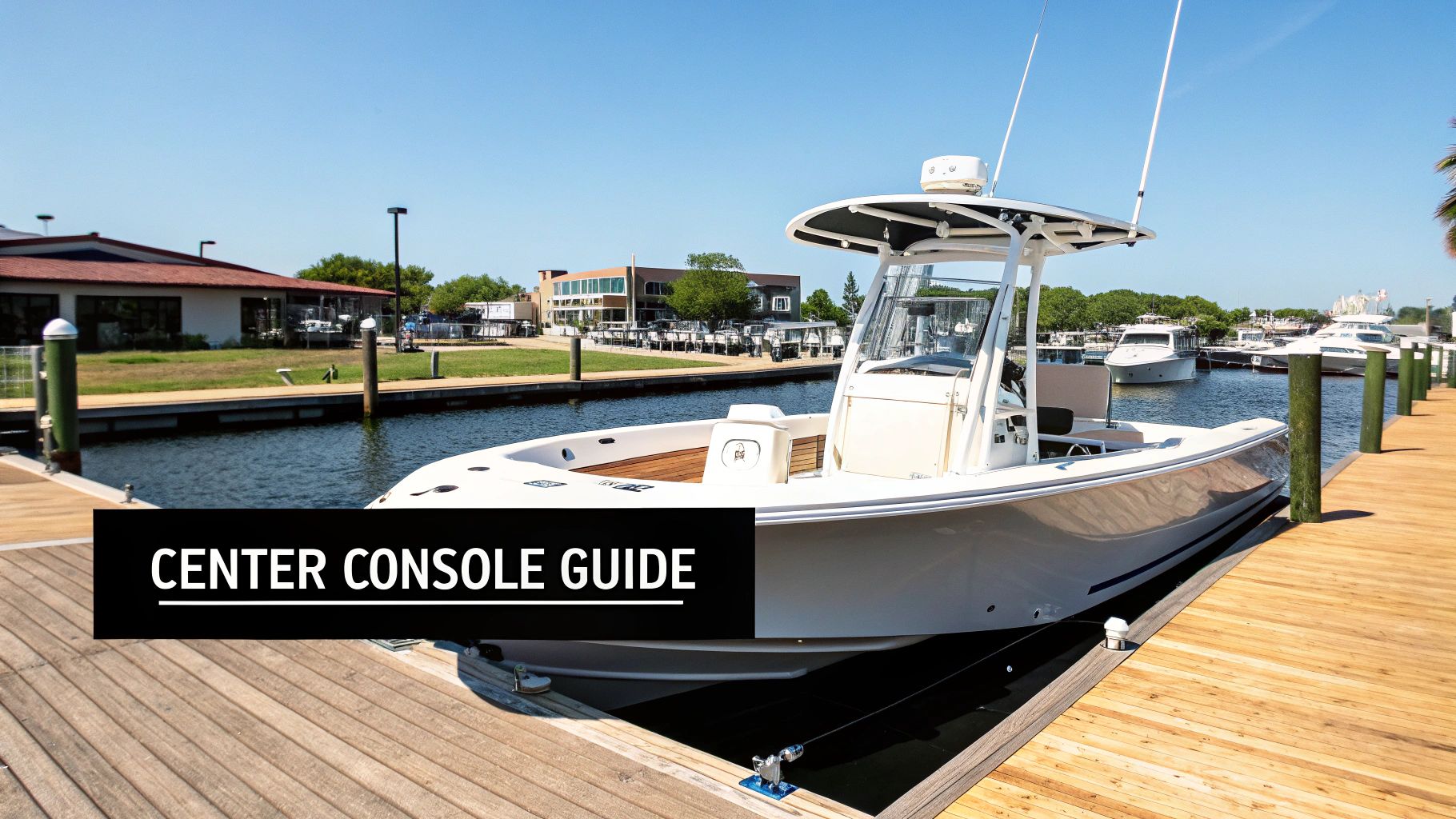
Jumping into the boat-buying process is exciting, but let's be honest—it can also feel a little daunting. With so many choices out there, the center console manages to stand out because of one brilliant design feature: its layout. The helm is smack-dab in the middle, leaving the entire perimeter of the boat open and accessible.
Think of it as the Swiss Army knife of the sea. This single design choice creates what serious fishermen call 360-degree fishability, meaning you can cast, fight, and land a fish from anywhere on deck without bumping into anything. For families, that same open space means more room to relax, tow a tube, or just enjoy a day on the water together.
Why This Guide Is Your Compass
Trying to navigate the boat market without a plan is like setting sail without a map. This guide is your compass, built to point you in the right direction and make sense of all the crucial details before you even start looking. We’re here to walk you through the entire process, from that first flicker of an idea to the day you sign the papers.
The goal is to give you the confidence to look at different models, understand what really matters, and choose a boat that's genuinely right for you.
By the end, you'll be able to:
Pinpoint the right type of center console for how you plan to use it, whether that's exploring shallow bays or heading way offshore.
Make sense of the spec sheets and features to know what's a "must-have" versus a "nice-to-have."
Walk onto a boat for an inspection feeling prepared and knowing exactly what questions to ask.
If you're eager to see what's out there right now, you can start exploring a huge selection of center console boats for sale to get a real feel for the options and prices.
A well-informed buyer is a happy boat owner. The time spent on research upfront pays dividends in enjoyment and peace of mind on the water for years to come.
While we're zeroing in on center consoles here, many of the buying principles are universal. For a wider perspective, you might want to check out a general buyer's guide with essential tips for buying a boat. Now, let’s get you on the path to finding your perfect boat.
Understanding the Main Types of Center Console Boats
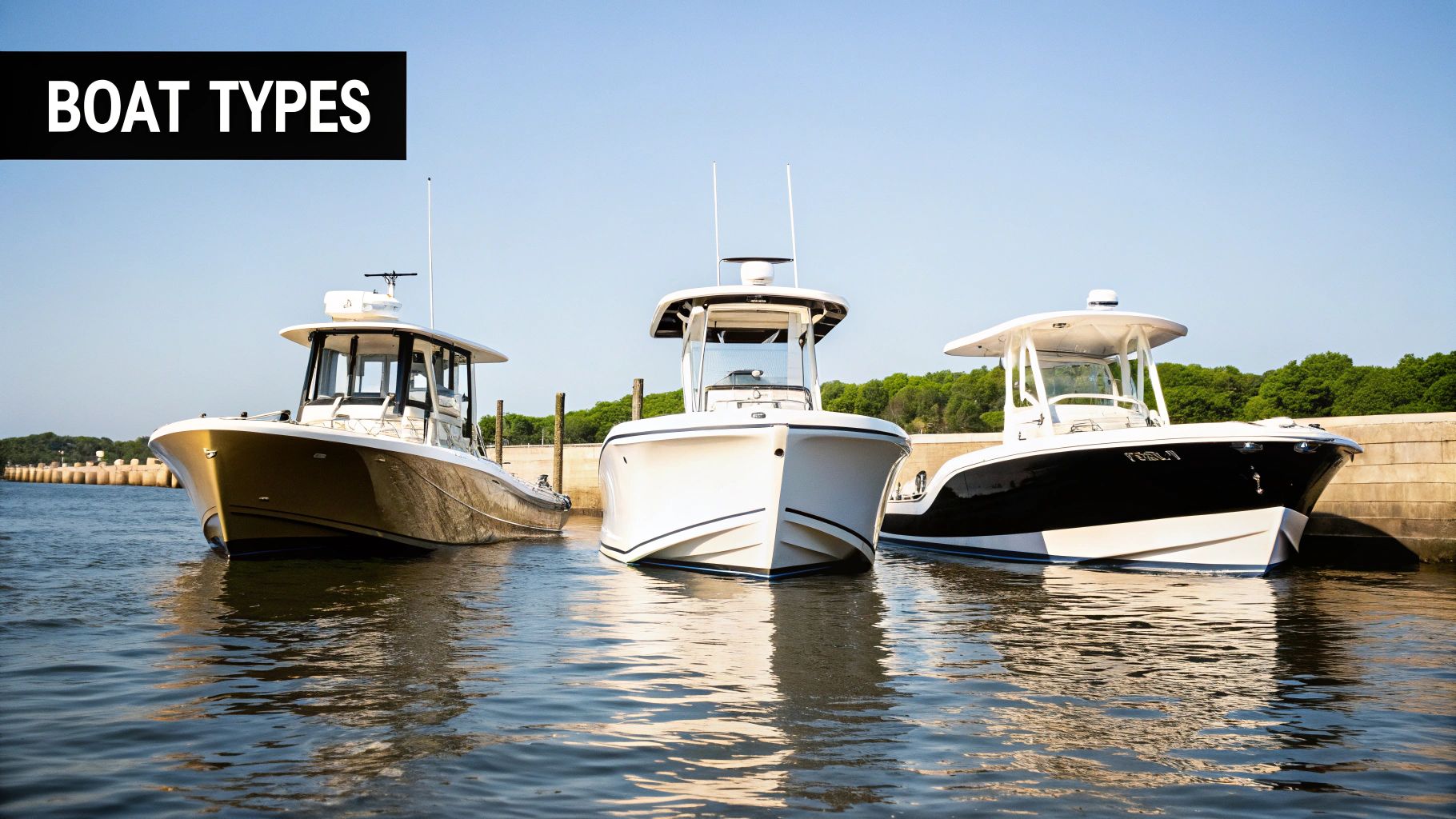
So, you've started searching for "boats for sale center console," and you're seeing a huge variety. That's because "center console" isn't a one-size-fits-all category. It's a wonderfully diverse world, with boats designed for very different jobs on the water.
Think of it like buying a truck. You wouldn't use a light-duty pickup to haul heavy commercial equipment, right? The same logic applies here. The first step is figuring out which type of center console fits your lifestyle. They're all defined by their hull shape, size, and features, which are specifically chosen to excel in certain conditions.
Let’s break down the main players you’ll find in your search.
Offshore Fishing Boats
These are the heavy-duty workhorses of the center console family. Built to tackle the rough, unpredictable conditions of the deep sea, offshore boats are all about safety and capability when you're miles from land.
They’re typically big, ranging from 25 to over 50 feet, and are built on a deep-V hull. This sharp, pointed bottom is designed to slice right through big waves, giving you a much smoother and safer ride. They’re packed with features for serious bluewater anglers, like massive fuel tanks, multiple insulated fish boxes, and top-tier navigation electronics.
Inshore and Bay Boats
On the other end of the spectrum, you have inshore boats, often called bay boats. These are the nimble explorers, designed to navigate shallower waters like bays, rivers, and coastal flats where bigger boats can't go.
Inshore boats are generally smaller, from 18 to 25 feet, and use a modified-V or flatter hull. This design gives them a "shallow draft," meaning they can float in just a few feet of water without running aground. They're all about maximizing fishing space with large casting decks and come equipped with essentials like trolling motors and livewells to keep your bait fresh.
Choosing between an offshore and inshore model is the most fundamental decision you'll make. It's about honestly assessing where you'll spend 90% of your time on the water, not just where you dream of going.
Hybrid Boats
What if you want a boat that can handle a bit of both? That’s where hybrid boats come in. Just like the name implies, these boats blend the key features of offshore and inshore designs to give you incredible versatility.
Most hybrids fall into the 22 to 28-foot range. They have a hull that's deep enough to handle some offshore chop comfortably but still shallow enough to sneak into the backwaters. They are the ultimate jack-of-all-trades, perfect for the boater who wants to fish nearshore one day and take the family tubing the next.
To help you visualize the differences, here’s a quick breakdown of how these three core types stack up.
Center Console Boat Type Comparison
Boat Type
Primary Use
Common Size Range
Key Features
Offshore
Deep-sea fishing, long-range trips
25 - 50+ feet
Deep-V hull, large fuel capacity, heavy build
Inshore/Bay
Flats, bays, coastal fishing
18 - 25 feet
Modified-V hull, shallow draft, casting decks
Hybrid
Versatile inshore & nearshore use
22 - 28 feet
Blended hull, all-around features for family & fishing
This table should give you a solid starting point for figuring out which direction to go.
Power Catamarans
A category that's really gaining steam is the power catamaran. Instead of a traditional single hull, these boats ride on two parallel hulls. This design creates an incredibly wide and stable platform on the water.
That twin-hull design does something unique—it traps a cushion of air between the hulls, which softens the ride and dramatically reduces the pounding you feel in choppy water. They're known for their impressive fuel efficiency and massive deck space, making them a fantastic choice for both hardcore fishing and comfortable family cruising.
This isn't just a niche market, either. The center console power catamaran market is booming, currently valued at around $2.8 billion. North America is leading the charge, holding about 45% of the market share.
Decoding Key Features and Must-Have Upgrades
Alright, so you've narrowed down the type of center console you’re after. Now comes the fun part: digging into the specific features that separate a good boat from a great one. These are the details that really shape your days on the water, turning a basic hull into a well-oiled machine built for your kind of adventure.
Think of it like buying a truck. The basic frame might be the same, but the engine, suspension, and interior amenities are what make it a workhorse, an off-road beast, or a comfortable family hauler. When you're looking at boats for sale center console, these features are what define its personality and purpose.
Core Components Every Buyer Should Know
Some features are just fundamental to the center console design. You'll see them on nearly every listing, and understanding what they do is the first step to making a smart pick.
First up is the T-top, probably the most iconic feature besides the console itself. It's more than just a roof—it's your best friend on a hot, sunny day and your primary shield from a passing shower. A solid T-top not only provides crucial shade but also acts as a mounting platform for rod holders, antennas, and outriggers.
For anyone who plans to fish, a livewell is non-negotiable. This is essentially a built-in, aerated tank designed to keep your bait frisky or your catch fresh. The size and number of livewells are a dead giveaway to a boat's fishing intentions; serious offshore machines often boast multiple, high-capacity wells.
Finally, pay close attention to the seating configuration. We've come a long way from the simple leaning post. Modern designs feature comfortable forward-facing bow lounges, clever transom bench seats that fold away when it's time to fish, and helm chairs with flip-up bolsters that let you drive comfortably whether you're sitting or standing.
Essential Fishing and Family Upgrades
Once you've got the basics covered, you can start looking at the upgrades that truly dial in the boat for your needs. This is where you match the boat's equipment to your specific plans, whether that's chasing tuna offshore or cruising to a sandbar with the family.
Here are a few popular upgrades worth looking for:
Rod Holders and Storage: You can genuinely never have too many. Look for them in the gunwales for trolling, on the T-top (often called "rocket launchers"), and tucked away under the gunwales to keep your expensive gear safe.
Freshwater System: A simple transom shower might seem like a small luxury, but the ability to rinse off salty skin, spray down your gear, or wash your hands is an absolute game-changer for comfort.
Marine Head: Having a toilet (or "head" in boat-speak) inside the console is a massive upgrade, especially on longer trips with family and friends. It extends your time on the water and just makes the whole day more pleasant for everyone.
When you're standing on a boat you're considering, actually walk through the motions of a typical day out. Pretend to cast a line, grab a drink from the cooler, or help a kid get back on board. This little exercise will tell you more about the boat's layout and features than any spec sheet ever could.
Deciphering the Electronics Package
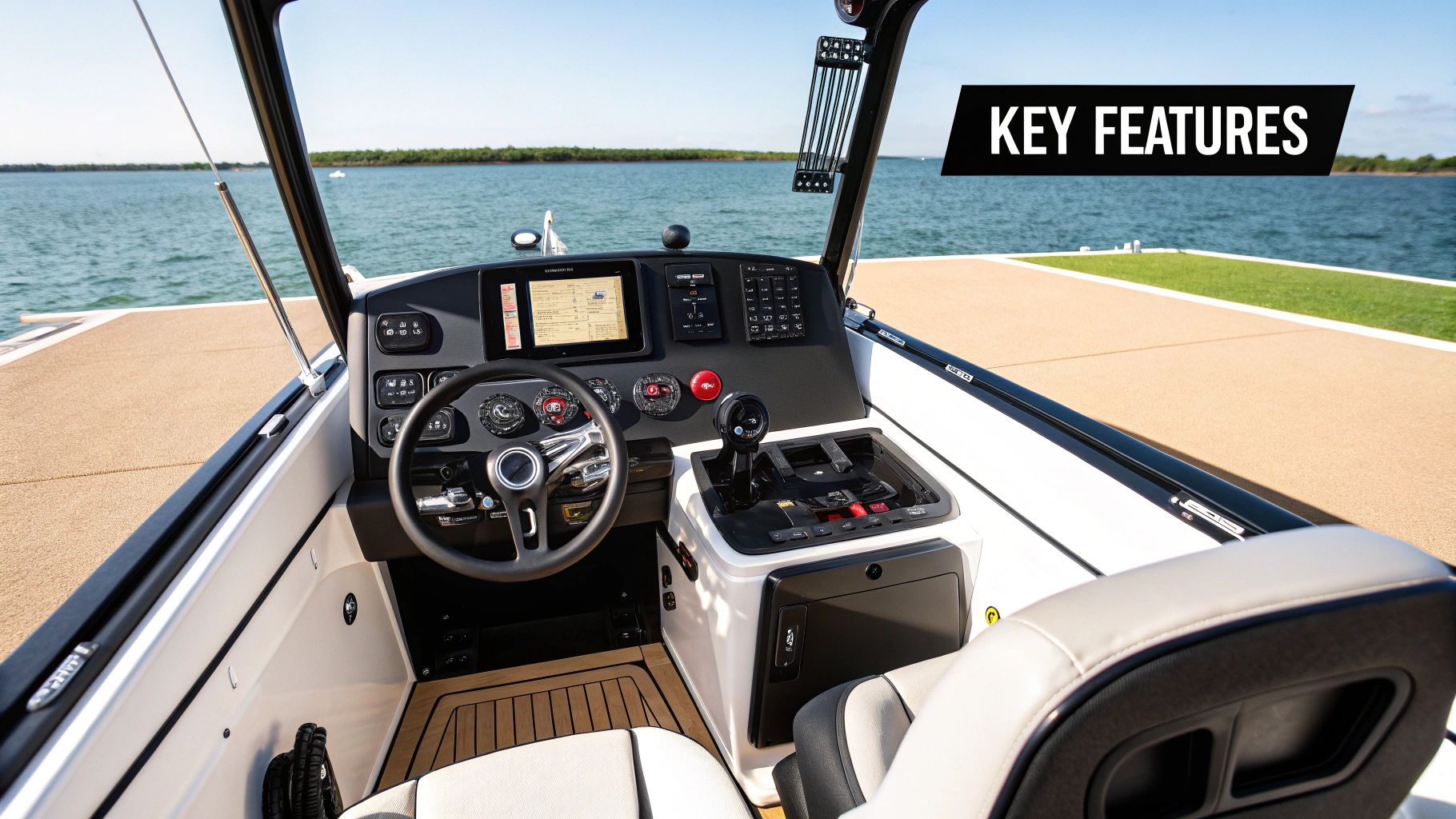
The helm of a new center console can look as complex as an airplane's cockpit. Don't be intimidated. Understanding the main components is straightforward, and it's important—the electronics package is one of the biggest single investments on the boat.
The GPS chartplotter is the command center of your helm, displaying your position on a detailed nautical chart. Most of the time, this is part of a larger multi-function display (MFD) that can control everything. Next is the fishfinder (or sounder), which uses sonar to paint a picture of what's happening below you—from bait balls and game fish to reefs and wrecks.
If you plan on heading offshore, radar becomes a vital piece of safety equipment. It lets you spot other boats, land, and storm cells in the dark, fog, or rain. And last but not least, a good VHF radio is your lifeline for communicating with other boaters, marinas, and the Coast Guard. The quality and integration of these systems can easily add tens of thousands of dollars to the price, so think hard about what you truly need for the boating you plan to do.
Navigating Price Ranges and Boat Financing
Let's talk money. Figuring out the financial side of buying a boat is just as critical as picking the right hull design. The sticker price you see is really just the starting line. To make a smart investment that you'll enjoy for years, you need to look at the whole picture, from the day you buy it to all the costs that come after.
When you start browsing boats for sale center console, you'll find a massive price spectrum. You can find small, used models for a few thousand bucks, or you can easily spend over a million on a top-of-the-line offshore fishing machine. That huge difference comes down to size, brand reputation, engine power, and all those fancy features we just covered.
Think of budgeting for a boat like planning a long road trip. You wouldn't just calculate the cost of gas to get to your destination. You'd also account for food, hotels, and maybe a fund for a flat tire. Your boat budget needs that same kind of real-world thinking.
Breaking Down the Price Brackets
So, what can you realistically expect to spend? While the market is always shifting, center console boats generally fall into a few predictable price tiers. These can help you narrow your search and set a practical budget.
It's no secret that recreational boating is more popular than ever, and that's reflected in the numbers. The global market for these boats was recently valued at around $1.5 billion and is expected to hit $2.2 billion by 2032. This isn't just a fleeting trend; it shows a steady, growing demand for these incredibly versatile vessels. To see where things are headed, you can learn more about the trends shaping the center console boat market.
Here’s a rough guide to get you started:
Entry-Level (Under $50,000): This is the zone for smaller new boats, usually 17-20 feet, with the essentials. You can also find some great, well-cared-for used models up to 22 feet. These are fantastic for inshore fishing and casual family days on the water without breaking the bank.
Mid-Tier ($50,000 - $150,000): Now we're talking. In this range, you'll find new, well-equipped boats from respected builders in the 21-25 foot range. This is the sweet spot for many people, offering hybrid models that are just as comfortable chasing fish nearshore as they are cruising the bay.
Upper-Tier ($150,000 - $400,000+): Welcome to the big leagues. This is where you find the serious offshore boats, typically 26-35+ feet, with twin engines, sophisticated electronics, and all the premium fishing gear you can imagine. These are purpose-built machines designed for deep water.
Uncovering the Total Cost of Ownership
The price you pay the dealer is just part one. To avoid any nasty surprises down the road, you absolutely have to factor in the recurring costs of boat ownership. These are the expenses that keep your boat legal, safe, and ready to hit the water whenever you are.
Think of the purchase price as your entry ticket to the boating world. The ongoing costs are your season pass—they're what allow you to keep enjoying the experience year after year.
Make sure you build these key expenses into your financial plan:
Insurance: This is a must. Most marinas and lenders require it. Your rates will depend on the boat's value, where you live, and your experience on the water.
Storage: Where will the boat live when you're not using it? On a trailer in your driveway? In a dry stack facility? Or in a wet slip at a marina? Each of these comes with a very different price tag.
Fuel: This is one of the biggest variables. A large offshore boat with twin outboards can burn through hundreds of dollars in fuel on a single fishing trip. Don't underestimate it.
Maintenance: A boat needs regular love, just like a car. You've got engine service, hull cleaning, winterization, and the inevitable unexpected repairs. A solid rule of thumb is to budget about 10% of the boat's value annually for maintenance and upkeep.
Demystifying Boat Financing Options
For most of us, financing is what turns the dream of boat ownership into a reality. The process feels a lot like getting a car loan, but with a few key differences. Lenders are going to look closely at your credit score, your debt-to-income ratio, and how much you're putting down—you'll typically need 10-20% of the purchase price for a down payment.
You've got two main routes for getting a loan: going directly to your bank or credit union, or working with the dealership's finance department. Dealer financing is convenient, no doubt, but it's always a smart move to get pre-approved by your own bank first. It gives you a solid interest rate to compare against and puts you in a much stronger negotiating position. For a more detailed look at the process, take a look at our guide on how to finance a boat the right way.
How to Properly Inspect a Center Console Boat
Whether you're eyeing a shiny new model on the showroom floor or a pre-loved boat from a private seller, the inspection is your best line of defense. This is the moment you stop scrolling through photos and actually get your hands on the vessel. It's your one real chance to spot the hidden problems that can turn a dream boat into a money pit.
Think of yourself as a detective looking for clues. You're not just kicking the tires; you're piecing together the boat's true history. A good, methodical inspection gives you the confidence to either walk away from a lemon or seal the deal on a gem. When you're searching for boats for sale center console, this step is absolutely critical.
The Used Boat Inspection Checklist
When you're looking at a used center console, you need a game plan. I always tell people to start on the outside and work their way in, focusing on the parts of the boat that take the most abuse. This isn’t a five-minute once-over; it’s a deep dive.
The Hull and Deck Examination
Start with the hull. This is the boat's foundation, so give it your full attention. Look for more than just surface-level scratches. Keep a sharp eye out for stress cracks, which often look like spiderwebs fanning out from corners or high-load areas, like where the T-top is mounted or around the transom. These can signal structural fatigue.
Another thing to check for is blistering in the gelcoat below the waterline, which can be a red flag for moisture getting into the fiberglass. A great old-school trick is to tap along the hull with the handle of a screwdriver. A solid "thump" is what you want to hear. A dull, hollow thud could mean delamination, a serious issue where the fiberglass layers have separated.
Engine and Mechanical Systems
The outboard is the heart of a center console. If you can, try to see it started from cold. A healthy engine should fire up without a bunch of smoke or sputtering. Pull the dipstick and check the oil—if it looks milky, that's a classic sign that water is getting inside the engine, which is a major problem.
Give all the hoses and wiring a good look. You're searching for anything that looks cracked, brittle, or corroded. And don't forget the simple stuff: tilt the engine all the way up and down to make sure the hydraulic trim works smoothly and isn't leaking any fluid.
Digging Deeper Onboard
Once you've given the big-ticket items a thorough check, it's time to hop aboard and inspect the systems you'll be interacting with on every trip.
Electrical and Electronics Check
Go to the helm and flip every single switch. Test the navigation lights, bilge pumps, livewell pumps, and courtesy lights. Turn on the GPS, the fishfinder, and the VHF radio to see if they power up and function as they should. Chasing down bad wiring is a frustrating and often expensive job, so be meticulous here.
A professional marine survey is like a home inspection for a boat. For any significant purchase, especially a used one, hiring an accredited surveyor is one of the smartest investments you can make. They have the tools and expertise to spot issues you'd never see.
Upholstery and Final Touches
Inspect every cushion and vinyl coaming pad for sun damage, mold, or split seams. It might seem like a small thing, but reupholstering an entire boat can easily cost thousands of dollars. Open every hatch and storage locker. Use your eyes and your nose—you're looking for any signs of water intrusion or the musty smell of mildew.
You wouldn't buy a car without a test drive, right? The same logic applies to a boat, only it's even more important. The sea trial is where theory meets reality. It's your chance to feel how the boat handles, how it gets up on plane, and if there are any weird vibrations or noises coming from the engine when it's under a real-world load.
During the trial, run the boat at different speeds, from a slow no-wake crawl all the way up to wide-open throttle. Make some hard turns to see how it carves through the water. This is the final exam that ties your entire inspection together and confirms if this is truly the right boat for you.
Choosing Between a Dealer and a Private Seller
You've found a few boats that tick the boxes, and now you're at a crossroads: should you buy from a dealer or a private seller? This is a huge decision, and each path has its own set of pros and cons that can make or break your buying experience.
Think of it like buying a car. Going to a dealer is the "certified pre-owned" route—you get structure, support, and a safety net. Buying from a private seller is more like finding a deal on Facebook Marketplace; you might save some cash, but you're on your own if things go south.
The Case for Buying From a Dealer
Working with a reputable boat dealer takes a lot of the guesswork out of the process. They handle the nitty-gritty paperwork, from title transfers to registration, which is a lifesaver for first-time buyers. Plus, their reputation is on the line, so they have a vested interest in selling you a boat that's ready for the water.
One of the biggest advantages is the potential for a warranty. New boats always come with one, but many good dealers also offer limited warranties on their used inventory. That peace of mind alone can be worth the extra cost, saving you from a nasty surprise repair bill right after you've splashed your new toy.
Dealers also bring a few other key things to the table:
Financing Help: They have connections with marine lenders and can often get you set up with a loan right then and there.
Trade-In Options: If you're upgrading, you can trade in your old boat, which makes the whole process a lot smoother.
After-Sale Support: A good dealership becomes your go-to for service, routine maintenance, parts, and future upgrades.
The Private Seller Path
So, if dealers offer all that, why would you even consider looking at boats for sale center console from a private owner? One word: price. When you cut out the middleman, you can often find a fantastic boat for a whole lot less than you'd pay on a dealer's lot. You also get to talk directly to the person who knows the boat inside and out, giving you a chance to hear its full history.
The catch? You have to be your own expert. Private sales are almost always "as-is," which means the second money changes hands, that boat and all its potential problems are yours. There’s no warranty to fall back on and no service department to call if the engine sputters a week later.
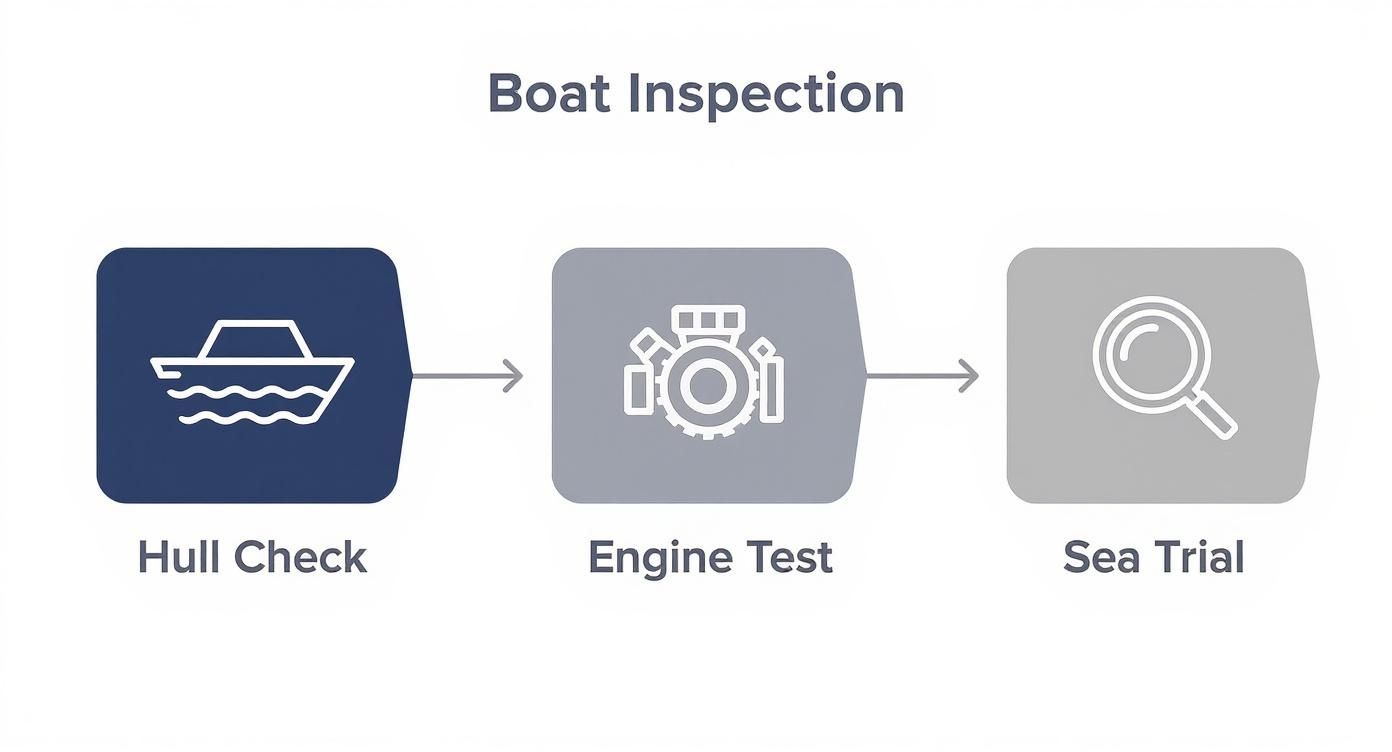
This is where a thorough inspection becomes non-negotiable, as the infographic below highlights.
Whether you’re a pro or a novice, following this simple flow—hull check, engine test, sea trial—is your best defense when buying from an individual.
Your decision really comes down to what you're comfortable with. A dealer offers a higher-cost, lower-risk experience. A private sale is a lower-cost, higher-risk alternative.
This is a big market, and it's only getting bigger. The global center console boat market is already valued at around $5 billion and is expected to grow by about 6% each year. All that growth means more choices for buyers like you. If you're curious, you can discover more insights about center console boat market trends to see where things are headed.
No matter which route you take, a meticulous inspection and a complete understanding of what you're signing up for are the keys to a happy purchase.
Answering Your Lingering Questions
As you get closer to buying a center console, you're bound to have a few final questions floating around. It's completely normal. This is a big purchase, and you want to be sure you're making the right call.
Let's tackle some of the most common questions we hear from boat buyers. Think of this as our last chat at the dock before you cast off, making sure you're confident and ready for the adventure ahead.
What’s the Best Size for a First Center Console Boat?
For your first boat, it's tough to beat the 18 to 22-foot range. This is the real sweet spot for a new owner.
Why? A boat this size is big enough to handle a bit of chop in coastal waters, so you'll feel secure. At the same time, it's still small enough that you won't be sweating when it's time to dock or load it onto a trailer. You get a great balance of capability and easy handling, which is exactly what you need when you're learning the ropes.
It's also a smart move for your wallet. Fuel, storage, and maintenance costs are all much more manageable in this size class. You can really hone your boating skills and figure out what you love doing most on the water without the financial pressure of a massive vessel.
How Much Upkeep Does a Center Console Really Need?
Just like a car, a center console needs consistent care to run reliably. The single most important habit to build? Flushing the engine with fresh water after every single trip in saltwater. Seriously, this isn't optional—it's your number one defense against corrosion.
Beyond that, your routine will look something like this:
Engine Service: Plan on an annual service (or every 100 hours of use) for things like oil changes, new filters, and spark plug checks.
A Good Scrub: Wash down the hull, deck, and cushions after each outing. Getting the salt and grime off quickly prevents it from doing long-term damage to the finish.
Annual Systems Check: Before your main boating season kicks off, give all the electrical systems, pumps, and safety gear a thorough inspection.
Here's a solid rule of thumb we've seen hold true for years: budget about <
Keeping up with routine maintenance — especially at the start of each season — protects your investment and ensures your center console is always ready to go. Browse center console listings with detailed specs and maintenance history at SearchShop.com.