Finding the right sportfish boat for sale is the first step toward a lifetime of incredible offshore adventures. This guide is designed to be your navigator through that entire process. This isn't just about buying a boat; it's about investing in a lifestyle dedicated to chasing big fish in the deep blue. Your journey to finding the perfect vessel starts now.
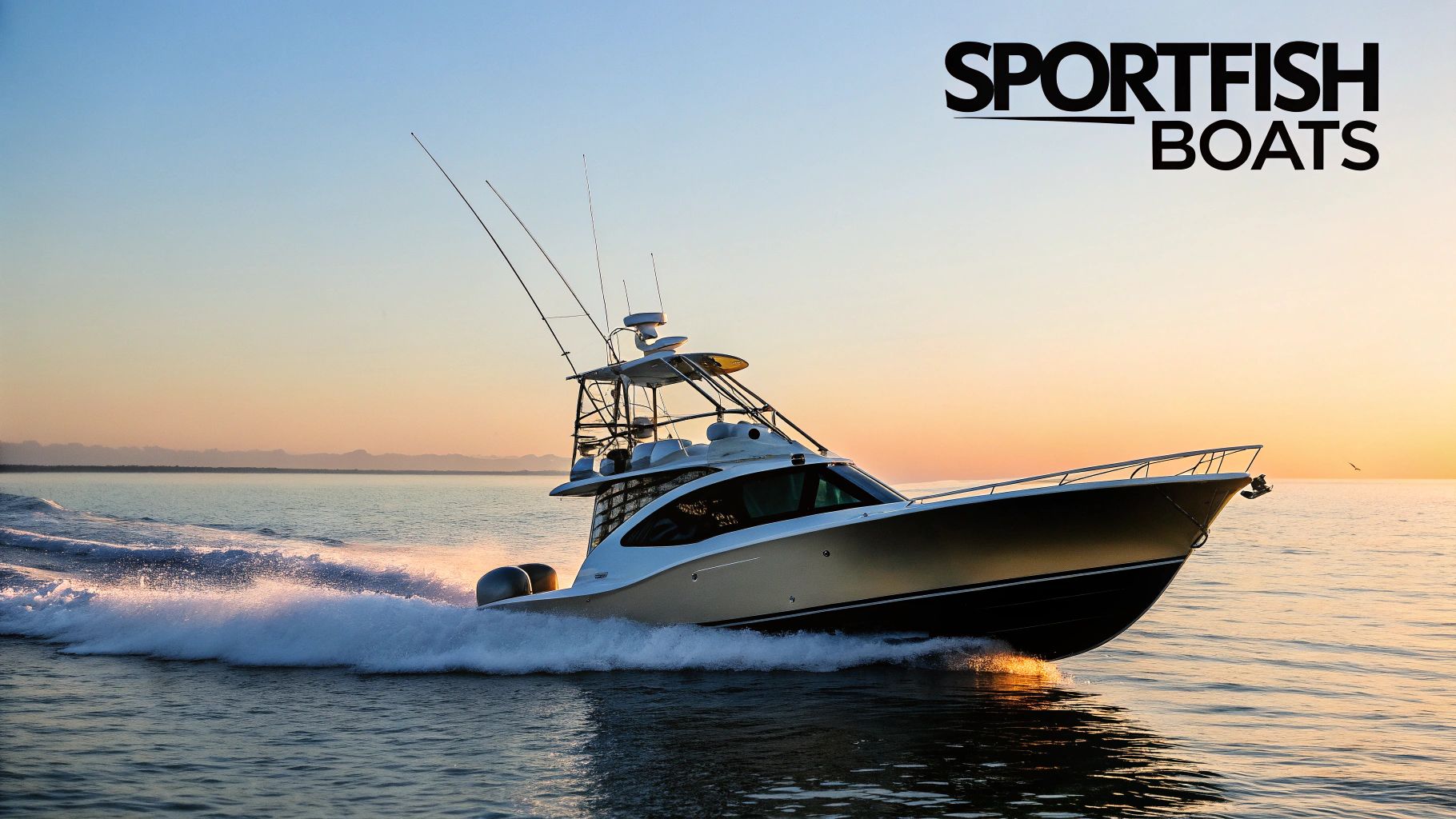
Deciding to buy a sportfish boat is a big move. It puts you in a special community of serious anglers and people who truly love the sea. These aren't just run-of-the-mill boats; they are highly specialized machines built for performance, endurance, and the pure thrill of the offshore chase. Just like a serious offshore angler chooses a sportfish for deep-water expeditions, a serious angler chooses a sportfish for conquering the open ocean.
We're going to cut through the confusing technical jargon and get straight to what matters. This guide will explore what really separates a sportfish from other boats, zeroing in on the design features that make them the ultimate fishing platforms. Think of this as your complete roadmap to making a smart, confident purchase.
We’ll build your knowledge one step at a time, making sure you feel ready for every part of the buying process. The goal here is to give you the insight you need to find a sportfish that fits your fishing style and your budget perfectly.
Here’s what we’ll dive into:
- Decoding Essential Features: Learn to spot the non-negotiable elements that define a true sportfish.
- Understanding Market Value: Get a clear picture of what drives prices and how to know if you're getting a fair deal.
- Mastering the Inspection: We'll give you a checklist to evaluate a boat’s condition like a seasoned pro.
- Securing the Right Financing: Learn how to navigate the loan process to make your dream a reality.
Your search for the perfect sportfish boat for sale should be an exciting adventure, not a stressful ordeal. By understanding the key factors from the get-go, you can focus on the thrill of all the offshore trips in your future.
This passion for a specialized boating experience is part of a much bigger picture. The global recreational boating market is booming, valued at around USD 48.0 billion in 2025 and expected to blow past USD 124.6 billion by 2035.
Inboard engine boats, a category that includes many classic sportfish models, command a solid 33.0% market share. Their powerful performance makes them a top choice for anyone serious about their time on the water. You can explore more about these market trends to see how they might impact future boat values. With this guide, you’ll be ready to jump into this dynamic market with your eyes wide open.
So, what really separates a true sportfish from any other boat with a few rod holders? It’s not just about raw horsepower or a fancy paint job. It comes down to a specific design philosophy where every single element is engineered for one purpose: hunting down and landing big, powerful fish in the open ocean. These boats are the apex predators of the recreational fishing world, and their anatomy is a dead giveaway.
The hull is where it all starts. A purpose-built sportfish almost always has a deep-V hull paired with a flared bow. This isn't just for looks. That sharp entry cuts through heavy seas like a hot knife through butter, while the flare pushes spray out and away. The result is a much smoother, drier ride when you're miles offshore—something you’ll appreciate when the weather turns. It’s a design that’s all about stability and performance.
This kind of specialized design is in high demand. The global fishing vessel market, which includes these high-performance boats, is on track to hit US$ 1.69 billion by 2025. That growth, pegged at a 7.4% compound annual rate, is fueled by a growing interest in deep-sea fishing. If you're curious about the numbers, you can read the full research on fishing vessel market growth to get a better sense of where the industry is heading.
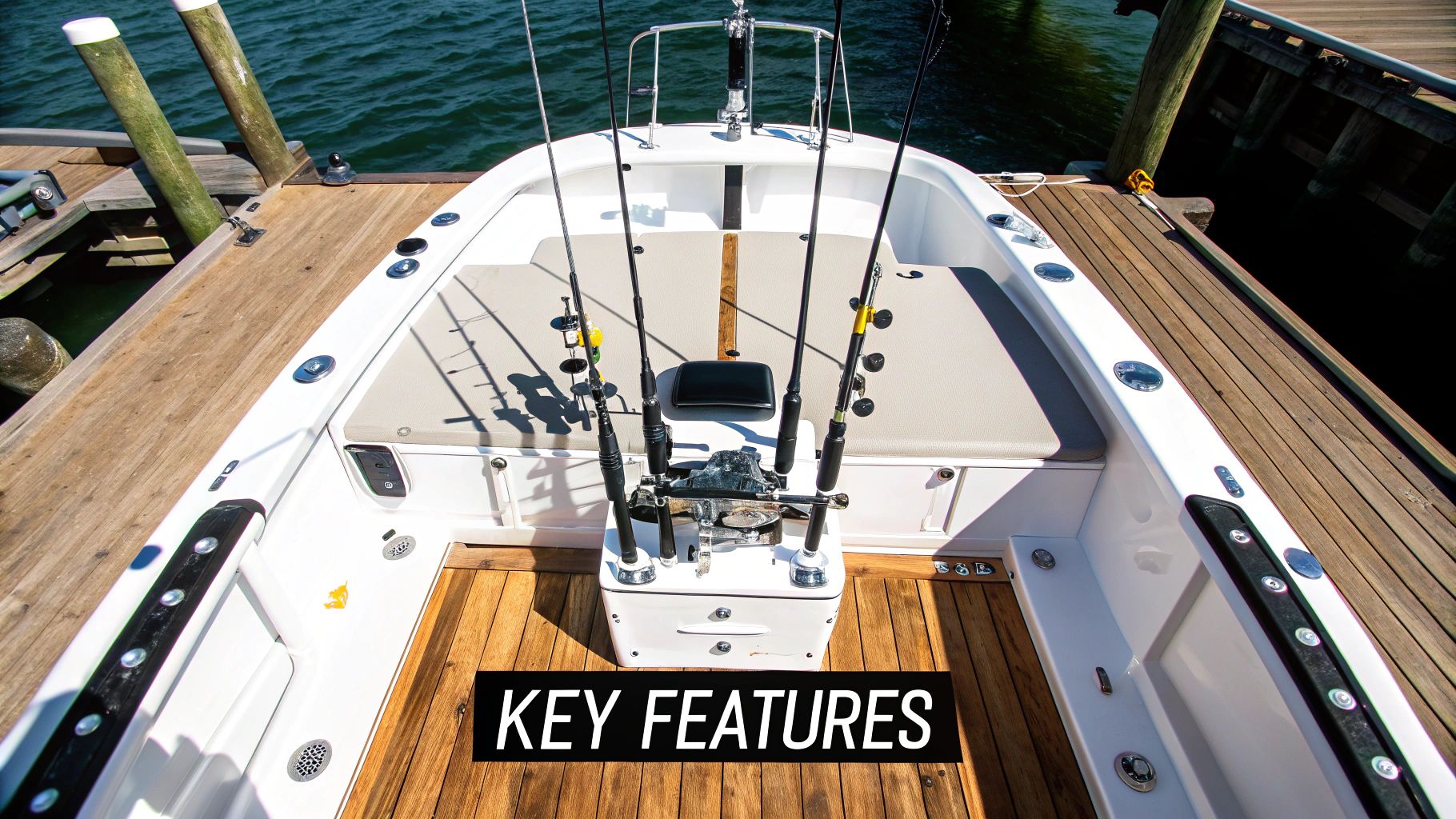
Step into the cockpit, and you'll get it immediately. This space isn’t for sunbathing. It's an arena, meticulously laid out for the chaos and intensity of battling a monster fish. The deck is wide open and uncluttered, giving the crew and angler room to move quickly and safely when a reel starts screaming.
A few key features really define this workspace:
- The Fighting Chair: This isn't just a seat; it's the throne at the center of the action. Securely bolted to the deck, this highly specialized piece of gear is built to help an angler brace against the incredible pull of a big marlin or tuna.
- Rocket Launchers: Despite the name, these aren't for defense. They're rows of rod holders, usually mounted on the fighting chair or tower legs, that keep extra rods rigged and ready to go at a moment's notice.
- Transom Door: This is essentially a gate at the stern. It’s absolutely critical for safely sliding a massive fish onto the deck instead of trying to hoist it over the side.
The layout of a sportfish cockpit is a masterclass in functional design. Every detail, from the placement of the bait freezer to the non-skid surface underfoot, is there to minimize risk and maximize the odds of landing the fish of a lifetime.
Beyond the cockpit, a few other iconic features complete the sportfish anatomy. These are the tools that truly distinguish a serious offshore machine from a weekend cruiser.
The tuna tower is probably the most recognizable element. This elevated helm station gives the captain a massive advantage, offering a bird's-eye view to spot signs of life—like diving birds or bait fish breaking the surface—from miles away. It’s also incredibly useful for navigating tight channels or docking.
Then you have the outriggers. Those long poles extending from the sides of the boat aren't just for show. They allow you to spread your trolling lines out wide, creating a broad, enticing presentation that looks like a natural school of baitfish. It's a game-changer that dramatically increases your chances of getting a strike. It’s the combination of all these elements that creates a platform perfectly tuned for its environment, giving the angler every possible advantage.
Once you’ve got a handle on the classic sportfish profile, it’s time to pop the hood and see what really makes these boats tick. Looking at the core features and onboard systems is a bit like a mechanic inspecting an engine—it tells you everything you need to know about the boat’s performance, reliability, and whether it’s the right fit for your offshore adventures. This is where you move beyond looks and get into function.
When you start browsing any sportfish boat for sale, the options can feel overwhelming. But it almost always boils down to a series of trade-offs. Be honest about how you fish, where you'll be running the boat, and what you’re comfortable maintaining. That clarity will point you straight to the right combination of features. It’s all about matching the machine to the mission.
The engine is the heart of any sportfish, and for decades the big debate has been inboard diesels versus modern outboards.
Classic sportfish yachts are legendary for their powerful, rumbling inboard diesels tucked neatly below the cockpit. This setup gives you a ton of torque to muscle a heavy hull through big seas and, just as importantly, keeps the transom completely clear for fighting fish. Nothing beats a wide-open cockpit when a big one is on the line.
Lately, though, modern four-stroke outboards have made a huge splash, showing up on bigger and bigger boats. They tend to be quieter, are often simpler to maintain, and can be tilted completely out of the water—a massive plus for preventing corrosion if you keep your boat in a saltwater slip. The trade-off? They take up valuable real estate on the transom, which can sometimes get in the way of angling.
What’s happening beneath the waterline is what truly dictates how a boat handles the rough stuff. Most offshore sportfish rely on a deep-V hull, which has a sharp entry at the bow that gradually flattens out toward the stern. This design is brilliant at slicing through waves, giving you a much softer, more stable ride when you’re miles from the nearest land.
Think of it like the suspension on a high-performance truck. A well-designed deep-V hull absorbs the shock of choppy water, dramatically reducing the pounding that wears a crew out on long runs offshore. When you're looking at a boat's specs, the "deadrise"—the angle of the "V"—tells you a lot. A sharper V generally means a smoother ride in the slop.
Beyond the hull and engines, a sportfish is really defined by the specialized gear built to put fish in the boat. These aren't just fancy add-ons; they are the essential tools of the trade that separate a serious fishing machine from a weekend cruiser.
Make sure you give these must-have systems a close inspection:
- Generators: A reliable generator is non-negotiable. It’s the workhorse that powers everything from the cabin's air conditioning and the bait freezer to the massive electronic displays at the helm. Without a good one, you’re basically just boating on the water.
- Insulated Fish Boxes: These are large, built-in compartments, often refrigerated or designed for ice, that are integrated right into the deck or transom. Their whole job is to chill your catch fast and keep it that way, ensuring it's sushi-grade when you hit the dock.
- High-Capacity Livewells: If you fish with live bait, a big, circular livewell with powerful water circulation is an absolute must. It keeps your bait frisky and healthy, which is often the secret to getting bites from finicky gamefish.
To give you a clearer picture of what to look for, here’s a quick breakdown of these core features.
| Feature |
Common Options |
Primary Benefit for Anglers |
| Power Plant |
Inboard Diesel, Outboard (Twin, Triple, Quad) |
Inboards: Unmatched torque, clear transom. Outboards: Easy maintenance, shallow draft capability. |
| Hull Design |
Deep-V, Modified-V, Catamaran |
Provides a stable, dry ride in offshore conditions, reducing crew fatigue and improving safety. |
| Tuna Tower / Marlin Tower |
Full Tower with Controls, Half Tower, Hardtop |
Offers a high vantage point for spotting fish, birds, or weed lines from a distance. |
| Livewell System |
Pressurized, Recirculating, Gravity-Fed |
Keeps bait alive and healthy for extended periods, increasing the chances of a successful catch. |
| Fish Boxes |
In-Deck (Macerated), Transom, Refrigerated Plates |
Preserves the quality of the catch by keeping it properly chilled from the moment it comes aboard. |
| Outriggers |
Fixed, Telescoping (Manual or Hydraulic) |
Spreads bait lines wide, allowing you to cover more water and prevent tangles when trolling. |
| Fighting Chair / Leaning Post |
Full-Size Chair, Rocket Launcher Leaning Post |
Provides a secure and powerful station for battling large, powerful gamefish. |
These components are more than just items on a checklist; they work together to create an effective and comfortable fishing platform.
As you can see, the quality and capability of these onboard systems directly influence a boat's value and performance on the water.
Today's marine electronics are the central nervous system of any serious sportfish. Gone are the days of standalone gadgets. We now have fully integrated suites where every component talks to each other, giving the captain a complete, real-time picture of their environment. This fusion of tech is a huge reason the leisure boat market is projected to surge from USD 41.6 billion in 2025 to nearly USD 65.9 billion by 2034. You can discover more insights about these marine technology trends to see where things are headed.
An integrated electronics suite is your underwater eyes and ears. It turns the art of finding fish into a science, giving you a decisive advantage on the water.
All the key components work in harmony. Your GPS chartplotter shows your position and course, while the radar keeps an eye out for other boats, approaching storms, and even flocks of birds diving on bait. Meanwhile, below the surface, the sonar (or fishfinder) paints a detailed picture of the bottom structure and, most importantly, marks fish. When these systems are networked together, you can mark a promising spot on your sonar, and it instantly drops a waypoint on your GPS. That means you can navigate back to that exact spot with pinpoint accuracy. It’s a game-changer.
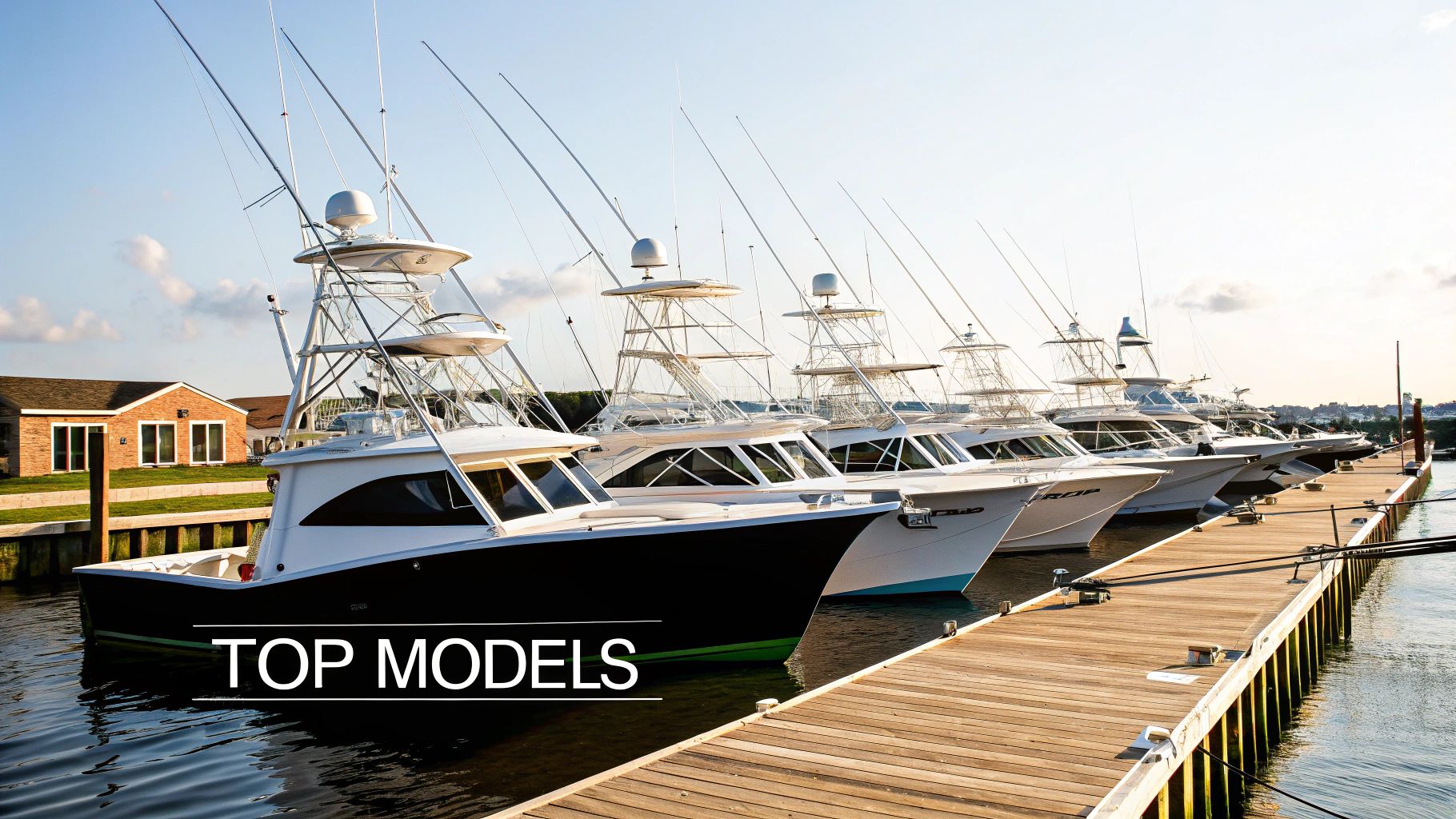
Alright, let's get down to the brass tacks: the money. When you start looking at a sportfish boat for sale, it’s easy to focus on the listing price. But that number is just the tip of the iceberg. The real cost of ownership is a much bigger picture, and understanding it is the key to making a smart purchase.
Think of buying a sportfish like buying a high-performance car or a premium vessel; the sticker price is just the entry fee. The true value is a combination of its pedigree, its history, and how well it's been kept.
First off, the builder's name carries a lot of weight. Legendary brands like Viking, Hatteras, and Bertram earned their reputations the hard way—by building boats that are tough, seaworthy, and last for decades. A well-cared-for vessel from a top-tier builder will always fetch a higher price and hold its value far better than its lesser-known counterparts.
Beyond the brand, a boat's individual history and condition are everything. Here’s what really moves the needle on price:
- Engine Hours: This is the boating world’s version of mileage on a car or boat. Lower hours are usually better, but only if they’re backed by a rock-solid maintenance history.
- Maintenance History: A thick binder full of service records is pure gold. It's proof that the boat was loved, not neglected, and it can save you from a world of expensive headaches down the road.
- Recent Upgrades: Has the boat been repowered with modern engines? Did the owner just invest in a brand-new electronics suite or generator? Those big-ticket upgrades add serious value and appeal.
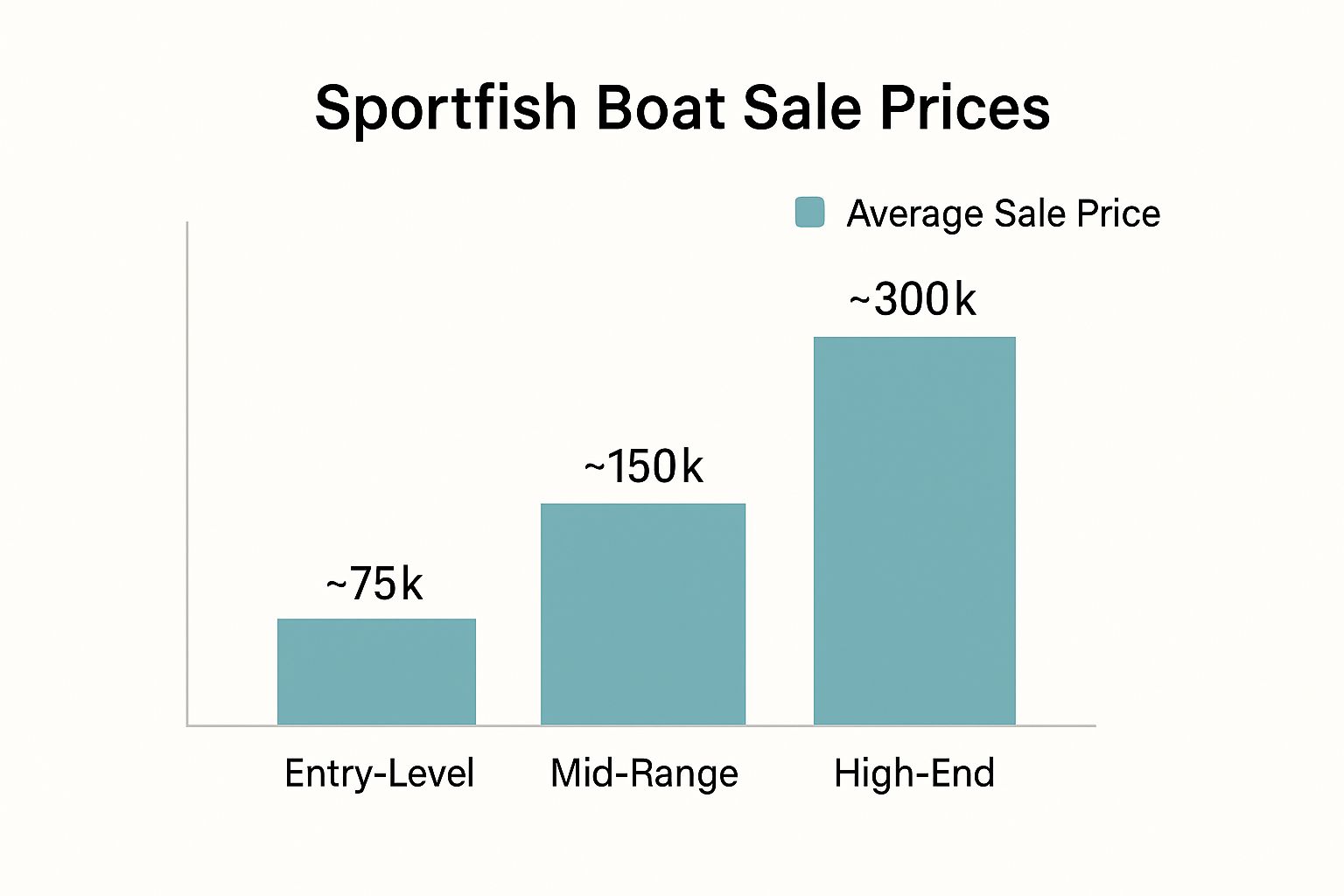
To give you a real-world feel for what to expect, the pre-owned market has a huge range. A boat’s size, age, and condition can cause prices to swing wildly.
The table below offers a general ballpark for what you might see out there. It’s a starting point to help you frame your budget before you start seriously shopping.
| Boat Length (Feet) |
Age (5-10 Years) |
Age (10-20 Years) |
| 35-45 ft |
$250,000 - $600,000+ |
$100,000 - $300,000 |
| 45-55 ft |
$600,000 - $1,500,000+ |
$250,000 - $700,000 |
| 55-65 ft |
$1,500,000 - $3,000,000+ |
$500,000 - $1,200,000 |
Keep in mind, these are just estimates. A pristine, updated 15-year-old Hatteras might cost more than a neglected 8-year-old from a lesser brand. Always let the boat's condition, not just its age, guide your valuation.
This is the part that trips up so many new owners. Buying the boat is a one-time event; keeping it in the water, running, and ready to fish is an ongoing commitment. Budgeting for these "hidden" costs is what makes ownership sustainable and fun.
Understanding the total cost of ownership is the difference between buying a boat you can afford and buying a boat you can afford to use. A realistic budget ensures your time is spent fishing, not stressing over finances.
These recurring expenses aren't just suggestions—they are fundamental to responsible boat ownership. If you don't account for them, your dream boat can quickly become a financial nightmare.
Here are the big four you need to bake into your annual budget:
-
Marina and Storage Fees: Unless you have a waterfront home with a lift, you'll be renting a slip or a spot in a boatyard. Depending on your location and the marina's amenities, this can easily run from a few hundred to several thousand dollars every single month.
-
Insurance: This is non-negotiable. Marine insurance protects your investment from damage, liability, and total loss. The premium will depend on the boat's value, where you plan to use it, and your own boating experience.
-
Annual Maintenance: This is a big bucket. It covers everything from routine engine service (oil, filters, impellers) and bottom painting to servicing the generator, air conditioning, and other systems. A widely used rule of thumb is to budget 10% of the boat’s value for maintenance every year.
-
Fuel Consumption: There’s no getting around it—sportfish boats are thirsty. Their big diesel engines can burn through hundreds of gallons of fuel on a single offshore trip. This will likely be one of your biggest operating costs, so be prepared for it.
By getting a handle on these numbers before you buy, you can confidently find a sportfish that you can not only purchase but also enjoy for years to come.
Alright, you’ve found a sportfish that looks like the one. Before you get swept up in the excitement and start talking numbers, it's time to slow down and play detective. This pre-purchase inspection is, without a doubt, the most important step in the entire process. It’s your best defense against a bad deal and future headaches that could cost you a fortune.
Think of it this way: you're not trying to find a reason to kill the deal. You're building a complete, honest picture of the boat's true condition. A thorough inspection gives you incredible negotiating power and the confidence to know you’re making a smart investment. Let's kick the tires like you've done this a hundred times before.
The hull is the foundation of everything, so that's where we start. If you can, make sure you see the boat out of the water. A shiny topside is nice, but what’s happening below the waterline and in the structural core is what really counts.
Get up close and personal. Here’s what you’re looking for:
- Stress Cracks: Zero in on high-stress areas like the base of the tower, around cleats, and railing stanchions. Fine, spiderweb-like cracks can be a sign that the fiberglass is flexing more than it should, hinting at potential structural issues.
- Blisters: Scan the bottom for any bubbles or bumps under the paint. These could be osmotic blisters, which happen when water seeps into the fiberglass. It's not a deal-killer, but it's a repair you'll want to factor into the price.
- Through-Hull Fittings: Every opening below the waterline is a potential point of failure. Check each one. Can you easily open and close the seacocks? Is there any sign of corrosion? A seized or leaking through-hull is one of the quickest ways to sink a boat at the dock.
- Deck Condition: Now, walk every inch of the deck. Pay attention to how it feels under your feet. Any sponginess or soft spots are a massive red flag, often pointing to a waterlogged and rotten core—a repair you absolutely want to avoid.
The engines are the heart of any sportfish. A problem in the engine room can easily sideline your fishing season and drain your wallet faster than a wide-open run to the canyons. So, let's pop the hatch and see what we've got.
The very first thing you should ask for is the maintenance logs. A good owner will have a thick binder detailing every oil change, service, and repair. No records? That doesn’t automatically mean the boat was neglected, but it means your own inspection needs to be that much more critical.
A detailed service log is more than just a stack of receipts; it's the boat's biography. It tells a story of consistent care and proactive maintenance, which is a strong indicator of a reliable vessel.
Next, just use your eyes. The engine room doesn't need to be clean enough to eat off of, but a tidy, well-organized space is usually a sign of a meticulous owner. Look for the obvious: oil in the bilge, crusty salt deposits, or streaks from old coolant leaks. Give the belts and hoses a squeeze—they shouldn't feel brittle or mushy.
The big, noisy engines get all the attention, but the boat's other systems are what keep you safe and comfortable offshore. Go to the main electrical panel and start flipping switches. Do the navigation lights, cabin lights, and electronics all fire up? Do the pumps kick on?
Test the plumbing from top to bottom. Run the freshwater sink, flush the head, and most importantly, check the bilge pumps. Make sure they turn on automatically with the float switch. A failed bilge pump is a disaster waiting to happen.
Finally, do a quick inventory of the safety gear. Check the inspection dates on the life raft, fire extinguishers, and emergency flares. This equipment isn't optional, and if it's expired, the replacement costs can add up fast.
Look, this checklist will help you perform a really solid initial walkthrough. But it's no substitute for a professional. Always hire a qualified and accredited marine surveyor to conduct a full survey and sea trial. They have the experience and tools to spot problems a passionate buyer might overlook, protecting your investment and ensuring your new boat is truly ready for adventure.
After all the research and long hours spent on deck during inspections, you’ve finally found the one—the perfect sportfish boat for sale. Now for the last hurdle before you can finally grab the keys: figuring out the financing. This part can feel a little daunting, but with the right approach, you’ll be in complete control.
Think of it this way: you wouldn't use a freshwater reel for deep-sea fishing. The same logic applies here. You have two main routes—a traditional bank or a dedicated marine lender. While you might have a great relationship with your local bank, a marine lender is a specialist who lives and breathes the boating world. They truly get the unique value of a well-maintained sportfish, and that understanding can make all the difference in the terms you get. They are the experts in marine financing — boat-specific lenders understand the nuances of a deep-sea sportfish versus a smaller inshore boat.
Marine lenders often offer much longer loan terms, sometimes extending up to 20 years for bigger boats. This can dramatically lower your monthly payments, bringing a top-tier sportfish well within reach. They also tend to be more forgiving when it comes to older boats, because they know a classic vessel that's been cared for holds its value far better than a car.
A traditional bank, on the other hand, might just lump a boat loan in with their standard auto or personal loans. This often means you're looking at shorter terms, potentially higher interest rates, and approval criteria that don't really grasp the nuances of a boat's value.
Working with a lender who understands the marine market is a huge strategic advantage. They see the long-term value in your investment, which almost always translates into a better loan package for you.
Here's one of the smartest moves you can make: get pre-approved for your loan before you even think about making an offer. Getting pre-approved is like walking into a negotiation with cash in hand. It signals to sellers that you're a serious, qualified buyer, and that gives you a ton of leverage.
It also forces you to shop with a firm budget. You won't waste time falling in love with a boat you can't afford, turning an emotional hunt into a confident, calculated decision.
To get the ball rolling on pre-approval, you’ll want to get your financial paperwork in order. Lenders will typically ask to see:
- Proof of Income: This usually means recent pay stubs, W-2s, or tax returns.
- Statement of Assets and Liabilities: A clear picture of your overall financial standing.
- Credit History: They will pull your credit score to gauge their risk.
Having these documents ready will make the whole process smooth and fast. A strong financial profile, combined with a healthy down payment (usually 10-20%), puts you in the best position to lock in great financing and get you that much closer to casting lines from the cockpit of your new boat.
Even after you've done all your homework, a few lingering questions are bound to pop up. That’s perfectly normal when you’re looking at a major investment like a sportfish. Let's walk through some of the most common final hurdles buyers face before they feel ready to make a move.
One of the big debates is whether to go for a shiny new boat from a lesser-known brand or an older, well-maintained classic from a legend like Hatteras or Viking. While the allure of "new" is strong, in the world of sportfishing yachts, pedigree and maintenance history often trump age. A classic battlewagon that's been properly cared for has already proven its mettle on the water and will almost always hold its value better in the long run.
Next up is the engine hour question. People often get fixated on finding a boat with low hours, but is there really a magic number to avoid? Not really. It’s far more about how those hours were put on and, crucially, how well the engines were maintained.
An engine with 2,500 hours backed by a perfect, detailed service record is often a much safer bet than one with only 800 hours and a completely blank maintenance history. Consistent, professional service is the true sign of a healthy powerplant.
Th