If you've started looking for a pontoon boat for sale, you've picked a great time to join the fun. These boats have truly become the ultimate platform for enjoying the water, perfectly mixing family-friendly comfort with the muscle for everything from fishing to watersports. Much like a spacious RV offers a home on the road, a pontoon provides a comfortable, versatile living room on the water.
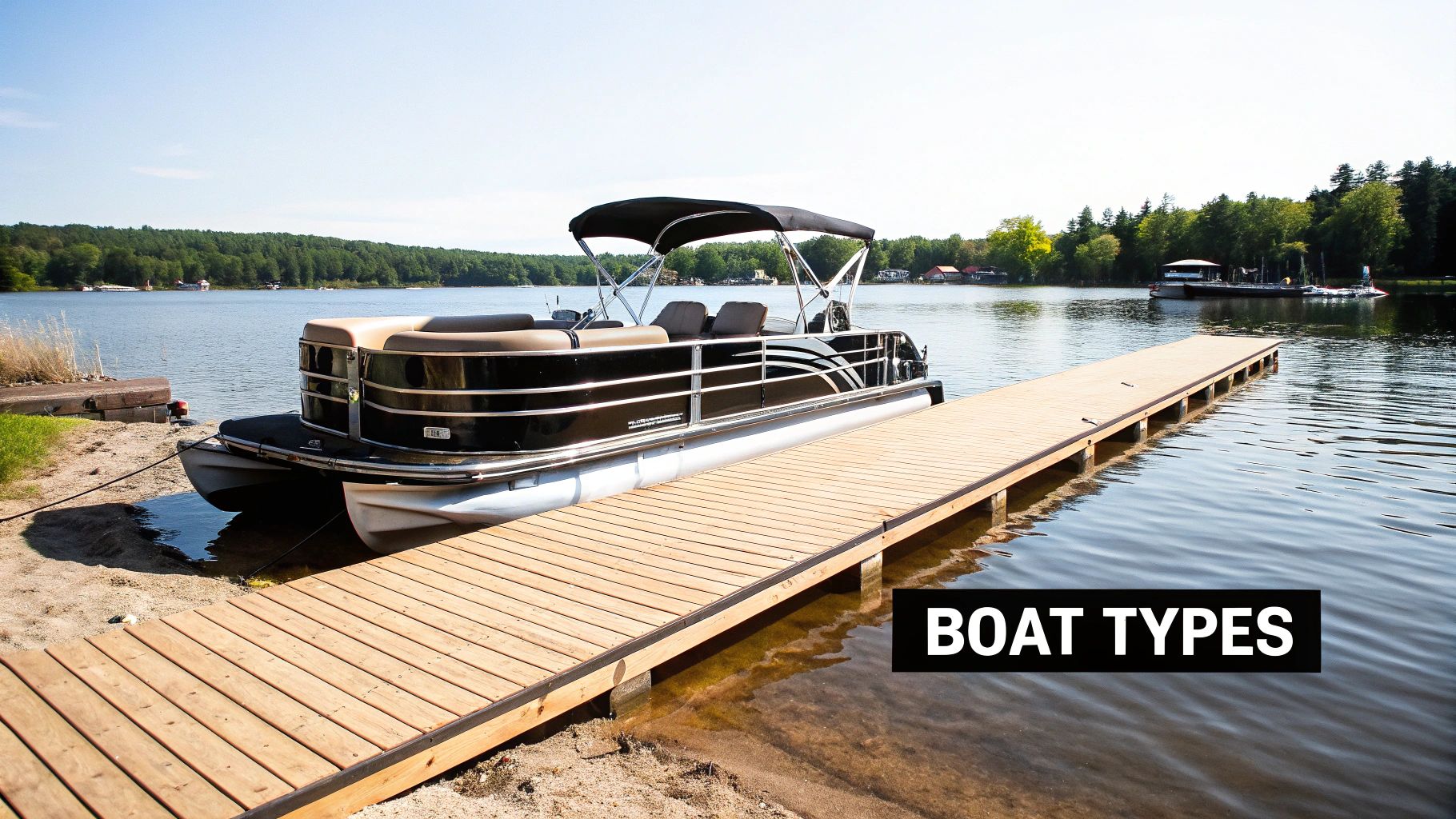
Starting the search for a new or used pontoon is an exciting process. It’s more than just buying a boat; it's an investment in a lifestyle filled with relaxed afternoons, fun social gatherings, and quiet escapes. Unlike a traditional V-hull boat built for speed, a pontoon’s wide, stable deck makes it the undisputed champion of versatility and comfort.
We often compare it to the family SUV or Class C RV of the lake. It has plenty of room for kids and their friends, it's comfortable enough for grandparents, and it can be outfitted for just about any activity you can dream up. It's this unique blend of features that has caused their popularity to skyrocket.
The secret to a pontoon's appeal is simple: it offers something for everyone. You could be a serious angler needing space for all your gear, a family wanting a safe platform for swimming and tubing, or a couple who loves hosting sunset cruises. A pontoon can handle it all.
Here’s a quick rundown of why they’re so loved:
-
Unmatched Comfort: With plush lounge seating, tons of legroom, and bimini tops for shade, pontoons are designed for all-day comfort on the water.
-
Incredible Stability: The two- or three-tube ("toon") design creates an exceptionally stable platform. It feels solid underfoot, making it easy to walk around even with a full crew on board.
-
Versatility for Activities: You can cast a line from the bow, pull a tuber from the stern, and host a floating picnic all in the same day. Modern pontoons can truly be configured for anything.
-
Ease of Use: They are generally simple to drive and dock, which makes them a fantastic choice for both seasoned captains and people just getting into boating.
The global pontoon boat market reflects this demand perfectly. Valued at $2.5 billion in 2025, it's projected to climb to around $3.3 billion by 2033. This growth is fueled by more people like you seeking high-quality leisure experiences on the water. You can explore more data on this growth trend to see what it means for buyers.
Consider this guide your trusted first mate as you navigate the search for a pontoon for sale. We’ll walk you through every critical step, from understanding the different types and their ideal uses to inspecting a used boat and budgeting for the real cost of ownership.
To help you stay organized, here's a quick checklist of the key decisions you'll be making. You can refer back to it as you move through the guide.
|
Consideration
|
Key Questions to Ask Yourself
|
Where to Find Answers in This Guide
|
|
Primary Use
|
What's my main goal? Fishing, watersports, cruising, or a mix?
|
Section 2: Types of Pontoons
|
|
Size & Capacity
|
How many people will I usually have on board? What size fits my lake?
|
Section 3: Essential Features
|
|
Performance
|
Do I need speed for tubing or just a gentle cruise? What about rough water?
|
Section 3: Engine & Toon Options
|
|
Budget
|
What's my all-in budget, including taxes, fees, and gear?
|
Section 5: Pontoon Pricing
|
|
New vs. Used
|
Am I looking for the latest features or the best value?
|
Section 6: Buying New vs. Used
|
|
Maintenance
|
Am I prepared for the upkeep? What are the long-term costs?
|
Section 7: Maintenance & Care
|
Our goal is to give you the knowledge and confidence to choose a pontoon that perfectly fits your budget, lifestyle, and dreams for countless days on the water. Let’s get started.
Not every pontoon is created equal. The moment you start looking at any pontoon for sale, you'll realize they come in a surprising number of flavors, each one specifically designed for a certain kind of day on the water. Figuring out which one is right for you is the most important decision you'll make.
We always tell new buyers to think of it like shopping for any watercraft. You wouldn't choose a small campervan for a family of five, and you wouldn't take a luxury Class A motorhome off-roading. In the same way, the pontoon you need for thrilling watersports is a completely different beast from one designed for quiet mornings of fishing.
The Four Main Pontoon Categories
Most pontoons fit neatly into one of four main groups. Understanding these will help you cut through the noise and zero in on the boats that actually fit your vision for life on the water.
-
Luxury Cruisers: Think of these as the high-end Class A RVs of the boating world. Comfort is king here, with plush, premium seating, high-tech sound systems, and elegant finishes. Many even include amenities like built-in wet bars or pop-up changing rooms. They're perfect for entertaining guests and enjoying long, stylish afternoons on the lake.
-
Performance Tritoons: This is your sports sedan on the water. A "tritoon" features three aluminum tubes instead of the standard two, which provides a massive boost in stability, handling, and speed. When paired with a beefy engine, these boats have no trouble pulling skiers, wakeboarders, and tubers, making them the clear winner for watersports lovers.
-
Dedicated Fishing Models: Built from the ground up for the serious angler, these pontoons are all about function. They come straight from the factory with everything you need, like livewells to keep your catch fresh, swiveling fishing chairs for casting all day, built-in rod holders, and durable, easy-to-clean vinyl flooring.
-
Value-Focused Cruisers: These are the reliable family haulers of the pontoon world, similar to a travel trailer or Class C motorhome. They strike a fantastic balance between comfort, space, and price, making them a great way to get into pontooning without breaking the bank. They're ideal for families and casual boaters who want a versatile boat for swimming, sunbathing, and cruising around the lake.
The real difference between these categories often boils down to two key things: the number of tubes (the "toons") and the horsepower of the engine.
A standard two-tube pontoon is fantastic for leisurely cruises on smaller lakes. It’s incredibly stable, comfortable, and gives you a smooth, gentle ride at lower speeds. But if you have a need for speed or you'll be on bigger, choppier water, a tritoon is practically a necessity.
The third tube in the center acts a lot like a keel on a traditional boat. It lets the pontoon bank into turns, slice through waves instead of bouncing over them, and handle a much larger engine. This design literally transforms the boat from a gentle patio into an agile, high-performance machine.
The engine size is directly tied to this. A classic pontoon might have a 50 to 115-horsepower engine, which is plenty for its intended purpose. A performance tritoon, however, can handle outboards pushing 200, 300, or even 400 horsepower. That's where you get the raw power needed for an exciting day of watersports.
This infographic really drives home how these core elements—capacity, power, and layout—are the building blocks that define what a pontoon is meant to do.
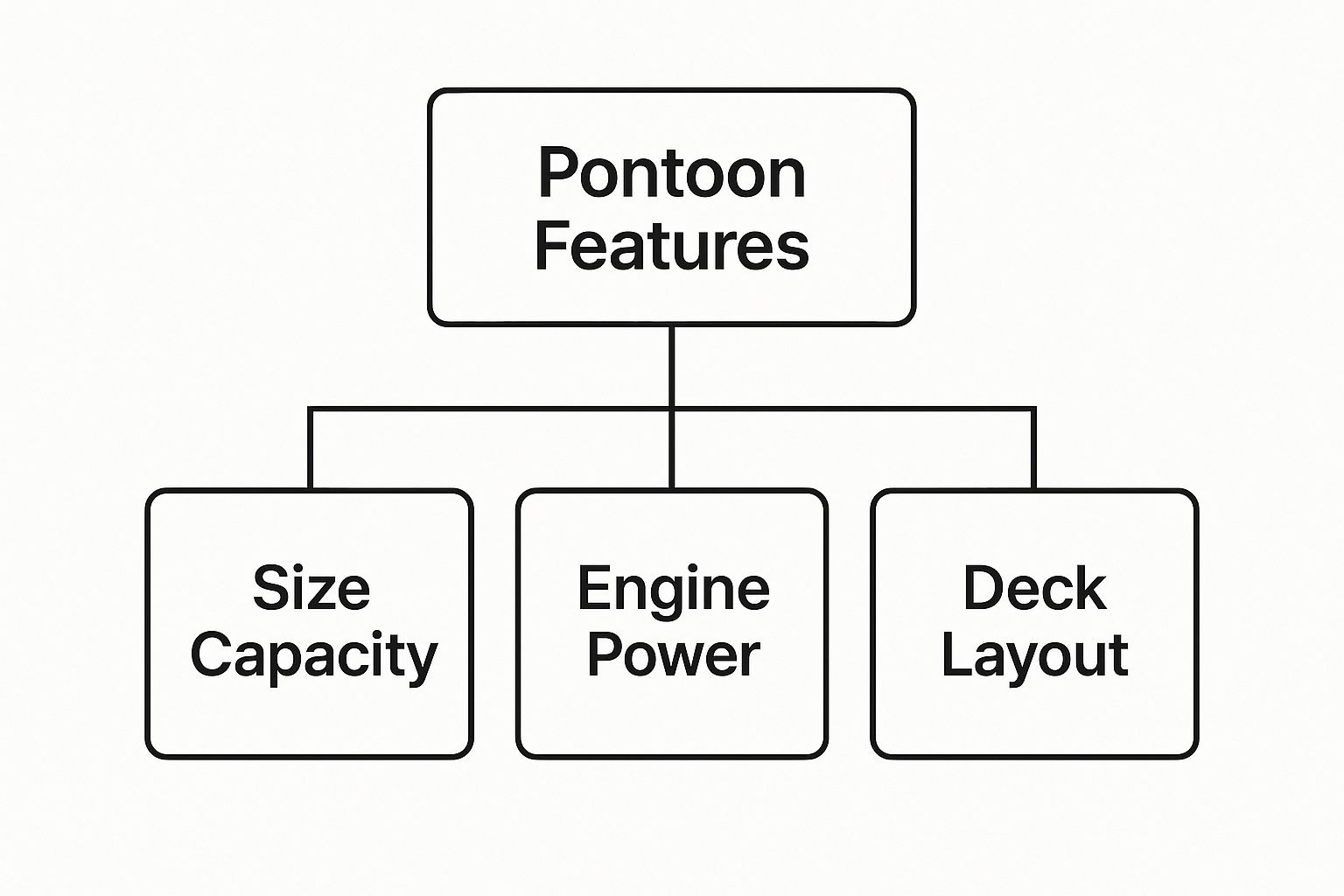
As the diagram shows, your choices in these three areas are what will ultimately decide whether you end up with a relaxed floating patio or a high-octane sport boat.
Beyond the hull and engine, the deck layout is where you really get to customize the boat for your specific activities. A fishing-focused pontoon, for example, will happily trade some lounge space for open casting decks and dedicated fishing stations. A luxury cruiser, on the other hand, will go all-in on seating with L-shaped couches and rear-facing loungers to maximize relaxation.
Think about how you'll really use the boat:
-
The Social Host: If you see yourself hosting sunset cruises with friends, look for layouts with wrap-around seating, a built-in table for snacks and drinks, and maybe even a small galley with a sink.
-
The Active Family: For days filled with swimming, tubing, and cannonballs, a layout with a large rear swim deck, a sturdy ski tow bar, and durable, easy-to-clean upholstery is an absolute must.
-
The Serious Angler: You'll want to prioritize models that have livewells at both the front and back, plenty of secure rod storage, and a gate for a trolling motor.
By first thinking about how you'll spend your time on the water, you can then match that vision to the right type, hull, and layout. Do that, and you'll find a pontoon for sale that will give you countless perfect days on the water.
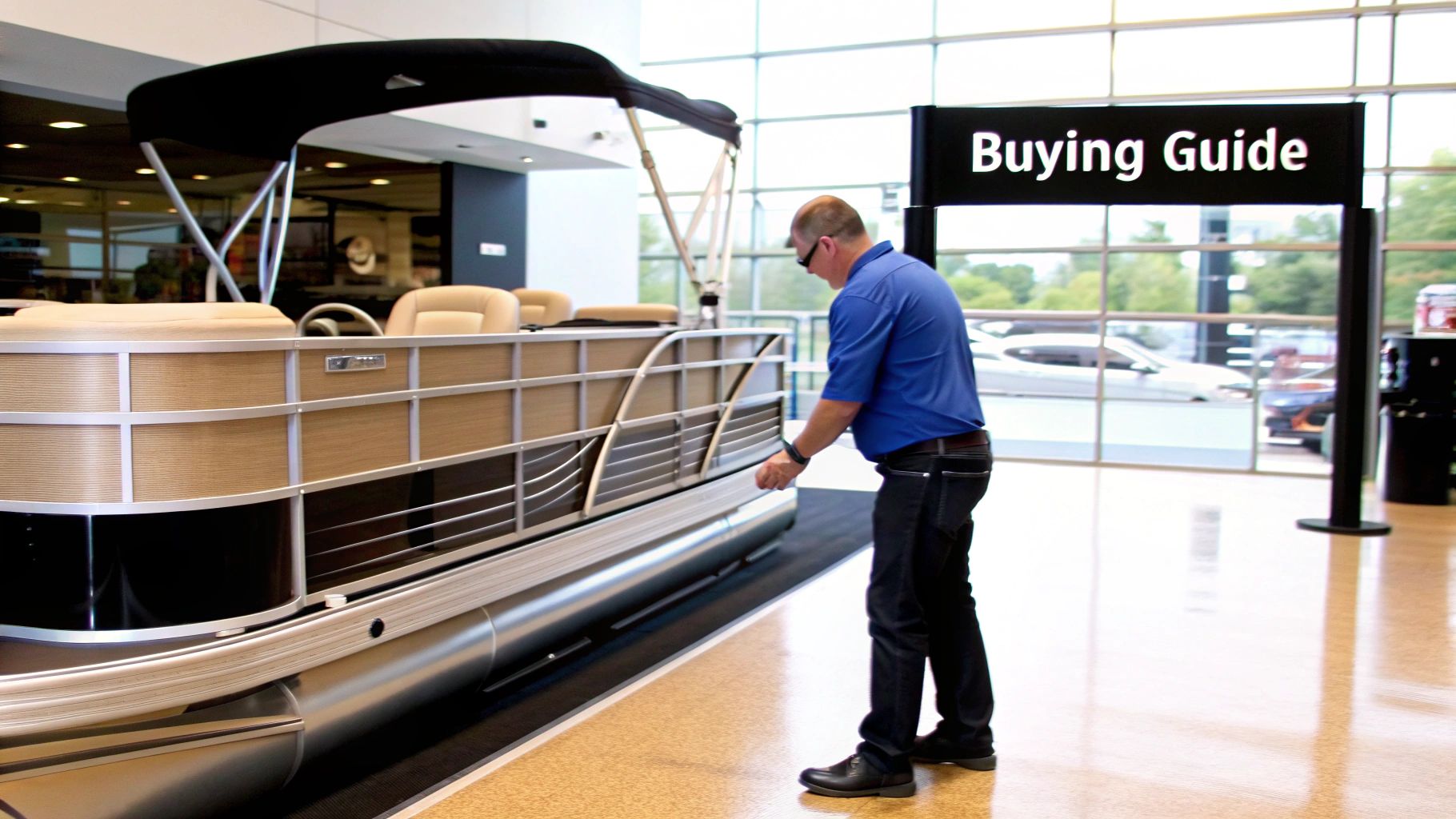
Alright, you've figured out what type of pontoon fits your life. Now comes the fun part: digging into the details that separate a good boat from a truly great one. It’s easy to get wowed by the showroom shine when you see a beautiful pontoon for sale, but the real value is often hidden from plain sight.
Making a smart, long-term investment means looking past the surface. We're going to pull back the curtain and inspect the build quality, the comfort features that make or break a day on the lake, and the performance options that deliver the exact on-water experience you're dreaming of.
A pontoon's lifespan starts with its bones. Whether you're looking at a brand-new model or a pre-owned gem, these are the non-negotiables you need to inspect with a critical eye.
-
Decking Material: This is the literal foundation of all your fun. Many traditional pontoons use marine-grade plywood, which works but can be prone to rot if moisture finds its way in. Newer and higher-end models are shifting to composite or even all-aluminum decking—it’s completely waterproof and built to last a lifetime.
-
Tube Construction: Take a close look at the welds on the aluminum tubes (the "toons"). You want to see clean, consistent lines. Messy, uneven welds can be a red flag for lower-quality manufacturing. Also, check for splash guards at the front of the tubes; they make a huge difference in keeping spray off the deck and your passengers dry.
-
Fencing and Rails: The fencing that encloses the deck is there for safety. Give it a good shake. It should feel solid and secure, not flimsy or rattly. That solid feel is what you want when you have kids or guests moving around the boat.
Comfort is what turns a quick trip into an all-day adventure you don't want to end. This is where you really see the influence of the massive boating community—with over 85 million Americans hitting the water each year, manufacturers have been pushed to innovate. The result? Plush furniture, incredible stability, and amenities that can make a pontoon feel more like a floating living room. If you're curious about the trends, you can read more about how consumer demand shapes pontoon features.
Here are the key comforts to put on your checklist:
-
Upholstery: Look for marine-grade vinyl treated to resist UV fading and mildew. Squeeze the cushions—the foam should feel firm and supportive, not mushy. Check the stitching for tightness and quality.
-
Bimini Top: This is a pontoon must-have for shade and sun protection. A good one should be easy for one person to put up and take down. Check the hardware to make sure it’s sturdy enough to handle a windy day. A double Bimini that covers the entire boat is a fantastic luxury.
-
Changing Room: A pop-up changing curtain, often tucked away inside a lounge seat, is a game-changer. It gives you a private spot to get out of a wet swimsuit and is incredibly handy for families with kids.
-
Sound System: Modern systems are almost always Bluetooth-ready. What you really want to check is the speaker placement. Are they positioned to provide even sound throughout the boat, or will the captain be the only one who can hear the music?
A boat's layout should feel like it was designed just for you. If you're a family that loves to swim and lounge, a huge Bimini and a changing room are far more valuable than an extra fishing chair. Always prioritize the features you'll actually use.
How the boat feels on the water is just as important as how it looks. The right options can transform a pontoon from a slow, gentle cruiser into a surprisingly agile sport boat.
Engine Horsepower: This is the single biggest performance decision you'll make. An engine in the 90-115 HP range is perfect for laid-back cruising. But if you have dreams of pulling tubers or skiers, you need to be looking at 150 HP or more, especially on a tritoon.
Lifting Strakes: Think of these as little wings welded onto the pontoon tubes. As the boat picks up speed, they provide lift, helping it get on plane faster, hit higher speeds, and handle more crisply in turns. For anyone interested in performance, these are a must-have.
Power Steering: For any boat with a larger engine (150 HP and up), hydraulic or power-assisted steering is a lifesaver. It dramatically reduces driver fatigue and makes maneuvering, whether you're docking slowly or cruising at speed, feel as effortless as driving your car.
By carefully weighing these structural, comfort, and performance features, you can look at any pontoon for sale with confidence, knowing you're choosing a boat that delivers real value for your budget and your family.
Let’s talk about money. Getting the financial part right is the secret to buying a boat you'll love without any buyer's remorse later. When you start looking at a pontoon for sale, it's easy to get caught up in the sticker price, but that's really just the first chapter of the story. A savvy buyer knows the real cost includes everything that comes after you sign the papers.
Think of your budget not as a set of rules, but as your personal roadmap to happy boating. It helps you account for the boat itself, plus all the gear and fees needed to get you from the dealership to the water, stress-free.
Pontoon boats have a price range as wide as a big lake. You can find a fantastic deal on a quality used boat or go all-in on a brand-new model packed with the latest gadgets. The main things that move the price tag are the boat's size, the brand's reputation, how powerful the engine is, and all the luxury bells and whistles.
For example, a smaller, no-frills pontoon with a modest engine is a great way to get started. On the other end of the spectrum, a massive, high-performance tritoon from a top-tier brand with a 300-horsepower engine will obviously cost a lot more. This is exactly why it’s so important to know what you’ll be doing with the boat before you start shopping. It keeps you focused on the power and features you’ll actually use, so you don't end up paying for things that don't fit your on-the-water lifestyle.
The secret is out: people love pontoons. The global market was valued at around $2.83 billion in 2023 and is on track to hit nearly $5.35 billion by 2030. This boom means manufacturers are stepping up their game, bringing more innovation and a wider variety of boats to fit just about any budget. You can dig deeper into the trends driving pontoon market growth if you're curious.
Here's a quick look at what your money gets you at different price points. Keep in mind these are general estimates, and prices can shift based on location, brand, and condition.
|
Price Range
|
Typical Boat Type (New/Used)
|
Common Features and Size
|
|
$15,000 - $30,000
|
Used Pontoons & New Entry-Level Models
|
Basic seating, smaller engines (under 90 HP), typically 18-22 feet long. Great for calm lakes.
|
|
$30,000 - $50,000
|
Mid-Range New Pontoons
|
More comfortable seating, upgraded audio, maybe a Bimini top. 22-24 feet with 90-150 HP engines.
|
|
$50,000 - $80,000
|
Performance & Luxury Pontoons
|
Often tritoons, powerful engines (150+ HP), premium finishes, and tech features. 24-26 feet.
|
|
$80,000+
|
Top-of-the-Line Tritoon Models
|
High-end everything: twin engines, luxury bars, advanced electronics, custom features. 25+ feet.
|
This table should give you a solid starting point for matching your budget to your expectations.
This is where a good budget proves its worth. The "real cost" of a pontoon includes a handful of other expenses that are easy to forget when you're dreaming about sunny days on the water. Accounting for these from day one gives you the true financial picture.
-
Trailer: Unless you're paying for a slip at a marina, you'll need a trailer. A new one can easily add a few thousand dollars to your total bill.
-
Safety Gear: This isn't optional. You'll need Coast Guard-required gear, like life jackets for everyone on board, a fire extinguisher, flares, and a horn or whistle.
-
Registration and Taxes: Just like a car or an RV, your boat and trailer need to be registered with the state. And don't forget about sales tax on the purchase.
-
Insurance: Protecting your new investment is a must. Insurance rates will depend on the boat's value, where you live, and your boating experience.
-
Storage: Where will the boat live? Storing it at home is cheapest, but a storage facility or a marina slip comes with monthly or yearly fees.
-
Routine Maintenance: Set aside money each year for engine tune-ups, winterization, and cleaning supplies. Good maintenance protects your boat's value for years to come.
For many people, financing is the key to pontoon ownership. Boat loans are a lot like car or RV loans, with repayment terms often ranging from 10 to 20 years. The interest rate you get will hinge on your credit score, the length of the loan, and how much you put down.
Speaking of which, a down payment of 10-20% is a great goal. Not only does it lower your monthly payment, but it often helps you lock in a better interest rate from the lender. Don't just take the first offer you get—shop around. Check with your personal bank, local credit unions, and the dealership itself to find the best terms for your financial situation.
By planning for both the sticker price and these ongoing costs, you can confidently find a pontoon for sale that fits your life and your budget perfectly.
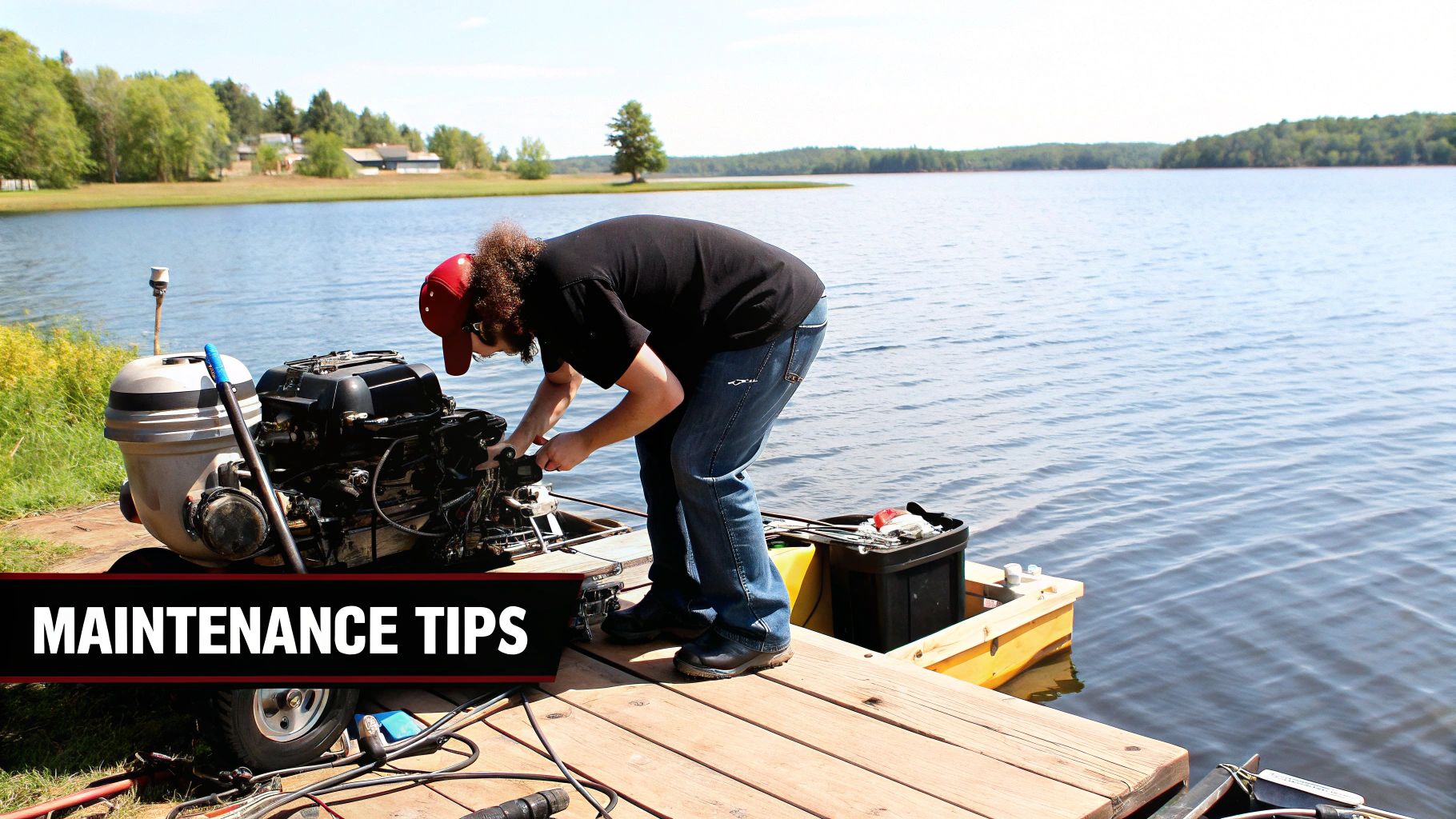
Shopping for a used pontoon for sale is a brilliant way to get a fantastic boat for a fraction of the cost of a new one. But let's be honest—unlike buying new, this requires you to put on your detective hat. You have to look past a fresh coat of wax and see the boat for what it really is.
This hands-on inspection is your best defense against buying a floating headache. A thorough walkthrough is what separates a great deal from a future money pit, ensuring your first day on the lake is about fun, not surprise repair bills. Let's walk through how to inspect a used pontoon with the eye of a seasoned pro.
Before you even think about stepping aboard, get down and give the boat's core structure a serious look. The pontoons (or "tubes") and the deck they support are the boat's skeleton. Problems here are the most critical—and by far the most expensive—to fix.
Get on your knees and inspect the aluminum tubes up close. You're hunting for major dents, deep gouges, or any corrosion, especially anything that's been sitting below the waterline. Pay special attention to the welds where the tubes connect to the deck frame. They should look clean and solid, with no signs of cracking or stress.
Next, it’s time for the "deck walk." Stomp around the entire floor, especially in high-traffic spots like near the gates and helm. Do you feel any soft spots, sponginess, or flexing under your feet? Those are huge red flags. They almost always point to waterlogged and rotting plywood under the vinyl, a massive and expensive repair job.
Once you’re satisfied with the boat's bones, you can move on to the fun stuff—the features that make a pontoon a "party barge." The condition of the furniture and electronics tells you a lot about how the previous owner cared for their investment.
The sun and water are brutal on boat interiors. Run your hand over every inch of the vinyl seating. Is it getting brittle or cracked? Are the seams pulling apart? Lift up the seat cushions and look and smell for mildew or dark stains, which are dead giveaways of moisture getting trapped. A little wear and tear is expected, but widespread sun damage means you're staring at a pricey reupholstery project.
Now, go on a power trip and test every single electrical component:
-
Flip every light switch—navigation, docking, and courtesy lights.
-
Crank up the stereo and listen to all the speakers.
-
Honk the horn.
-
If there's a livewell or sink, test the pumps.
-
Check that the gauges at the console actually work.
Don't be shy about this. Flip every switch and push every button. Chasing down electrical gremlins on a boat is no fun. A seller with nothing to hide will have zero problem with you checking everything.
The outboard motor is the heart of your pontoon. Even if you're not a mechanic, a good visual inspection reveals a lot. Pop the engine cover (the cowling) and look inside. You're looking for obvious red flags like heavy corrosion, sloppy wiring, or any signs of fluid leaks. Also, give the propeller a good look for any major dings or missing chunks.
Most importantly, ask the seller for maintenance records. A diligent owner will have a stack of receipts for regular oil changes, winterization, and other service. Having no service history at all is a major warning sign.
Finally, a few simple questions can tell you the boat’s life story:
-
"Where did you store it in the off-season?" (Inside is always the best answer).
-
"Was it used in saltwater or freshwater?" (Salt is much, much harder on every part of a boat).
-
"So, why are you selling it?"
By following these steps, you can confidently check out any used pontoon for sale. You'll know how to spot the hidden problems and make a smart buy that will lead to years of happy memories on the water.
Bringing your new pontoon boat home isn't the end of the story—it's the beginning. That initial thrill of finding the perfect pontoon for sale settles into the simple, rewarding rhythm of ownership. To keep that investment sound and ensure years of worry-free fun on the water, you just need to stick to a straightforward maintenance routine.
Think of it like owning a car or an RV. You wouldn't dream of skipping oil changes and then wonder why the engine is acting up. The same logic applies here. A little proactive care for your boat will stop minor issues from turning into major, weekend-wrecking headaches. Besides, a well-cared-for boat runs better and will always fetch a better price when it’s time to sell or trade up.
Taking care of your pontoon is really about looking after its three main parts. Each one has different needs, but it's all pretty manageable once you get the hang of it.
Engine Care
The outboard motor is your boat's powerhouse. Following the manufacturer’s schedule for oil and filter changes isn't just a suggestion—it's essential. But the single most important job is winterization. This is the process of prepping the engine for cold-weather storage by draining all the water out and adding antifreeze. It prevents leftover water from freezing, expanding, and cracking the engine block, which is a catastrophic and expensive failure.
Upholstery and Decking
The furniture and flooring on your pontoon are constantly exposed to sun and water, which is a tough combination. You’ll want to clean them regularly with marine-grade vinyl cleaners to fight off mildew and use a UV protectant to prevent the sun from fading and cracking the material. Just a quick wipe-down after each trip makes a huge difference in stopping stains from becoming permanent.
It's always easier to keep something clean than it is to restore it later. A boat that looks well-maintained sends a powerful message to a potential buyer: this owner cared. That care translates directly into a higher resale value, every single time.
The Pontoons Themselves
Don't forget the aluminum tubes—the "pontoons" in your pontoon boat! Over time, they get a na
Taking the time to compare multiple listings, negotiate with confidence, and inspect before you sign protects you from the most common used-boat pitfalls. Browse pontoons for sale by price, size, and location at SearchShop.com.