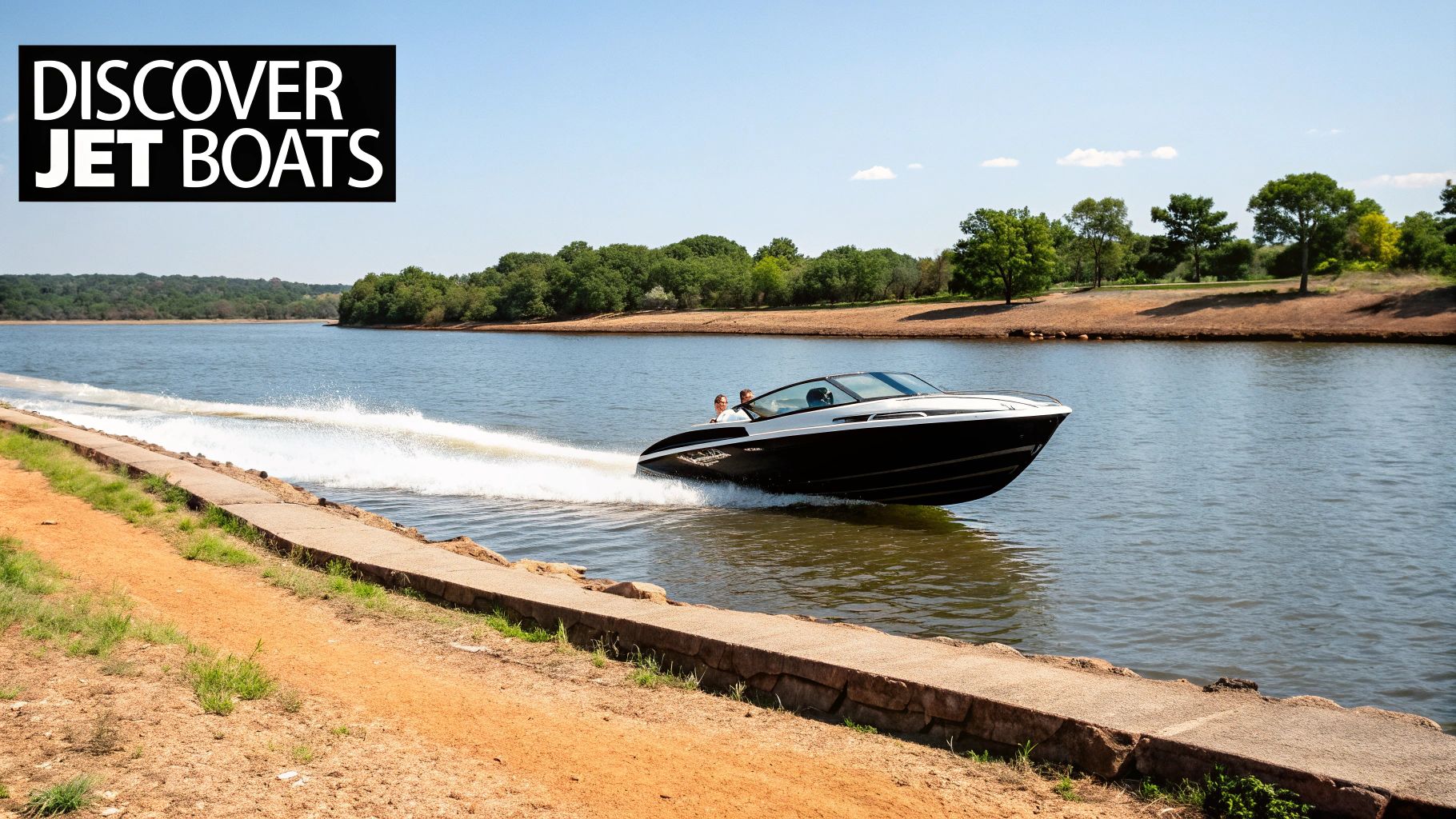
If you've started searching for jet boats for sale, you're already on the path to some of the most exciting and versatile boats on the water. What really sets them apart from traditional boats is their propulsion system. There's no exposed propeller, and that single design choice is a game-changer. It not only makes them safer but also lets you venture into shallow waters where other boats just can't follow.
Why a Jet Boat Might Be Your Perfect Match
Deciding to buy a jet boat is about choosing a particular kind of on-the-water lifestyle, similar to how an RVer chooses between a motorhome and a travel trailer. The engine works a lot like a high-powered jet ski, just scaled up. It sucks water in through an intake in the hull and shoots it out of a nozzle at the back, creating powerful thrust.
This is a world away from a standard propeller boat, and it’s these core differences that are winning over more and more boaters. The attraction isn't just raw speed; it's about the freedom and peace of mind you get on the water.
Key Benefits for Buyers
So, what does this unique design mean for you as an owner? It translates directly into tangible benefits that shape every trip you take.
Enhanced Safety: This is the big one. With no external, spinning propeller, the swim platform becomes a much safer place. This is a huge relief for anyone with kids or who enjoys watersports like tubing, wakeboarding, or just swimming off the back of the boat.
Shallow Water Access: Jet boats can run in just inches of water. This ability opens up a whole new world of exploration, allowing you to navigate shallow rivers, explore hidden coves, and even nose right up to your favorite sandbar.
Agile Handling: The direct thrust from the jet pump gives you incredible acceleration and razor-sharp turning. It feels more like driving a sports car than a boat, making them exceptionally fun to pilot and perfect for pulling skiers and tubers.
To help you quickly see how these features translate into purchasing decisions, here's a quick snapshot.
Jet Boat Buyer's Snapshot
Key Advantage
Why It Matters for Your Purchase
Best Use Case
No Exposed Propeller
Greatly reduces the risk of injury around the swim platform.
Families with children, watersports enthusiasts, and anyone prioritizing safety.
Shallow Draft
Lets you access areas other boats can't, like shallow beaches and rivers.
Exploring new waterways, beaching the boat, and navigating tricky shallows.
Responsive Handling
Provides quick acceleration and tight turns for a thrilling ride.
Waterskiing, wakeboarding, tubing, and for drivers who love a sporty feel.
This table helps put the unique selling points of a jet boat into perspective, connecting the engineering to your real-world experience.
The market certainly reflects this growing appreciation. The global jet boat market was valued at an impressive USD 2.8 billion in 2022 and is expected to rocket to USD 4.6 billion by 2030. That kind of growth shows a real, sustained demand for everything these boats bring to the table.
Consider this guide your roadmap. We’ll take you from a casual search for "jet boats for sale" to confidently choosing the perfect model for you. We'll cover everything from comparing different types, including top brands and our fantastic selection of Aquasport boats for sale, to navigating financing and long-term maintenance.
Finding the Right Jet Boat for Your Lifestyle
Deciding you want a jet boat is the easy part. The real work is figuring out which jet boat is right for you. Think of it like buying an RV: a small teardrop trailer and a 40-foot Class A motorhome are both great, but they’re built for completely different adventures. The secret is matching the boat to what you actually plan to do on the water.
So, before you fall in love with a listing, take a minute. Close your eyes and picture your perfect day on the lake. Is it packed with watersports and adrenaline-pumping turns? Or is it a laid-back cruise with a boat full of family and friends? Your answer is the compass that will point you to the right model.
For the Thrill-Seekers: Sport Models
If your idea of fun involves a healthy dose of adrenaline, a sport jet boat is calling your name. These are the performance machines of the boating world, built for heart-pounding acceleration and razor-sharp handling. They generally run from 16 to 21 feet and are all about action.
Their nimble size and powerful engines make them ideal for:
Wakesurfing and Wakeboarding: They jump on plane in a flash and hold speed effortlessly, carving out a clean, predictable wake that riders love.
Tubing: Nothing beats the thrill of being whipped through a turn on a tube, and a sport jet boat's agility makes for an unforgettable ride.
Just Plain Fun Driving: For those who simply love the feeling of carving through the water, a sport model delivers an unmatched, driver-focused experience.
The trade-off? Their smaller size means less seating and fewer creature comforts. These are purpose-built boats for a day of pure, high-octane fun.
One of the best things about these sportier models is how light they are. This doesn't just make them fast and agile; it also means they're a breeze to tow and launch, even with a smaller SUV or truck. That convenience is a huge selling point for a lot of people.
For Family Outings: Cruisers and Luxury Models
If your perfect day on the water involves more people and less white-knuckle maneuvering, a larger family-style or luxury jet boat is probably a better fit. These boats, often stretching from 21 to 27 feet or more, are designed from the ground up for comfort, space, and all-day entertainment.
You'll find these models are outfitted for a totally different kind of day. We're talking plush, wraparound seating that can be rearranged for sunbathing or socializing. Many come with must-have amenities like an enclosed head (a boat bathroom), a freshwater sink for rinsing off, and massive swim platforms that become the social center of the party when you're anchored at the sandbar. While they still pack a punch, their design is focused on delivering a smooth, stable ride for a whole crew.
Single vs. Twin Engines: What's the Difference?
As you dig into listings, you’ll constantly see boats described as having a single or twin engine. This is a huge decision point that directly affects performance, price, and how the boat handles.
Engine Setup
Best For
What to Consider
Single Engine
Smaller boats (under 21 ft), first-time buyers, and general family fun.
Lower upfront cost, better fuel economy, and simpler maintenance. Might feel underpowered with a full boat and a rider in tow.
Twin Engines
Larger boats (21+ ft), serious watersports families, and anyone who wants ultimate control.
Serious power and the safety of a backup engine. Higher purchase price, thirstier on fuel, and double the maintenance.
Twin engines offer a massive advantage in one key area: low-speed handling. With two throttles to control each jet pump independently, docking and navigating tight spaces becomes much, much easier—addressing one of the few common complaints about jet boats. While modern single-engine systems have gotten better, nothing beats the pinpoint control of twins. It’s why you see them on almost all larger, high-end models where that maneuverability is a top priority.
Decoding Features That Truly Matter
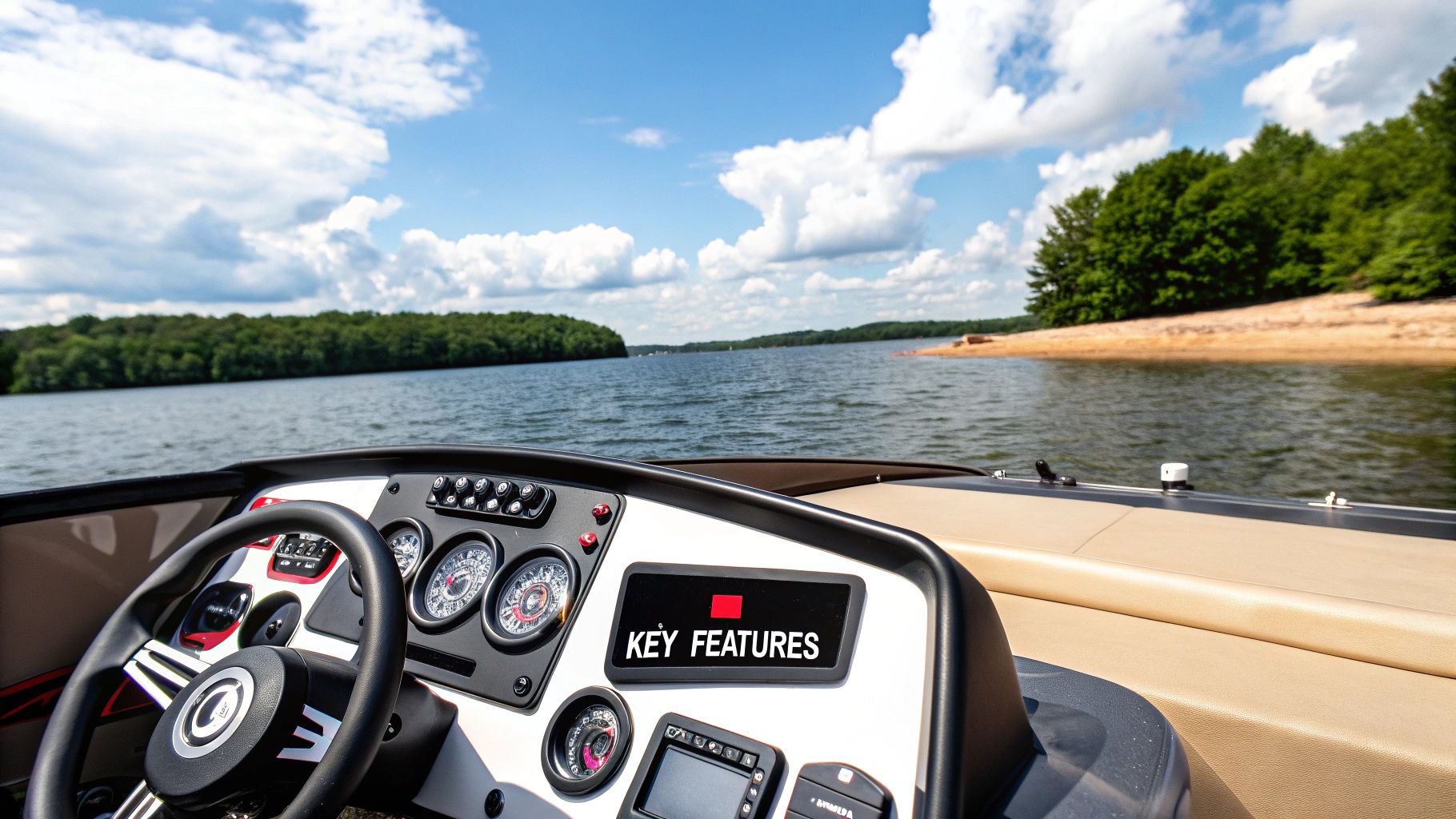
Okay, so you've narrowed it down to the type of jet boat that fits your life. Now the real fun begins: digging into the listings and comparing what different models offer. This is where we go from the big picture to the nuts and bolts—the specific features that make the difference between a good boat and a great one.
Think of it like this: the brochure is full of promises, but you need to know which ones actually count when you're out on the water. Knowing what to look for lets you inspect any jet boats for sale with a sharp, practical eye. It’s how you make sure your money goes toward quality you’ll appreciate every single time you cast off the lines.
Control and Handling at Your Fingertips
Let's talk about one of the biggest game-changers in modern jet boats: the helm control system. For years, the knock against jet boats was their clunky, low-speed handling. Trying to dock one used to be a white-knuckle affair, especially in a crowded marina. Thankfully, today’s technology has pretty much put that problem to bed.
Systems like Yamaha's DRiVE control are a fantastic example. It’s a paddle system right on the steering wheel that lets you shift, steer in reverse, and go to neutral without ever letting go. Suddenly, docking a big jet boat feels as intuitive as parking your car. This isn't just a flashy gadget; it’s a brilliant solution that gives new and experienced captains alike a massive confidence boost.
The All-Important Swim Platform and Hull Design
When the engine is off, the swim platform becomes the social hub of the boat. It’s where you’ll gear up for a ski run, cool your feet in the water, or just hang out. A good one is spacious, sits low to the water for easy boarding, and might have cushy seating or even a stereo remote.
When you're checking out a boat, don't just give the platform a quick look—really imagine yourself using it. Is there room for your family? Are the grab handles and ladder solid? These little things add up to a much better day on the lake.
Underneath the boat, the hull design is what determines how it rides.
Deeper-V Hulls: These are your best friend in choppy water. They slice through waves, giving you a much smoother, more comfortable ride when conditions get bumpy.
Flatter Hulls: These boats are often faster and feel more nimble in calm conditions, but you'll feel every bit of chop when the water gets rough.
Knowing the difference helps you pick a boat that’s built for the kind of water you'll be on most often.
A great swim platform isn't just a feature; it's the stage for your family's best memories. Because there’s no exposed propeller, this area is uniquely safe and functional on a jet boat, and you can tell manufacturers put a lot of effort into making it the best seat in the house.
Must-Haves for Watersports and Comfort
If you have any intention of towing skiers or wakeboarders, a wakeboard tower is an absolute must. It’s not just for looks. That high tow point makes a world of difference, helping pull riders up out of the water with less effort and giving them more air for tricks. Check for one that feels solid and doesn't rattle, and bonus points for integrated board racks.
Inside the cockpit, thoughtful design is key. Good seating with multi-density foam means you can spend a whole day on the water without feeling beat up. And don't overlook storage! Look for deep, well-placed lockers for stashing life vests, ropes, and fenders. Keeping the deck clear is a matter of both convenience and safety.
This combination of performance and user-friendly design is why the market is booming, especially in North America. In 2023, the global jet boat market was valued at around USD 2.07 billion, with the U.S. and Canada leading the charge. That demand is driven by people who want exactly what these boats offer: high-speed fun and the ability to explore shallow waters. To see the data for yourself, you can dig into some detailed research about the jet boat industry. When you choose a boat with these proven features, you're investing in a platform built for fun.
Setting a Realistic Budget for Your New or Used Jet Boat
Alright, let's talk about the part of the process that really grounds the dream in reality: the budget. When you're looking at jet boats for sale, it's easy to get carried away. But figuring out your numbers before you start shopping is the single best thing you can do to make sure your new boat or RV is a source of joy, not a financial headache.
Jet boat prices are all over the map. You can get your feet wet with an entry-level model, which will typically run you somewhere in the $30,000 to $50,000 range. For something with a bit more room and features for the whole family, you’re likely looking at $50,000 to $80,000. And for the top-of-the-line, premium boats loaded with all the bells and whistles? Those can easily sail past the $100,000 mark. Knowing this range helps you zero in on what's realistic for you.
It's actually a fantastic time to get into the recreational lifestyle. The whole market has been booming as more people look for ways to enjoy the outdoors. In fact, some analysts predict the global boating market will grow to around USD 61.19 billion by 2032. For you, the buyer, this is great news—it means more competition, more innovation, and a ton of great options on the water. You can read up on the latest boating market business insights if you want to dive deeper into the trends.
New vs. Used: The Great Debate
One of the first big forks in the road you'll face is whether to buy a new or a used jet boat. Honestly, there's no single "right" answer here. It all comes down to what you value most.
Buying New: There's nothing quite like that new boat smell. You're getting the absolute latest in design and tech, a full factory warranty, and the peace of mind that comes with knowing you're the first one to put it on the water. No inherited problems, no questionable history—just a clean slate.
Buying Used: This is where you can find some serious bang for your buck. A pre-owned boat often lets you step up to a bigger, more powerful model than you could afford new. The trick is to do your homework and know exactly what you're looking at.
To help you decide which path is right for you, let’s compare the two side-by-side.
New vs. Used Jet Boat Purchase Comparison
Choosing between new and used involves weighing upfront costs against long-term peace of mind. This table breaks down the key trade-offs to help clarify your decision.
Consideration
New Jet Boat
Used Jet Boat
Upfront Cost
Higher initial purchase price.
Significantly lower purchase price for a comparable model.
Warranty
Full manufacturer warranty covers most issues.
Typically sold "as-is" with no warranty protection.
Condition
Perfect, with no wear, tear, or previous owner history.
Will have some level of wear; requires thorough inspection.
Technology
Includes the latest helm systems, features, and designs.
May have older technology and fewer modern amenities.
Depreciation
Highest depreciation occurs in the first few years.
The first owner has already absorbed the biggest depreciation hit.
Ultimately, a new boat offers a worry-free experience, while a used boat provides maximum value for your money if you're willing to do a little extra due diligence.
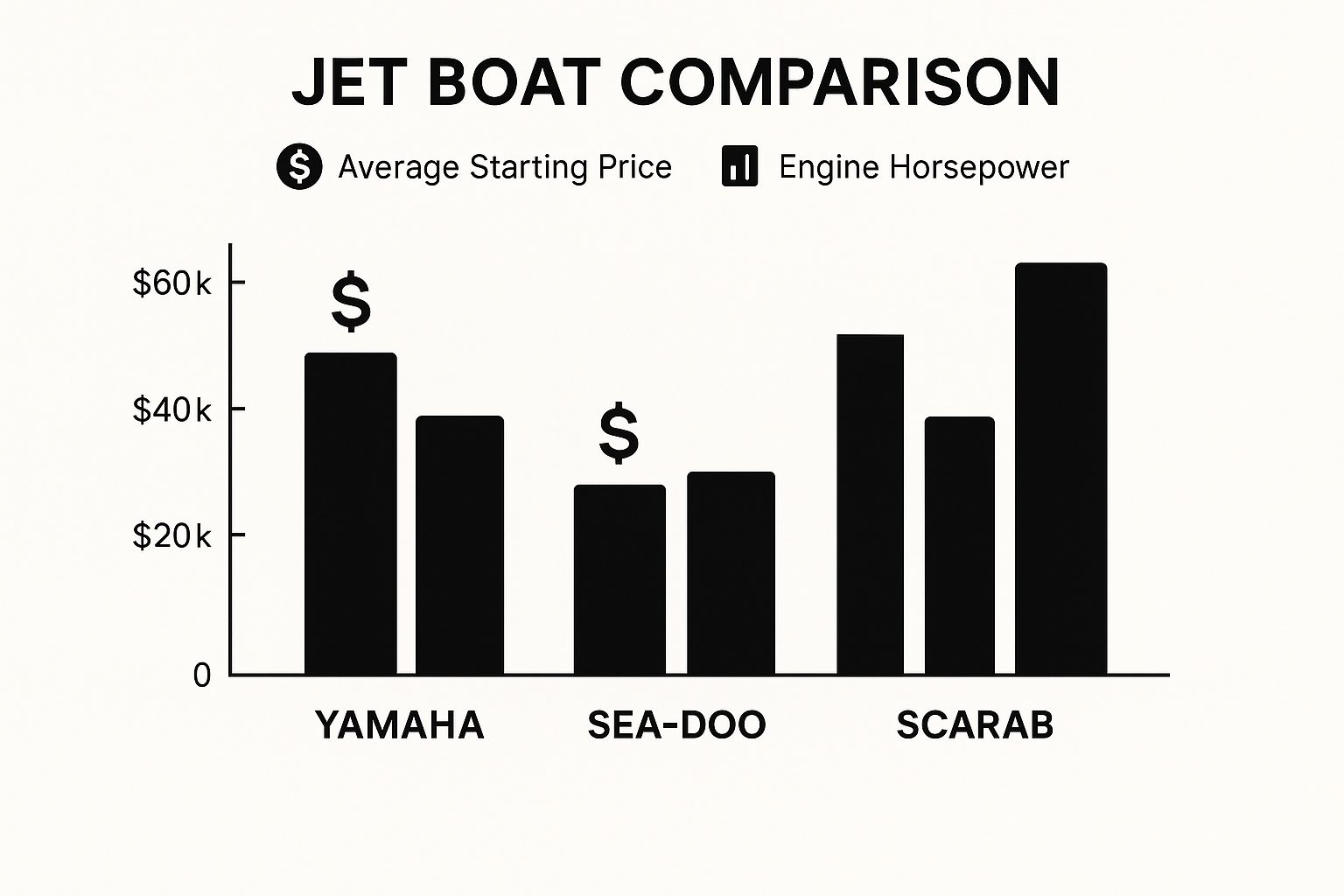
The image below gives you a quick snapshot of how a few popular brands stack up in terms of starting price and horsepower.
As you can see, some brands go all-in on power, while others aim for a price point that makes it easier for new boaters to get started.
Budgeting Beyond the Sticker Price
This is a big one, especially for first-time buyers. The price on the boat is just the beginning. To avoid any nasty surprises down the road, you need to account for all the other costs that come with boat ownership.
Remember, the purchase price is just your ticket to entry. The ongoing costs are what keep you on the water season after season. Factoring them in now prevents surprises later.
Here's a quick checklist of the "other" costs to build into your total budget:
Insurance: An absolute must. Most marinas and lenders won't let you proceed without it.
Trailer: Don't assume one is included. If not, you'll need to budget for a way to get your boat to the lake.
Safety Gear: Life jackets, flares, a first-aid kit, fire extinguishers—these aren't optional.
Storage or Slip Fees: Unless you have a huge garage, you'll be paying for storage, either at a facility or a marina slip.
Maintenance: Set aside funds for regular upkeep like oil changes, winterization, and the occasional repair. A good rule of thumb is to budget 10% of the boat’s value annually, especially for a used model.
Taxes and Registration: These state-specific fees are a mandatory part of buying any vessel.
Thinking through these things upfront gives you a much clearer financial picture and helps you choose a boat you can truly afford to enjoy. If you're looking for brands that deliver a great experience without breaking the bank, you might want to explore our selection of Axis boats for sale.
Alright, you've found the perfect jet boat. The excitement is real. But now comes the part that can feel a bit like homework: sorting out the money and the paperwork. Don't let it trip you up. Getting your financing and insurance lined up correctly is what turns that dream boat into a worry-free reality.
Think of it this way: a boat loan makes a big purchase manageable by spreading out the cost, while insurance acts as a financial safety net for your new pride and joy. Let's break down how to handle both like a pro.
Getting a Handle on Boat Loans
When you start talking to lenders about those jet boats for sale you've got your eye on, you'll hear a few key terms thrown around. Knowing what they mean is your first step toward locking in a great rate.
APR (Annual Percentage Rate): This is the real cost of your loan each year. It’s not just the interest rate; it includes lender fees too. Your goal? Get the lowest APR possible.
Loan Term: This is simply how long you have to pay the loan back, usually somewhere between 10 to 20 years for a new boat. A longer term gives you a lower monthly payment, but you’ll pay more in total interest over time. It's a trade-off.
Down Payment: This is the money you bring to the table upfront. Putting down a healthy amount—aim for 10% to 20% if you can—is a smart move. It lowers the amount you need to borrow, which often means lenders will offer you a better interest rate.
A little prep work here goes a long way. Before you even apply, pull your credit report to see where you stand. Cleaning up any errors or paying down some credit card debt can make a real difference in the offers you receive.
Why Boat Insurance Isn't Optional
With financing in the bag, your next call should be to an insurance agent. This isn't just a suggestion—it's almost always a requirement. Your lender will insist on it to protect their investment, and most marinas won't even let you tie up at their docks without proof of coverage.
Think of boat insurance as a life jacket for your finances. You hope you never need it, but you'll be incredibly grateful it's there if something goes wrong.
It protects you from the big "what-ifs"—accidents, theft, liability claims, you name it. For example, if you're weighing different models, understanding the full ownership cost, including insurance, is crucial. You can see how features and prices influence this by checking out the popular Yamaha boats for sale and imagining the total financial picture.
Understanding Your Coverage Options
Boat insurance isn't a one-size-fits-all product. You'll build a policy that fits your boat and how you use it. The two foundational pieces you'll need to understand are liability and comprehensive coverage.
Liability Coverage: This is your core protection. If you're at fault in an accident that injures someone or damages their boat or dock, this coverage steps in to pay for those costs. It's what stands between a bad day on the water and a financially devastating lawsuit.
Comprehensive and Collision Coverage: This is the part that protects your boat. Collision covers damage from hitting another boat, a submerged object, or a dock. Comprehensive handles the other stuff, like damage from a storm, a fire, or if someone decides they'd like to steal your boat.
From there, you can often add on other protections, like on-water towing assistance or coverage for your expensive watersports gear. Take the time to compare a few quotes and really read the policies. Getting the right coverage is the final step to ensuring you, your family, and your new jet boat are set for years of fun.
Here is the rewritten section, designed to sound like it was written by an experienced human expert.
Protecting Your Investment with Smart Maintenance
Getting the keys to your new jet boat is an amazing feeling, but it’s really just the start. If you want years of fun on the water and want to protect your boat's resale value, a little bit of smart, consistent maintenance is your best friend. We're not talking about becoming a master mechanic overnight—just building some simple habits.
Honestly, it’s a lot like owning a performance car or a high-end RV. You wouldn't dream of skipping oil changes or ignoring a problem. Your jet boat needs that same kind of attention to catch small issues before they become trip-ending, wallet-draining headaches.
Your Essential Maintenance Checklist
The easiest way to stay on top of things is to turn maintenance into a routine. A simple checklist for before you launch and after you pull the boat out of the water will quickly become second nature. This is the stuff that makes the difference between a boat that’s beat up in five years and one that’s still creating family memories a decade from now.
Pre-Launch Inspection (The 5-Minute Check)
Check the Intake Grate: This is the single most important habit you can develop. Before the boat even touches the water, get in the habit of visually checking the intake grate underneath for weeds, rocks, or a stray piece of rope. A clear intake is everything for performance and preventing serious damage.
Battery and Bilge: Flip your battery switch and make sure you’ve got juice. Then, hit the bilge pump switch for a second to ensure it kicks on. It’s a simple check that can save you from a major headache later.
Fluid Levels: Just like your car, pop the engine cover and glance at the oil and coolant. This takes ten seconds and is your first line of defense against engine problems on the water.
Post-Trip Cleanup (Protecting Against Wear)
Engine Flush: This one is non-negotiable, especially if you're boating in saltwater or even brackish, murky lakes. Flushing the engine with fresh water gets all the salt, sand, and gunk out that can lead to corrosion and overheating. Most jet boats today have a simple hose hookup that makes this a five-minute job.
Wash Down the Hull and Deck: Give the whole boat a good rinse with fresh water. Getting the salt and grime off protects the gelcoat finish, keeps your upholstery from getting stained, and stops metal hardware from pitting.
Think of flushing your engine like brushing your teeth. It’s a quick, simple habit that prevents major decay down the road. Saltwater, in particular, is incredibly corrosive, and skipping the flush is probably the fastest way to cause expensive, hidden damage inside your engine.
Seasonal and Long-Term Care
Beyond the regular trip-by-trip tasks, a couple of bigger jobs each year will go a long way in preserving your boat. These steps are especially crucial if you're looking at jet boats for sale in an area that gets a real winter.
Winterization and Storage If you live anywhere that freezes, winterizing your boat isn't optional—it's mandatory. This means draining all the water from the engine block and systems, adding the right kind of antifreeze, putting a stabilizer in the fuel tank, and taking care of the battery. If you don't, you risk water freezing and cracking your engine block, which is about as catastrophic (and expensive) as it gets.
Hull and Upholstery Protection At least once a season, give the hull a good coat of marine wax. It acts like sunscreen for your boat, creating a barrier against the UV rays that fade and oxidize the gelcoat. The same goes for your vinyl seats; a good UV protectant spray will keep them from cracking and looking old before their time. This kind of care pays off big time when you eventually decide to sell or trade up.
Answering Your Top Questions About Buying a Jet Boat
As you get closer to pulling the trigger, a few final questions always seem to surface. When you're browsing jet boats for sale, getting straight answers to these common queries can give you that last bit of confidence you need. Let's tackle them head-on.
Are Jet Boats Good In Rough Water?
This is probably one of the most common questions I hear. The short answer is: they’re much better than they used to be, but it depends on your definition of "rough."
Modern jet boats have come a long way. That said, their lighter build and flatter hull design mean you'll feel the chop more than you would in a heavy, deep-V hull boat built for the open ocean. They absolutely shine o
In calm inland water — lakes, rivers, and protected bays — a modern jet boat handles remarkably well and delivers a genuinely fun, spray-free ride. For the open ocean, a deep-V hull is still the better choice. Browse jet boats by size and engine at SearchShop.com and find the right fit for your home waters.