So, you're ready to find a "jet boat for sale." It's an exciting prospect, but diving into online listings without a plan is a recipe for getting overwhelmed. The secret to a successful search isn't just about finding a good deal; it's about finding the right boat for you. Before you even start browsing, you need to figure out exactly what that looks like.
This simple bit of prep work will save you a ton of time and prevent the classic mistake of falling for a boat that looks great but doesn't actually fit your life.
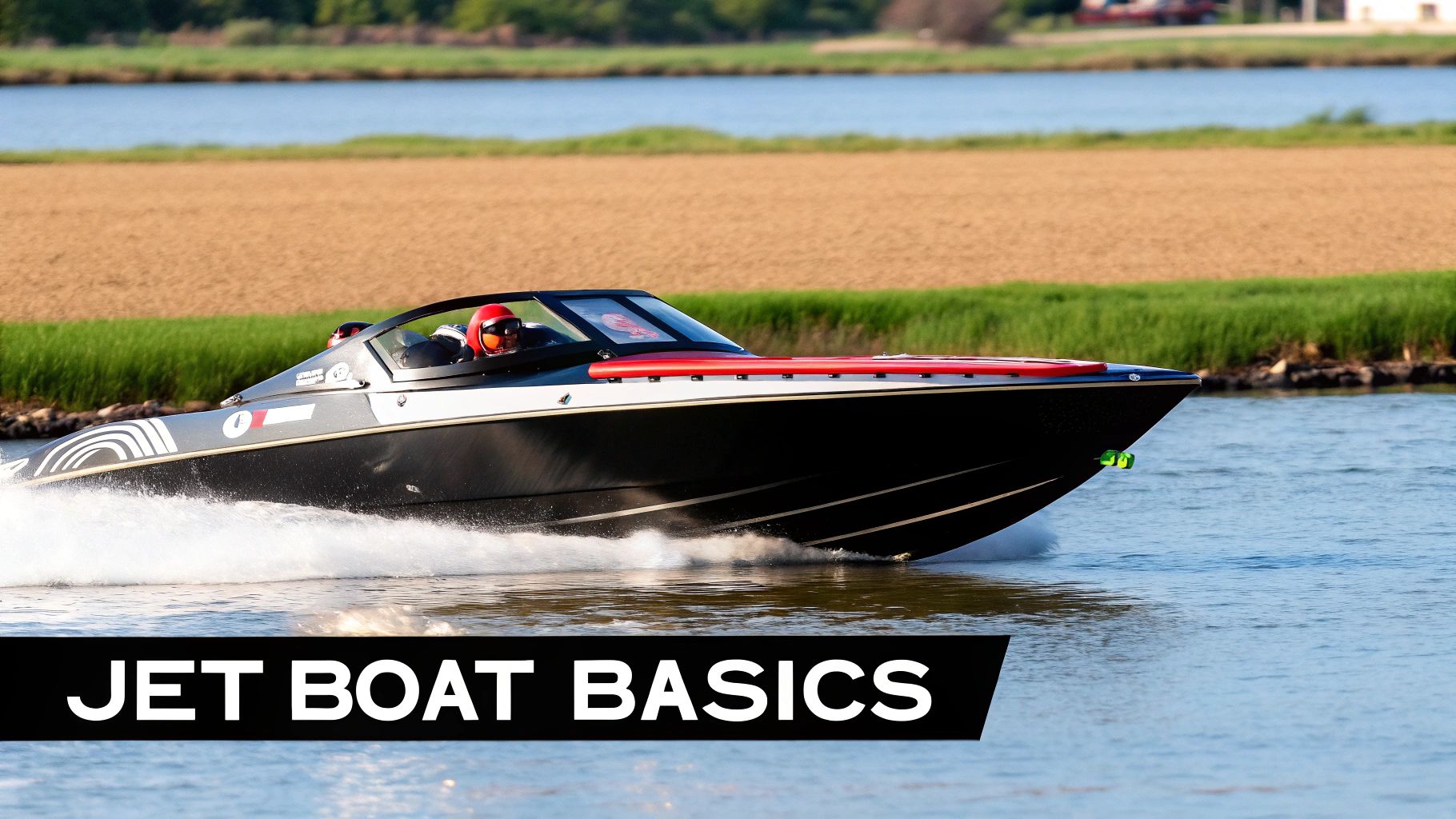
Before you click on a single listing, just stop and think. What does your ideal day on the water look like? Are you picturing a quiet cruise with your family on a glassy lake? Or are you dreaming of carving sharp turns on a fast-flowing river and pulling wakeboarders? The boat you need for those two scenarios is completely different.
Knowing your "why" is the most important step. It's the filter that will narrow down the hundreds of options into a manageable handful of real contenders. You're not alone in this search, either. The global jet boat market was valued at $2.8 billion in 2022 and is expected to grow to around $4.6 billion by 2030, which shows just how many people are catching on to the unique fun these boats offer.
To help connect the dots between what you want to do and what you need to look for, we've put together this quick table. It breaks down common activities and pinpoints the features that will make the biggest difference for each.
|
Activity / Use Case
|
Key Features to Prioritize
|
Why It Matters for You
|
|
Family Cruising & Sandbar Days
|
Ample seating, comfortable upholstery, swim platform, lots of storage
|
You need space for everyone to relax and room to stash coolers, towels, and toys for a full day of fun without feeling cramped.
|
|
Watersports (Wakeboarding, Tubing)
|
Higher horsepower, wake tower or tow pylon, deep-V hull
|
More power means a better hole shot for getting riders up. A tower provides a higher tow point for better air, and a deep-V hull cuts through chop for a smoother ride.
|
|
Shallow River & Backwater Exploration
|
Durable hull (e.g., aluminum), shallow draft, cleanout port
|
A tough hull resists damage from hidden rocks, a shallow draft lets you go where props can't, and a cleanout port makes clearing debris from the intake a breeze.
|
|
Fishing
|
Casting platforms, livewell, trolling motor compatibility, rod holders
|
These features turn a pleasure boat into a serious fishing machine, giving you stable areas to cast from and keeping your catch fresh.
|
|
All-Around Versatility
|
Moderate horsepower, flexible seating layout, balanced storage
|
If you want to do a little bit of everything, look for a boat that doesn't over-specialize in one area. It should be capable enough for tubing but still comfortable for cruising.
|
Thinking through these scenarios helps you build a mental checklist. You’ll be able to instantly spot boats that are a great fit and dismiss the ones that just won’t work.
A common mistake we see is people getting wowed by a boat's sleek looks on the trailer, only to find it's totally impractical for how they actually use it. Always, always prioritize how you'll use the boat over pure aesthetics. You'll be much happier in the long run.
Now let's talk money. Your budget isn't just the price you pay the seller—that's only the beginning. To get a true picture of the cost, you have to think about the total cost of ownership. Forgetting this part is where financial surprises can really bite you.
Make sure you account for these ongoing expenses:
-
Insurance: This is non-negotiable. It protects you and your new investment.
-
Maintenance: Think oil changes, winterization, and saving for any unexpected repairs.
-
Gear: Life jackets, safety flares, dock lines, fenders, and of course, all the fun water toys.
-
Storage/Mooring Fees: If you can't keep it at home, this can be a hefty annual expense, similar to storing a boat off-season.
Laying all these costs out helps you establish a realistic price range. You might find that some brands offer better value for your specific needs, so it's always smart to compare. You can even check out resources like this guide to Avid Boats for sale to see how different brands and models are positioned.
When you ground your search for a jet boat in a real, comprehensive budget, you're not just buying a boat—you're making a smart investment that you can enjoy for years without financial stress.

Okay, so you've zeroed in on the type of jet boat that fits your lifestyle. Now comes one of the biggest forks in the road for any buyer: do you go for a shiny, brand-new model or a seasoned, pre-owned vessel?
This decision will shape everything from your initial budget to your long-term maintenance reality. There’s no universally correct answer here—it’s all about what aligns with your wallet, your mechanical comfort level, and your priorities on the water.
A factory-fresh jet boat has a powerful allure. You get the latest and greatest in tech and design, a full warranty straight from the manufacturer, and that incredible "new boat smell." But that privilege comes with a premium price tag and the sting of immediate depreciation—the value drop that happens the second it becomes yours.
On the flip side, the used market is where you can find some serious bargains. The first owner has already absorbed that initial, steep depreciation, meaning you can often get a whole lot more boat for your money. This route, however, demands a bit more homework. A used boat has a past, and it's up to you to uncover it.
Buying new is all about peace of mind. A comprehensive warranty takes the worry out of those first few seasons on the water. If something goes wrong, it's covered. For a first-time boat owner, that security can be priceless.
You’re also getting the benefit of modern engineering:
-
The newest hull designs for better performance and handling.
-
More efficient engines, like the popular Rotax systems.
-
Up-to-date features like advanced throttle controls and integrated tech.
The main trade-off, of course, is the cost. A new jet boat is a major financial commitment, and just like driving a new car off the lot, it loses a chunk of its value right away.
For many savvy boaters, the used market is the only way to go. With some patience and a keen eye, you can find a meticulously maintained, late-model boat for a fraction of what it cost new. That can leave a lot of room in your budget for fuel, gear, and insurance for years of fun.
The challenge with a pre-owned jet boat is figuring out its history. You have to be a bit of a detective, looking for red flags that signal neglect or hard use. This is where brand reputation really matters. Reliable names like Yamaha have a track record for longevity, making them a solid choice when you’re buying used. It’s a good idea to browse used Yamaha boats for sale to get a feel for what’s out there and how different models are priced.
Our Pro Tip: Never, ever buy a used boat based on pictures alone. A thorough pre-purchase inspection by a qualified marine mechanic and a comprehensive sea trial aren't just good ideas—they are absolutely non-negotiable.
It's also worth noting that the jet boat market is incredibly healthy. The North American market alone was valued at USD 2.07 billion in 2023 and is expected to climb to USD 3.10 billion by 2032. This steady growth means there's a strong, active market for both new and used boats, giving you plenty of options no matter which path you choose. You can dig into the numbers yourself in the full report on jet boat market trends on polarismarketresearch.com.
Alright, this is where the fun really begins. You’ve sifted through countless online listings for a "jet boat for sale" and have finally found one that looks promising. Now it’s time to get your hands dirty and see if the boat is as good in person as it is in the pictures.
A thorough, hands-on inspection is your best protection against buying someone else’s problem. You don't have to be a master marine mechanic to do this, but you absolutely need to know what to look for. Think of yourself as a detective. This checklist will guide you through the key areas—the hull, the jet drive, and the engine—so you can spot the red flags that often lead to expensive headaches down the road.
The hull is the backbone of any boat, so start your inspection there. With the boat on its trailer, take a slow walk around the entire vessel. Run your hand along the sides and the bottom, feeling for any inconsistencies. You're looking for more than just a few cosmetic scratches.
-
Stress Cracks: Pay close attention to fine, spiderweb-like cracks. You’ll usually find these near high-stress areas like the transom corners, around cleats, and where a wakeboard tower is mounted. These can be a sign of structural fatigue.
-
Gelcoat Blisters: These look exactly like they sound—bubbles or pimples on the fiberglass surface. They can indicate that moisture has seeped into the laminate, a problem often called "boat pox."
-
Bad Repairs: Look for mismatched paint, uneven surfaces, or rough fiberglass patches. These are dead giveaways that the boat has had some repair work done, and not always professionally. Don't be afraid to ask about any repair that looks sloppy.
Once you’ve circled the outside, climb aboard. Walk around the deck and carefully feel for any soft spots under your feet. Softness is a major red flag for rot in the underlying stringers or floor. Pay special attention to the areas around seat bases and other high-traffic zones.
A freshly waxed hull can hide a multitude of sins. If at all possible, try to inspect the boat in bright, direct sunlight. The glare is your best friend for revealing imperfections in the gelcoat that are nearly invisible in the shade.
The jet drive is what separates a jet boat from everything else on the water, making this the single most critical part of your inspection. Ask the seller to pull the cleanout plug so you can get a good look inside the intake grate. You'll need a good, bright flashlight for this.
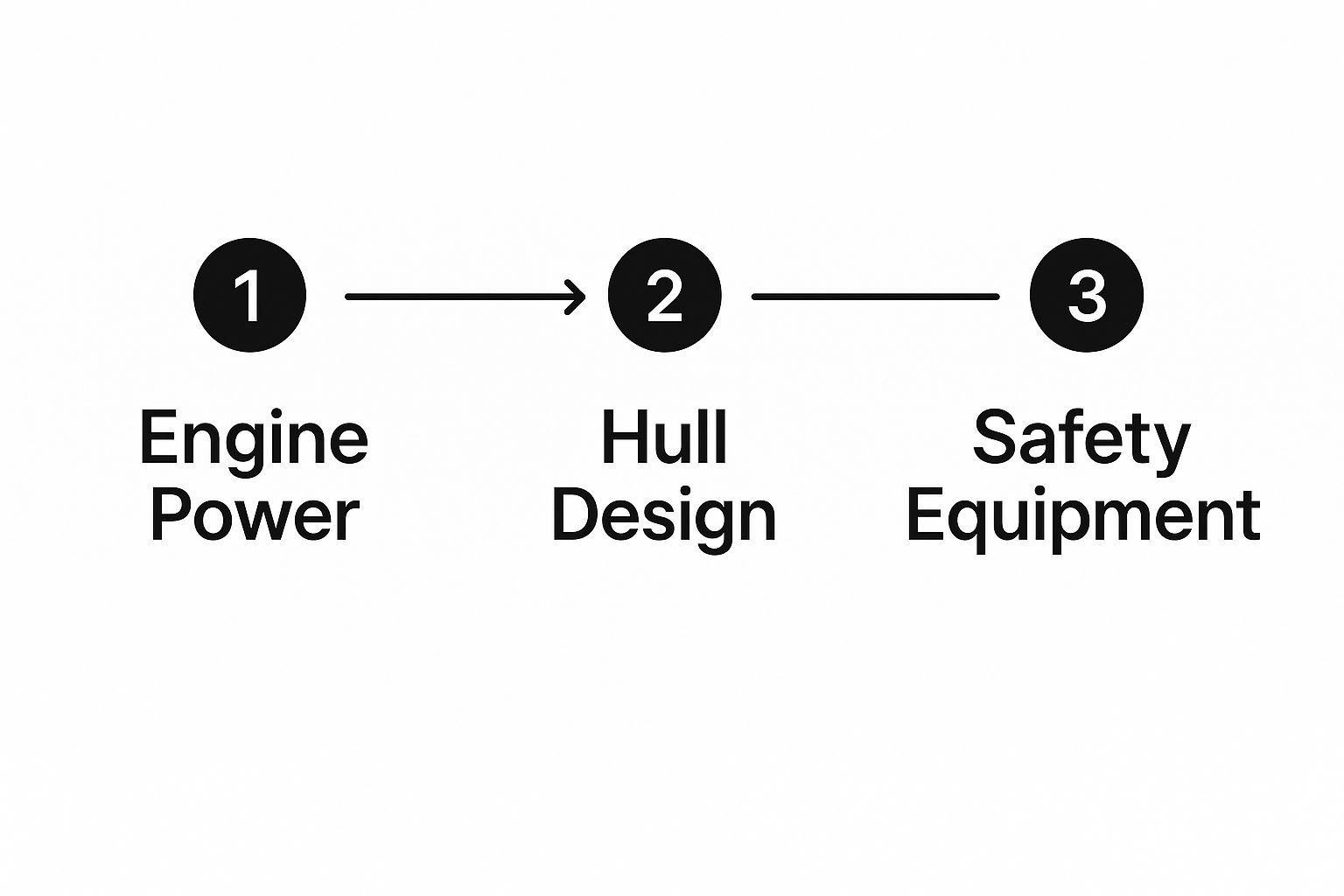
Here's what to zero in on when you're looking into the pump:
-
The Impeller: This is the internal propeller that does all the work. Shine your light on its leading edges. Are there significant dings, chips, or bent blades? This is caused by sucking up rocks and debris. A little bit of wear is normal, but major damage will kill the boat's performance and is expensive to fix.
-
The Wear Ring: This is a sacrificial ring that fits snugly around the impeller. The gap between the impeller blades and the wear ring should be incredibly tight—about the thickness of a credit card is a good rule of thumb. If you see a large gap, it means a loss of thrust, and the ring needs to be replaced.
Don't forget to check the components at the stern. Wiggle the steering nozzle and the reverse gate. They should both move smoothly from side to side and up and down without any grinding or binding.
Finally, it’s time to pop the engine hatch. Even if you're not a gearhead, you can easily spot signs of neglect. Look for:
-
Obvious oil or fluid leaks on the engine or in the bilge.
-
Corrosion on battery terminals and electrical connections.
-
Belts and hoses that look cracked, brittle, or frayed.
Always ask for service records. A well-maintained engine almost always has a paper trail to prove it.
Next, head to the helm and test every single switch, button, and gauge on the dash. Flip on the navigation lights, hit the horn, and make sure the bilge pump runs. Things like faded upholstery or worn-out flooring might seem purely cosmetic, but the replacement costs can add up quickly and become a useful bargaining chip.
When you're looking at different boats, you'll start to notice variations in build quality. For instance, some premium brands you might see in listings for Everglades boats for sale are known for their incredibly durable finishes and hardware. Paying attention to these details helps you build a much better sense of a boat’s true quality and value.
The inspection on the trailer is important, but it's only half the story. The sea trial is where the boat’s true character comes out. You wouldn’t buy a car without driving it, right? This is your chance to feel how the boat handles, accelerates, and responds on the water before you sign on the dotted line.
This on-water test is all about confirming what you saw on land. It’s where you’ll find out if the engine is as strong as it looks, the jet pump is doing its job, and the hull is sound. Pay close attention here—what you feel and hear is far more telling than a shiny gel coat.
Your first test begins the moment the seller turns the key. The engine should fire up without a lot of cranking and settle into a smooth idle. If it sputters, coughs, or struggles to start, you could be looking at anything from bad gas to deeper fuel or ignition issues.
Once you’re clear of the dock, it's time to open it up. Don't be shy; you need to see what this boat can really do.
-
Smooth Acceleration: As you push the throttle forward, feel for a clean, steady pull. The boat should get on plane without any hesitation or bogging down. This is a great sign of a healthy engine and an efficient jet pump.
-
Wide-Open Throttle (WOT): In a safe, open stretch of water, go full throttle for a short burst. The engine should hit its recommended max RPMs without shaking the boat apart or making any scary noises.
-
Cruising Speed Check: Back it down to a comfortable cruising speed, maybe 30-35 mph. Listen to the engine. It should sound even and unstrained, and you shouldn't feel any weird vibrations through your feet.
A tell-tale sign of a neglected jet boat for sale is a bad wear ring or a chewed-up impeller. If the boat feels lazy getting up to speed, the engine revs high but you go nowhere (cavitation), or you feel a heavy vibration, the jet pump is almost always the problem.
Power is one thing, but how the boat handles is just as critical. Jet boats are known for their incredible agility, so put it to the test. Carve a few tight turns at a decent speed. The boat should dig in and turn on a dime, not slide out or feel like it's going to trip over itself.
Next, see how it behaves at low speeds. Many jet boats need a little bit of throttle to steer well around the dock. Try to pull up to a buoy or simulate docking. Don't forget to test the reverse bucket. It should engage crisply and give you enough control to back up effectively.
This is also your last chance to test every single system under real-world conditions. Stand at the helm and flip every switch one more time.
If the boat passes all these tests with flying colors, you can feel confident that it runs as good as it looks, and you’re one step closer to making a smart purchase.
You’ve found the one. It’s the perfect jet boat for you, and it passed the inspection and sea trial with flying colors. Now for the final stretch: making it officially yours. This part of the process is less about kicking the tires and more about crossing the T's and dotting the I's to ensure a clean, legal, and secure handover.
Remember that inspection and sea trial? Those aren’t just for your peace of mind—they’re your best leverage at the negotiating table. If you found some minor issues, like a worn wear ring, a few dings in the gelcoat, or some upholstery showing its age, you have a legitimate reason to discuss the price.
This isn't about criticizing the seller's boat. It's about being practical. Frame these points as real costs you'll have to cover once you take ownership. Back up your position with hard data. Do a little homework on what similar models have recently sold for in your area. When you combine this market research with your inspection notes, you can confidently make an offer that truly reflects the boat's condition and value.
A respectful negotiation is almost always a successful one. Start with a firm but fair offer and calmly explain your reasoning. You’re much more likely to strike a deal where both you and the seller walk away happy.
This is the step you absolutely cannot rush. The paperwork is what legally transfers the boat to you, and getting it wrong can cause major headaches down the road.
Make sure you have all the essential documents in hand before any money changes hands:
-
Bill of Sale: Think of this as the official receipt. It needs to list the boat's hull identification number (HIN), make, model, and year. It also must include the final sale price and be signed by both you and the seller.
-
Title (or Certificate of Origin): Just like a car, a boat has a title. Double-check that the seller is the legal owner listed on it and that they sign it over to you properly. If you're buying a brand-new boat, you’ll get a Manufacturer's Certificate of Origin instead.
-
Registration: The boat’s current registration will need to be transferred to your name. You'll take the signed title and bill of sale to your state's boating authority to get this done.
With the keys finally in your hand, a couple of things need your immediate attention. First and foremost: boat insurance. Don't wait on this. Most marinas and storage facilities require proof of insurance, and more importantly, it protects your brand-new investment from theft, accidents, and liability. Get quotes and have a policy in place before you even think about moving the boat.
Next up, logistics. How are you getting your new toy home? If you don’t have a truck capable of towing it, you might need to hire a professional boat transport service. It’s also wise to have your storage or slip already arranged to avoid a last-minute scramble.
This is the moment all the research pays off. You're now the owner of a boat known for its incredible maneuverability, shallow-water capabilities, and thrilling speed—perfect for everything from exploring rivers to a fun day of wakeboarding. And you're not alone; as they've become more affordable, more people are discovering the unique fun of jet boats. You can learn more about the growing jet boat market on factmr.com.
As you zero in on the perfect jet boat, you’ll find that a lot of specific questions start to pop up. This is a great sign! It means you're moving past the "just looking" phase and getting serious. To help you navigate this final stretch, let's tackle some of the most common things that come up for prospective buyers.
The heart of the difference is how they move through the water. A jet boat works like a powerful, water-based jet ski. It has an internal part called an impeller tucked safely inside the hull. This impeller sucks in water and then blasts it out the back at high speed to create thrust.
This single design choice is what gives jet boats their superpower: the ability to skim through incredibly shallow water. You don't have that constant, nagging fear of smacking a propeller on a rock or sandbar.
Your traditional prop boat has an external propeller that hangs down below the boat. While they can be a bit more fuel-efficient on a long cruise in open water, that exposed prop is always a liability. One wrong move in a shallow cove or near a rocky shoreline can mean a ruined day and a hefty repair bill.
For anyone who loves exploring rivers, pulling up right onto a sandy beach, or just wants that "point-and-go" freedom, the jet boat is a game-changer. It takes the anxiety out of shallow-water boating.
Is It True Jet Boats Cost More to Maintain?
This is a common myth. The maintenance costs are often neck-and-neck with prop boats, but the types of repairs you might face are different.
With a jet boat, your attention is on the jet pump itself—specifically the impeller and the wear ring. Sucking up gravel or a stray piece of wood can chip the impeller, which hurts performance and might eventually need replacing. It's something to be aware of. On the plus side, some brands like Scarab have a closed-loop cooling system, which is fantastic because it keeps corrosive saltwater out of your engine block, saving you from major headaches down the road.
On a prop boat, you're always worried about the lower unit. Banging the propeller is common, but hitting something hard can damage the skeg or the entire gearcase, and that's a repair that can cost thousands. Routine stuff like oil changes and winterizing? The cost and process are virtually identical for both.
Hands down, it's falling for a boat that looks great on the trailer and skipping a proper inspection and sea trial. We've seen it happen time and time again. A boat can be waxed to a mirror shine, but have serious, hidden problems.
Issues with the jet pump, engine compression, or even the structural integrity of the hull are almost impossible to spot with an untrained eye. These are also the most expensive things to fix.
You absolutely must getthe boat on the water. A sea trial is non-negotiable. It's the only way you'll feel for weird vibrations, hear how the engine performs under a real load, and check if the steering and handling are as sharp as they should be.
Brand reputation is important, for sure. Big names like Yamaha, Scarab, and Chaparral have earned their stripes for a reason. They generally have solid build quality, proven reliability, and they tend to hold their resale value much better. Plus, finding a dealer for service or getting parts is usually far easier.
However, and this is a big "however," the actual condition and maintenance history of the specific boat in front of you is always more important than the logo on the side. A neglected boat from a top-tier brand is a much riskier buy than a meticulously cared-for boat from a smaller, lesser-known builder.
As you continue your search, it's helpful to have answers to your specific questions readily available. We've compiled a quick FAQ table to address some of the most frequent inquiries we receive from buyers.
undefined
Hopefully, these answers provide more clarity and confidence as you evaluate your options. Having the right information is key to making a purchase you'll be happy with for years to come.
Ready to put all this knowledge to use? At SearchShop.com/boat, we are committed to making your boat buying experience better. Use our powerful tools to analyze prices, read reviews, and search through thousands of new and used boat listings to find the perfect jet boat for your next adventure. Explore your options at SearchShop.com.