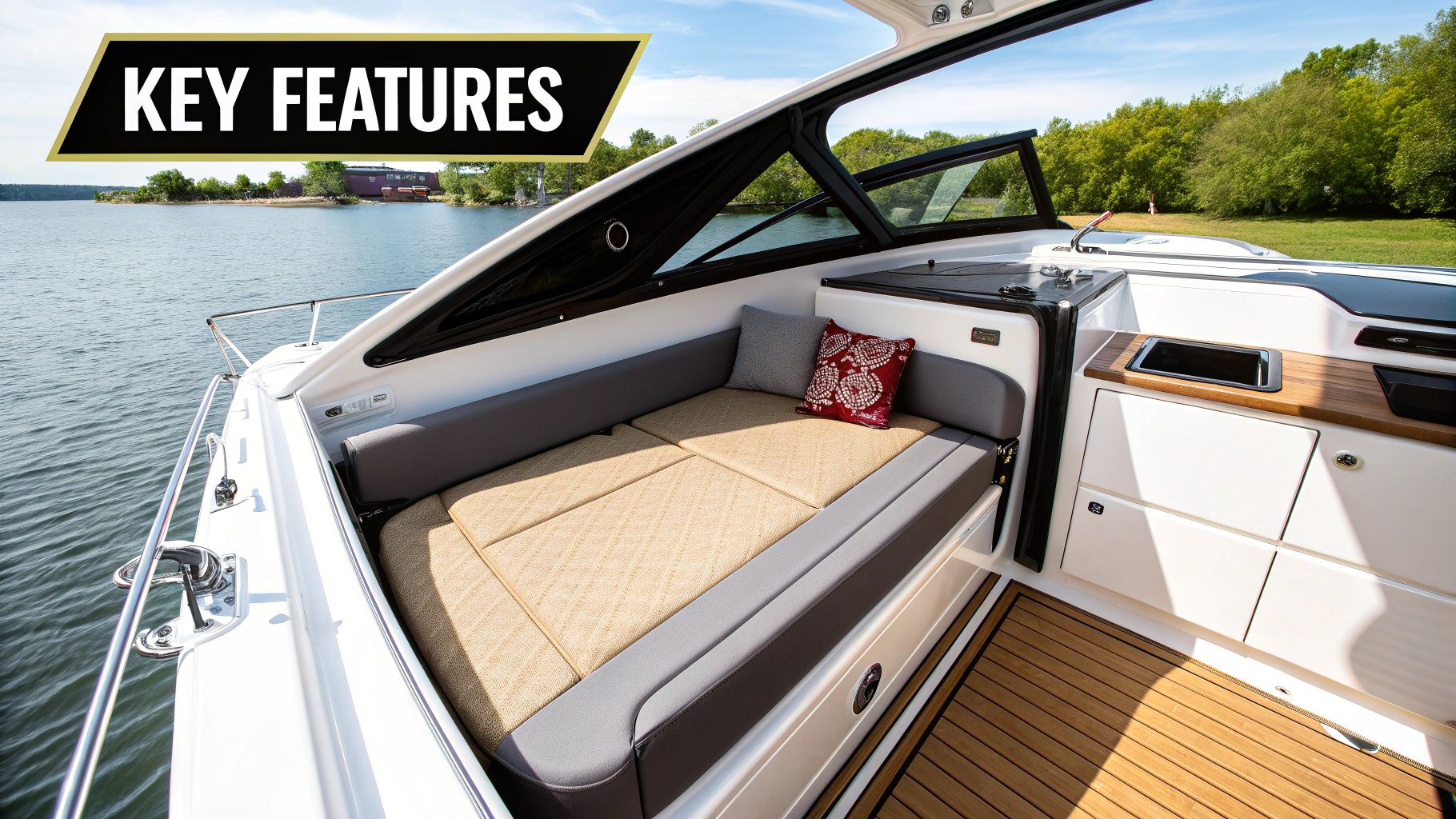
When you start looking for cuddy cabin boats for sale, you're really searching for a versatile vessel that can do a little bit of everything. It’s this unique mix of open-deck freedom and a cozy, sheltered space that makes them such a practical choice for so many people.
Picking the right boat is all about matching it to the life you want to live on the water. Before you start scrolling through listings, let's get clear on why a cuddy cabin might be the perfect fit for your adventures. Think of it as a launchpad for spontaneous family fun—a boat that won’t send you running for shore at the first sign of a passing cloud.
The magic of a cuddy is its split personality. It’s part sporty bowrider, part comfortable cruiser. This versatility is exactly why the market for these boats, which usually run between 18 and 30 feet, has ballooned into a USD 4.3 billion industry. The design centers around that V-shaped berth in the bow, giving you a protected spot for storage or a quick nap. If you're curious, you can explore more details on the cuddy cabins market to see just how popular they’ve become.
Let's picture this: You're out on the lake, the kids are having a blast tubing, and the sun is high. Then, out of nowhere, a dark cloud rolls in. If you were in a typical open-bow boat, your day might be over. Everyone’s soaked, the gear is drenched, and you’re heading back to the dock.
But with a cuddy cabin, you just pop the kids and the gear inside, wait out the 15-minute shower with some snacks, and then get right back to the fun once the sun returns. That’s the cuddy’s superpower.
The real value of a cuddy cabin isn't just the cabin itself, but the flexibility it gives your family. It turns a potential "let's go home" moment into a minor inconvenience, extending your time and enjoyment on the water.
To give you a clearer picture, here’s a simple breakdown of what defines a cuddy cabin boat.
| Key Feature |
Primary Advantage |
| Enclosed Bow Cabin |
Provides all-weather shelter, secure storage, and a private space for changing or resting. |
| Open Cockpit/Deck |
Offers ample room for fishing, sunbathing, watersports, and socializing, like a bowrider. |
| Compact Size (18-30 ft) |
Easier to trailer, handle, and dock compared to larger cruisers, while still offering shelter. |
| V-Berth |
A small sleeping area in the bow, perfect for overnight stays or a quick nap for the kids. |
This blend of features is precisely what makes these boats so adaptable for a wide range of on-the-water activities.
That little cabin opens up a world of possibilities. It’s so much more than just a rain shelter. For anyone with young children, you know how valuable a private, quiet spot for a nap can be, especially away from the glaring sun. If you're an angler, it’s a secure place to lock up thousands of dollars in rods and tackle when you pull up to a waterfront restaurant for lunch.
This built-in adaptability makes the cuddy a fantastic platform for all sorts of fun:
- Family Watersports: You get plenty of deck space for skiing and tubing, plus that all-important cabin for when the little ones get tired.
- Spontaneous Fishing Trips: Just load up your gear and go, knowing it’s all safe and sound when you need to leave the boat.
- Casual Day Cruising: Go explore that distant cove or island with the peace of mind that a bit of wind or rain won’t ruin your day.
Ultimately, choosing a cuddy cabin is about choosing a boat that doesn't box you in. It’s for the boater who wants to be ready for anything the day might throw at them.
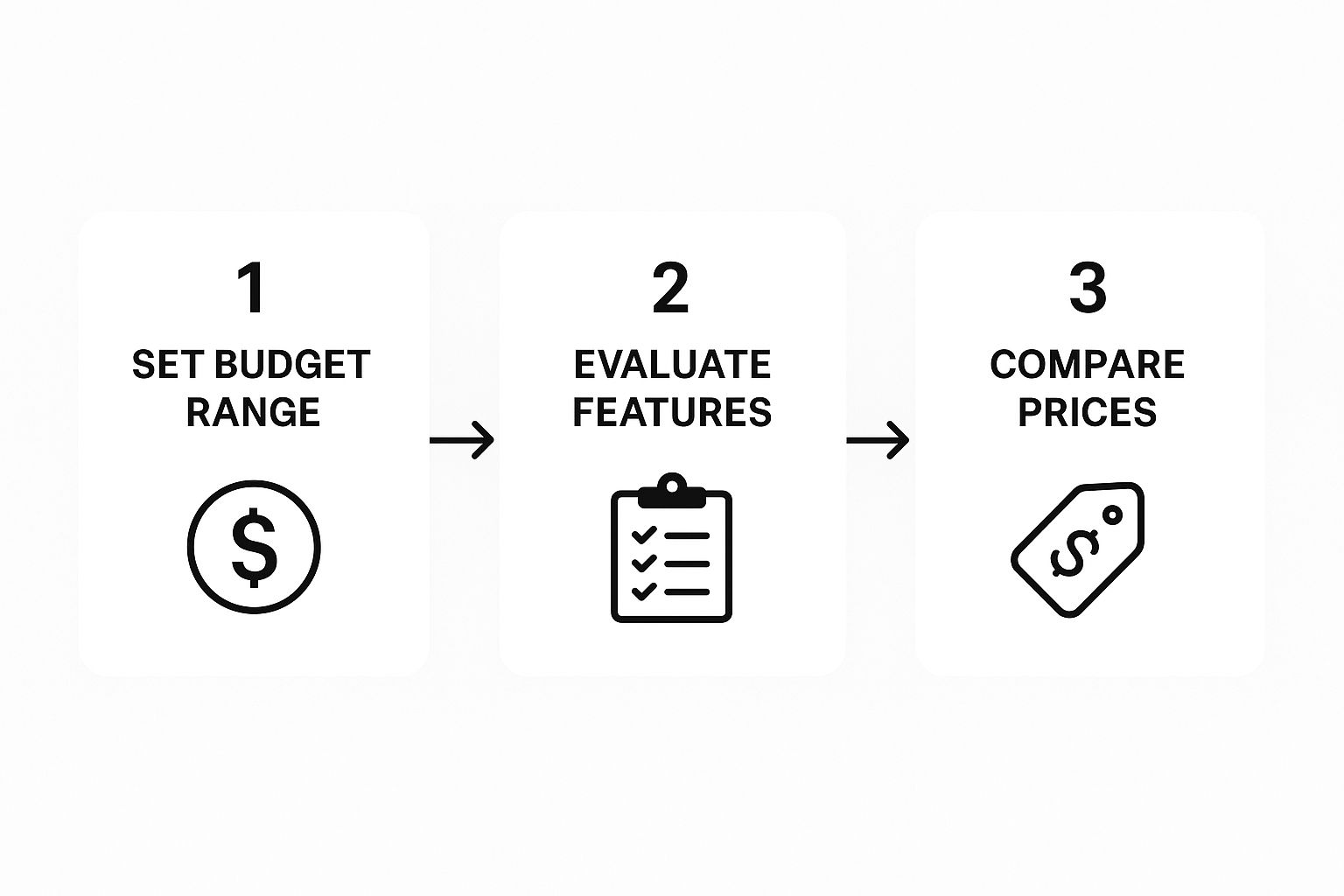
When you start browsing cuddy cabin boats for sale, it’s incredibly easy to get tunnel vision and fixate on the asking price. But the reality is, the sticker price is just the starting line. A smart buyer knows the total cost of ownership is what truly matters, and budgeting for it upfront saves a world of financial headaches later.
A solid rule of thumb we always recommend is to budget an extra 10-20% of the boat's price just for first-year expenses. This isn't just for extras; it's the buffer for immediate costs like sales tax, registration, insurance, and the initial gear you'll need before you can even think about launching. Forgetting this part can put a serious strain on your finances and keep your new boat high and dry.
After you handle the initial hit, the ongoing costs of boat ownership kick in. These are the recurring expenses that make up your real boating budget, and they can swing wildly depending on where you live and how you plan to use your cuddy.
Think of it this way: the purchase price gets you in the door, but the ongoing costs are what let you enjoy the experience year after year. Here’s what you absolutely must factor in:
- Insurance: This is a must. Depending on your boat's value, your location, and your boating history, a policy could run from a few hundred dollars to well over a thousand each year.
- Storage and Dockage: Are you trailering it and keeping it in your driveway? Great, that's a huge savings. If not, a marina slip can be a significant expense, often costing thousands annually. And if you're in a colder climate, don't forget about winter storage fees.
- Routine Maintenance: A boat needs consistent care, just like a boat or car. You've got annual engine servicing, oil changes, winterization, and hull cleaning. Skimping here is the fastest way to devalue your investment.
- Fuel: This one is all about how you play. A day of pulling water skiers will guzzle a lot more gas than a slow, lazy cruise around the bay. Try to estimate your hours on the water and the engine’s fuel burn to avoid a shock every time you visit the fuel dock.
Beyond the nuts and bolts of maintenance, your budget has to match your lifestyle on the water. This is where you need to be brutally honest with yourself and separate what you truly need from what would just be cool to have. We've seen buyers get a boat loaded with features they never use, while missing the one thing they actually needed.
The "must-have" list for a dedicated fisherman is going to look completely different from a family that just wants to cruise on weekends.
A fisherman is going to prioritize a livewell, plenty of rod holders, and a top-notch fishfinder. For a family, the non-negotiables might be a powerful enough engine for tubing, a freshwater sink for washing hands, and a comfortable V-berth for when the kids need a nap.
Before you even glance at a single listing, grab a pen and paper. Make two columns: "Must-Haves" and "Nice-to-Haves." This simple exercise brings so much clarity to your search. It helps you instantly filter out the wrong boats and focus on the cuddy cabins that perfectly fit your activities and, just as importantly, your wallet. It’s the best way to keep your hunt for cuddy cabin boats for sale efficient and on-budget.
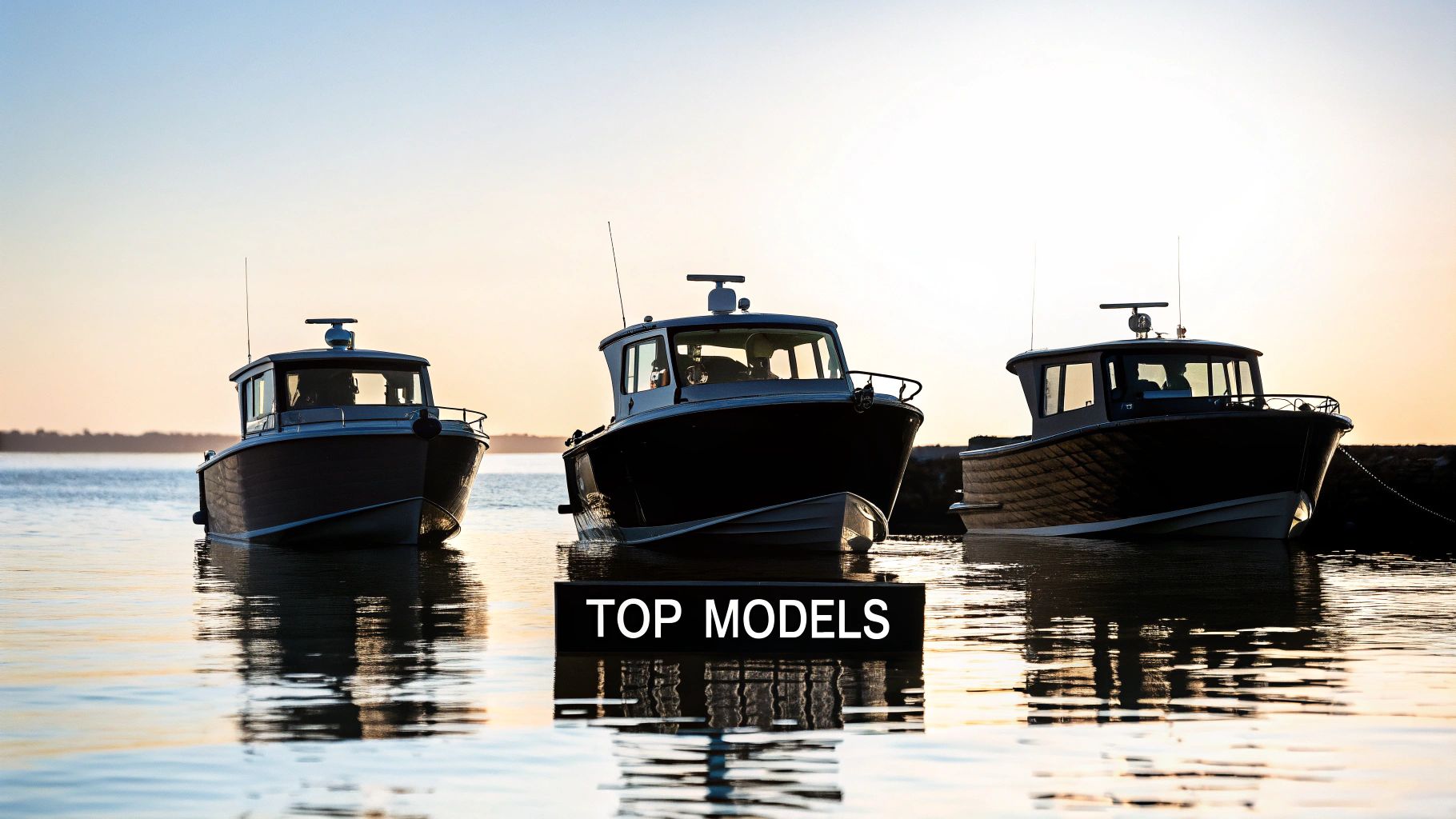
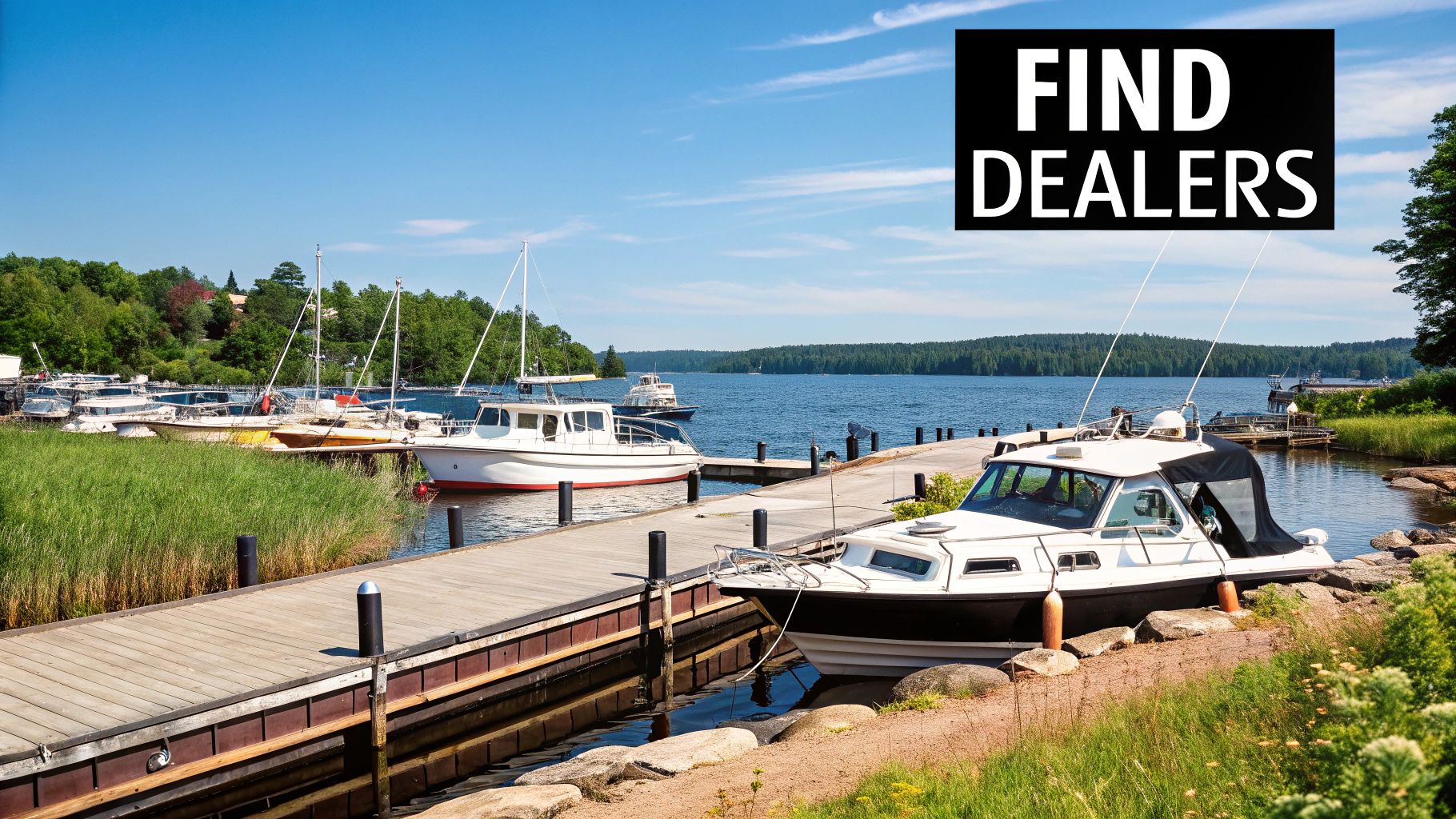
Alright, you’ve got your budget figured out and a solid list of must-haves. Now comes the fun part: the hunt for cuddy cabin boats for sale. To get the best deal, you need to look in more places than just a quick online search. It's about casting a wide net.
The market for these boats is hot. The global small boats market, which includes cuddy cabins, was recently valued around USD 31.93 billion, and it's not slowing down. North America, in particular, is seeing a huge spike in demand as more people get into fishing and weekend cruising. You can discover more insights on small boat market trends to get a feel for the landscape, but the takeaway is clear: a smart approach is essential.
Your search will almost certainly start online. It’s where the most options are. Websites like Boat Trader and YachtWorld are the heavy hitters, but don’t discount local classifieds and marketplaces. The sheer volume is the biggest perk—you can compare models, prices, and features from anywhere.
The catch? You’re often flying solo. It’s on you to decipher the listings. Blurry photos, a price that seems too good to be true, or a vague description can all be red flags. Our advice is to set up alerts for the specific make, model, and length you’re after. The good ones go fast.
This is exactly where a professional boat broker earns their keep. A good broker is more than just a salesperson; they're your guide. They have access to listings that never make it online and possess a deep understanding of the market. They'll help you steer clear of overpriced boats with hidden problems and can take the stress out of negotiating a fair price.
While the internet and brokers are the main highways, some of the best deals are found on the back roads. These are the "off-market" boats, often sold by people who aren't in a hurry and prefer to sell through word-of-mouth.
Here’s where to look for these hidden gems:
- Attend Boat Shows: Go to boat shows, even if you’re only looking for a used vessel. They’re fantastic for networking with dealers and brokers. Plus, you get to climb aboard different models and get a real feel for current pricing.
- Join Local Boating Clubs: This is one of the smartest things you can do. Getting connected with your local boating community puts you on the inside track. Members are always the first to hear when someone’s thinking of selling, often long before a "for sale" sign ever goes up.
- Walk the Docks: Seriously, just go for a walk. Spend an afternoon at your local marinas and boatyards. Keep an eye out for "For Sale by Owner" signs and chat with people. Boat owners love to talk, and they are a goldmine of information.
The best strategy is to do it all. Combine the massive reach of online marketplaces, the expert guidance of a broker, and the insider knowledge you'll get from the local boating scene. This multi-pronged approach dramatically boosts your chances of finding that perfect cuddy cabin for the right price.
So, you found a listing that looks perfect. It has the right features, the right price, and you can already picture yourself on the water. This is the exciting part, but it's also where you need to slow down and put on your detective hat.
A thorough, hands-on inspection is your absolute best defense against buying someone else’s problem. Think of it this way: you're looking for the real story behind the boat, not just the one in the sales ad. From the tiniest gelcoat blister to a faint whiff of mildew in the cabin, every little detail matters. Skipping this step is how dream boats turn into financial nightmares.
Start with the most critical part of the boat: the hull. This is where the biggest and most expensive problems love to hide. Get down low and run your hand along the entire surface below the waterline. You're feeling for any bumps, ripples, or blisters. Those little bubbles are a classic sign of osmosis, meaning water has worked its way into the fiberglass. That's a repair you don't want to pay for.
Next, get on board and walk every inch of the deck. Pay close attention to how it feels under your feet. Does it feel solid, or are there soft, spongy spots? That sponginess is a huge red flag for a rotted core due to water intrusion.
While you're up there, zero in on these potential trouble spots:
- Transom Strength: Go to the stern and push down hard on the outboard engine or sterndrive. If you see any flexing, movement, or stress cracks where the transom connects to the hull, walk away.
- Deck Fittings: Look closely at the base of every railing, cleat, and piece of hardware. See any rusty-looking stains or fine cracks around them? That’s often a sign that water has been seeping into the deck's core.
- Hatches and Portlights: Open and close every single one. Check the rubber seals for any signs of dry rot or cracking—these are common culprits for mysterious leaks.
The engine is the heart of any boat, and it's also the source of the most common—and costly—headaches. Even if you aren't a seasoned mechanic, you can spot some obvious warning signs.
Pop open the engine compartment. Your eyes and nose will tell you a lot. Look for excessive corrosion, any belts or hoses that look frayed and cracked, or oil that looks milky on the dipstick (a dead giveaway for water in the engine).
Then, move on to the electrical system. Go to the helm and start flicking switches. Test every single light, pump, gauge, and accessory. Messy, disorganized wiring that looks like a rat's nest is a bad sign. So are corroded connections or fuses that keep blowing. These point to a system that’s been neglected or poorly modified over the years.
A professional marine survey is absolutely non-negotiable. Your initial inspection is great for weeding out the bad ones, but a qualified surveyor has specialized tools and a trained eye. They can find things you'd never spot, like hidden moisture in the hull or subtle engine issues that only appear under specific tests.
Finally, the moment of truth: getting the boat on the water. A boat can look perfect on the trailer, but the sea trial reveals its true character. How does it handle? Pay attention to how quickly it gets on plane, if the steering feels smooth and responsive, or if you hear any strange noises or feel unusual vibrations at different speeds.
This is also your best chance to test all the electronics, like the GPS and fishfinder, in real-world conditions. When you're looking at cuddy cabin boats for sale, skipping the sea trial is something you simply can't afford to do. It's a gamble you simply can't afford to take.
Alright, you’ve found the one. The cuddy cabin that ticks all your boxes, the one you can already picture yourself enjoying on the water. It’s passed the survey with flying colors, and you’re ready to make it official.
Now comes the part that makes some people sweat: the negotiation. But don't worry. This isn't about some high-pressure sales tactic; it's about reaching a fair price based on facts. And you have the most powerful fact-finding tool right in your hands: the marine survey report.
Even a fantastic boat will have a few minor dings in its survey report. That's perfectly normal. Maybe the surveyor noted the trailer tires are showing their age or a bilge pump is nearing the end of its service life. These aren't deal-breakers; they're negotiation points.
Get a couple of quotes for the cost to replace those tires or install a new pump. You can then present those figures to the seller. It’s not about trying to lowball them—it’s about adjusting the price to reflect the boat’s actual condition and the immediate costs you'll have to take on.
Unless you’re paying cash, you’ll want your financing sorted out before you make a firm offer. Walking in with a pre-approval is like being a cash buyer; it tells the seller you're serious and ready to move quickly.
Don’t just take the first loan you're offered. It pays to shop around.
- Your Bank or Credit Union: A great place to start. If you have a good relationship with them, you can often get some of the most competitive rates.
- Specialized Marine Lenders: These folks live and breathe boats. They understand the nuances of marine financing and can sometimes offer more flexible terms than a traditional bank.
- Dealer Financing: This is often the most convenient option, but it isn't always the cheapest. Use a pre-approval from your bank as a benchmark to make sure you're getting a good deal.
Having your financing locked in before you start talking price is a game-changer. It gives you a hard budget to work with and a massive amount of leverage at the negotiating table.
Once you and the seller have shaken hands on a price, it's time to make it legal. The paperwork might seem tedious, but getting it right is crucial for protecting yourself and ensuring a smooth transfer of ownership.
When you're looking at a cuddy cabin boat for sale, you'll need three key documents to seal the deal:
- The Bill of Sale: Think of this as the official receipt. It needs to have the date, the final sale price, the names and addresses of both you and the seller, and a complete description of the boat (make, model, year, and Hull Identification Number). Make sure you both sign it.
- The Title: Just like a car, the boat has a title that proves ownership. The seller needs to sign it over to you. Double-check that there are no liens listed on it, which would mean there's still a loan on the boat that needs to be settled.
- Registration: With the signed title and bill of sale in hand, you’ll head to your state's agency that handles vehicle and boat registrations (like the DMV). This is where you'll officially put the boat and trailer in your name, pay any applicable sales tax, and get your new registration numbers.
Even with all the research in the world, a few lingering questions always seem to surface right before you’re ready to pull the trigger. That’s a good thing. Buying a boat is a big deal, and you should feel completely confident that you’ve turned over every stone.
We’ve pulled together some of the most frequent questions we hear from people looking at cuddy cabin boats for sale. These are the final-hour queries that can provide that last piece of the puzzle.
It all comes down to one thing: the cabin. A bowrider is fantastic for fair-weather cruising with its open seating, but a cuddy offers a secure, dry, and private space that a bowrider just can’t replicate.
This cabin is what makes the boat so incredibly versatile. It’s a lockable spot to stow your expensive electronics and gear, a private nook for a portable head (a lifesaver on long days), and your instant escape from a surprise rain shower or the scorching midday sun. That flexibility can easily add hours of comfort to your day on the water.
How Much Should I Actually Budget for Maintenance Each Year?
The go-to rule of thumb in boating is to set aside about 10% of the boat’s purchase price for annual upkeep and operating costs. This fund covers the predictable stuff like engine service, winterization, cleaning supplies, and those little things that always seem to break.
Now, if you're buying a used cuddy, we always tell people to bump that up for the first year. It’s smart to have a little extra financial cushion for any surprises that pop up as you're getting acquainted with your new-to-you boat.
Your maintenance budget isn't just an expense—it's an investment in your boat's health and future resale value. A little preventative care now can save you from a massive, wallet-draining repair down the line.
Yes. A thousand times, yes. It is one of the most critical steps for any used boat purchase, regardless of size. We’ve seen so many buyers try to skip this to save a few hundred dollars, and it almost always bites them back.
A professional surveyor brings a trained eye and specialized tools to find problems you’d never spot on your own. They’re looking for things like:
- Hidden water intrusion in the hull or deck core (a potential deal-breaker).
- Sketchy wiring or electrical faults that are a genuine safety hazard.
- The first signs of trouble in the engine or outdrive.
Uncovering these issues before you sign on the dotted line gives you immense negotiating power and can literally save you thousands of dollars.
It absolutely can. In fact, cuddy cabins are becoming a go-to choice for sport fishing enthusiasts who want the best of both worlds. You get the comfort and shelter of the cabin for long days offshore, but still have a generous, open cockpit for all the fishing action.
More and more, you’ll see manufacturers equipping their cuddy models with fishing-focused features like live wells and rod holders right from the factory. It’s a growing trend, blending family comfort with true fishing capability, as noted in reports on the rise of sport fishing boats.
The key to finding the right cuddy cabin is having the best selection and the right information at your fingertips. At SearchShop.com, we’re dedicated to making your boat search as simple and transparent as possible. Use our search tools to browse thousands of new and used cuddy cabin boats for sale, compare pricing, and find the perfect boat for your next adventure on the water. Start your search on SearchShop.com today!

