When you start looking at center console boats for sale, you'll quickly see why they're so popular with outdoor adventurers. People love them for their sheer versatility. Think of them as the Swiss Army knife of the boating world—they can be a hardcore fishing machine, a comfortable family cruiser, and a powerful performance boat, all rolled into one.
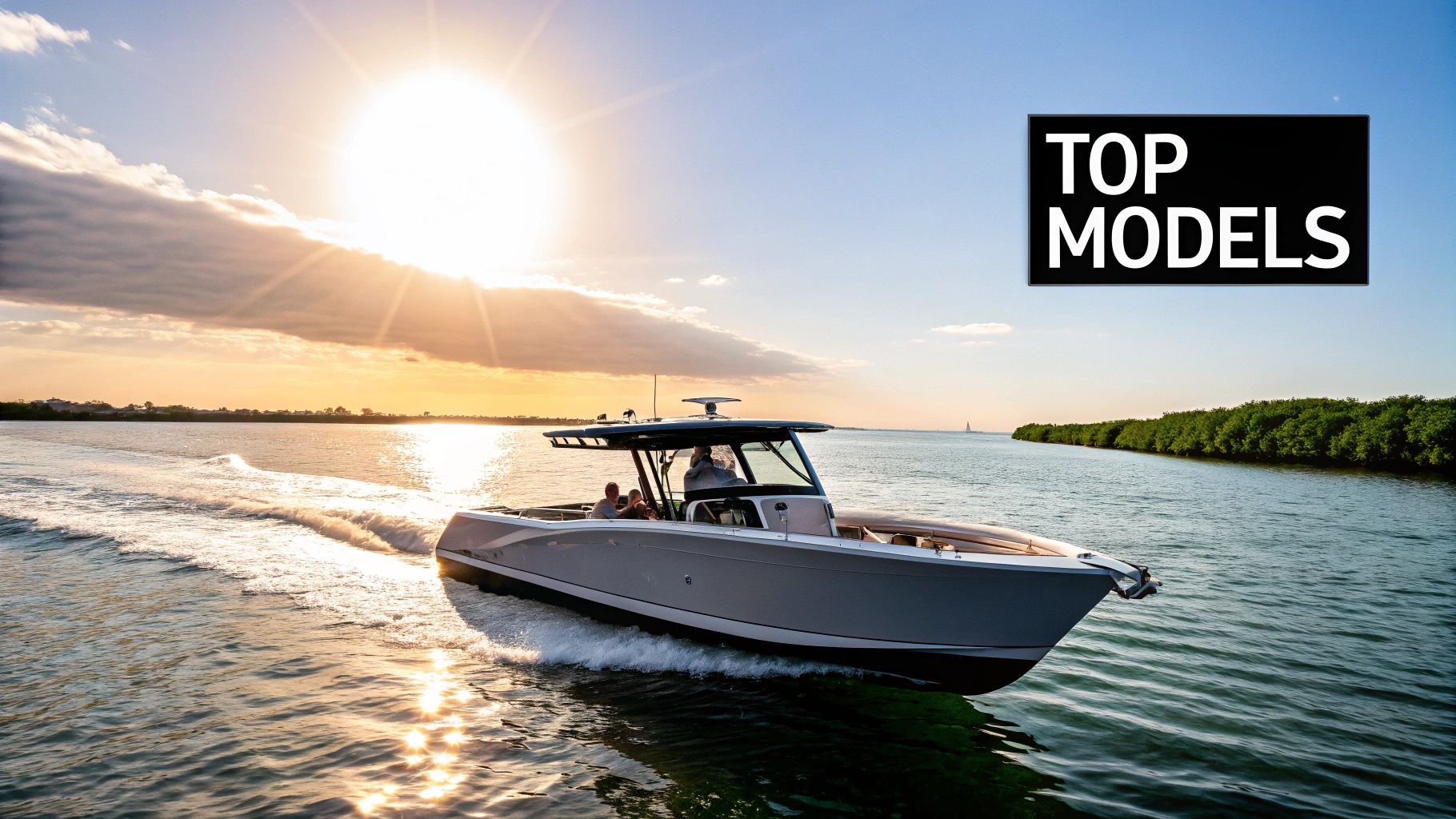
The whole idea behind a center console is to give you maximum freedom on the water. The design is brilliant in its simplicity: the helm station sits right in the middle of the boat. This opens up the deck, creating a clear, walkable path all the way around.
For anyone who loves to fish, this is a game-changer. It creates a 360-degree fish-fighting arena, which means you can follow a big catch from the bow to the stern without stumbling over seats or ducking under a cabin roof. It’s a design built for action.
But that wide-open layout isn’t just for anglers. It makes for a incredibly social and flexible space for whatever you have planned for the day. It’s easy for family and friends to move around, whether you're getting ready to waterski, finding a spot to sunbathe, or just kicking back and enjoying the ride.
This practical design brings a few other major perks to the table:
- Unmatched Visibility: From the center helm, the captain gets a clean, panoramic view. This makes docking in tight slips or navigating a busy channel much less stressful.
- Superior Stability: Placing the weight in the middle of the boat gives it a naturally balanced feel. You'll notice this especially when people are moving around on deck; the boat just feels more planted in the water.
- Easy Cleanup: Most center consoles have self-bailing, open decks. At the end of the day, a quick hose-down is all it takes to clean up after fishing or a day of swimming.
Beyond the layout, center consoles are just plain tough. Most are built with deep-V hulls designed to slice through choppy seas, giving you a much smoother and drier ride than you'd get from other boats of a similar size. That robust construction gives you the confidence to venture offshore for some serious fishing or handle that unexpected afternoon chop on the lake.
The real magic of a center console is how it can be a serious fishing machine on Saturday and the perfect family cruiser on Sunday. It’s this chameleon-like ability that makes it one of the most popular boat designs out there.
Whether you're planning hardcore fishing trips, lazy family days on the water, or watersports action, a center console gives you a stable, safe, and incredibly capable platform. As you check out the different center console boats for sale, you'll find there's a model out there that’s a perfect fit for the adventures you’re dreaming of.
When you first start looking at center console boats for sale, the sheer variety can be overwhelming. They come in all shapes and sizes, and for a good reason: not all center consoles are created equal. Each type is specifically designed for a particular job on the water.
Think of it like picking the right tool from a toolbox. You wouldn't use a sledgehammer for a finishing nail, right? The same logic applies here. Just like shopping for a comparable vessel, the most important first step is to be honest about how you’ll actually use the boat. A hardcore offshore fishing machine won't be the most comfortable choice for a relaxed family cruise, and a boat built for skinny water will get you into trouble when the seas kick up.
Let's break down the main categories to figure out which one is your perfect fit.
This guide gives you a quick visual on what to look for based on how you plan to spend your time on the water.
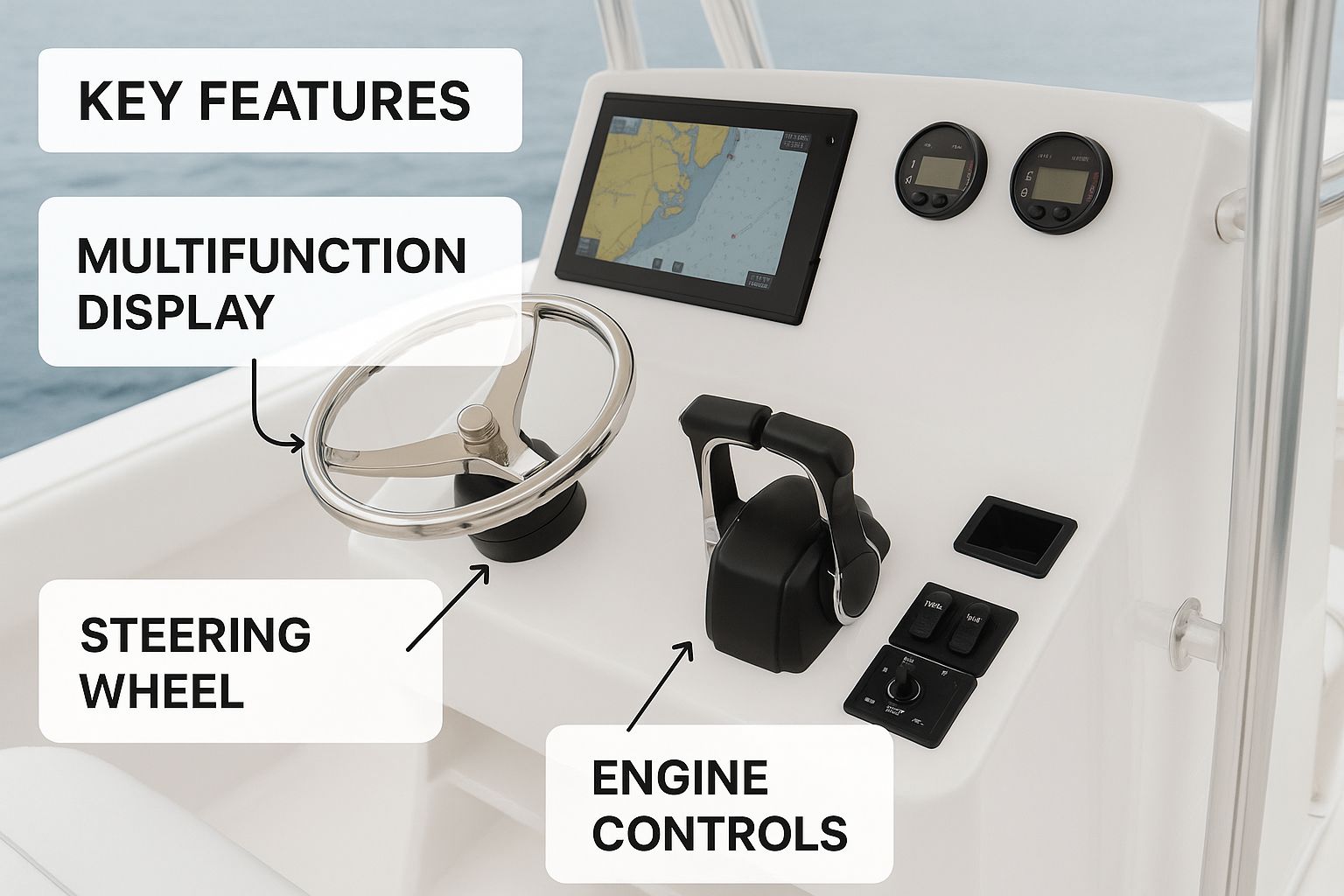
Use this as a starting point to identify the must-have features for your ideal boat.
Use this quick comparison to match a center console style to your on-the-water activities and find the right fit.
| Boat Type |
Typical Size Range |
Primary Use |
Key Feature |
| Offshore |
25 - 40+ feet |
Deep-sea fishing, handling rough seas |
Deep-V hull for slicing through waves |
| Inshore/Bay |
18 - 25 feet |
Coastal, flats, and bay fishing |
Shallow draft for accessing skinny water |
| Hybrid |
22 - 28 feet |
Inshore and nearshore versatility |
A blend of shallow draft and offshore capability |
| Family Cruiser |
20 - 35+ feet |
Cruising, watersports, entertaining |
Ample seating, comfort amenities (head, shower) |
This table should give you a solid foundation, but let's dive into what really makes each of these boat types tick.
If you dream of chasing marlin and tuna far from land, you're going to need an offshore model. These are the bruisers of the center console world, typically running from 25 to over 40 feet long. They’re built around a deep-V hull that’s engineered to slice through heavy seas, giving you a stable and surprisingly dry ride when conditions get nasty.
When you're inspecting an offshore boat, here's what you need to see:
- A serious Deep-V Hull: This is absolutely non-negotiable for safety and comfort in big water.
- Massive Fuel Capacity: Long runs to the fishing grounds burn a lot of fuel, so these boats are built with huge tanks.
- Pro-Level Fishing Gear: We're talking large livewells, multiple oversized fish boxes, outriggers, and rod holders everywhere.
These boats are all business. They put rugged performance and fishing functionality above all else, designed to get you out to the canyons and back home safely.
For boaters who would rather hunt for redfish in the mangroves or explore shallow coastal bays, an inshore or bay boat is the perfect tool. These are typically smaller, from 18 to 25 feet, and ride on a modified-V or nearly flat hull. That design is key—it lets them float in incredibly shallow water, sometimes less than a foot deep, opening up fishing spots that bigger boats can only dream of.
Their nimble handling is perfect for sneaking along a shoreline or navigating tight channels. While they offer fantastic stability when you're casting, that flatter hull means they are definitely not designed for rough, open seas.
So, what if you want to do it all? Enter the hybrid. These boats are the ultimate compromise, blending the shallow-water stealth of a bay boat with some of the seakeeping ability of an offshore vessel. Usually found in the 22 to 28-foot range, their hulls are smart designs that can handle a bit of chop while still letting you get into the skinny stuff.
A hybrid model is the perfect solution for the angler who wants to fish the flats on Saturday morning and then run a few miles offshore to troll for kingfish in the afternoon. It offers incredible flexibility for both serious fishing and family fun.
While any center console can be a family boat, some models are designed from the ground up with comfort and fun in mind. These boats dial up the creature comforts, often featuring plush, cushioned seating in the bow, a freshwater shower for rinsing off, an enclosed head (a marine toilet) tucked inside the console, and a big swim platform with a ladder.
These boats are all about making a day on the water enjoyable for everyone. They frequently have options like a ski tow pylon and tons of storage for tubes and wakeboards, making them the ultimate platform for swimming, watersports, and just relaxing. This blend of utility and comfort is a huge reason the global center console boats market is booming. Valued at roughly USD 1.5 billion, it's expected to climb to USD 2.7 billion by 2033. You can check out more market insights from the pros at Verified Market Reports.
So, you've figured out the type of center console you want. Now for the fun part: digging into the details. When you start scrolling through center console boats for sale, it's easy to get lost in a sea of technical specs and brand names. The trick is to cut through the noise and zero in on the features that actually make a difference out on the water.
Think of it like a pre-purchase inspection on any significant purchase. You have to look past the shiny gelcoat to understand how it will really handle when the weather turns and you're miles from the dock. Let’s break down the big-ticket items, from the hull that cuts the waves to the electronics that find the fish.
The single most important part of any boat is its hull. Period. It dictates everything—how it rides in the chop, how stable it is when you're drifting, and how efficiently it moves. The key term you'll see everywhere is deadrise, which is just the angle of the V-shape at the back of the hull.
A good way to think about it: Trying to drive a low-slung sports car down a bumpy dirt road would be a miserable, bone-jarring experience. But an off-road truck? It would soak up those bumps with ease. That’s exactly what a deep-V hull does in choppy seas.
- Deep-V Hulls (20-24 degrees): This is the off-road suspension of the boat world. These hulls slice through waves, giving you a much smoother, drier ride in rough conditions. They're a must-have for serious offshore boats. The trade-off? They need a bit more power to push and can rock a little more when you're stopped.
- Modified-V Hulls (15-19 degrees): This is the sweet spot for many boaters. It’s a fantastic compromise, offering a respectable ride in a chop while being more stable at rest. You’ll see this design on a ton of versatile, family-friendly boats.
- Shallow-V or Flat Hulls (below 15 degrees): Typically found on bay boats, these hulls are built for stability and getting into skinny water. The downside is they'll pound you pretty good in anything but calm conditions.
The engine is the heart of your boat, and deciding between one big motor or two smaller ones is a major consideration. The right answer really comes down to where and how you plan to use your boat.
For most people sticking to bays, lakes, and nearshore waters, a single, modern outboard is more than enough. It's simpler, more fuel-efficient, and cheaper to maintain over the long haul. But once you start venturing far offshore, the calculus changes.
The case for dual outboards isn't just about going faster; it’s about redundancy. If one engine gives up the ghost 30 miles from shore, the other one will get you home. For an offshore angler, that peace of mind is absolutely priceless.
Twins also give you a big advantage in maneuverability, especially when trying to dock in a tight spot with wind and current. When you’re looking at listings, don't just fixate on horsepower. Pay close attention to the engine hours and ask for service records—they tell the real story of how the boat was cared for.
The helm is your boat's command center, and today's electronics are game-changers for both safety and fishing. A boat with a modern, well-integrated suite of electronics is a huge plus.
Here's what you should be looking for:
- GPS/Chartplotter: This is your digital roadmap. You want a big, bright screen that's easy to see in the glaring sun.
- Fishfinder/Sonar: This is your eye under the water. It uses sound to paint a picture of the bottom, marking structure and, most importantly, fish. Newer CHIRP and side-scan technologies provide almost photo-like clarity.
- VHF Radio: This is your lifeline. It’s non-negotiable safety equipment for communicating with the Coast Guard and other boaters.
This is where you have to be honest with yourself about your priorities. No boat is the perfect hardcore fishing machine and the perfect family cruiser, but plenty of them strike a great balance.
If you're a die-hard angler, your checklist will look like this:
- Livewells: A good-sized, circulating bait tank is essential. Check the pumps and plumbing.
- Rod Holders: You can never have enough. A good mix of holders in the gunwales and "rocket launchers" on the T-top is ideal.
- Fish Boxes: Large, insulated, in-deck boxes are crucial for keeping your catch fresh on ice.
If family fun is higher on the list, you’ll be looking for:
- Seating: Comfortable bow seating with cushions and a transom bench seat that can be folded away are huge wins.
- T-Top or Hardtop: A must-have for providing shade. It’s also the perfect spot to mount antennas, radar, and outriggers.
- Enclosed Head: A small private toilet (a "head") inside the console is a game-changer for keeping everyone, especially kids, happy on long days.
By focusing on these core elements, you can see past the sales pitch and really understand what a boat is built for. This knowledge will help you confidently sort through the many center console boats for sale and pick the one that’s a perfect match for your adventures.
Sooner or later, every potential buyer—whether for a boat—faces the big question: should you buy a shiny, factory-fresh model or a well-loved, pre-owned one? It’s a classic head-vs-heart dilemma, and there’s no single right answer. It really boils down to your budget, how much risk you're comfortable with, and what you value most—a full warranty or more boat for your buck.
When you're browsing center console boats for sale, remember that the sticker price is just the first chapter of the financial story.
The pull of a brand-new boat is strong. You get that perfect showroom gleam, the latest and greatest tech, and the ironclad peace of mind that comes with a manufacturer's warranty. Plus, you get to be the architect, choosing everything from the hull color to the exact electronics you want. But all that comes at a premium. Just like a new boat or car, a new boat takes its biggest depreciation hit in the first couple of years.
On the flip side, a used boat can be a fantastic value. The original owner has already absorbed that initial depreciation, which means you can often get a lot more boat for your money. Many used boats even come loaded with expensive aftermarket upgrades—think top-tier fishfinders or a custom T-top—that the first owner paid for. The trade-off? No warranty and the potential for hidden issues.
That "new boat smell" is nice, but buying new is really about confidence and control. You're the first and only owner, so you know its history from day one. You know the engine was broken in properly because you’re the one who did it.
Here’s where a new boat really shines:
- Full Warranty Coverage: This is the big one. If a major component on the engine or hull fails, the manufacturer has your back. That security is priceless.
- Modern Tech and Design: New boats feature the latest hull designs for a better ride, more efficient engines, and cutting-edge marine electronics.
- Total Customization: You build your boat. You pick the power, the layout, and the features you want, and you don’t pay for the things you don’t need.
- Easier Financing: Lenders often roll out the red carpet for new boats, offering better interest rates and more favorable terms.
Yes, the upfront cost is higher. But for many people, that certainty and the ability to create their dream boat from a blank canvas is worth every penny.
Value. That's the number one reason to buy a used center console. A boat that's just three to five years old can often be had for 25-40% less than its original price, and it still has a long, happy life ahead of it. This strategy lets many buyers jump into a larger, better-equipped boat than they could ever afford new.
But going this route means you have to do your homework.
A thorough pre-purchase inspection isn't just a good idea when buying used—it's absolutely critical. A professional marine survey can spot hidden deal-breakers like hull moisture, structural problems, or an engine on its last legs. It’s the best money you’ll ever spend.
While you give up the warranty, you get a boat that’s already had its initial kinks worked out by the first owner. They’ve likely dealt with any minor factory glitches and added practical, real-world upgrades. Keep a close eye on the engine hours; they’re the equivalent of mileage on a car and tell you exactly how much work that motor has done.
Whether you buy new or used, the purchase price is just the entry fee. A smart boater budgets for the total cost of ownership, because the little things add up fast.
Make sure you plan for these ongoing expenses:
- Insurance: This is non-negotiable for most marinas and any lender. Rates will depend on the boat's value, where you live, and your experience on the water.
- Storage or Slip Fees: Unless you have space at home, you’ll be paying for a home for your boat, either in the water at a marina or in a dry-stack facility.
- Routine Maintenance: This is the big one. From engine oil changes and fuel filters to winterization, keeping your boat in top shape costs money. A good rule of thumb is to budget 10% of the boat's value annually for maintenance and eventual repairs.
- Fuel: This can be a huge variable. A big offshore boat with twin engines can drink a serious amount of fuel, especially on a long run to the fishing grounds.
Factoring these costs into your budget from the start is the key to enjoying your time on the water without financial stress. The market shows that boaters are willing to invest heavily for the right vessel. Take power catamarans, a specialized but growing segment of the center console world. That niche was valued at USD 2.8 billion and is expected to climb to USD 4.6 billion by 2033, with recreational fishing fueling more than half of that growth. You can dive deeper into these market dynamics on DataHorizzon Research.
Alright, you've done your homework and have a solid idea of the type of boat and the features you need. Now for the exciting part: the hunt. This is where theory hits the water, and finding the right center console boat for sale comes down to having a smart game plan.
Think of the next few steps as your pre-purchase checklist. It’s designed to help you zero in on a great boat and, just as important, steer clear of a money pit. Let's get started.
Your search will likely take you from the couch to the docks. The best approach is to cast a wide net, using a mix of online resources and in-person visits to get a real feel for the market.
Starting online is a great way to cover a lot of ground quickly. Big marketplaces like Boats.com or Boat Trader have thousands of listings, letting you filter by size, brand, price, and location. This is perfect for getting a baseline on what’s out there and what things cost. But don't stop there.
- Reputable Dealerships: A good dealer can be a fantastic resource. They usually have a solid inventory of new and pre-owned boats and can offer service and support long after you've signed the papers.
- Boat Shows: You can't beat a boat show for pure comparison shopping. It's a chance to hop aboard dozens of different models from just as many builders, all in one afternoon. Nothing replaces that hands-on feel for layouts, fit, and finish.
- Private Sellers: Sometimes, the best deals come from private sellers. Just know that this path requires the most legwork. You’ll be on your own for inspections, paperwork, and negotiations.
Once you’ve got a shortlist, it's time to see these boats in person. Your first pass is all about a detailed visual inspection. You can learn a surprising amount about how a boat was treated just by looking closely.
Try to see past the fresh coat of wax and look for the small signs of neglect. Are the vinyl cushions cracked and faded from the sun? Is the wiring under the console a rat's nest of tangled wires? Little things like this are red flags, hinting that the owner might have skimped on bigger, more important maintenance, too.
A boat that looks clean and well-organized is usually a good sign. It often points to a meticulous owner who didn't cut corners on engine service or other critical upkeep. On the other hand, a boat that’s dirty and disorganized should make you proceed with caution.
When you're looking at a used boat, you need to put on your detective hat. Some problems are just cosmetic, but others are absolute deal-breakers. Your focus should be on the two most expensive parts of any boat: the hull and the engine.
Here’s what to look for:
- Inspect the Hull: Keep an eye out for long, spiderweb-like cracks in the gelcoat, especially around the transom and where hardware is mounted. These can signal underlying structural stress. Also, check for mismatched gelcoat or uneven surfaces that might indicate a past repair.
- Check for Moisture: This is a big one. Take the plastic handle of a screwdriver and tap along the hull, deck, and transom. You want to hear a sharp, solid "thwack." If you hear a dull, low "thud," it could mean water has gotten into the fiberglass core—a very expensive problem to fix.
- Examine the Engine: Pop the engine cowling and look for obvious corrosion, any fluid leaks, or milky-looking oil (a dead giveaway for water in the engine). The single most important thing you can ask for is a complete set of service records. Consistent, professional maintenance is the best predictor of a healthy engine.
You wouldn't buy a car without a test drive, and a sea trial is even more crucial for a boat. This is your one and only chance to feel how the boat actually performs on the water. It’s where you find out if the seller's claims hold up.
During the sea trial, make sure you:
- Run at Various Speeds: See how it gets on plane, how it feels at a comfortable cruising speed, and push the throttle all the way forward for a minute to make sure the engine can handle it.
- Test the Steering and Trim: Does the boat track straight, or does it wander? Do the trim tabs work properly to level out the ride in a crosswind?
- Listen and Feel: Tune into the boat. Are there any strange vibrations, weird noises, or rattles coming from the hull or engine? These can point to problems with the propeller, engine alignment, or other systems.
Let’s say a boat has passed your initial inspection and the sea trial went great. Before you shake hands and write a check—especially on a major purchase—there's one final, critical step: hire a professional marine surveyor.
A surveyor is your expert on the ground. They’ll conduct an incredibly thorough inspection, using specialized tools to check for hidden moisture, evaluate the boat's structural integrity, and test every single system, from the wiring and plumbing to the engine itself.
They'll give you a detailed written report of their findings. You can use this report to negotiate a lower price for any discovered issues or, if the problems are serious enough, to confidently walk away from the deal. The few hundred dollars you spend on a survey can easily save you thousands in future headaches and repairs. It's the best insurance you can buy.
You’ve crawled all over the hull, put the boat through its paces on a sea trial, and you're finally convinced: this is the one. Now comes the exciting part—turning that dream boat into your boat. This last stretch is all about nailing the negotiation and getting the paperwork buttoned up.
This is where your homework really pays off. You've got your market research and, most importantly, the surveyor's report in hand. That report is your biggest asset. Don't be shy about using any discovered issues—even minor ones—as a starting point for negotiation.
Your initial offer should be fair, but firm, reflecting the boat's true condition. The goal isn't to lowball the seller but to land on a price that feels right for both of you. A good deal is one where everyone walks away happy.
Once you’ve shaken hands on a price, it’s time to make it official with a purchase agreement. Think of this as the blueprint for the entire sale. This legally binding document should spell out every single detail: the final price, the closing date, and any other conditions you’ve agreed upon.
Crucially, make sure there’s a clause stating the sale is contingent on a satisfactory survey and sea trial. This protects you if something unexpected pops up.
With the agreement signed, you'll move on to the final paperwork shuffle. It might seem like a lot, but it’s straightforward. You'll typically handle three key documents:
- Bill of Sale: This is your official proof of purchase.
- Title Transfer: Just like with a car, the boat's title needs to be legally signed over to you.
- Registration: The last step is getting the boat registered in your name with the proper state agency.
The popularity of these boats is undeniable, and it shows in the numbers. The center console market was valued at around USD 18.9 billion and is expected to climb to USD 25.9 billion by 2031. You can dive deeper into these figures in this market trend report from Verified Market Research.
When you start digging into the world of center console boats for sale, a few questions always seem to pop up. Don't worry, you're not alone. Whether you're a seasoned boater or just getting your feet wet, getting these answers straight is a huge step toward a successful search.
Let's tackle some of the most common things we hear from buyers.
If you're new to this, a boat in the 18 to 22-foot range is the perfect sweet spot. It’s a fantastic place to start.
This size gives you enough boat to feel stable and secure on coastal waters or big lakes, but it’s still nimble enough that you won't feel overwhelmed. You’ll find it’s much easier to trailer, launch, and dock, which is a massive confidence builder. It's truly the ideal size for learning the ropes without the bigger fuel bills and maintenance headaches of a larger vessel.