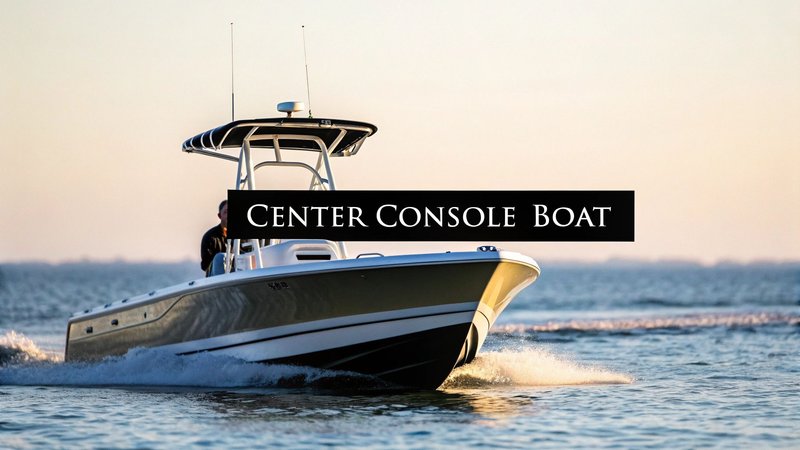
So, you're on the hunt for a boat center console for sale. Excellent choice. You’ve just waded into one of the most versatile and popular boat categories out there. These boats are the ultimate utility players on the water, celebrated for their wide-open decks and a helm station smack in the middle.
That central command post gives you a full 360-degree view and unimpeded access to every inch of the boat. It’s a design that makes them rockstars for fishing, perfect for family fun, and ready for just about any adventure you can dream up. They’re a stable, dependable platform that can handle it all, making them a top choice for both new and experienced boaters.
Before you get lost in a sea of online listings, it’s worth taking a moment to understand what really makes a center console tick. Think of it as the SUV of the boating world—it’s built for practicality, space, and adapting to whatever you throw at it. That layout isn't just about style; it's pure function.
Fishermen are huge fans because they can cast a line or land a fish from anywhere on the boat without wrestling with a cabin or awkward seating. For a family day out, that same open layout means plenty of room to move around, soak up the sun, or just kick back and enjoy the ride. This chameleon-like ability to fit any need is exactly why they’re so incredibly popular with shoppers.
It's not just you—the demand for these do-it-all boats is on a serious upswing. The global market for center consoles was valued at around USD 1.5 billion in 2023 and is projected to climb to USD 2.2 billion by 2032.
This isn't just a fleeting trend. It reflects a bigger shift toward recreational boating as more people discover the pure joy of being on the water. For a deeper dive into what's driving this growth, you can check out the full analysis of the global center console boats market.
What does this hot market mean for you as a buyer? More choices. You'll find everything from slick new models loaded with the latest gadgets to a healthy supply of well-maintained used boats waiting for their next owner.
A center console’s greatest strength is its simplicity and open-concept design. This layout provides a blank canvas that can be equipped for serious offshore fishing, casual family cruising, or watersports, making it an ideal choice for boaters with diverse interests.
To get your search started on the right foot, let’s break down the options by size. This is probably the first big decision you'll need to make, as it directly influences what the boat can do and what it will cost.
This table is a great starting point. It breaks down the main size classes to help you quickly figure out which category best fits your plans and your wallet.
| Boat Size Class (ft) |
Primary Use Case |
Typical Price Range (New) |
Key Advantage |
| 15-20 ft |
Inshore fishing, bay cruising, small lake boating |
$25,000 - $60,000 |
Easy to trailer, low operating costs |
| 21-25 ft |
Coastal fishing, family outings, watersports |
$60,000 - $150,000 |
Versatile for both inshore and nearshore use |
| 26-30 ft |
Nearshore/offshore fishing, larger family groups |
$150,000 - $300,000 |
Better rough-water handling and more amenities |
| 31+ ft |
Serious offshore fishing, long-range cruising |
$300,000+ |
Superior performance, luxury features, high capacity |
Think of this chart as your roadmap. Once you have a size range in mind, you can start digging into the specific models and features that will make your time on the water perfect.
A boat's spec sheet can look intimidating at first glance, like trying to read a foreign language. But once you know what to look for, those numbers tell you everything about how a boat will actually perform on the water. Think of it less like a technical manual and more like the boat's resume—it lays out its strengths, its limits, and what it was truly built to do.
When you're looking at a boat center console for sale, getting comfortable with these specs is your key to finding the right match. It lets you see past the shiny gelcoat and understand the boat's core DNA.
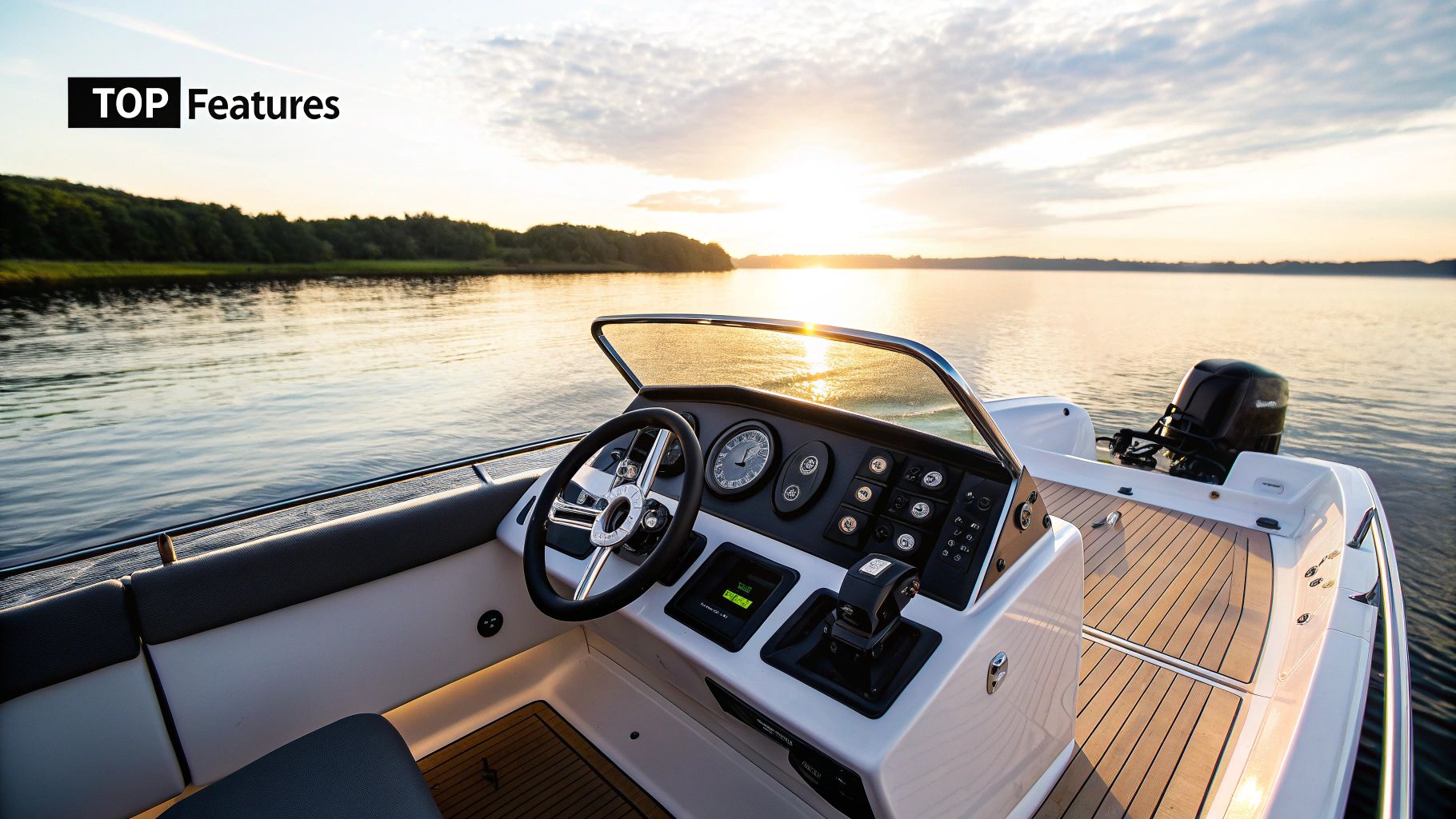
Let's break down the most important numbers so you can translate them into a clear picture of your future days on the water.
The first stats you'll always see are Length Overall (LOA), Beam, and Draft. These three aren't just random numbers; they work together to define everything from how the boat handles chop to where you can actually take it.
- Length Overall (LOA): This is the tip-to-tail measurement of the boat. Generally speaking, a longer boat will give you a smoother, drier ride in choppy seas. The trade-off? It's tougher to trailer and needs a bigger, often more expensive, slip at the marina.
- Beam: This is simply the boat's width at its widest point. A wider beam is a game-changer for stability, much like a car with a wide wheelbase. It dramatically reduces that side-to-side rocking motion, which is a huge plus when you have people moving around or are fighting a fish.
- Draft: This number is critical. It tells you how much water the boat needs to float without the hull or engine scraping the bottom. A shallow draft (under 2 feet) is your ticket to exploring skinny water and nosing up to sandbars. A deeper draft usually means you have a deep-V hull, built to slice through offshore waves.
A boat's personality comes from how these dimensions interact. A long, narrow boat might be fast and efficient, but it could feel a bit tippy. On the other hand, a shorter, wider boat will feel solid as a rock but might pound a bit more heading into a stiff chop.
Right after the boat's size, the engine is the most critical choice you’ll make. Get it right, and you've got reliable power for years. Get it wrong, and you're in for a world of sluggish performance and eye-watering fuel bills.
As you browse listings for a boat center console for sale, you'll notice one type of engine dominates the market: the outboard. The industry data is clear—outboard engines are widely favored for their fantastic performance, easier maintenance, and the simple fact that they don't eat up valuable deck space. You can dig deeper into these market trends in center console boats to see just how popular they are.
So, what should you be looking for on the transom?
One of the first big decisions is whether to go for one engine or two. There’s no single right answer; it all comes down to where and how you plan to use your new boat.
Single Outboard Engine:
- Pros: The upfront cost is lower, you'll get better fuel economy, and your annual maintenance bill is cut in half.
- Cons: If that one engine quits miles from shore, you don't have a backup.
- Best For: Boaters who stick to inshore waters, lakes, or stay close enough to the coast to get help easily.
Dual Outboard Engines:
- Pros: The ultimate peace of mind. One engine down? The other will get you home. Twins also give you way more control and maneuverability around the dock.
- Cons: You're paying more upfront, doubling your maintenance costs, and burning more fuel.
- Best For: Anyone heading offshore, boaters who value redundancy above all else, or those needing extra grunt for watersports.
Horsepower (HP) is what ties this all together. Every hull is designed by the manufacturer with a recommended horsepower range. It’s vital to stay within that zone. Underpowering a boat makes it feel lazy and struggle to get on plane, while overpowering it is just plain dangerous and can lead to unpredictable handling. The goal is to find that sweet spot with enough power for your needs without having to mortgage your house to pay for fuel.
If the engine is the heart of a boat, then the hull is its soul. It's the part that's always in contact with the water, and its shape dictates everything about how your boat handles, from slicing through waves to sitting still at the dock. Honestly, choosing the right hull is one of the most critical decisions you'll make, impacting your safety, comfort, and just how much fun you have out there.
When you're scrolling through listings for a boat center console for sale, it’s easy to get distracted by the shiny topside features. But you have to look deeper—literally. Picking a hull that doesn't match your local waters is a classic rookie mistake, one that can turn a perfect day into a bone-jarring, miserable ride.
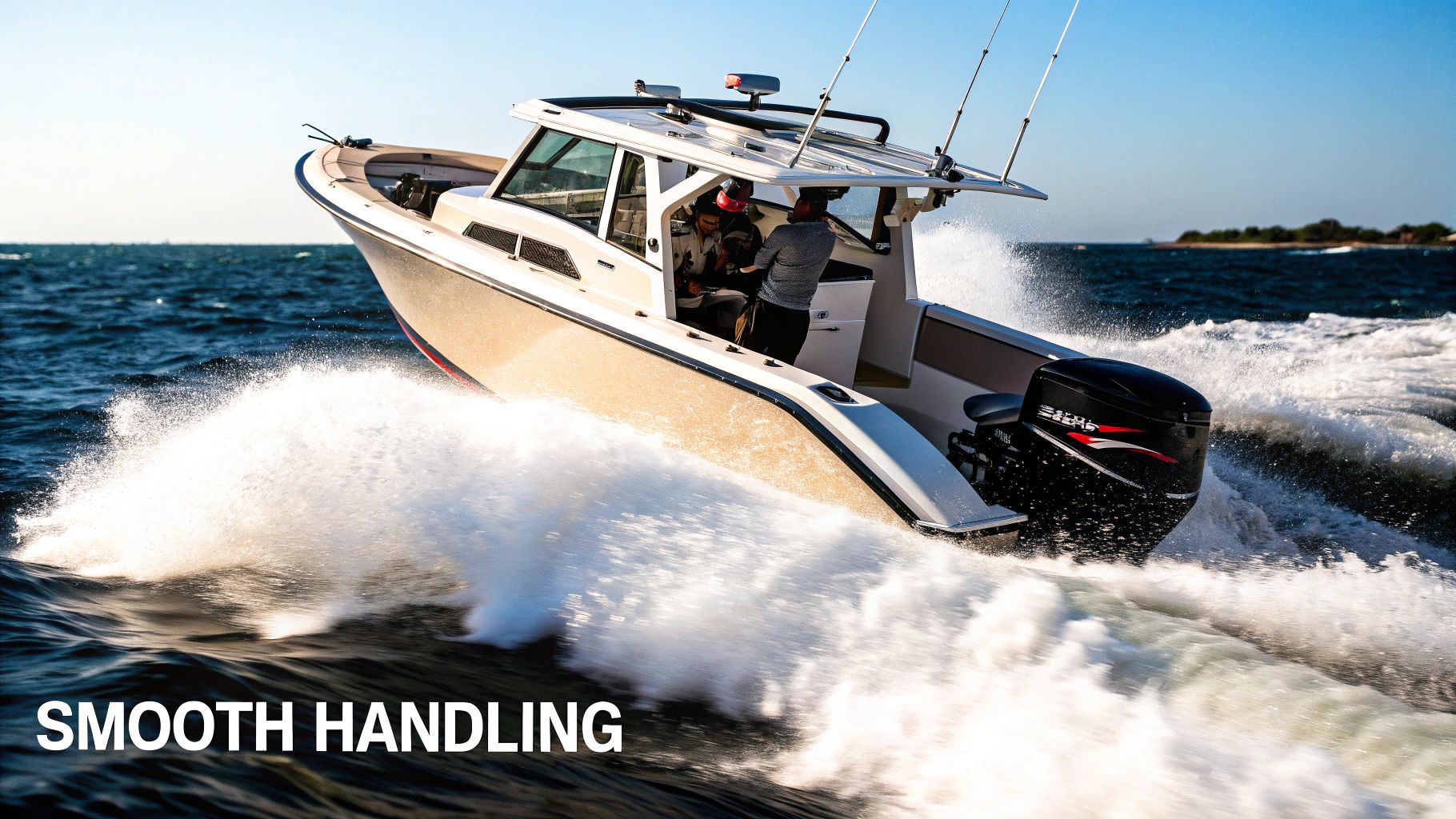
So, let's get into the three main hull designs you’ll come across. Understanding these will give you the confidence to pick a boat that’s truly right for you.
Imagine you're trying to cut through a thick steak. You wouldn't use a butter knife, right? You’d grab a sharp chef's knife. That’s exactly what a deep-V hull does to rough, open water. Its sharp entry point slices cleanly through waves instead of slamming down on top of them.
This design is all about its aggressive angle, called deadrise. Think of deadrise as the "V" in the hull, measured in degrees. Anything with a deadrise of 20 degrees or more is firmly in deep-V territory.
- Best For: Offshore fishing runs, crossing big lakes that can get nasty, and anyone who refuses to let a little chop ruin their day.
- Trade-Off: That sharp V, so brilliant for cutting waves, can make the boat a bit tender or "tippy" when you're anchored or drifting. It also needs more water to float, meaning it has a deeper draft.
If you’re dreaming of chasing fish miles from the coastline, a deep-V isn't just a nice-to-have; it's a must. It gives you the soft, predictable ride you need to handle whatever the open ocean throws at you.
Now, let's head to the other end of the spectrum with the flat-bottom hull. Instead of a knife, picture a raft. This hull is designed to ride on top of the water, not cut through it. The result is incredible stability when you're not moving.
With practically no V-shape at all, this hull has an incredibly shallow draft. That's its superpower. It can sneak into skinny backwaters, tidal creeks, and flats where other boats wouldn't dare to go.
A flat-bottom hull offers rock-solid stability at rest, making it the perfect platform for poling across a flat or throwing a cast net in calm water. But be warned: that same design will deliver a harsh, pounding ride in even the slightest chop.
This is the go-to design for dedicated inshore anglers or anyone who sticks to small, protected lakes and rivers where waves are a non-issue.
It’s no surprise that the modified-V hull is the most popular design you'll find when looking at a boat center console for sale. It's the ultimate compromise, expertly blending the best traits of the other two designs into a single, versatile package.
A modified-V typically starts with a sharper V at the bow to handle chop, which then tapers to a flatter section at the stern. This hybrid shape gives you a decent ride in moderate waves, good stability when you stop to fish, and a shallower draft than a true deep-V.
Hull Design At a Glance
| Hull Type |
Primary Strength |
Ideal Environment |
Key Compromise |
| Deep-V |
Smooth ride in rough water |
Offshore, large lakes |
Less stable at rest, deep draft |
| Modified-V |
Versatility and stability |
Coastal, bays, large rivers |
Good at everything, master of none |
| Flat-Bottom |
Extreme stability, shallow draft |
Backwaters, ponds, creeks |
Rough ride in any chop |
At the end of the day, picking the right hull comes down to being honest with yourself about where you'll spend 90% of your time. Don't buy a brawny offshore machine if you really just want to explore shallow bays. And please, don't get a flat-bottom skiff if you know you need to cross a choppy inlet to get to your favorite spot. Match the hull to your home waters, and you're setting yourself up for success from day one.
A center console’s layout and features are what really make it your boat. The exact same hull can be a hardcore fishing machine or a comfortable family cruiser—it all comes down to how it's equipped. Getting this right is the key to finding a boat that doesn't just sit at the dock, but perfectly fits your life on the water.
Think of it like buying an RV or a truck. You could get the base model with a simple layout for practical trips, or you could option it out with luxury amenities for family adventures. The frame is the same, but the features define its purpose. Let’s break down what to look for, whether you're chasing fish or chasing sunsets with the family.
This graphic gives you a quick snapshot of how price, power, and passenger capacity tend to scale up.
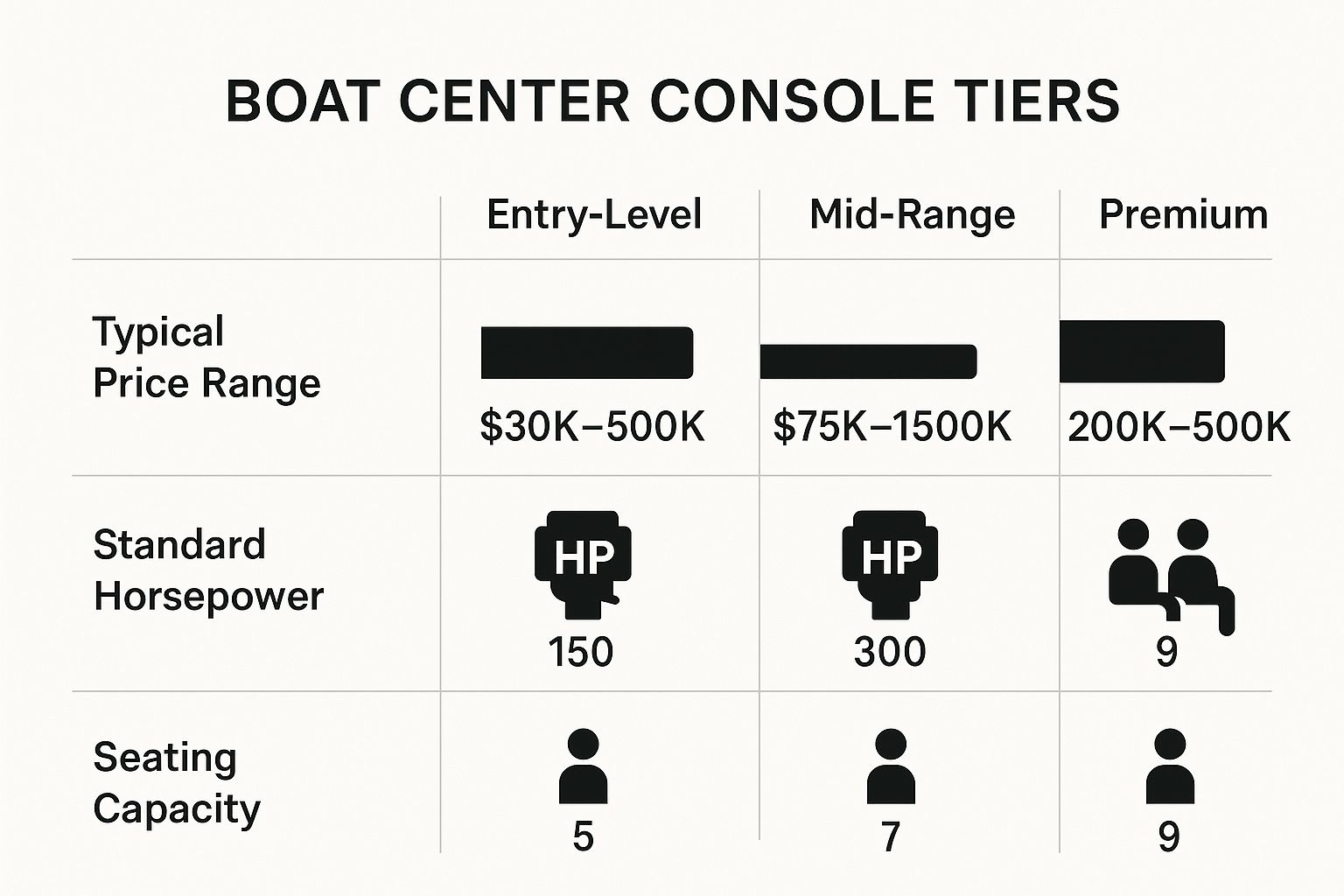
As you can see, jumping up in size doesn't just affect the price tag. It opens the door to more powerful engines and more room for people, letting you plan bigger adventures with more friends and family.
For a serious angler, a center console isn't just a boat; it's a tool. Every single feature should make it easier to find, fight, and land the catch of the day. Here, pure function wins out over plush comfort every time. The whole layout is designed for 360-degree fishability when the bite turns on.
When you're looking at a boat with fishing as your top priority, these are the non-negotiables.
- Livewells and Baitwells: These are absolutely essential for keeping your bait frisky and your catch fresh. Look for a system with strong circulation. A 20-gallon tank is usually fine for inshore trips, but if you're heading offshore, you'll want 40 gallons or more.
- Rod Holders and Rocket Launchers: You can never have too many. Seriously. Check for plenty of gunwale-mounted holders for trolling, plus a set of "rocket launchers" on the T-top or leaning post to keep extra rods safely out of the way.
- Integrated Fish Finders and GPS: Modern marine electronics are total game-changers. A big, bright screen with CHIRP sonar technology and detailed GPS maps is an angler’s best friend for finding underwater structures and getting back to your secret spots.
- Raw Water Washdown: After you land a fish, things can get messy. A raw water washdown uses a pump to spray down the deck with sea water, making cleanup a breeze so you can get back to fishing.
When family fun is the main mission, the focus shifts completely from fishability to comfort, safety, and convenience. The goal here is to create a welcoming space where everyone, from toddlers to grandparents, can kick back and enjoy a day on the water.
This means you’re looking for features that enhance the whole experience, not just the fishing.
For a family boat, the single most important feature is often just good shade. A well-designed T-top or bimini can easily add hours to your day on the water, offering critical protection from the sun. It can be the difference between a great day and a trip cut short by sunburns.
Here are the must-have features for a family-friendly center console:
- Comfortable Bow Seating: Forget spartan casting decks. You want plush, forward-facing lounge seats with high backrests in the bow. Many models even offer a filler cushion that turns the whole area into a massive sunpad.
- Enclosed Head Compartment: A small private bathroom, or "head," tucked inside the console is a huge plus for families. For anyone with young kids, this feature alone can turn a two-hour trip into a full-day adventure.
- Swim Platform with Ladder: A wide, integrated swim platform on the stern makes it safe and easy to get in and out of the water. Make sure it has a sturdy, telescoping ladder that’s easy to use.
The demand for boats that can do it all—but especially fish—is a massive force in the industry. The global market for center console fishing boats was valued at around $16.57 billion in 2025 and is projected to surge past $26.21 billion by 2033. This incredible growth underscores just how important these purpose-built features are to today's buyers. You can dive deeper into the data by exploring more about the growing center console fishing boats market and see how these trends are shaping the boats of tomorrow.
The differences become really clear when you see the typical features side-by-side. While many boats try to blend both worlds, dedicated models will lean heavily in one direction.
| Feature |
Dedicated Fishing Model |
Family Hybrid Model |
| Bow Area |
Open casting deck, insulated fish boxes |
U-shaped lounge seating with backrests, sunpad filler |
| Seating |
Leaning post with rocket launchers, minimal rear seats |
Forward-facing rear bench seat, helm chairs with bolsters |
| Storage |
Tackle centers, in-deck fish boxes, rod lockers |
Dry storage for bags, cooler space, life jacket compartments |
| Key Amenity |
Large, pressurized livewell |
Enclosed head inside the console |
| Flooring |
Non-skid fiberglass, optional SeaDek padding |
Snap-in carpet or soft-touch marine flooring |
| Extra Features |
Outriggers, raw water washdown, cutting boards |
Ski pylon, freshwater shower, cockpit table, stereo system |
Ultimately, the best boat is the one that has the features you will actually use. Understanding this distinction is the first step toward making a smart purchase that you'll be happy with for years to come.
When you're looking for a center console boat for sale, it's easy to get tunnel vision and focus on just one number: the purchase price. But any seasoned boat owner will tell you that the sticker price is just the down payment on the total cost of ownership. If you want to make a smart investment, you need a budget that accounts for everything that comes after you sign the papers.
Think of it like planning a big road trip in an RV. You don't just budget for the boat itself; you have to factor in fuel, insurance, campsite fees, and routine maintenance. A boat is no different, and getting ahead of these expenses from the start is what separates a happy boater from a stressed-out one.
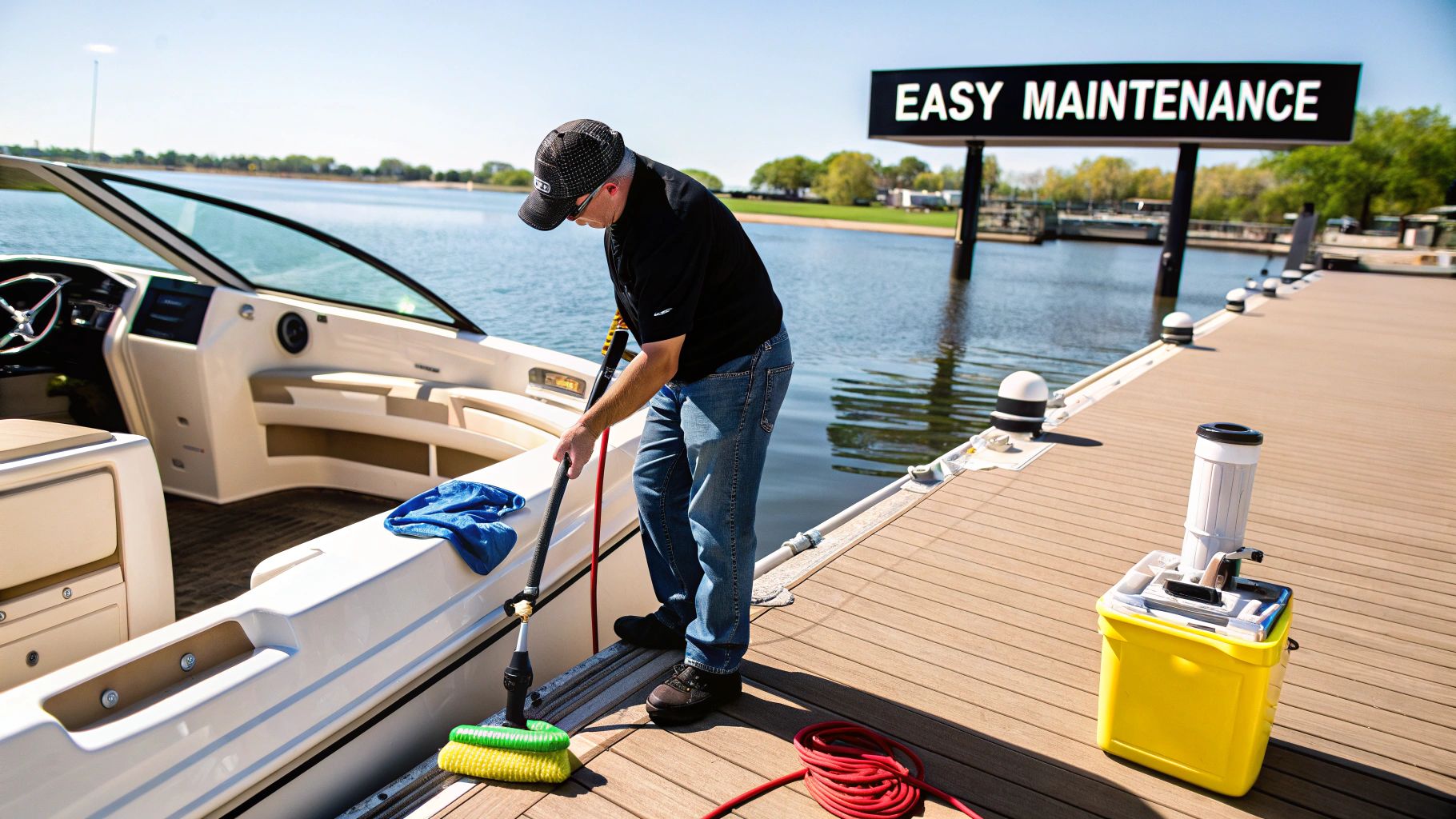
Right out of the gate, before you even splash the boat for the first time, a handful of immediate costs will pop up. It's best to factor these into your initial number so there are no surprises when you're ready to close the deal.
- Taxes, Title, and Registration: Just like buying a car or RV, you've got sales tax and fees to legally title and register the boat. These can vary wildly from state to state, but they can easily add a few thousand dollars to your total outlay.
- Trailer Fees: If your boat comes with a trailer, it often needs its own registration and license plate. It's another small but necessary fee to add to the list.
- Safety Gear: You can't legally—or safely—leave the dock without a full complement of safety gear. This means life jackets for everyone on board, a fire extinguisher, flares, a horn, and dock lines.
This is where the real-world cost of boating lives. The purchase is a one-time hit, but the ongoing expenses determine if you can truly afford to own the boat year after year. A good rule of thumb is to budget roughly 10% of the boat’s value for annual operating costs.
A boat purchase isn’t a single transaction; it’s an ongoing financial commitment. Understanding and planning for recurring costs like insurance, storage, and maintenance is the key to sustainable and stress-free boat ownership.
Here are the big-ticket items you'll need to plan for every year:
- Insurance: This one is non-negotiable. Boat insurance protects your investment from theft, damage, and liability. Your rates will depend on the boat's value, your experience on the water, and where you plan to use it.
- Storage: Where is the boat going to live? Your options range from a free spot in your driveway to a slip at a marina or a dry-stack facility, which can run you hundreds or even thousands of dollars a year.
- Fuel: This is probably your biggest variable cost. A day of fishing or cruising can burn through a lot of fuel, so think about your engine's efficiency and how often you realistically plan to be out on the water.
- Routine Maintenance: This covers everything from annual engine servicing (oil, filters, etc.) and winterization in colder climates to regular cleaning. Staying on top of routine tasks is the best way to prevent a small problem from turning into a massive, expensive headache.
If you’re looking at a pre-owned boat, there's one expense that isn't a cost—it's an investment. I'm talking about a professional marine survey. This is a top-to-bottom inspection of the hull, engine, and all systems by a certified expert. It's the boat equivalent of a home inspection, and it is absolutely essential.
A good surveyor will find hidden problems you'd never spot yourself, like structural issues, water intrusion, or looming engine troubles. The final report gives you incredible negotiating leverage and, more importantly, peace of mind that you're buying a safe, seaworthy vessel. Skipping this step to save a few hundred bucks is a high-stakes gamble that could cost you thousands down the road.
Alright, you’ve done your homework, you know what you need, and you’ve got a budget in mind. Now for the fun part: the hunt. When you start searching for a boat center console for sale, you'll find there are a few key places to look, and each one has its pros and cons. Knowing where to start is just as crucial as knowing what you're looking for.
You're not alone in this search, either. The center console market is booming. Valued at roughly $5 billion in 2025, it's projected to grow at a 6% CAGR through 2033. This surge in popularity means more boats are hitting the market every year, giving you a wider selection than ever before. If you're curious about what's driving this trend, you can dive into the full market research on center console boats.
Your path to finding the perfect boat will likely lead you down one of three main avenues. Each offers a completely different buying experience, from the guided, secure process at a dealership to the thrill of uncovering a great deal from a private owner.
Think of a boat dealership as the most straightforward and secure route to ownership. They are your one-stop shop for new and certified pre-owned boats, and they usually offer a full suite of services like warranties, financing, and a service department to handle future maintenance. For a first-time buyer, the peace of mind and expert guidance from a good dealer can be priceless.
This is where the treasure hunt really begins. You can find some incredible deals and meticulously maintained boats on online marketplaces and in local classifieds. The catch? The responsibility is all on you. This path requires a sharp eye and a healthy dose of skepticism.
When buying from a private seller, trust your gut. A deal that feels too good to be true probably is. Major red flags include a seller who is hesitant about a sea trial, can't provide clear title paperwork, or pushes for a quick, cash-only transaction.
Honestly, there's no better way to see a massive variety of boats in a single afternoon. A boat show is a fantastic opportunity to climb aboard dozens of different models, get a feel for their layouts, and compare them side-by-side. You can talk directly with factory reps and dealers all in one place. Even if you don't end up buying at the show, it's an incredible research tool.
It doesn't matter if you found your dream boat at a high-end dealership or on a local forum—these last two steps are absolutely non-negotiable. They are your best defense against buyer's remorse and a costly mistake.
- The Sea Trial: This is the ultimate test drive. You need to feel how the boat handles on the water. Open it up, make some turns, and listen to the engine at different speeds. Does it feel right?
- The Professional Inspection: For any used boat, hiring a certified marine surveyor is the smartest money you'll spend. They'll crawl through every inch of that boat—hull, engine, electrical systems—and find potential problems you'd never spot on your own.
Alright, let's wrap this up by hitting some of the most common questions shoppers ask when looking at center console boats for sale. Getting these sorted out will give you that last bit of confidence you need to make a great purchase.
For anyone just getting into boating, the advice is almost always the same: look for something in the 18 to 22-foot range. This is the real sweet spot for new buyers.
A boat in this class is big enough to handle coastal chop or a busy lake with confidence, so you'll feel safe. But it's still small enough that you won't break a sweat trailering it, launching it at the ramp, or docking it. It’s the perfect size to learn the ropes without feeling overwhelmed, whether you're fishing inshore or just cruising with the family.
Plus, a boat this size usually runs on a single outboard engine, which keeps your fuel and maintenance bills from getting out of hand. That’s a huge win compared to bigger boats with twin engines.
Think of a 20-foot center console as the perfect "starter home" on the water. It gives you everything you need to build your skills and figure out what you truly love about boating before you even think about upgrading to something bigger and more specialized.
How Much Should I Budget for Annual Maintena
Ready to find your perfect center console? SearchShop.com makes it easy to filter by size, price, engine hours, and location — so you spend less time searching and more time on the water. Start browsing center consoles today.