
So, you’re ready to buy a motorcycle. It’s a huge decision, and honestly, it’s one of the most exciting purchases you’ll ever make. That feeling of hitting the open road is what it's all about, but getting there takes a bit more than just picking a bike that looks cool. This same logic applies whether you're shopping for a two-wheeled machine, an RV for cross-country trips, or a boat for weekends on the water.
This guide is your roadmap. Think of me as your experienced buddy who's been through this a few times. We're going to break down the entire process—from figuring out what kind of rider you really are to shaking hands on the final deal. No fluff, just practical steps to get you on two wheels.
My goal here is to help you connect your passion for adventure with the smarts to make a great purchase. We'll cover everything you need to know so you can walk in with confidence and ride away with a bike that’s perfect for you.
What to Expect from This Guide
We're going to tackle this one step at a time. This is the complete playbook for buying a motorcycle, whether it's your first or your fifth.
Here’s a look at what’s coming up:
-
Pinpointing Your Perfect Ride: Are you a weekend warrior carving up backroads, or are you looking for a long-haul touring machine? We’ll start by nailing down the right vehicle for your actual life.
-
The Hunt for Your Bike: I’ll show you the ins and outs of searching for new and used motorcycles, and how to spot a great deal (and a lemon) in online listings.
-
Kicking the Tires (and Then Some): You'll learn exactly what to look for during an inspection and how to get the most out of a test ride. This is where you separate the good from the "no, thanks."
-
Making It Yours: Finally, we’ll talk money. From financing and negotiation tactics to handling all the paperwork, we'll get you through the finish line.
Look, buying a motorcycle can feel a little overwhelming, but it doesn't have to be. By following a clear process, you can make sure the vehicle you end up with is the one you’ll love for years to come. The whole point is to match the machine to your mission, so every ride is pure fun.
Defining Your Ideal Motorcycle and Riding Style
Before you even think about scrolling through listings, the most important work happens in your head. It's so easy to get mesmerized by a sleek sport bike or a rumbling cruiser, but the secret to a great purchase is getting brutally honest about how you're actually going to use your new vehicle.
Are you picturing epic cross-country adventures? Maybe just spirited weekend blasts down your favorite coastal highway? Or are you simply looking for a more exciting way to explore those winding backroads near your home? This same self-assessment is crucial whether you're choosing between a cruiser and a sport bike, or a motorhome and a travel trailer.
Answering these questions helps you build a personal "owner profile." Think of this profile as your North Star for the entire buying process. It keeps you from getting distracted and steers you toward a bike that doesn't just look cool in the garage but feels perfect for the adventures you're dreaming of.
This little infographic breaks down the journey perfectly: dream, plan, and then—finally—ride.
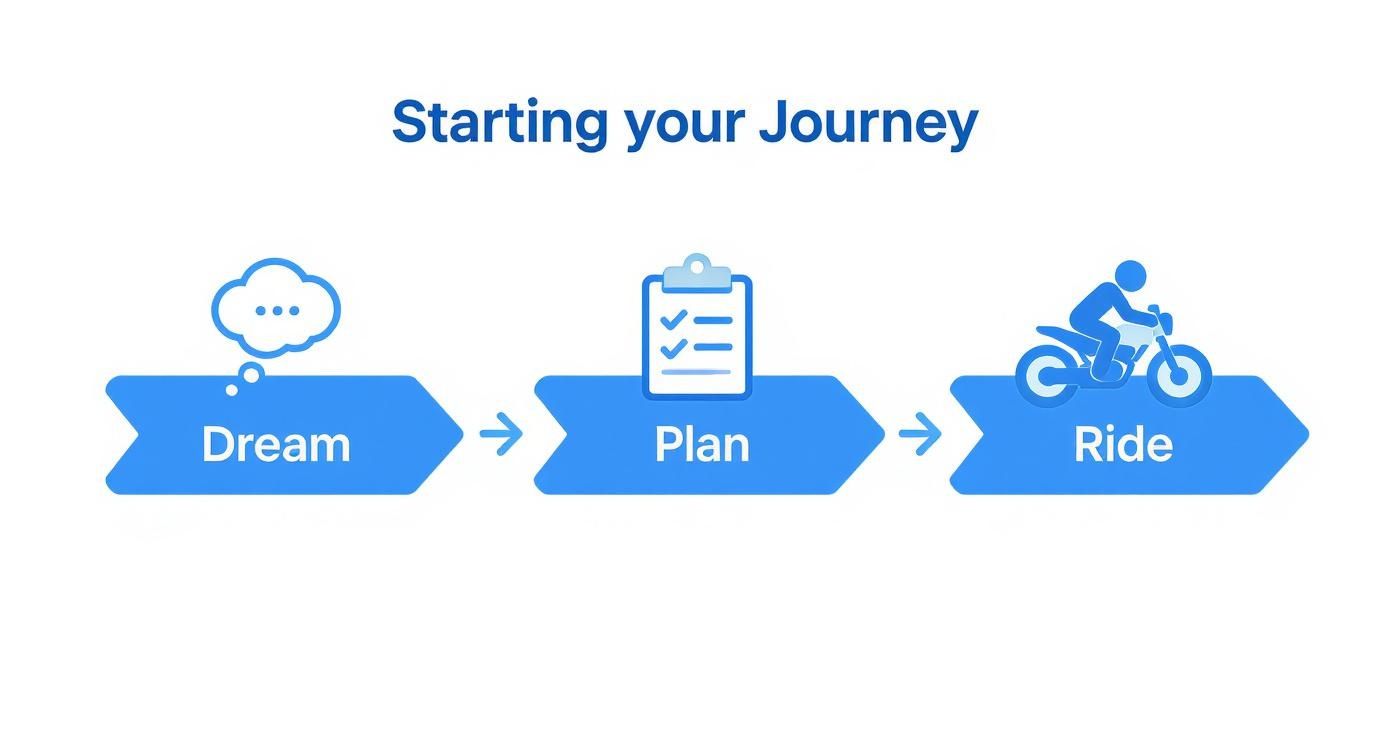
See? It all starts with a clear vision. When you nail down your personal "why" for buying first, you set yourself up to find a machine that truly fits your life.
Matching the Motorcycle to Your Mission
Different bikes are built for different jobs. You wouldn't take a tiny fishing boat out into the deep sea, and you wouldn't pick a race-ready sport bike for a thousand-mile trek across the plains. Getting familiar with the main categories is your first real step.
Let's break down the primary types and who they're for:
-
Cruisers: These are the classic, laid-back hogs known for their relaxed, feet-forward riding position. They’re perfect for comfortable highway miles and just looking cool around town. Think of them as the classic convertible of the motorcycle world—all about the scenic route and enjoying the journey.
-
Touring Bikes: Built for the long haul, these are the RVs of the two-wheeled world. They come loaded with creature comforts like big windshields, plush seats for you and a passenger, and tons of storage. If crossing state lines is your goal, a touring bike is your best friend.
-
Sport Bikes: Pure adrenaline. These machines are designed for speed, sharp handling, and peak performance, which means a forward, aggressive riding stance. They’re an absolute blast on a racetrack or a twisty mountain road but can be a real pain on a long, straight highway.
-
Dual-Sport/Adventure Bikes: The SUVs of motorcycling. These versatile bikes are just as comfortable on paved roads as they are on dirt trails, thanks to their upright riding position and rugged suspension. If your ideal ride involves getting a little lost and exploring where the pavement ends, this is your ticket to freedom.
Why Engine Size and Ergonomics Matter Most
Okay, so you've got a style in mind. Now for the engine. It is so tempting for new riders to go for the biggest, most powerful engine they can find, but that's almost always a mistake. Starting on a smaller, more manageable bike (think 250cc to 650cc) lets you build real confidence and master the fundamentals without being terrified of the machine.
A bike with less than 75 horsepower is often the sweet spot. It has enough get-up-and-go to be fun but is still forgiving enough for a rider who's learning the ropes.
The whole point is to enjoy yourself. A bike that feels too heavy or too powerful will just cause anxiety, not joy. You can always trade up once your skills outgrow your first bike.
Just as critical is ergonomics—how the bike actually fits your body. When you're stopped, can you plant both feet firmly on the ground? Is the reach to the handlebars comfortable, or are you straining your back and shoulders?
A bike should feel like it was made for you. If it’s too tall, too heavy, or the controls feel just out of reach, you’ll spend all your energy fighting the bike instead of flowing with it. Pay close attention to seat height and the bike's overall weight as you browse. A comfortable bike is a safe bike, and it lets you focus on what really matters: the ride itself.
Finding Your Perfect Bike in Today's Market
With a clear picture of what kind of rider you are, you’re ready for the best part: the hunt. This is where you dive into the market, both new and used, to find a machine that truly fits your budget and your dreams for the open road. It's more than just scrolling through pretty pictures; it's about becoming a sharp, informed shopper.
You’ll quickly learn to read between the lines of a listing, whether it's on a dealership's shiny website or a private seller's ad. Knowing what to look for helps you spot potential red flags from a mile away and, more importantly, recognize a genuinely great deal when you see one. Think of this phase as your homework—do it right, and the test ride will be that much sweeter.
New or Used: The First Big Decision
One of the first forks in the road is deciding between a brand-new vehicle straight from the factory or a pre-owned one with some miles already on it. There’s no right answer here. It really boils down to your budget, how comfortable you are with a wrench in your hand, and what level of risk you’re willing to take.
A new motorcycle brings an undeniable sense of security. You get a full factory warranty, the latest tech, and a clean slate—no hidden history. You’re the first and only owner, so you know exactly how it’s been treated from the moment it left the showroom. Of course, that peace of mind comes with a higher price tag, and new vehicles suffer the steepest depreciation in their first couple of years.
On the flip side, a used bike can be a fantastic value. The first owner has already taken that big depreciation hit, which means you can often get a more powerful or better-equipped motorcycle for your money. The trade-off? The unknown. A used bike's future reliability is tied directly to its past, making a thorough, hands-on inspection an absolute must.
Deciding between new and used? This table breaks down the crucial factors to help you make the best choice for your budget and needs.
New vs Used Motorcycle Key Differences
|
Factor |
New Motorcycle |
Used Motorcycle |
|---|---|---|
|
Cost |
Higher initial purchase price. |
Lower initial purchase price. |
|
Depreciation |
Significant drop in value in the first 2-3 years. |
Depreciation has already occurred, slower value loss. |
|
Warranty |
Comes with a full manufacturer's warranty. |
Typically sold "as-is" with no warranty. |
|
Condition |
Perfect, untouched condition. |
Varies from pristine to poor; requires inspection. |
|
History |
No previous owners, no hidden history. |
Unknown history; a vehicle report is crucial. |
|
Technology |
Features the latest safety and performance tech. |
May have older technology and fewer features. |
|
Maintenance |
No immediate maintenance needs. |
May require immediate or upcoming maintenance/repairs. |
Ultimately, both paths can lead to an amazing ride. Your job is to weigh these factors and decide which set of trade-offs you're most comfortable with.
Mastering the Search With Smart Tools
Whether you’re team new or team used, modern search tools are your best friend. Platforms like SearchShop.com are game-changers, letting you filter through thousands of listings for motorcycles, RVs, and boats from both dealers and private sellers all in one place. You can set up alerts for specific models you’re hunting for, compare pricing across different listings, and get a feel for a dealership's reputation before you even walk through their doors.
Pro Tip: Don't just look at the price tag. A listing with just one blurry photo, a super brief description, or vague language is often a warning sign. Good sellers—whether it's a dealer or a private owner—are proud of their vehicle and will provide clear, detailed information.
Once you find a used bike that looks promising, your very next step should be to run a vehicle history report (VHR). For a small fee, this report can uncover a bike's entire past, including accident history, title problems (like a salvage or flood title), and even odometer discrepancies. It’s a tiny investment that can save you from a massive headache down the road.
Understanding the Bigger Picture: Market and Brand
It also pays to understand the lay of the land in the motorcycle world. A brand's global footprint can have a real impact on your ownership experience.
Take Honda, for example. As the world’s largest motorcycle manufacturer, it’s projected to account for about 40% of global unit sales in the fiscal year ending March 2025, with an expected 20.2 million motorcycles sold. A staggering 85% of those sales are in Asia. You can read more about these global sales figures and their industry impact. What does this mean for you? This global dominance translates to a massive dealer network and easily accessible parts, which is a huge advantage whether you’re riding across town or across the country.
By combining smart online research with a solid understanding of the market, you shift from being just another buyer to being an empowered consumer. You’ll be able to confidently find the right vehicle at the right price, setting yourself up for a smooth purchase and countless miles of adventure.
The Hands-On Inspection and Test Ride
So, you've done the homework, scoured the listings, and found a bike that looks like the one on your screen. Great. Now for the most important part of the whole process: getting your hands on it.
This is where the rubber literally meets the road. No picture or description can tell you what your own eyes, ears, and gut will during the in-person inspection and the test ride. Whether you're at a dealership or in some guy's driveway, this is your last, best chance to confirm you've found the right machine before you part with your cash. It's time to do more than just kick the tires.
What to Look For During the Walk-Around
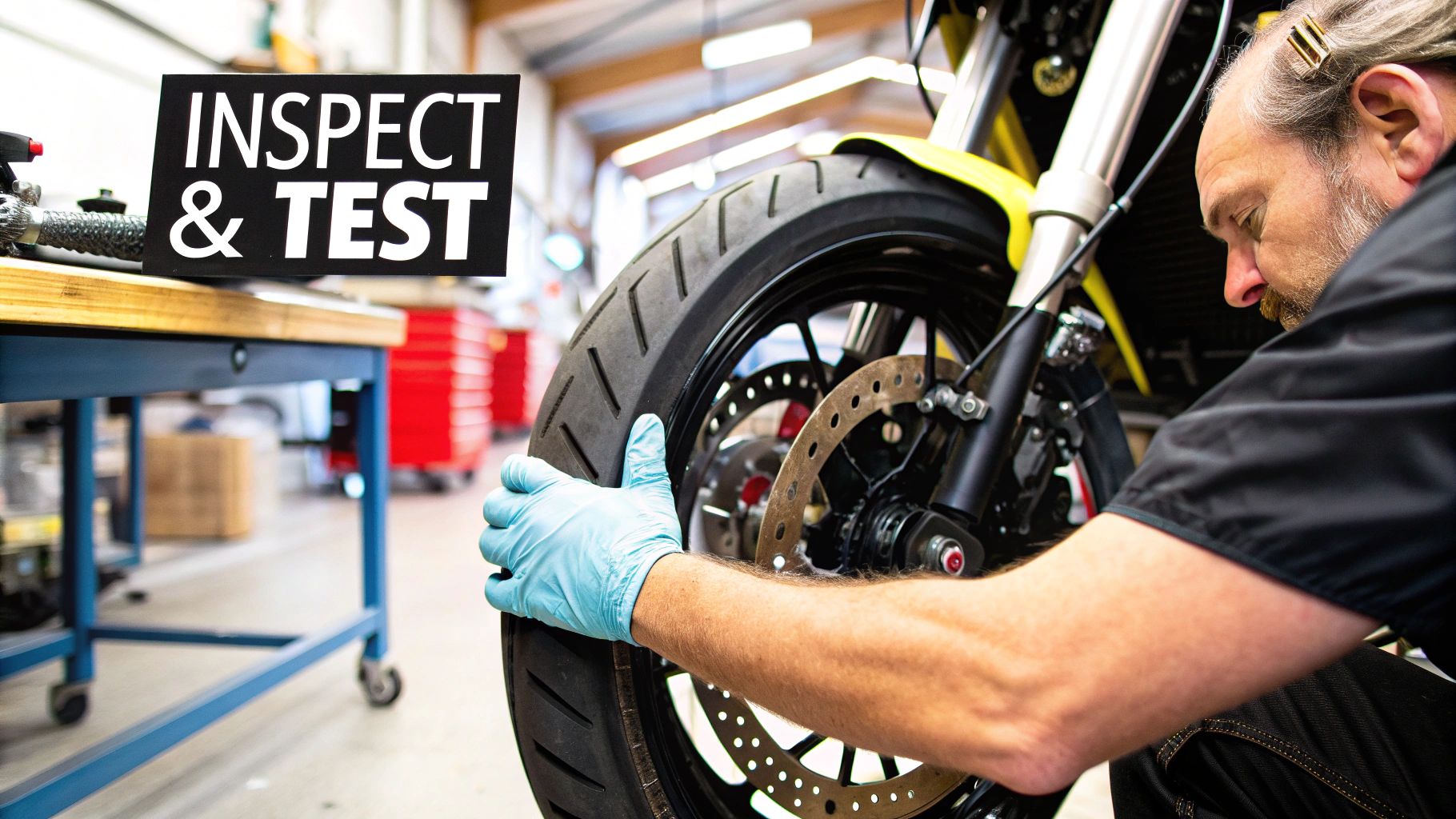
Before you even think about putting a key in the ignition, just walk around the bike. Slowly. This initial once-over tells you a story about how it's been cared for. You’re looking for clues that weren't in the ad.
Start with the big picture. Are there scratches or dents? A few cosmetic blemishes are totally normal on a used bike, but pay close attention to where they are. Deep gouges on the engine case, bar ends, or footpegs are classic signs of a bike that's been dropped, not just tipped over.
Get down on your hands and knees and look at the frame, especially around the steering head. Any hint of a crack or bent tube is a massive red flag. That's a deal-breaker, period. While you're down there, scan for any fluid leaks. A little road grime is one thing, but fresh drips of oil or coolant mean you're buying someone else's repair bill.
Here’s a quick-and-dirty checklist to run through:
-
Tires: How's the tread depth? More importantly, check the sidewalls for cracks. Old, dry-rotted tires need to be replaced immediately, and that’s a few hundred bucks out of your pocket.
-
Chain and Sprockets: The chain shouldn't be rusty or stiff. Look at the sprocket teeth—if they look hooked or sharp like shark fins, the whole set is toast and needs replacing.
-
Brakes: Eyeball the brake pads. Is there plenty of meat left on them? Check the brake fluid reservoir; the fluid should be a clear, honey color, not black sludge.
-
Lights and Electrics: This is simple but crucial. Flick on the lights (high and low beam), test the turn signals, hit the brake lever to check the brake light, and give the horn a toot. Make sure it all works.
A wise old mechanic once told me, "You're not just buying a motorcycle; you're buying its previous owner." A clean, well-maintained vehicle is almost always a better bet than a neglected one, no matter how tempting the price.
The Test Ride Is Your Data-Gathering Mission
Alright, now for the fun part. The test ride isn’t about seeing how fast it goes; it’s about gathering information. You're trying to figure out if this bike truly fits you and if it has any hidden mechanical gremlins. Don't even think about hopping on without your license (with motorcycle endorsement) and proper gear.
The moment of truth starts with the ignition. How does it fire up? A healthy engine should start easily without a lot of drama. Let it idle for a minute and just listen. Do you hear any weird rattling, ticking, or knocking sounds?
As you ease out the clutch and pull away, feel how it engages. It should be smooth and predictable, not jerky or vague. Click through the first few gears. The shifts should feel solid and positive. If it's hard to find neutral or the shifts are clunky, that could be a sign of clutch or transmission issues.
Find a big, empty parking lot first to get a feel for the bike's low-speed manners. Can you do a few tight figure-eights without struggling? A bike that feels top-heavy and clumsy at 5 mph will be a real bear to live with in city traffic.
Evaluating Performance and Feel on the Road
Once you're comfortable, take it out for a real ride. This is where you connect all your visual checks to how the bike actually behaves.
Pay attention to these four things:
-
Brake Responsiveness: Get on the brakes a bit, testing the front and rear separately. They should feel firm and strong, not soft or spongy. If you feel a pulsing in the lever or pedal, the rotors might be warped.
-
Suspension Feel: Aim for a few manhole covers or small bumps. Does the suspension soak them up, or does it feel like you're riding a pogo stick? The bike should feel stable, not bouncy.
-
Engine Performance: Roll on the throttle. Is the power delivery smooth, or does it sputter and hesitate? That could point to fueling problems that can be a pain to diagnose.
-
Ergonomics in Motion: This is the most personal part. How do you feel on the bike? Are your arms at a comfortable angle? Are your legs cramped? A bike can feel perfect sitting still but become a torture rack after ten minutes on the road.
This whole hands-on process is your single best tool for avoiding buyer's remorse. A methodical inspection paired with a focused test ride will tell you everything you need to know. It’s how you find out if this isn't just a good bike, but the right bike for you.
Talking Turkey: Financing and Negotiating Your New Ride
Alright, this is where the rubber meets the road. All that time you spent researching, comparing, and inspecting has led you here. You've found the one, and now it's time to talk numbers. This part can feel like a high-stakes poker game, but it doesn't have to. With a solid plan, you can walk in with confidence and ride out with a great deal.
Think of it this way: a fantastic negotiated price doesn't mean much if you get stuck with a terrible loan. On the flip side, a great interest rate won't save you if you overpaid for the bike in the first place. You have to nail both to truly make a smart purchase.
First, Know Your Real Budget
Before you dream up an offer, you need a rock-solid, all-in budget. So many buyers make the mistake of just focusing on the sticker price, completely forgetting about the other costs that pop up the second you take ownership.
Your actual spending limit has to include these essentials:
-
Riding Gear: If you're new to this, a quality helmet, jacket, gloves, and boots are non-negotiable. Plan for at least $500 to $1,500 for decent starter gear.
-
Insurance: Don't get surprised by this one. Rates vary wildly depending on you, your location, and the vehicle. Get a few quotes before you even start negotiating.
-
Taxes and Fees: Uncle Sam wants his cut. Sales tax, title, and registration fees can easily add another 10% or more to your final cost.
-
Immediate Maintenance: Especially with a used vehicle, it's smart to have cash set aside for an oil change, a fresh set of tires, or a basic tune-up right away.
Adding these up gives you a realistic picture of your total initial investment. That number tells you exactly how much you can actually spend on the bike itself without getting in over your head.
Playing Your Hand: The Negotiation
Negotiating isn't about confrontation; it's a conversation to find a price that works for everyone. The best tools you have are all the facts and figures you've already gathered. Your job is to make a firm, fair offer based on what you know.
Understanding the market is a huge advantage here. For example, motorcycle sales in the United States have been a bit sluggish lately. Sales through June 2025 were down 9.2% compared to the year before. Knowing trends like these, which you can read more about in these reports on U.S. motorcycle sales trends, tells you that sellers might be more motivated to make a deal.
Kick off the conversation by bringing up what you found during your inspection. Don't just say, "I want a lower price." Instead, try something like, "The bike is great, but the tires are nearly bald, and that's a $400 replacement I'll have to do immediately. So, I can offer you X." This grounds your offer in reality.
Expect a counter-offer—it’s just part of the dance. If their number is still within your budget, you can find a happy middle ground. But the most important thing? Know your walk-away price before you start talking and be ready to stick to it. Sometimes the best deal is the one you don't make.
Finalizing the Purchase and Riding Away Safely
The deal is done. You’ve put in the work—the research, the inspection, the negotiation—and now that perfect motorcycle is within reach. This last phase is all about locking it down and making sure you’re ready to hit the road, not just legally, but safely. It’s an incredibly exciting moment, but getting these final details right is what sets you up for years of incredible rides.
Let's get the paperwork squared away first. The process changes slightly depending on whether you’re buying from a dealer or a private seller, but the end goal is always the same: getting that clean, legal title in your name.
Securing the Title and Registration
Buying from a dealership usually makes this part pretty painless. They have a whole system for handling the title transfer, registration, and all the state-specific forms. You'll sign on the dotted line, and they’ll often mail your new license plate and registration straight to your house. It’s one of the real conveniences of going through an established dealer.
A private sale, however, puts the ball in your court. You are now the one responsible for making it all official. The two most critical pieces of paper are the signed-over title from the seller and a bill of sale. Make sure the bill of sale clearly lists the date, purchase price, vehicle identification number (VIN), and has the names and signatures of both you and the seller. Never, ever hand over your cash without getting that signed title in your hand.
The title is everything. An unsigned or missing title is a gigantic red flag. Without it, you can't prove ownership or register the bike, turning your new ride into a very expensive garage ornament.
Gearing Up for Your First Ride
Before you even think about throwing a leg over that bike, you need the right gear. Seriously, this isn't optional—it's the most important investment you can make. A quality helmet, a proper riding jacket, gloves, and sturdy boots are your personal insurance policy. They're the only thing standing between you and the asphalt.
Your very next call should be to an insurance agent. Most states require you to show proof of insurance before you can even register the motorcycle, so don’t put this off. Get that policy activated before you leave the seller's driveway.
If you bought a bike far from home, riding it back might not be an option. For these situations, look into professional transport. A comprehensive motorcycle shipping guide can walk you through finding safe and secure options to get your new ride home.
It’s an exciting time to be a rider. The motorcycle market is projected to climb from USD 121.5 billion in 2025 to USD 179.8 billion by 2035, and every one of those new riders starts right here, with these crucial final steps. To get a better sense of this trend, you can review insights on the global motorcycle market.
Common Questions About Buying a Motorcycle
Even with all the research in the world, a few questions always seem to surface right before you're ready to buy. Let's tackle some of the most common ones I hear, so you can move forward with confidence.
What Should My Real Budget Be?
The sticker price is just the starting line. You've got to account for the other essentials that come with owning a bike.
First up is gear. A quality helmet, jacket, gloves, and boots aren't optional—they're crucial for your safety. This can easily set you back anywhere from $500 to over $1,500, depending on what you choose. Then there's insurance, which can be a real wildcard depending on your age, where you live, and the bike you pick.
Don't forget the administrative stuff, like registration fees, plus a little cash set aside for initial maintenance like a fresh oil change. As a general rule, I tell people to tack on an extra 20-25% of the motorcycle's price to cover all these first-year necessities.
Is a Dealership Better Than a Private Seller?
This one truly comes down to what you value most.
Going through a dealership is all about convenience and security. They handle the financing, offer warranties, and make sure the paperwork is buttoned up. That peace of mind comes at a premium, of course, but for a first-time buyer, it can be invaluable.
On the other hand, a private seller usually means a lower price and more wiggle room to negotiate. The catch? The sale is almost always "as-is." That puts the burden of a thorough inspection 100% on you. It's a higher-risk path, but the savings can be significant if you know what you're looking for.
The biggest mistake I see new riders make is buying too much bike. It's easy to get swept up in the emotion, but choosing a machine that matches your actual skill level will lead to a much better, and safer, long-term experience.
One final piece of advice on the logistics: when you're sorting out insurance for your new ride, it's really important to know what kind of policy you need. Taking a moment for understanding the differences between commercial and personal auto insurance can save you a world of headaches later. Getting the right coverage from the get-go is just as vital as picking the right bike.
Ready to turn all this know-how into action? At SearchShop.com, we give you the tools to analyze prices, dig into vehicle histories, and browse thousands of listings from dealers and private sellers alike. Find your perfect motorcycle, boat, or RV today at https://www.searchshop.com.