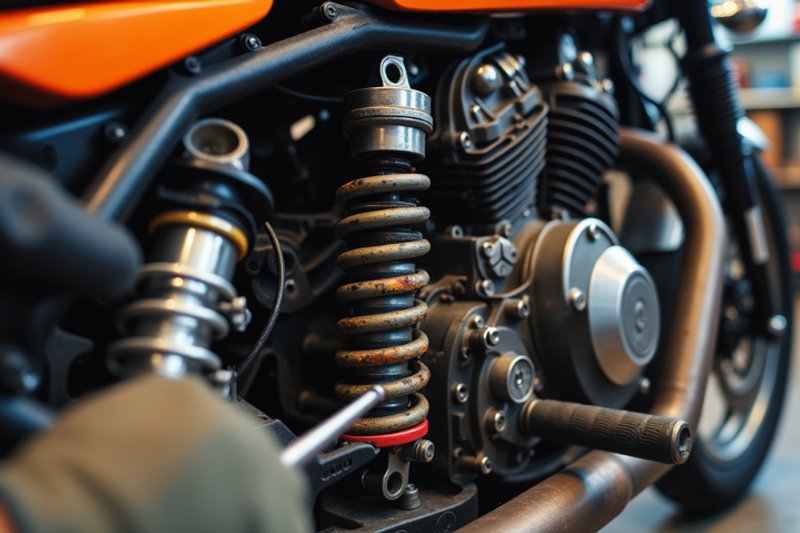
Suspension problems can significantly impact the safety and performance of a used motorcycle. Recognizing the signs of suspension issues is crucial for riders looking to purchase a pre-owned bike. These problems can affect handling, stability, and overall ride quality, making it essential to identify them before making a purchase.
This article will explore seven key indicators of motorcycle suspension problems. We'll cover unusual noises and vibrations, handling and stability issues, visual red flags, and performance-related concerns. By understanding these signs, potential buyers can make informed decisions and avoid costly repairs down the road.
When inspecting a used motorcycle for signs of suspension problems, paying attention to unusual noises and vibrations is crucial. These can be key indicators of underlying issues that may affect the bike's performance and safety.
Clunking noises often point to worn-out or loose components in the suspension system. These sounds typically occur when the motorcycle goes over bumps or during sudden changes in direction. Riders might hear a distinct knocking noise coming from the lower control arm area or the engine bay. This could indicate problems with the upper strut mount, which acts as an upper control arm in some suspensions. A worn upper strut mount can cause various knocking noises that match bumps in the road.
Squeaking or creaking sounds can be another sign of suspension issues. These noises might resemble the sound of bed springs and could be accompanied by a clicking noise. Such sounds often occur when the suspension moves or when the rider applies the brakes. It's important to note that these noises could also stem from other parts of the motorcycle, such as the brakes or steering components.
While some vibration is normal in motorcycles, excessive vibration can indicate suspension problems. Riders might feel buzzing, shaking, or oscillating sensations through the handlebars, seat, or footpegs. These vibrations can vary in intensity and frequency depending on the speed and road conditions. Improperly balanced wheels are a common source of low-frequency vibration, which can be felt as an up-and-down shaking at the handlebar. Side-to-side shaking, particularly noticeable around 80 km/h, might suggest that the wheel is not straight.
Motorcycle suspension problems can significantly impact handling and stability, making riding unsafe and uncomfortable. Riders should be aware of key signs that indicate potential issues with their bike's suspension system.
One of the most noticeable signs of suspension problems is difficulty cornering. When a motorcycle's suspension is not functioning properly, it may feel unstable or wobble during turns. This can cause the bike to run wide in corners, making it challenging to maintain the intended line. In some cases, riders may experience a pulling sensation inside the turn, requiring significant countersteering force to maintain control.
Suspension issues can also lead to problems with steering. Riders may notice that the bike feels heavy or sluggish when turning, especially at lower speeds. This can be caused by various factors, including worn steering head bearings, improper tire pressure, or misaligned wheels. In some cases, the motorcycle may feel like it wants to stand upright, making it harder to initiate turns or maintain lean angles.