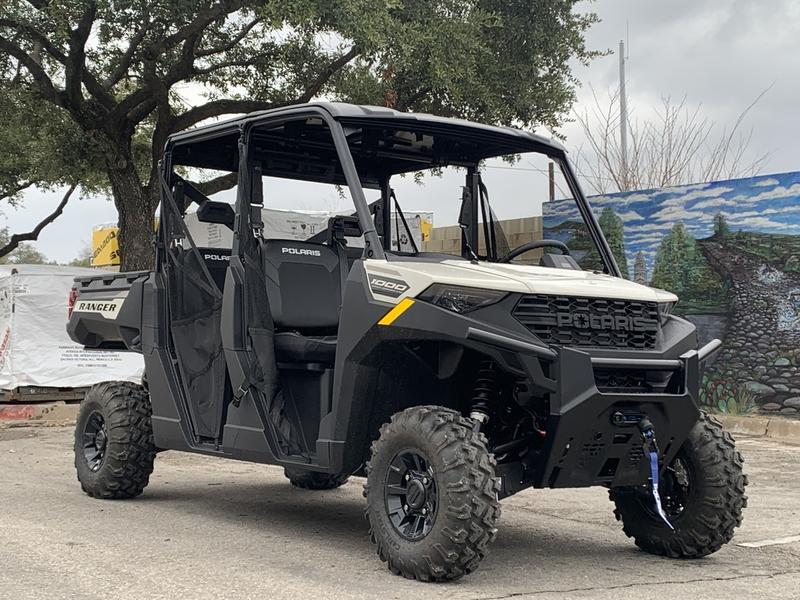
Whether a UTV is street legal depends on the state. Arizona, Utah, Montana and New Mexico issue plates or street-legal registration for side-by-sides that meet their rules. States such as Minnesota, Wisconsin and Michigan allow them only on certain roads, while California, Colorado and Florida keep them off most public roads.
At a glance
- Minnesota, Idaho, Nevada, Michigan, California and Vermont keep side-by-sides off interstates or freeways, with narrow exceptions in some of them, and Michigan, Idaho and Utah cap UTV speed at 25 to 50 mph.
- In states that plate UTVs, the owner must usually add road equipment such as lights, brakes, a horn and mirrors, and carry a driver's license and insurance.
- In Minnesota, Wisconsin, Michigan, Vermont, Texas, Colorado and California, many of the roads open to UTVs are chosen by counties, cities or towns, so local rules decide where you can drive.
- California says an off-highway vehicle can no longer be converted for highway use, and Florida's 2026 bills to allow UTVs on public roads died in committee.
Rules in this guide were read from state agency websites and official statutes on 29 October 2026. If you are shopping now, browse side-by-sides for sale on Searchshop and check your state's rules before you choose a model.
Every rule in this guide comes from a state agency website or the state's official statutes, read on 29 October 2026. Dealer blogs, magazines, forums and insurers were not used as sources. The table covers 15 states whose rules could be confirmed from those primary sources, and states not named are not covered.
State laws use different names for side-by-sides, including UTV, ROV, off-highway vehicle, ORV and class 2 all-terrain vehicle. This guide uses each state's own term where it matters. It is general information, not legal advice, and counties and cities can add their own limits, so confirm the rules with your state agency and local government before you drive on a public road.
Fifteen states handle side-by-sides on public roads in three broad ways: a road plate or street-legal registration, use on roads that a state or local government opens, or a near-total ban outside crossings.
| State | Registration for road use | Where a UTV can drive | Main limits |
|---|
| Arizona | Street-legal registration | Paved and improved roads and streets | Listed equipment, driver's license and insurance |
| California | None; conversion for highway use is not allowed | Crossings, and locally designated combined-use highway segments | Daylight only, driver's license, no freeways |
| Colorado | None; Colorado Parks and Wildlife registration is for off-highway use | Roads the state or a local government designates open, and direct crossings | On roads a local government opens, it may require a license and insurance |
| Florida | None; off-highway vehicles are titled, not registered | No state law authorizes UTVs on public roads | 2026 bills to change this died |
| Idaho | Restricted vehicle license plate | Highways that are not state or interstate highways, plus some state highway stretches | 45 mph or the posted limit, whichever is less |
| Michigan | Plate only if converted and titled as an assembled vehicle | Roads opened by county, township, city or village ordinance | 25 mph on ordinance roads, far right side |
| Minnesota | DNR registration as a class 2 all-terrain vehicle | Right shoulder or far right side of county roads; other roads by local ordinance | Driver's license; interstates and freeways closed with narrow exceptions |
| Montana | License plate once made street legal | Paved highways | Listed equipment and a driver's license |
| Nevada | Registration as a large all-terrain vehicle | General and minor county roads; streets in cities under 25,000 people where an ordinance allows | Driver's license, insurance, no interstates |
| New Mexico | Paved Road plate | Paved roads opened by local ordinance or state resolution | Lights, brakes, mirrors, license and insurance |
| Tennessee | Registration plates if the vehicle meets state specifications | Certain state highways and county roads | Restrictions set in state law; apply through the county clerk |
| Texas | Off-highway vehicle license plate, not highway registration | Master planned communities, and some roads of 35 mph or less | Daytime and distance limits |
| Utah | Street-legal ATV/UTV registration | Streets and highways with one lane in each direction | 50 mph top speed, license, insurance |
| Vermont | ATV registration and a VASA Trail Access Decal | Highways a town, or for state highways the Secretary of Transportation, has opened and posted | Liability insurance; no limited-access highways |
| Wisconsin | DNR UTV registration | Designated ATV/UTV routes and some roads of 35 mph or less | No operators under 16 on a roadway, with exceptions |
Speed limits in the last column are the rules for UTVs, not the posted limit of the road, except where the table says a road's limit.
Arizona, Utah, Montana, New Mexico, Idaho, Tennessee and Nevada each offer a plate or registration that lets a qualifying side-by-side use some public roads. Michigan offers a plate only after conversion.
Arizona State Parks says registration is required "if you want your OHV to be 'street legal' (legal to be operated on paved and improved roads and streets)." The off-road or "RV" title plate is not a registration plate. Its rule of thumb: "If a passenger car can use the road, it needs to be registered." A street-legal OHV needs the equipment listed in the equipment section below, a licensed driver and insurance that meets the state's mandatory insurance rules.
Utah lets an all-terrain type 1 vehicle or a UTV that meets the requirements operate as a street-legal ATV/UTV "on a street or highway with one lane in each direction." The Driver License Division says a street-legal ATV "may not exceed 50 MPH," must follow all traffic laws, and requires vehicle registration, a driver license and insurance. Riders younger than 21 must wear a DOT-approved helmet. The Utah DMV says the tan off-highway vehicle plate is not street legal.
Montana Fish, Wildlife and Parks says that to ride an OHV, including a side-by-side, on paved highways "it must be street legal and have a license plate." State law requires the operator to carry a driver's license on a highway.
New Mexico's Motor Vehicle Division will not register off-highway vehicles as street legal, even if modified. Instead it issues a Paved Road plate, which "serves as the registration for owners who intend to operate an off-highway motor vehicle on paved streets or highways." The plate only helps where a local ordinance or a state transportation commission resolution has opened a paved road.
Idaho charges a restricted vehicle license plate fee to operate a UTV on city, county or highway district roads open to that use. Idaho law allows these vehicles on highways that are not state or interstate highways, and on some state highway stretches. They may not travel faster than the posted limit or 45 mph, whichever is less, and are barred from interstates and full access-controlled state highways.
Tennessee's Department of Revenue says vehicles not intended for highway use "may qualify for registration plates and may be operated on certain roads in Tennessee" if specifications are met, and owners apply through the county clerk. A 2025 law, Public Chapter 255, authorizes UTVs on county roads and state highways "subject to certain restrictions," so ask the county clerk which rules apply before you register.
Nevada registers a "large all-terrain vehicle" for certain roads, which state law defines as an all-terrain vehicle with seating for at least two people side by side. A registered large all-terrain vehicle may use roads designated as general or minor county roads, and a city or county may prohibit that by ordinance. Nevada requires insurance for this registration.
Michigan's Secretary of State says an ORV cannot be operated on a road "unless converted and titled as an assembled vehicle with registration and insurance." A converted vehicle needs a state license plate and Michigan No-Fault insurance. Without conversion, Michigan's road access comes from local ordinances, covered in the next section.
Minnesota, Wisconsin, Michigan, Vermont and Texas let side-by-sides use public roads only where state law or a local government allows it.
Minnesota's road rules for side-by-sides are written for class 2 all-terrain vehicles: wider than 50 inches but not more than 65 inches, with a total dry weight of 2,000 pounds or less. A class 2 vehicle may run on the right shoulder or the far right side of county and county state-aid highways. A county, city or town may pass an ordinance to allow ATVs on its roads to reach businesses and homes and to connect trails. ATVs are barred from interstate and freeway rights-of-way except on some grant-in-aid trails, and a driver's license is required on a public road right-of-way, with exceptions that include designated trails. Minnesota requires ATVs to be registered with the Department of Natural Resources.
Wisconsin allows UTVs on roadways that are designated ATV routes, using only the far right side, and on roadways that are ATV trails. A town, village, city or county may designate routes, and a state trunk highway needs Department of Transportation approval. A city, village or town may also allow UTVs by ordinance on non-interstate highways with a speed limit of 35 mph or less. No one under 16 may operate a UTV on a roadway, with limited exceptions.
A Michigan county board may adopt an ordinance letting ORVs use county roads, and townships, cities and villages can do the same for their roads. On these roads an ORV must travel at no more than 25 mph, or a lower posted ORV limit, and keep to the far right.
Vermont allows ATVs along a public highway only where the town, or for state highways the Secretary of Transportation, has opened it to ATV travel and posted it. Vermont's ATV definition covers vehicles up to 72 inches wide. Limited-access highways and the Interstate are excluded unless the Traffic Committee permits. Operators need a bond or liability policy of at least $25,000 for one person, $50,000 for two or more people and $10,000 for property damage.
Texas law says the state "may not register an off-highway vehicle for operation on a highway regardless of whether any alteration has been made to the vehicle." The Texas DMV instead issues an off-highway vehicle license plate. A plated vehicle may run in a master planned community, or in daytime on a road with a posted limit of 35 mph or less, no more than two miles from where it is usually parked, for trips to or from a golf course. Cities may allow off-highway vehicles on roads with a posted limit of 35 mph or less.
Many of the roads open to UTVs in these five states are set locally, so check with your county, city or town. When you compare machines, see Searchshop's guide to 4-seat side-by-sides for seating and width.
Colorado, California and Florida allow side-by-sides on public roads only in narrow cases, such as crossings or specially designated roads.
Colorado makes it unlawful to drive an off-highway vehicle on public streets, roads or highways regardless of where it is registered or titled, except in listed cases. The main exception is a road that the state or a local government has designated open. An off-highway vehicle may also directly cross a roadway, including a state highway, at an at-grade crossing, though not a state highway inside a city or town. On roads a local government opens, it may require drivers to have a driver's license and liability insurance.
California State Parks says a vehicle designed for off-highway use "can no longer be legally converted for highway use in California due to air emissions and federal safety regulations." Off-highway vehicles may cross highways under set rules. Local authorities, and some state and federal agencies, may designate a highway segment for combined use, generally no more than three miles and never a freeway. On those segments, driving after dark is prohibited, and the driver needs a valid driver's license and must meet the state's financial responsibility law.
Florida titles off-highway vehicles but does not register them or issue license plates. A 2025 Florida Senate staff analysis states that "Florida law does not define a utility terrain vehicle or authorize their operation on public roads." Senate Bill 356 and House Bill 101, which would have allowed UTVs on some two-lane county roads and city streets, both died in committee in March 2026.
States that plate side-by-sides publish their own equipment lists, and Arizona, Utah and Montana all ask for lights, brakes, a horn, a rearview mirror and a muffler.
- One or more headlamps, tail lamps, rear red reflectors and stop lamps
- A tail lamp or separate lamp lighting the rear plate with white light
- Amber or red electric turn signals on each side, front and rear
- A braking system other than a parking brake, and a horn or other warning device
- A muffler and an emission control system that meets Utah requirements
- Rearview mirrors on the right and left sides of the driver
- A windshield, unless the operator wears eye protection
- A speedometer for nighttime operation
- Tires no larger than the manufacturer offered, with at least 2/32 inch of tread
Arizona State Parks lists brakes, at least one and no more than two headlights, a taillight, a horn, a muffler, a rearview mirror, a license plate light, a brake light, a rear red reflector, a fuel tank cap, and a seat and footrests for the operator. Eye protection is required on streets and highways.
Montana Fish, Wildlife and Parks lists a functioning headlamp, stop lamp, brakes, electric horn, rearview mirror, exhaust muffler and spark arrester. New Mexico requires headlights, taillights, brakes, mirrors and mufflers for paved-road use. Wisconsin requires two headlamps and two tail lamps lighted on a UTV and a functioning brake, and every passenger must wear a safety belt.
Many states in this guide require a driver's license for UTV road use, and several also require insurance.
- Utah: registration, a driver license and insurance; no endorsement needed.
- Arizona: a licensed driver, and insurance that meets the state's mandatory insurance requirements.
- New Mexico: a valid driver's license, an off-highway motor vehicle safety permit where required, insurance under the Mandatory Financial Responsibility Act, and a helmet for operators under 18.
- Nevada: a valid driver's license to operate on a highway.
- Minnesota: a driver's license on a public road right-of-way, with exceptions that include designated trails; no one under 15 may operate a class 2 vehicle.
- Michigan: riders under 18 on ordinance roads need a driver license, or direct supervision by a parent or guardian plus an ORV safety certificate; no one under 12 may operate on those roads.
- Vermont: the bond or liability coverage listed above.
The U.S. Consumer Product Safety Commission advises against driving side-by-sides on paved roads, even where the law allows it. Its ROV safety page says, "Do not drive ROVs on paved roads." A 2021 CPSC release adds, "It is extremely dangerous to use ATVs and ROVs on paved roads intended for vehicles; they are simply not designed for that purpose." That advice applies whether or not your state allows road use.
Start with your state agency, then your county and city, before you buy a side-by-side for road use.
- Find your state in the table and open its agency page in the Sources list.
- Ask your county or city which roads, if any, are open to UTVs.
- If your state plates UTVs, list the equipment you would need to add and price it before you buy.
- Check width: Minnesota's class 2 limit is 65 inches and Vermont's ATV limit is 72 inches.
To narrow your choice, read side-by-side vs golf cart and the side-by-side UTV buyer's guide. When you know what your state allows, shop side-by-sides for sale on Searchshop and ask the dealer for the manufacturer's paperwork you will need to title and register it.
Generally no. Minnesota bars ATVs from interstate and freeway rights-of-way except on some grant-in-aid trails, Idaho and Nevada exclude interstates, Michigan cannot open interstates to ORVs, California never designates freeways for combined use, and Vermont excludes limited-access highways and the Interstate unless its Traffic Committee permits.
No. California State Parks says an off-highway vehicle can no longer be legally converted for highway use because of air emissions and federal safety rules, and the California DMV says an OHV must be made for both on- and off-highway use to qualify for highway registration. Off-highway vehicles may still cross highways under set rules and use locally designated combined-use segments in daylight.
Yes, in many of the states in this guide that allow road use. Utah, Arizona, New Mexico, Nevada, Montana and California require a driver's license for road use, and Minnesota requires one on a public road right-of-way except on designated trails. Michigan lets riders under 18 use ordinance roads without a license only under parent or guardian supervision and with an ORV safety certificate.
- Arizona State Parks, OHV registration
- Arizona State Parks, OHV laws and regulations
- Utah Driver License Division, street-legal ATV
- Utah DMV, street-legal ATVs
- Montana Fish, Wildlife and Parks, off-highway vehicles
- Montana Code 23-2-824
- New Mexico MVD, Chapter 16, off-highway motor vehicles
- Ride New Mexico, OHV laws and rules
- Idaho Code 49-402
- Idaho Code 49-426
- Tennessee Department of Revenue, off-highway vehicles
- Tennessee General Assembly, SB 728 (Public Chapter 255)
- Nevada Revised Statutes, chapter 490
- Nevada DMV, off-highway vehicles
- Nevada DMV, form OHV-008
- Michigan Secretary of State, recreational vehicles
- Michigan Compiled Laws 324.81131
- Minnesota Statutes 84.928
- Minnesota Statutes 84.9256
- Minnesota Statutes 84.92
- Minnesota Statutes 84.922
- Wisconsin Statutes 23.33
- Wisconsin DNR, ATV and UTV registration
- Vermont Statutes, Title 23, Chapter 31
- Texas DMV, unique vehicles
- Texas Transportation Code, chapter 551A
- Colorado State Patrol, off-highway vehicles not allowed on streets and highways
- Colorado DMV, specialized and other vehicles
- Colorado HB21-1138
- Colorado HB18-1103
- Colorado SB16-008
- California State Parks OHMVR, frequently asked questions
- California DMV, register an off-highway vehicle
- California Vehicle Code 38026
- California Vehicle Code 38026.5
- Florida HSMV, off-highway and all-terrain vehicles
- Florida Senate, SB 356 (2026)
- Florida Senate staff analysis of SB 356
- CPSC, ROV Safety Information Center
- CPSC news release, 2 June 2021