Choosing between a Side-by-Side (UTV) and an ATV often boils down to one simple question: who are you riding with? Think of a Side-by-Side as a social vehicle—it's built for passengers, comfort, and getting work done. On the other hand, an ATV delivers an active, solo experience, perfect for whipping through tight trails. For RV and boat owners, this decision is about finding the perfect 'tender' for your land-based adventures, a vehicle that extends your reach from the campsite or dock.
When you're picking an off-road vehicle, you're not just buying a machine; you're investing in how you spend your free time. This is a familiar feeling for anyone who already owns an RV or a boat. These vehicles are all about extending your adventures and getting you places your main rig can’t. The side-by-side vs. ATV debate isn’t about which is definitively "better," but which one truly fits your style of exploration, whether you're launching from a Class A motorhome or a lakeside cabin.
Do you imagine loading up the family at the campsite and heading to a remote fishing spot? Or are you looking for a nimble machine to make a quick solo trip from your RV into the backcountry? Just understanding the core design of each vehicle can point you in the right direction almost immediately.
The infographic below really nails the fundamental differences in capacity and maneuverability between these two off-road choices.
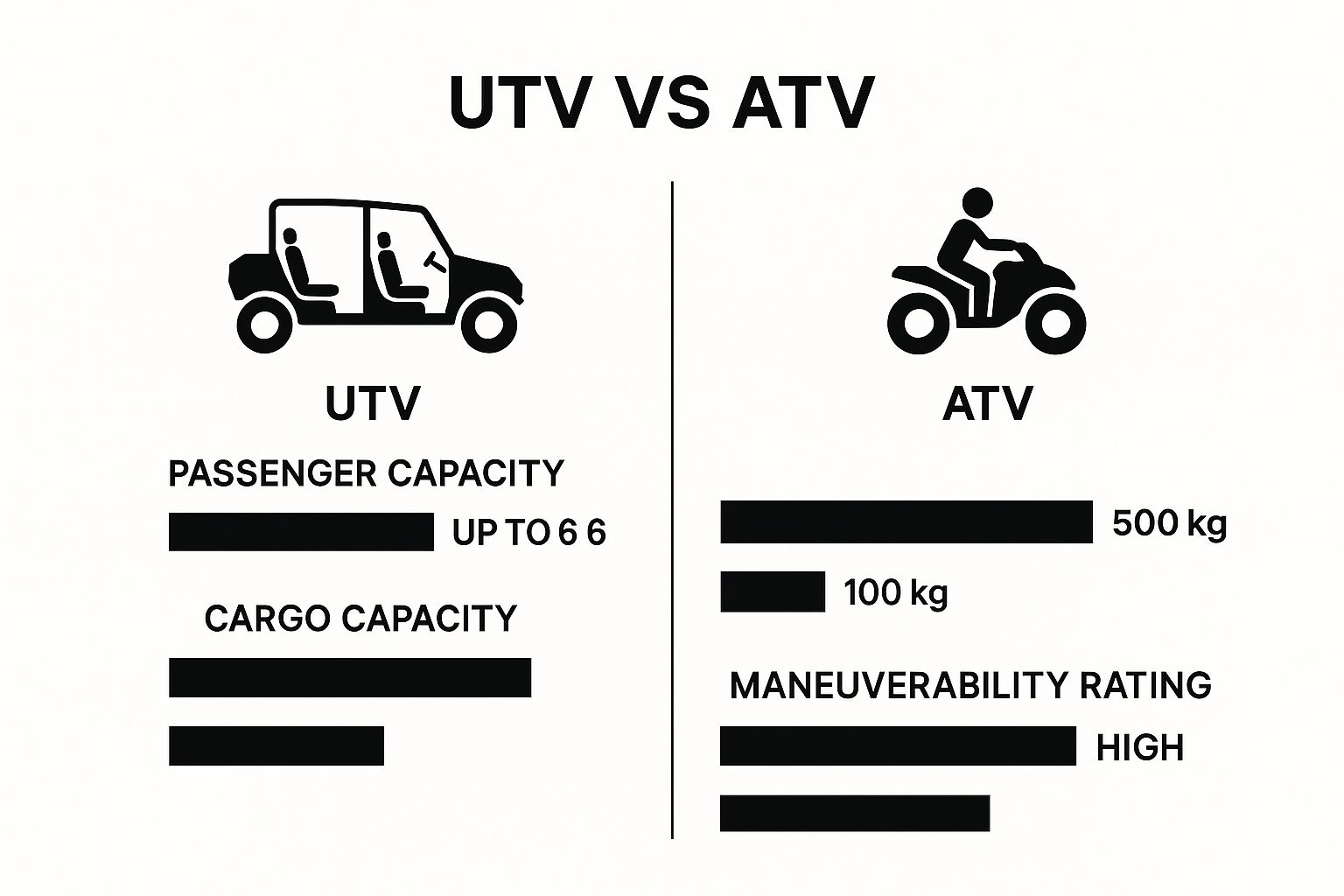
It’s pretty clear from the get-go: a UTV's strength is its ability to carry multiple people and a serious amount of cargo. An ATV, however, shines with its unmatched agility in tight spots.
This quick overview sets the stage for a deeper look. A Side-by-Side (often just called a UTV) drives a lot like a car, with a familiar steering wheel, foot pedals, and bucket seats. In contrast, you ride an ATV (or quad) more like a motorcycle, using handlebar steering and a straddle-style seat that demands you to be an active part of the ride. These core differences influence everything from comfort and safety to the kinds of trails you'll be able to conquer.
This table offers a snapshot of the fundamental distinctions between Side-by-Sides and ATVs, helping you quickly identify the best fit for your intended use.
| Characteristic |
Side by Side (UTV) |
All-Terrain Vehicle (ATV) |
| Seating & Passengers |
2 to 6 passengers, seated side-by-side |
Typically 1 rider (some models allow 2), straddle seating |
| Steering & Controls |
Steering wheel and foot pedals (like a car) |
Handlebars and thumb/twist throttle (like a motorcycle) |
| Primary Use Case |
Group recreation, utility work, hauling gear |
Solo trail riding, sport performance, quick maneuvering |
| Safety Features |
Roll-over protection structure (ROPS), seatbelts |
Rider skill and protective gear are the primary safety elements |
Ultimately, the best choice is the one that aligns with your practical needs and how you want to experience the outdoors.
Think of a Side-by-Side—or a UTV, as it's often called—as the off-road equivalent of a family car or pontoon boat. It’s built around a shared experience. You're not straddling a seat and gripping handlebars; you're sitting in a familiar cabin with a steering wheel and foot pedals for the gas and brake. This simple, intuitive design is its superpower.
Honestly, the learning curve is practically zero. If you can drive a car, you can hop in a UTV and feel right at home in minutes. That means you can easily toss the keys to a friend at the campsite without a 20-minute safety briefing. The whole point is to get out there and enjoy the ride together, not to spend time mastering a new machine.
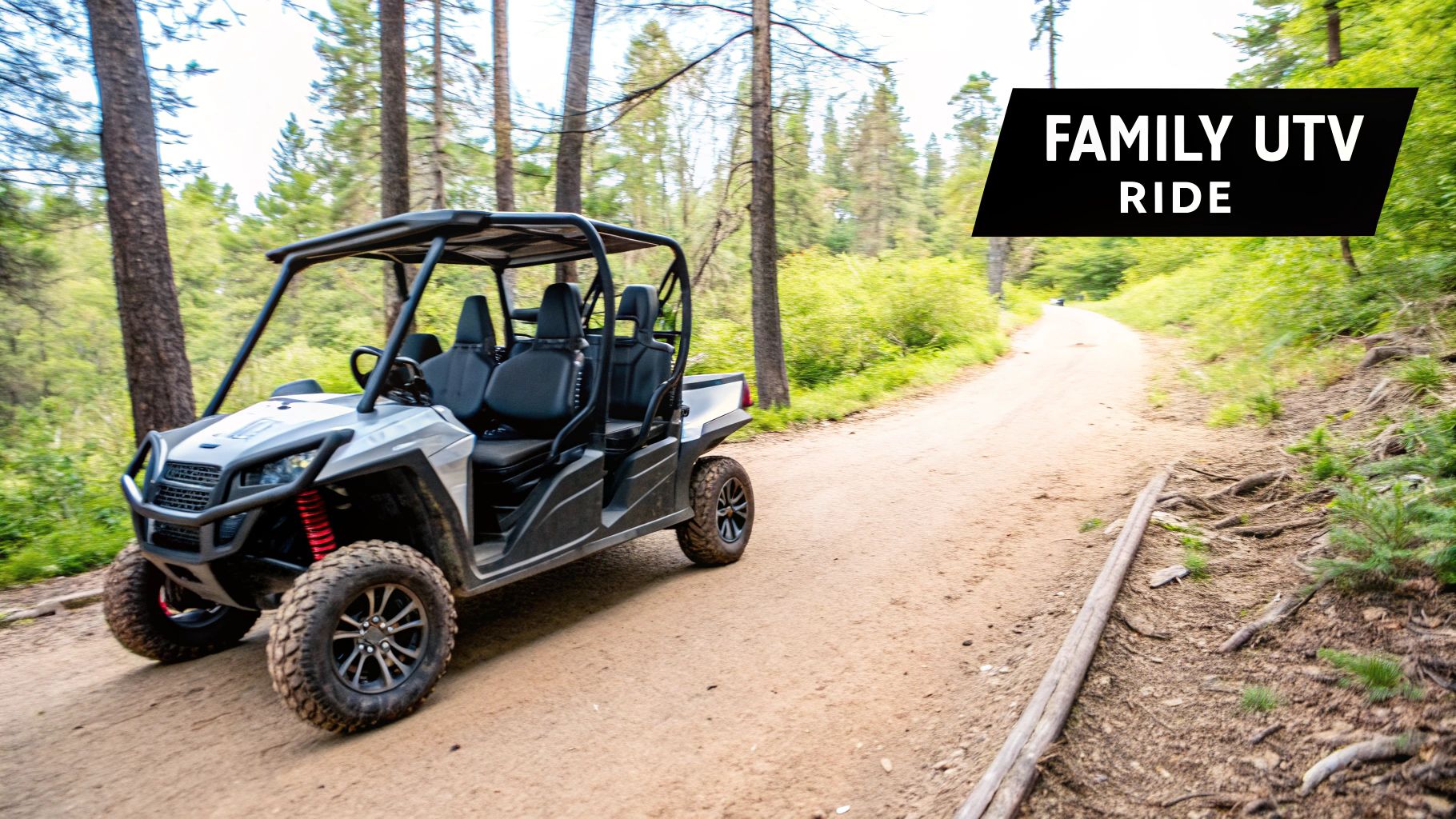
The real deciding factor in the side by side vs ATV debate often boils down to a simple question: who's coming with you? UTVs are designed from the ground up to carry people, with models that can seat two, four, or even six passengers comfortably. Everyone gets a proper seat, turning a solo trip into a social adventure.
But it’s the safety features that really set them apart and offer genuine peace of mind, especially when you have family on board. Unlike an ATV, a UTV comes equipped with built-in protection.
- Roll-Over Protection Structure (ROPS): This is the integrated roll cage that forms the vehicle's frame, designed to protect everyone inside if the unthinkable happens.
- Seatbelts: Every passenger gets a three-point harness, just like in a car, keeping them secure.
- Side Doors or Nets: These are crucial for keeping arms and legs safely inside the vehicle on rough terrain.
When you combine that stable, wide-track footprint with a full suite of safety gear, you get a machine built for shared adventures, not just solo thrills. It’s the go-to choice for anyone who puts a premium on keeping their crew safe and comfortable.
Don't let the fun fool you; a UTV is an absolute workhorse, making it a perfect companion for the RV or boating lifestyle. Its payload and towing capacities are seriously impressive, elevating it far beyond a simple recreational toy. Most models come with a rear cargo bed—many with a dump feature—that can haul hundreds of pounds of gear.
For RVers, that means effortlessly shuttling firewood, heavy coolers, and all your camping gear from the main site to a secluded spot by the lake. If you're a boat owner, a UTV can haul tackle and equipment down to the dock, tow a small trailer around your property, or help with chores at the lake house. This practical, get-it-done capability is a huge point of separation when you compare a side by side vs ATV; the UTV’s ability to work is in a completely different league.
If a Side-by-Side is the off-road equivalent of a car, then the All-Terrain Vehicle—the ATV—is its motorcycle counterpart. Forget sitting inside a cabin; on an ATV, you're part of the machine. You straddle the seat, grip the handlebars, and use your body weight to carve through turns, making it a truly physical and immersive experience.
This setup creates a completely different relationship with the trail. Instead of a steering wheel and pedals, you have handlebars and a thumb throttle, demanding constant input and engagement. For many riders, this raw, athletic connection is exactly what they're looking for.
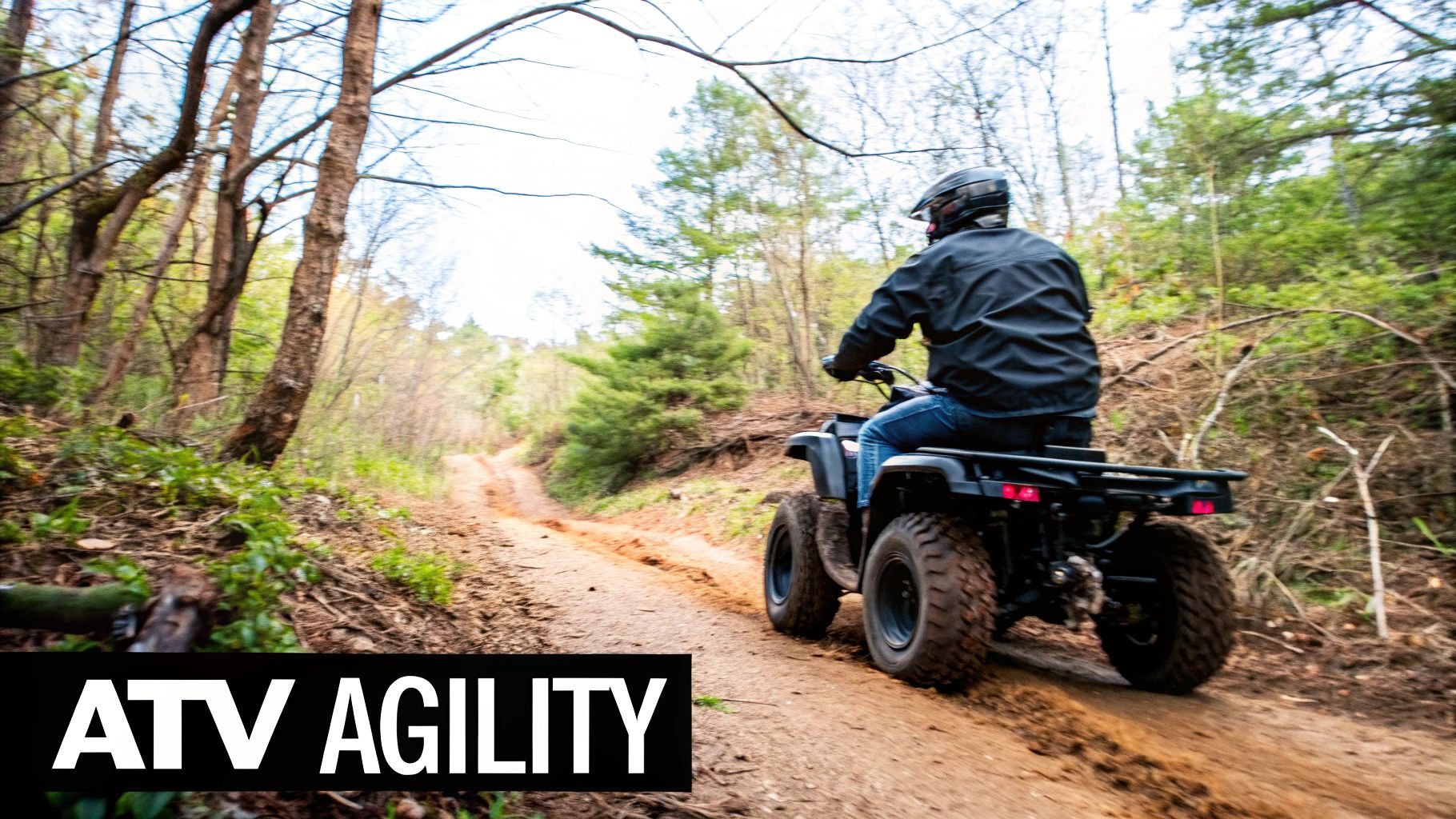
The ATV’s superpower is its incredible maneuverability. These machines are narrow and light, letting them slither through tight, tree-lined paths and navigate trails where a bulky UTV would get stuck. This makes it the ultimate tool for scouting remote areas from your main campsite or RV.
For a lone adventurer, that kind of agility is invaluable. You can effortlessly check out a new fishing hole, scope out trail conditions ahead, or just zip back to camp for supplies. The direct handlebar feedback gives you an intuitive feel for the terrain, building confidence when the going gets tough.
When the trail gets tight and technical, the ATV's nimble nature truly shines. It’s not just a vehicle; it’s an extension of the rider, built for those who crave a direct and unfiltered off-road experience.
ATVs aren't a one-size-fits-all deal. They come in a huge variety of styles built for different jobs, which is a critical point to grasp when thinking about a side by side vs ATV.
- Sport Quads: Think of these as the race cars of the ATV world. They are built for pure performance with powerful engines, long-travel suspension, and lightweight frames. They're all about speed, jumps, and adrenaline on dunes or motocross tracks.
- Utility Models: These are the dependable workhorses. You'll find them equipped with front and rear cargo racks, tough construction, and almost always four-wheel drive. They're perfect for doing chores around a lake house, hauling hunting gear deep into the woods, or just serving as a trusty runabout at a remote campsite.
This wide-ranging capability is what makes the ATV such a popular choice. Whether you need a practical tool for outdoor work or a machine for pure, unadulterated fun, there’s an ATV out there built just for that.
https://www.youtube.com/embed/4GkdxLwaSns
When you get past the spec sheets and actually hit the dirt, the UTV vs. ATV debate shows you two completely different personalities. How a machine feels isn't just about horsepower; it's about how it connects you to the ground beneath you. A UTV's performance is all about stability and predictability, while an ATV is built for pure agility and a hands-on ride.
Picture yourself on a wide-open fire road or a long, dusty desert trail. This is where a UTV truly shines. Its wider stance, longer wheelbase, and familiar car-like controls give you a ton of confidence at speed. With a low center of gravity, it feels planted and secure, which is a huge plus for new drivers or when you have family along for the ride.
But what happens when that trail suddenly dives into a dense forest with tight, winding switchbacks? The UTV’s greatest strength—its stability—suddenly becomes its biggest limitation. This is where an ATV comes alive. Its narrow frame and handlebar steering let it zip between trees and pivot around rocks with an ease a UTV just can't replicate. On a quad, you're not just steering; you're using your whole body to influence the machine, making for a thrilling and connected experience.
The core trade-off is simple: the UTV’s solid, secure ride versus the ATV’s nimble, go-anywhere spirit. A side-by-side feels like you’re driving over the trail, largely insulated from the small bumps and ruts. Riding an ATV, on the other hand, feels like you’re becoming part of the trail, reacting to every dip, twist, and turn.
Think about it this way: if you’re hauling gear down a rough but open track from your RV to a remote fishing spot, the UTV's stability is a massive advantage. But for a solo hunter scouting for deer in thick woods, the ATV’s agility is absolutely essential.
This handling difference has a direct impact on your confidence. It’s no surprise that new riders often feel more at home in a UTV. The familiar steering wheel and pedals, combined with its inherent safety, make it far less intimidating on rough ground.
Technology is also leveling the playing field, making these machines smarter and easier to handle than ever. While traditional four-wheel drive has long been the standard, we're seeing a big shift. In North America, four-wheel drive vehicles held a 61.22% market share, but intelligent all-wheel drive (AWD) systems are catching on fast, with an expected growth of 7.76% CAGR. This is being driven largely by new riders who want an "it just works" solution for traction. You can read more about this off-road market trend to see how technology is changing what buyers want.
These advanced drivetrains automatically send power to the wheels with the most grip, making both UTVs and ATVs much easier to handle in mud, snow, or on a steep climb. It lets you focus more on picking your line and less on flipping switches. Ultimately, the choice between a UTV vs ATV comes down to where you see yourself riding—and whether you value unwavering stability or unmatched agility.
The best way to decide between a side-by-side and an ATV is to think about the adventures you're already having. For those of us with an RV or a boat, an off-road vehicle isn't just a fun toy—it's a practical tool that expands what you can do. The right machine should seamlessly fit into your current setup, making your trips better, not more complicated.
Picture a weekend at the lake. You need to get your family, friends, and a heavy cooler from the RV down a winding, bumpy path to the boat dock. In this scenario, the UTV is the clear winner. Its passenger seats and cargo bed make what could be a major hassle into one easy, comfortable trip for everyone.
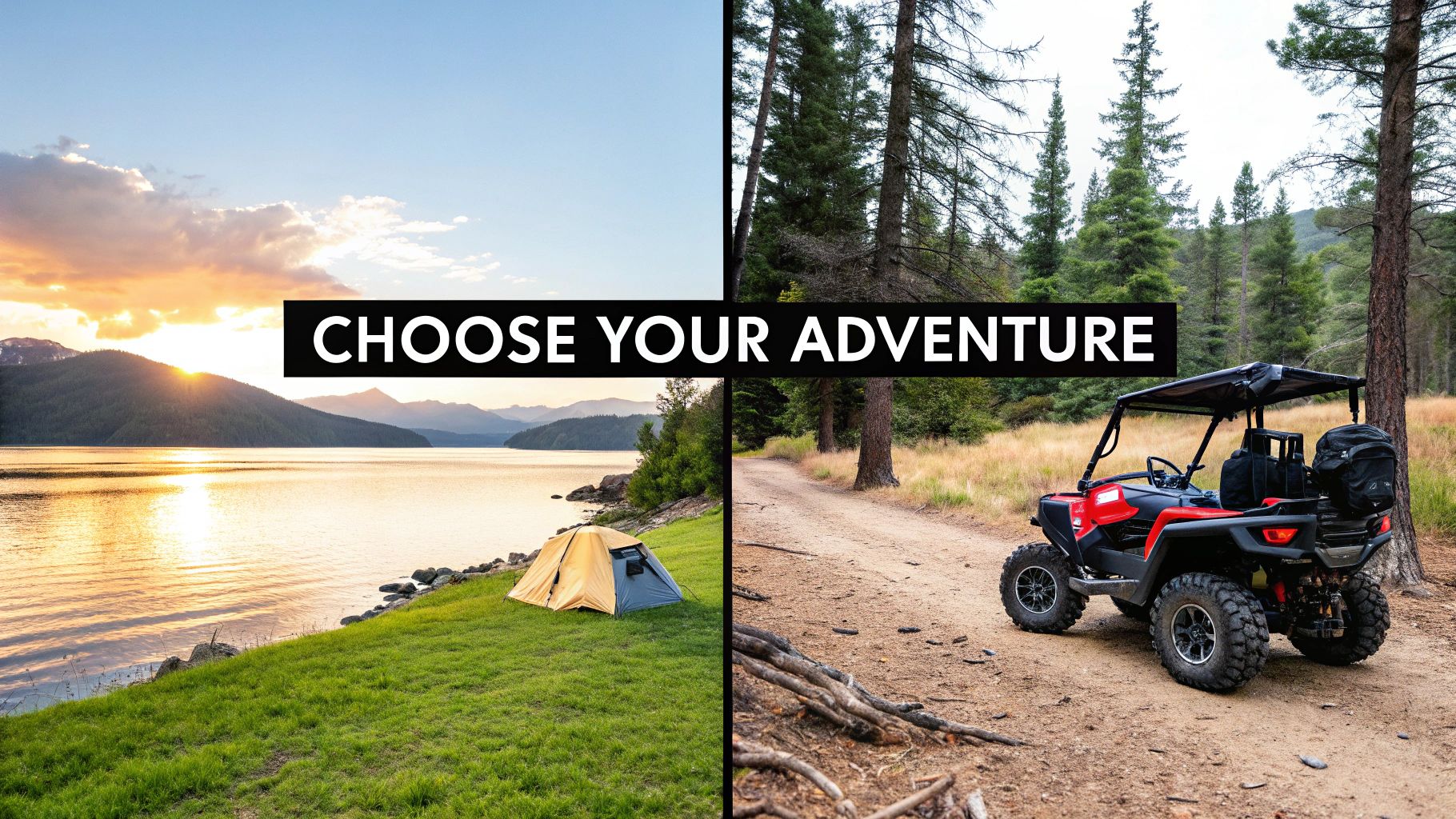
The Side-by-Side (UTV) truly shines when you've got people and gear to move. It’s the perfect rig for a lifestyle built around hosting others and hauling equipment.
- Family Outings: You can safely take the kids and grandparents from the campsite to a scenic spot or a quiet fishing hole. The built-in roll cage and seatbelts offer crucial peace of mind that an ATV just can't match.
- Property Upkeep: If you have a lake house or a large piece of land, a UTV quickly becomes essential for hauling firewood, moving landscaping supplies, or even towing a small trailer.
- Hunting and Fishing Trips: It’s no problem to carry a few buddies, all their gear, and (with any luck) their harvest. That large cargo bed is perfect for coolers, blinds, and tackle.
Key Insight: A UTV is fundamentally a social vehicle. It’s for the person who sees off-roading as a way to bring people together, making it an invaluable asset for any RV or boating enthusiast.
On the flip side, the ATV is all about independence and agility. Let’s say you’re at a remote campsite and want to scout the trail ahead or find a spot with a better view. An ATV is tailor-made for this—it's small, quick, and easy to handle on your own.
Its nimble nature is its biggest advantage for the solo explorer. You can squeeze through tight, wooded trails to find a secluded cove that a bigger UTV could never access. It's also great for a quick run into town for supplies without having to pack up your entire camp.
This kind of versatility is exactly why the demand for these vehicles keeps climbing. The global ATV and UTV market is expected to grow at a CAGR of around 6.10% between 2025 and 2034, hitting an estimated USD 21.31 billion by 2034. You can see more details on the ATV and UTV market growth here.
In the end, the right choice is the vehicle that makes your adventures easier. A UTV simplifies group activities, while an ATV is the perfect tool for fast, solo exploration.
When you’re weighing a side-by-side against an ATV, the sticker price is just the tip of the iceberg. The real financial picture—the total cost of ownership—unfolds over years of fuel, insurance, and maintenance. It's a lot like owning a boat or an RV; the initial purchase is just the first step.
Right out of the gate, an ATV is almost always the more budget-friendly option. Its simpler design, smaller engine, and lighter frame keep the initial price tag down. This simplicity extends to maintenance, too. Routine jobs like oil changes, new tires, and brake pads are typically a lot easier on the wallet for a quad.
A UTV, on the other hand, is a more complex machine, and that's reflected in its price. With its full roll cage, sophisticated suspension, and car-like drivetrain, there's just more material and engineering involved. That complexity means that when things do need fixing, parts and labor will likely cost more over the life of the vehicle.
So, what other expenses should you plan for? Let’s break it down:
- Insurance: A UTV usually costs more to insure. This is because it can carry multiple passengers and has a much higher replacement value if it's totaled or stolen.
- Fuel: The bigger, heavier UTV will almost always burn through more gas than a lightweight ATV. On a long day out on the trails, that difference can really add up.
- Accessories: This is a big one. Most machines don't come from the factory ready for your specific needs.
A good rule of thumb is to budget an extra 15-25% of the vehicle's purchase price for first-year essentials. For a UTV, this could be a winch, a windshield, or better lighting—things you'll quickly realize you can't live without.
It also helps to look at the bigger picture. While off-roading is as popular as ever, the market has been changing. Recently, ATV sales saw a 3.2% global decline, with an even steeper 6.3% drop here in North America. This isn't a one-off dip; it's part of a multi-year trend. You can dig into the specifics of these ATV and UTV market fluctuations here.
What this data tells us is that making a smart, informed decision is more critical than ever. An ATV often makes more financial sense for a solo rider on a budget. A UTV is a bigger investment, but it’s one that pays off if you’re hauling gear or bringing friends and family along for the ride. Thinking through these long-term costs ensures your new machine is a source of fun, not a financial headache.
When you're trying to decide between a side-by-side and an ATV, a few key questions always seem to pop up. Getting those last few details sorted out is often the final step before you can confidently pick the right machine for your adventures.
When it comes down to built-in safety features, the side-by-side (UTV) definitely comes out on top. Think of it this way: its design borrows heavily from cars. You’re sitting inside a protective structure, not on top of the machine.
UTVs have a roll-over protection structure (ROPS)—that’s the steel cage surrounding the cab—along with seatbelts for everyone. Most also have side nets or full doors to keep arms and legs safely inside. An ATV, on the other hand, puts the responsibility almost entirely on the rider's skill and the quality of their helmet and gear. While both require smart riding, the UTV’s design provides a safety net that makes it a better choice for beginners or families.
For family trips, there’s really no contest: the side-by-side is the clear winner. The whole debate for families boils down to two things—passenger capacity and safety. UTVs were literally built to carry more than one person, with models seating two, four, or even six people in bucket seats.
This creates a shared experience where everyone can talk and enjoy the ride together, just like in a car. When you add in the superior safety features we just talked about, it means you can bring the kids or grandparents along with much greater peace of mind.
This is a great question, but the answer really depends on how you define "versatile."
If versatility means accessing tight, tricky terrain, the ATV wins hands down. Its smaller size and nimble handling let you squeeze through dense forests and navigate technical trails that a wider UTV simply can't handle. For a solo hunter or a trail rider who loves a challenge, that go-anywhere agility is everything.
But if versatility is about utility and group fun, the UTV is far more capable. It's a workhorse. With its impressive towing and hauling capacities, a UTV can haul firewood, carry camping gear for a whole crew, or just take the family for a comfortable trail ride. For RV and boat owners, this kind of utility makes it the more versatile choice for supporting your primary hobby.
Ready to find the perfect off-road vehicle to complement your lifestyle? SearchShop.com offers a huge selection of new and used UTVs and ATVs. Use our powerful tools to compare listings, research prices, and make your choice with confidence. Find your next adventure vehicle today!

