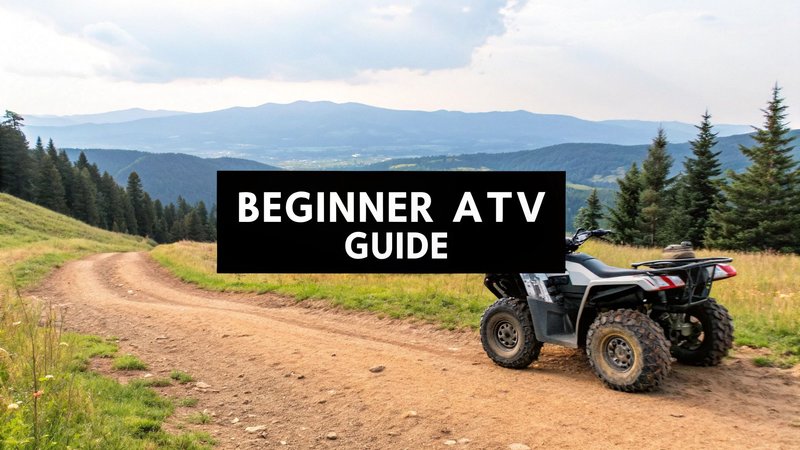
When you're looking for the best ATV for beginners, you'll want to focus on a few key things: an engine between 400cc and 800cc, an automatic transmission, and safety features like a throttle limiter. Getting this mix right gives you a machine that's got enough guts for real trail riding but is forgiving enough to help you build confidence without getting in over your head.
Welcome to the world of off-roading! Picking out your first All-Terrain Vehicle (ATV) can feel like a massive task, but it’s actually pretty straightforward once you know what to look for. The goal here isn't to snag the biggest, baddest machine on the showroom floor. It’s about finding a reliable partner that lets you learn the ropes without feeling overwhelmed.
Nailing this first choice is a huge deal for both your safety and how much you'll enjoy the sport for years to come.
Think of your first ATV as the key that unlocks a whole new world of outdoor fun. It’s more than just a machine—it’s your ticket to expanding your adventures, especially if you're already into camping or boating. That remote fishing hole you could never get to? Now you can. That scenic trail you saw on a map? It's your next weekend plan. An ATV fits right in with other outdoor hobbies, turning a simple RV or boat trip into a full-blown adventure.
A lot of new riders find that their ATV quickly becomes the central hub for all their recreational plans. It’s the piece of the puzzle that links everything together, especially for RV and boat owners.
-
For RV Enthusiasts: Picture this: you pull into a campsite with your RV. Instead of being stuck right there, you unload your ATV and go explore miles of trails nearby. Your campsite just became a basecamp for serious exploration.
-
For Boating Fans: An ATV can get you to those hidden shorelines and remote launch spots that are impossible to reach otherwise. It's the perfect link between your tow vehicle and the water's edge.
This isn't just about the adrenaline rush; it's about pushing your boundaries and building confidence one trail at a time on a machine that’s designed to have your back while you learn.
Choosing the right beginner ATV is like learning to drive a car. You wouldn't start out in a high-performance race car; you’d pick something predictable and easy to handle. The same idea applies here—control and confidence are way more important than raw power when you're just getting started.
So, what exactly should you be looking for? The best ATVs for beginners nail the balance between three things: manageable power, simple operation, and solid safety features. A machine with a monster engine can be downright scary and dangerous for a rookie. On the flip side, a model that's too small will feel underpowered pretty fast, which just leads to frustration.
The sweet spot is a mid-size engine, usually somewhere between 400cc and 700cc. This range gives you plenty of power to handle real off-road trails without the jumpy, aggressive throttle you’d find on a high-performance sport quad.
An automatic transmission is another must-have. It takes shifting gears completely out of the equation, so you can put all your focus on steering, braking, and reading the trail ahead. This one feature makes a massive difference, cutting down on the mental overload and making your first few rides much safer and a lot more fun. We'll dive deeper into these features and more as we go.
To make things even clearer, here's a quick rundown of the most important things to look for in your first ATV.
|
Feature
|
Recommended for Beginners
|
Why It Matters
|
|
Engine Size
|
400cc – 700cc
|
Powerful enough for trails, but not so aggressive it's hard to control.
|
|
Transmission
|
Automatic (CVT)
|
No shifting required. Lets you focus completely on steering and throttle control.
|
|
Throttle Limiter
|
Yes
|
A simple screw that physically limits how much you can press the throttle. Perfect for learning.
|
|
Drivetrain
|
Selectable 2WD/4WD
|
Start in 2WD for simplicity, and switch to 4WD when you need extra traction on tough terrain.
|
|
Power Steering
|
Electronic Power Steering (EPS)
|
Greatly reduces steering effort, which means less fatigue and better control on long rides.
|
This table should give you a solid starting point for what to prioritize as you begin your search. Keeping these fundamentals in mind will help you filter out the noise and zero in on a machine that will be a great partner for your first few years of off-roading.
The engine is the heart of an ATV, and its size—measured in cubic centimeters (cc)—is one of the first and most important decisions you'll make. Think of it this way: the "cc" number is a direct measure of the machine's power and acceleration. Getting this right from the start means your first ATV will be a fun, reliable partner for adventure, not an intimidating beast you can't control.
Jumping onto a massive 1000cc ATV as a newbie is like learning to drive in a dragster. It’s just too much, too soon. The power is instant and aggressive, which can easily overwhelm an inexperienced rider and turn a small mistake into a big problem. Instead of building your confidence, it just creates stress and makes it nearly impossible to learn the fundamentals.
On the flip side, you don't want something you'll outgrow in a couple of months. While a small youth model is perfect for kids, it simply won't have the power or suspension to carry an adult safely and comfortably on real off-road trails. The trick is to find that perfect middle ground.
For most new adult riders, the ideal engine size is in the 400cc to 800cc range. This is truly the sweet spot. It offers a fantastic blend of easy-to-handle power and genuine trail capability. An engine in this class has enough grunt to get you up steep hills and through tricky terrain, but it won't have the hair-trigger throttle response of a massive sport quad.
This balance is key because it lets you grow as a rider. As you get more comfortable, a mid-size engine has plenty of performance left to keep your rides exciting for years to come. You'll be able to confidently tackle the same trails as more experienced friends, making it a versatile machine for weekend trips with the RV or exploring the backcountry.
The market data backs this up. The 400cc to 800cc engine segment dominates the industry, holding a market share of roughly 52.6%. Why? Because it hits that crucial balance between power and control, offering enough horsepower for tough trails without scaring off new riders. You can dive deeper into these ATV market trends to see why this range is so popular.
To make the best choice, it helps to know how the different engine sizes are grouped and who they're built for.
-
Under 250cc: These are almost exclusively youth models. They’re built with safety in mind, featuring gentle power, automatic clutches, and throttle limiters. Their small frames and low power make them unsuitable for most adults.
-
250cc - 400cc: This class can be a decent starting point for smaller adults or teens who are riding under supervision. These machines are lightweight and easy to maneuver, but you might find they feel a bit weak on steep hills or in deep mud. It's a class many riders outgrow quickly.
-
400cc - 800cc: This is the sweet spot and our top recommendation for beginners. These ATVs are capable, reliable, and provide the perfect platform to build your skills safely. They have more than enough power for nearly any recreational trail riding you can imagine.
-
800cc and Up: Welcome to the high-performance zone. These are powerful machines designed for seasoned riders who know what they're doing. The raw power and speed are simply too much for someone just learning the ropes.
Your goal as a beginner isn't to win a race; it's to master control, build confidence, and enjoy the ride safely. A mid-size engine supports these goals perfectly, making it the smartest choice for your first ATV.
The image below lays out some of the most important features—including engine size—that every new rider should look for when shopping for their first four-wheeler.
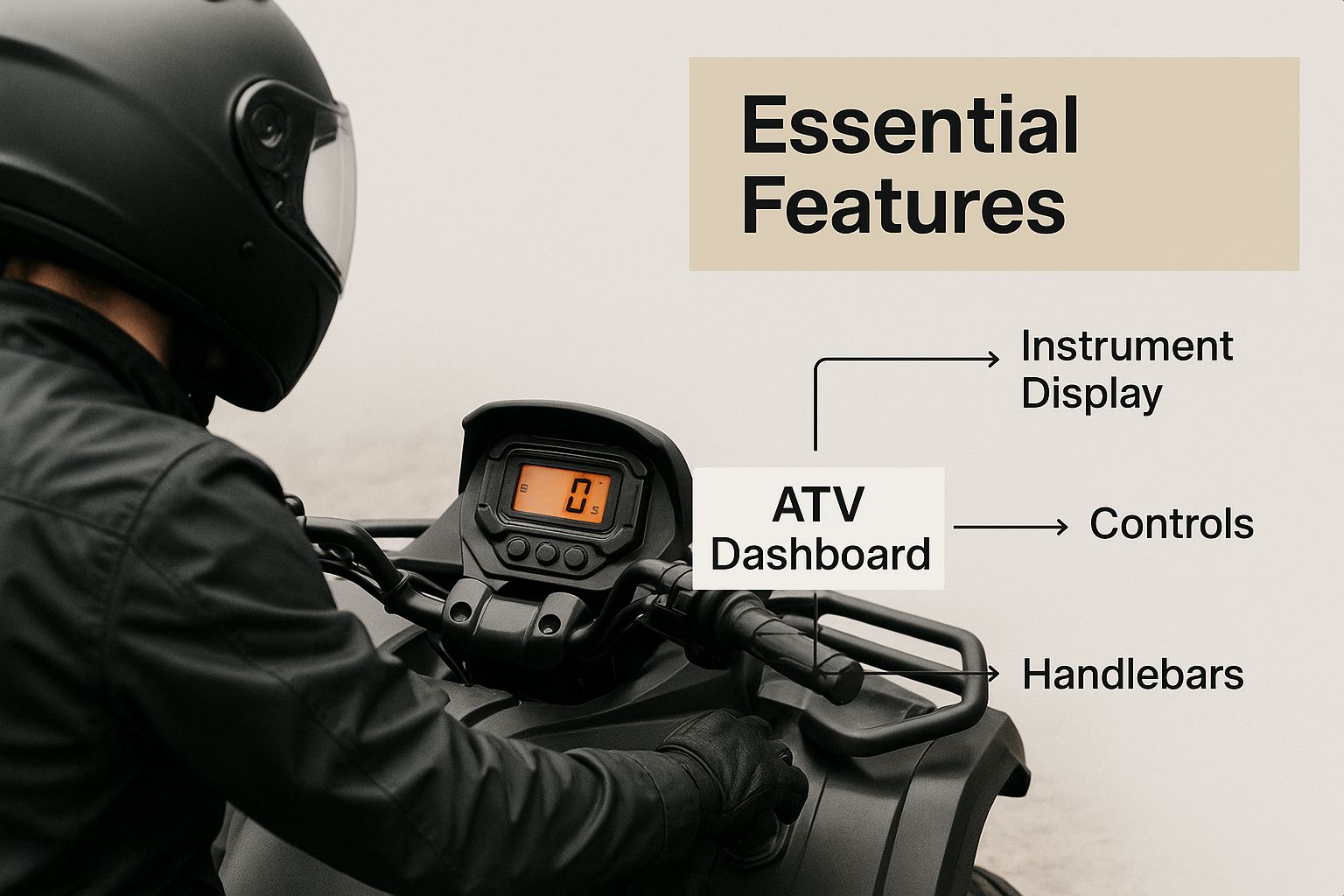
As you can see, a balanced approach is what matters most. Focusing on controllable power and practical features will serve you far better than just chasing the biggest engine on the lot.
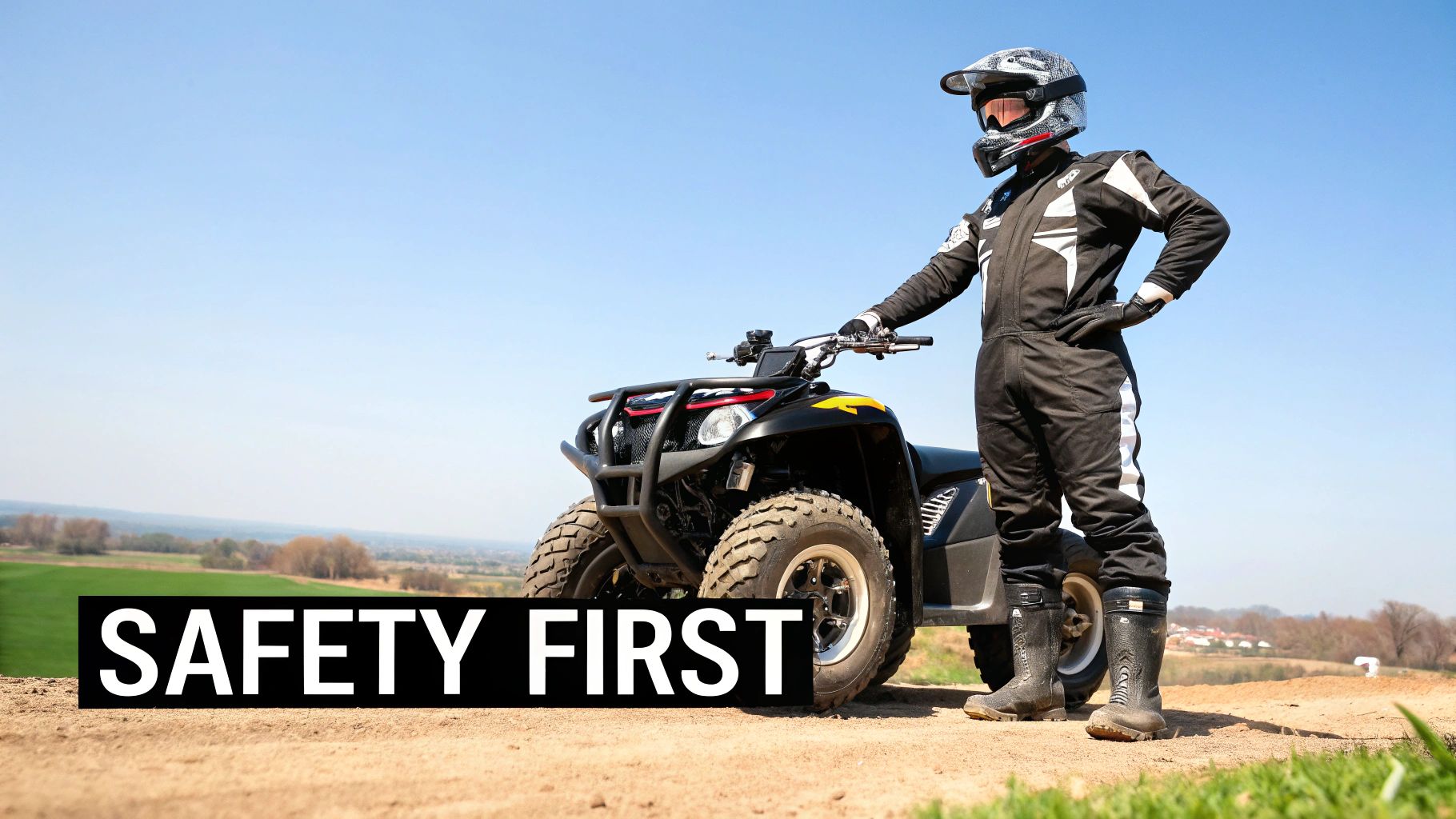
When we talk about safety, we often jump straight to helmets and gloves. And while those are non-negotiable, the ATV itself has a huge role to play. Think of modern safety features as your built-in co-pilot, designed to keep things predictable and manageable while you're still getting the hang of things.
These features aren't about taking the fun out of it; they're about managing the machine's power and stability so you can focus on learning to ride. They help you build confidence by preventing the common mistakes that catch most rookies off guard.
If there's one feature you absolutely want as a new rider, it's an automatic transmission. Forget about clutches and shifting gears—that's a layer of complexity you just don't need right now. Most modern ATVs come with a Continuously Variable Transmission (CVT), and it's a game-changer for beginners.
With a CVT, your job is simple: press the throttle to go, hit the brakes to stop. That's it. This frees up 100% of your mental energy to focus on what really matters—steering, picking a good line through a tricky section, and keeping your balance. Trying to juggle a clutch lever while navigating a rocky hill is a recipe for getting overwhelmed.
One of the most brilliant and simple safety features ever put on an ATV is the throttle limiter. It's usually just a small screw on the throttle housing that physically stops the lever from being pushed all the way.
It’s like training wheels for the engine. You can dial it back so the machine only delivers 25% or 50% of its total power. This completely prevents those whiskey-throttle moments—the sudden, jerky acceleration that can send a new rider into a panic. As you get more comfortable, you can slowly back the screw out to unlock more power, letting the ATV grow with your skills.
A throttle limiter puts you in complete control of the learning curve. It makes sure the ATV’s power never gets ahead of your abilities, giving you a safe and predictable machine to practice on.
You'll be glad to know that modern ATVs have fantastic brakes. Most rely on hydraulic disc brakes, which are worlds better than the old drum brakes you might find on vintage machines. They offer serious, reliable stopping power when you need it.
Here’s what you'll typically find:
-
Dual Hydraulic Disc Brakes (Front): These do most of the heavy lifting when it comes to stopping and are controlled by the lever on your right handlebar.
-
Single Hydraulic Disc Brake (Rear): Usually operated with a foot pedal, the rear brake is great for helping you slow down smoothly or manage slides.
-
Engine Braking System (EBS): This is an incredible feature for beginners. When you let off the throttle, the engine's natural compression automatically slows the ATV down. It’s a massive help on steep hills, preventing you from picking up too much speed without you having to ride the brakes the whole way down.
Finally, let's talk about suspension. A good suspension system does more than just smooth out the bumps; it's critical for stability. It works to keep all four tires on the ground, which is the key to staying in control.
Most beginner-friendly ATVs now feature independent rear suspension (IRS). This means each rear wheel can move up and down on its own, which helps the machine soak up uneven terrain without getting tippy. It makes for a much smoother and more stable ride, which is exactly what you want when you're starting out. As this technology becomes more common, it's making ATVs more accessible and appealing to new riders. You can learn more about how technology is shaping the beginner ATV market and its growth.
Buying your first ATV is a serious investment, and believe me, the sticker price is just the starting line. To get a real sense of what you'll spend, you need to think about the total cost of ownership. This includes everything from the safety gear you absolutely need before that first ride to the ongoing costs like insurance, maintenance, and even figuring out how you'll get your new machine to the trails.
Nailing down these costs upfront helps you find the best ATV for beginners that actually fits your life and your wallet. A smart budget means no nasty surprises later, letting you just focus on the fun. Many first-time owners who also enjoy RVing or boating quickly realize a trailer is a must-have for bringing all their toys along for the adventure.
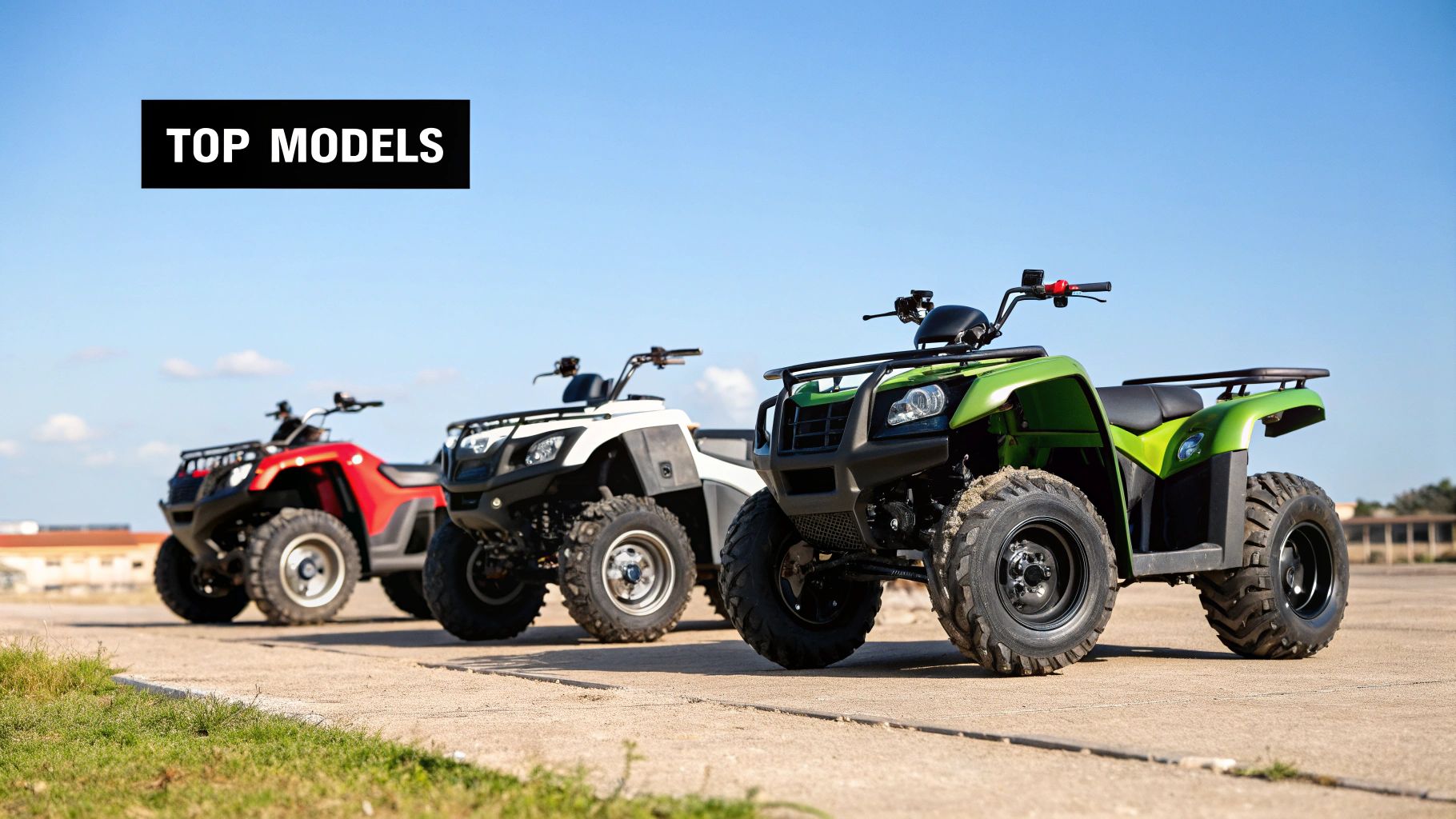
The purchase price is the big, obvious number, but it's just one piece of the financial puzzle. To avoid getting blindsided, you have to account for all the other expenses that come with owning an ATV. These costs can add up fast, but they're all part of riding safely and legally.
Here’s a breakdown of what you should plan for:
-
Essential Safety Gear: This is completely non-negotiable. At the bare minimum, you'll need a DOT-certified helmet, sturdy over-the-ankle boots, gloves, and goggles. This kit can easily run $500 or more, but it’s the single most important investment you’ll make.
-
Insurance and Registration: Just like your car, most states require liability insurance and registration, especially for riding on public land. Depending on your state and the coverage you choose, this can cost anywhere from $100 to $300 per year.
-
Transportation: Unless you live with trails in your backyard, you need a way to haul your quad. That might mean buying a small utility trailer (which can run $800 to $2,000+) and making sure your truck or SUV has a proper hitch setup. This is a big one for RV and boat owners who plan to tow their ATV to remote spots.
One of the biggest forks in the road for a new rider is deciding between a shiny new machine and a pre-owned one. There are real pros and cons to each, and the right call really depends on your budget and how comfortable you are with a little risk. A new ATV gives you peace of mind, but a used one can save you a serious chunk of change.
Think of it like this: a new ATV is a turn-key home, ready to go with no hidden issues. A used ATV is more like a fixer-upper; it can be a fantastic deal, but you have to know what to look for to avoid inheriting someone else's problems.
Deciding between new and used is a classic dilemma for any first-time buyer. To help you weigh your options, this table breaks down the key differences.
|
Consideration
|
New ATV
|
Used ATV
|
|
Initial Cost
|
Higher upfront price.
|
Lower initial cost, offering better value for the money.
|
|
Warranty
|
Comes with a full manufacturer's warranty, covering repairs.
|
Typically sold "as-is" with no warranty, meaning you cover all repairs.
|
|
Reliability
|
Excellent reliability with no prior wear and tear.
|
Unknown history; could have hidden mechanical issues.
|
|
Features
|
Includes the latest safety features, technology, and designs.
|
May have outdated technology and fewer modern safety features.
|
|
Financing
|
Easier to secure financing, often with promotional rates.
|
Financing can be more difficult to obtain for private-party sales.
|
|
Maintenance
|
No immediate maintenance needed.
|
May require immediate repairs or maintenance (tires, oil, brakes).
|
Ultimately, there's no single "right" answer. A new ATV offers a worry-free start, while a used one can be a smart, budget-friendly entry into the sport if you do your homework.
If you decide that a used ATV makes the most sense financially, a thorough inspection is absolutely critical. Don't let a tempting price tag blind you to potential red flags. Taking the time to go over the machine with a fine-toothed comb can save you thousands in repair bills down the road.
Here’s a simple checklist to run through when you go look at a used quad:
-
Check the Frame: Look for any cracks, deep dents, or sloppy re-welding. These are tell-tale signs of a major crash.
-
Inspect the Tires: Check for uneven wear patterns, plugs in the tread, and cracks in the sidewalls. Mismatched tires can also signal that maintenance wasn't a priority.
-
Examine Fluids: Pull the dipstick to check the oil and look at the coolant. If the oil looks milky, it could mean a serious engine problem. Grimy coolant suggests the cooling system has been neglected.
-
Test the Suspension: Push down hard on the front and rear racks. The ATV should rebound smoothly just once, not bounce up and down like a pogo stick.
-
Start It Cold: Ask the owner not to start the machine before you get there. A cold engine will reveal if it struggles to start.
-
Test Drive It: If you can, take it for a spin. Pay close attention to how it shifts, brakes, and steers. Listen for any weird clunks, whines, or grinding noises from the engine or drivetrain.
Alright, you've got the basics down. Now for the fun part: let's look at a few specific four-wheelers that consistently get rave reviews from both dealers and new riders alike. Think of this as your starting lineup—a handful of machines known for being reliable, easy to handle, and just plain fun to ride.
These aren't random choices. Each model here nails the essentials for a beginner: manageable power, intuitive controls, and solid safety features. I'll break down what makes each one a great choice, giving you the good and the "good-to-know" so you can get a complete picture. This isn't about finding the one "perfect" ATV, but about finding the perfect starting point for you.
It’s almost impossible to talk about the best ATV for beginners without mentioning the Polaris Sportsman 450 H.O. This machine has earned its reputation as a fantastic all-arounder that blurs the line between a workhorse and a trail toy, making it incredibly versatile for anyone new to the sport. The whole design is built around rider comfort and making things easy.
What really makes the Sportsman 450 stand out is its incredibly smooth ride. It has a best-in-class independent rear suspension that just soaks up bumps and ruts, keeping the machine feeling planted and predictable on rough ground. That stability is a massive confidence booster when you're just learning, letting you focus on picking your lines instead of fighting the trail.
-
Engine: 500cc ProStar Engine
-
Why It's Great for Beginners: It comes with a true on-demand All-Wheel Drive (AWD) system that’s basically foolproof. The AWD kicks in automatically when you need extra grip and switches back to 2WD when you don’t, taking all the guesswork out of it. The power comes on smooth and steady, so you won't get any sudden, jerky surprises.
When you hear the name Honda, you think reliability, and the FourTrax Rancher is the embodiment of that legacy. This thing is the absolute workhorse of the ATV world, built tough with a focus on durability and ridiculously low maintenance. It's the kind of quad you can count on to fire up every single time and take a beating for years, making it a smart long-term investment.
For a new rider, the Rancher's charm is its rugged simplicity. It’s not loaded with a bunch of high-tech gadgets; instead, every part is engineered to just work, and work well. Its smaller frame makes it feel nimble and easy to thread through tight, wooded trails where bigger, bulkier machines would get hung up.
The Honda Rancher is like the trusty old pickup truck of the ATV world. It’s not the fastest or the flashiest, but it’s built to be dead-on dependable and easy to own—exactly what a beginner needs.
One of its coolest features is the option for Honda's Electric Shift Program (ESP). This lets you shift gears with simple up/down buttons on the handlebar, no clutch needed. It gives you a little more control than a fully automatic transmission without being complicated.
Yamaha has a knack for building ATVs that are both capable and incredibly comfortable, and the Kodiak 450 is a perfect example. It's engineered to give you a full-size ATV feel but in a more compact, less intimidating package. This is a great machine for riders who want something that feels stable and secure under them without being a monster to handle.
The star of the show on the Kodiak 450 is its Ultramatic® automatic transmission. It's widely considered one of the toughest and most reliable CVT systems out there. It also provides natural-feeling engine braking on all four wheels, which is a game-changer when you're creeping down a steep hill. It helps you control your speed without having to ride the brakes the whole way down.
-
Ergonomics: Yamaha clearly put a lot of thought into how the Kodiak feels to ride. It has a roomy cockpit, a comfortable seat, and handlebars designed to keep you from getting tired out on longer trail rides.
-
Maneuverability: With a tight turning radius and responsive steering, the Kodiak 450 feels agile and easy to point exactly where you want it to go. This gives you the confidence to tackle tricky spots on the trail and makes it a perfect do-it-all machine for exploring, helping with chores, or tagging along on an RV trip.
Now when you walk into a dealership, you're not starting from scratch. You can start the conversation by mentioning these models, ask smart questions, and find the machine that’s truly the right fit for your new off-road adventures.
Alright, you've done the hard work, researched your options, and finally brought home the perfect ATV. The temptation to just hop on and rip it up is real, but hold on for just a minute. Before the real adventure starts, a few key steps will make sure that first ride is amazing for all the right reasons.
Think of it like a pilot doing their final walkthrough before takeoff. A pre-ride check is a simple, non-negotiable habit that turns small, preventable issues into non-issues. It’s a confidence-builder and your machine's first line of defense against the trail.
This check takes just a few minutes, but it's probably the most important part of your ride. The easiest way to remember what to look for is with the acronym T-CLOC.
-
T - Tires and Wheels: Are they at the right pressure? A quick glance for any obvious cuts or damage is a must.
-
C - Controls and Cables: Give the throttle and brakes a squeeze. Does everything move smoothly and snap back like it should?
-
L - Lights and Electrics: Flip on your headlights and check the taillights. You want to see and be seen.
-
O - Oil and Fluids: A quick peek at the oil and coolant levels can save you a world of hurt.
-
C - Chassis and Suspension: Just look for anything that seems loose or out of place.
With your ATV ready to go, the next question is where to go. Not all trails are beginner-friendly, and starting on something too technical can be a real buzzkill. Your best bet is to look for designated OHV (Off-Highway Vehicle) areas. These spots almost always have marked trails with difficulty ratings, so you can stick to the green circles and work your way up.
If there's one piece of advice to take to heart, it's this: Your first ride sets the tone for your entire off-roading journey. Taking a certified ATV safety course is the single best investment you can make. It’s where you’ll learn a ton about proper riding technique and how to handle unexpected situations in a safe, controlled setting.
Once you build that initial confidence, a whole new world opens up. You'll start seeing your ATV not just as a toy, but as a key. It’s the key to planning weekend camping trips to remote spots, towing a small boat to that hidden lake, or just exploring the backcountry in a way you never could before. That’s when the real fun begins.
Stepping into off-roading brings plenty of “what-ifs.” This FAQ rounds up the questions we hear most from new riders. With clear, straightforward answers, you’ll choose the right ATV and hit the trails with confidence.
Licensing can feel like a maze—rules shift from state to state. To ride on public lands or state-managed trails, you’ll generally need an Off-Highway Vehicle (OHV) permit.
Your everyday driver’s license might not cover off-road use, so double-check local regulations. Many states also require younger riders to finish a certified ATV safety course—a smart move whether you’re 16 or 60.
A top-quality helmet is non-negotiable. Look for a DOT-approved model that fits snugly; it’s your first line of defense against head injuries.
Round out your starter kit wit