If you’re looking for the short answer, here it is: the absolute best time to buy an RV is during the fall and winter, specifically from October through February. When the main camping and boating season winds down, so does buyer demand. That drop-off gives you a serious upper hand when you walk onto a dealership lot.
Think about it like buying a winter coat or a boat. You’d never walk into a store in the middle of a blizzard and expect a deep discount on a parka, nor would you expect a great deal on a wake boat in July. You'd wait until the off-season when the store is desperate to clear out gear to make room for the next season's inventory. The RV and boat market works in much the same way.
Spring and summer are the peak seasons. Everyone has vacation on the brain, and families are itching to get on the road or out on the water. This surge in demand means prices stay high, and dealers have little reason to negotiate.
But once the leaves start to change, the entire dynamic flips. Dealerships suddenly have a different set of problems. Their focus shifts from making the biggest profit on every unit to a much more urgent goal: clearing out last year's inventory before the new models completely take over.
This seasonal pressure creates the perfect opportunity for a savvy buyer. A few key factors come together to make the off-season the undisputed best time to strike a deal on a new recreational vehicle.
-
Model Year Changeovers: The shiny new models for next year start rolling onto the lots in late summer and early fall. This means dealers are highly motivated to sell the current year's models—what the industry calls "new old stock"—to make space.
-
End-of-Year Quotas: Sales teams have numbers to hit. As the calendar year comes to a close, managers are under immense pressure to meet annual goals, which often translates into bigger discounts just to get a deal on the books.
-
Less Competition: With fewer people shopping for RVs or boats in the colder months, you won't be competing with a dozen other families for the same model. You can take your time, compare options, and negotiate without feeling rushed.
The infographic below really paints a clear picture of how different the market looks from peak season to the off-season. You can see just how much pricing and inventory levels shift in your favor.
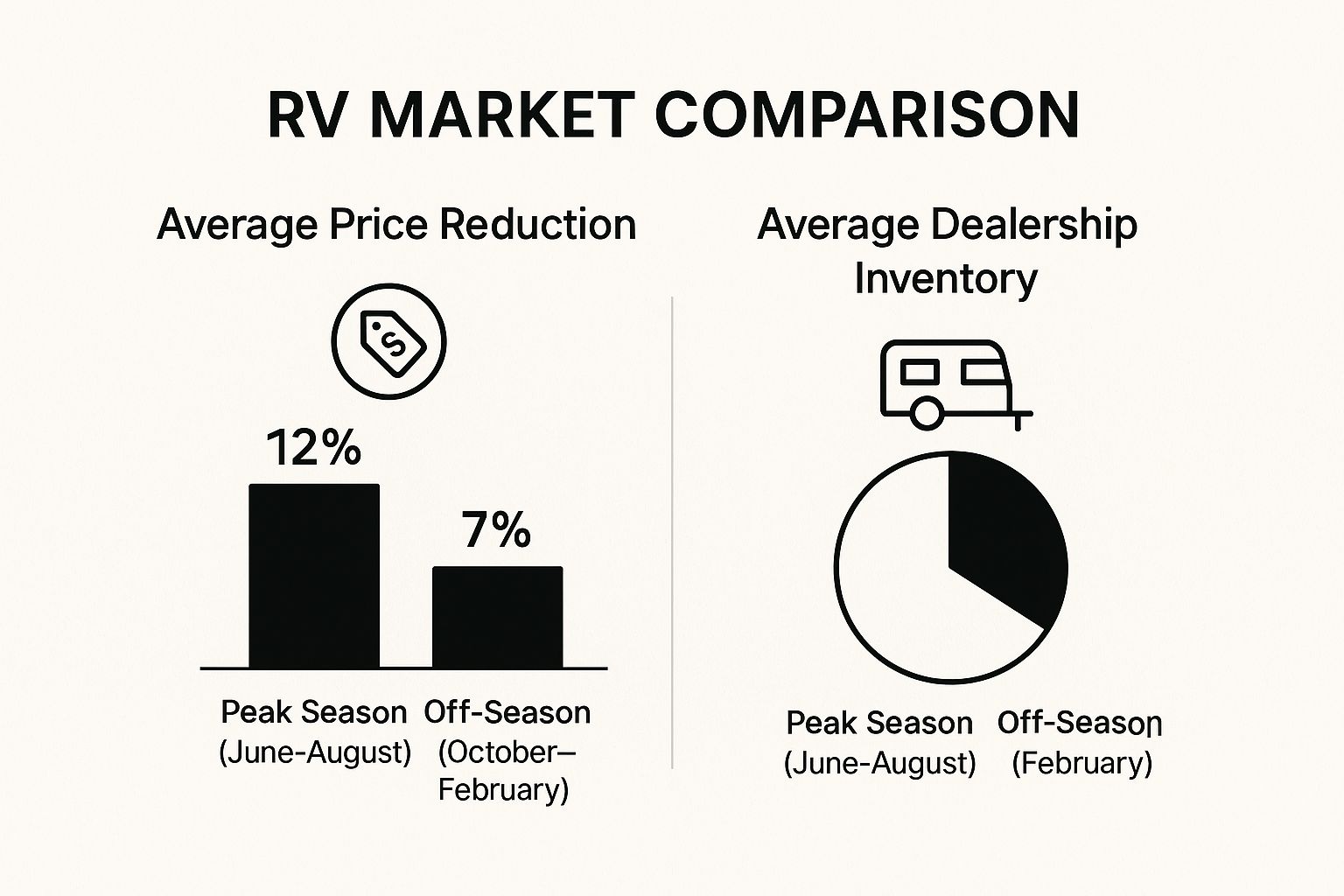
As you can see, the data is pretty clear. The off-season delivers not just lower prices but also a fantastic selection, giving you the best of both worlds.
To help you visualize the trade-offs, here’s a quick breakdown of what to expect during each of the four seasons.
|
Season
|
Price & Deals
|
Inventory Selection
|
Buyer Competition
|
|
Fall/Winter
|
Best prices and biggest discounts due to low demand and quotas.
|
Excellent, especially for last year's models.
|
Very low. You have time to shop and negotiate.
|
|
Spring
|
Highest prices. Dealers are firm and deals are scarce.
|
Best selection of the newest models and floor plans.
|
Extremely high. The market is very crowded.
|
|
Summer
|
Prices remain high, but some mid-season deals may appear.
|
Good, but the most popular models may sell out.
|
High. Lots of families are looking for a last-minute buy.
|
Ultimately, timing your purchase to align with the market's natural cycles is one of the most effective strategies for saving thousands on your RV or boat.
To really nail the timing on an RV purchase, you have to get in sync with the market's natural rhythm. Think of it like the tide. Demand for recreational vehicles ebbs and flows with the seasons, and if you know when the tide is low, you’ve got a massive advantage. The entire RV sales calendar is surprisingly predictable, driven by weather, holidays, and good old human nature.
Spring and summer are the high tide for RV and boat sales, without a doubt. As the weather warms up, families get the itch to plan their summer road trips and lake days, and that dream sends them straight to the dealerships. This surge in demand creates a classic seller's market where prices are firm and your wiggle room on negotiations is pretty tight. You’ll see all the shiny new models, but you'll pay a premium for them.
The real magic happens when that tide starts to go out. As summer fades and the season winds down, the entire dynamic shifts in your favor. This is the part of the sales cycle that creates the absolute best time to buy an RV.
From about March to August, dealership lots are buzzing. The sun is out, school is wrapping up, and everyone is scrambling to lock down their adventure vehicle. This period is all about high foot traffic and even higher prices.
-
Peak Demand: You're competing with the largest number of buyers, all looking for popular models at the same time.
-
Minimal Discounts: With customers lining up, dealers simply don't need to offer big discounts or throw in extra perks to make a sale.
Newest Inventory: On the plus side, you get first dibs on the latest and greatest models, fresh from the factory with all the new bells and whistles.
While the selection is fantastic, the prices directly reflect that peak-season excitement. If your number one priority is getting the newest model the second it's released, spring is your time to shine. For everyone else, a little patience goes a long way.
The spring and summer rush is all about immediate gratification. Buyers are focused on getting an RV or boat now for an upcoming trip, so they’re often less sensitive to price. That gives sellers all the leverage.
Once Labor Day weekend is in the rearview mirror, the market cools off fast. This is where smart shoppers find the real deals. Suddenly, the pressure isn't on you anymore—it’s squarely on the dealerships to move their inventory.
Dealerships are facing a perfect storm of motivation. They desperately need to clear out the current year's models to make space for the incoming stock, and sales managers are pushing hard to hit their end-of-year quotas. This confluence of factors creates a fantastic buyer’s market from roughly October through February.
This seasonal dip is a well-known industry trend. Across North America, RV sales take a nosedive in the fall and winter. October, in particular, is often a ghost town for dealers as the camping season officially ends, which means big discounts and way less competition on the lot. You can find more seasonal RV sales trends on sellmyrvtoday.com that back this up.
This downturn is your superpower. With fewer customers walking in, salespeople are more attentive and far more willing to negotiate on price, financing, and even extras like hitches or starter kits just to close a deal on a new camper, motorhome, or boat.
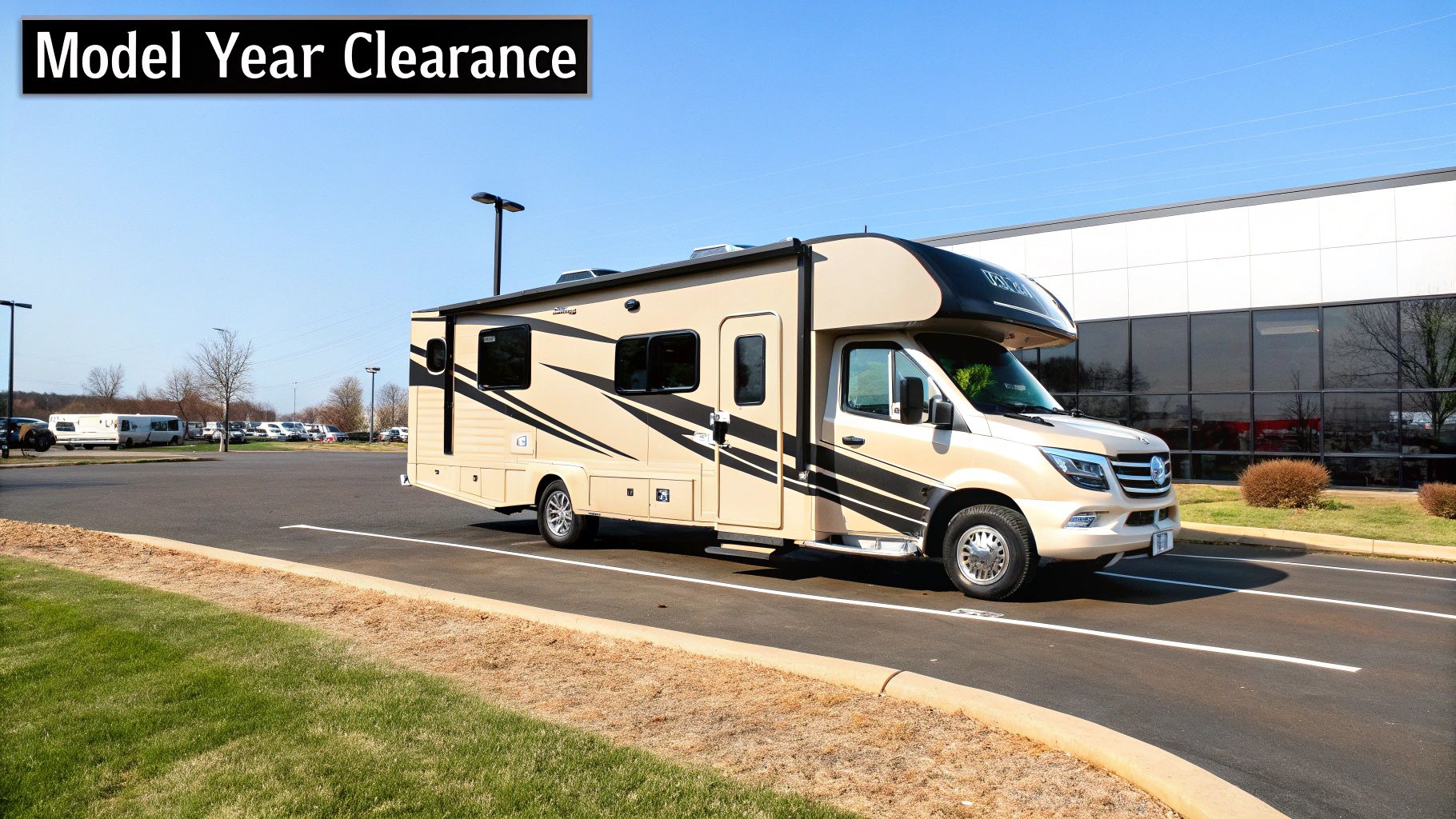
One of the best-kept secrets for getting a great deal on an RV is to time your purchase with the industry's annual model release cycle. It works just like the car business. When next year’s shiny new models start rolling onto the lot, dealers get antsy to clear out the current year's inventory. For a savvy shopper, this is where the real opportunities are.
Every year, usually in late summer and early fall, manufacturers start shipping the next model year's RVs and boats. This kicks off a crucial period for dealerships. Suddenly, they have a space problem—a very expensive space problem. They absolutely have to get the old models out to make room for the new ones.
This pressure creates a golden opportunity for buyers in the form of "new old stock." These are brand-new, factory-fresh RVs from the outgoing model year. They've never been used or owned, but they're now taking up valuable real estate as the newer models arrive. Think of them as 2024s sitting on the lot when the 2025s show up.
So, what are you actually giving up by buying last year's model? Honestly, not much. Most of the time, the updates between consecutive model years are pretty minor and often just cosmetic.
Here’s a look at the kind of changes you can expect:
-
New Upholstery Patterns: Maybe a different fabric or a new color scheme for the cushions and decor.
-
Updated Exterior Graphics: A fresh set of decals to give it a slightly different look on the road.
-
Minor Feature Swaps: Things like a different brand of microwave or a slightly bigger TV.
What you almost never see are big, sweeping changes to the floor plan, the chassis, or the fundamental construction of the RV. This means you're getting a pristine rig, complete with its full factory warranty, for thousands less than its nearly identical, slightly younger twin.
The secret is that you are buying a brand-new vehicle that is suddenly viewed as "aged inventory" by the dealer. This perception shift gives you incredible negotiating power.
The trick is to start looking right when the new models are being announced, which is typically around late August and September. As fall sets in, dealerships become more and more motivated to move their older inventory. The seasonal slowdown is already starting, and now they have the added pressure of the new fleet arriving.
It's a simple business calculation for them. As summer winds down, dealers focus on selling more units than they bring in. This clears the decks before the new models land and is a clear signal that they’re in deal-making mode. It's a fascinating process, and you can get a better sense of how dealers manage inventory on YouTube.
By targeting these "new old stock" units from September through December, you’re walking in at the perfect time. You're not just a customer; you're a solution to the dealer's biggest headache. This puts you in the driver's seat to secure a fantastic price on a brand-new RV.
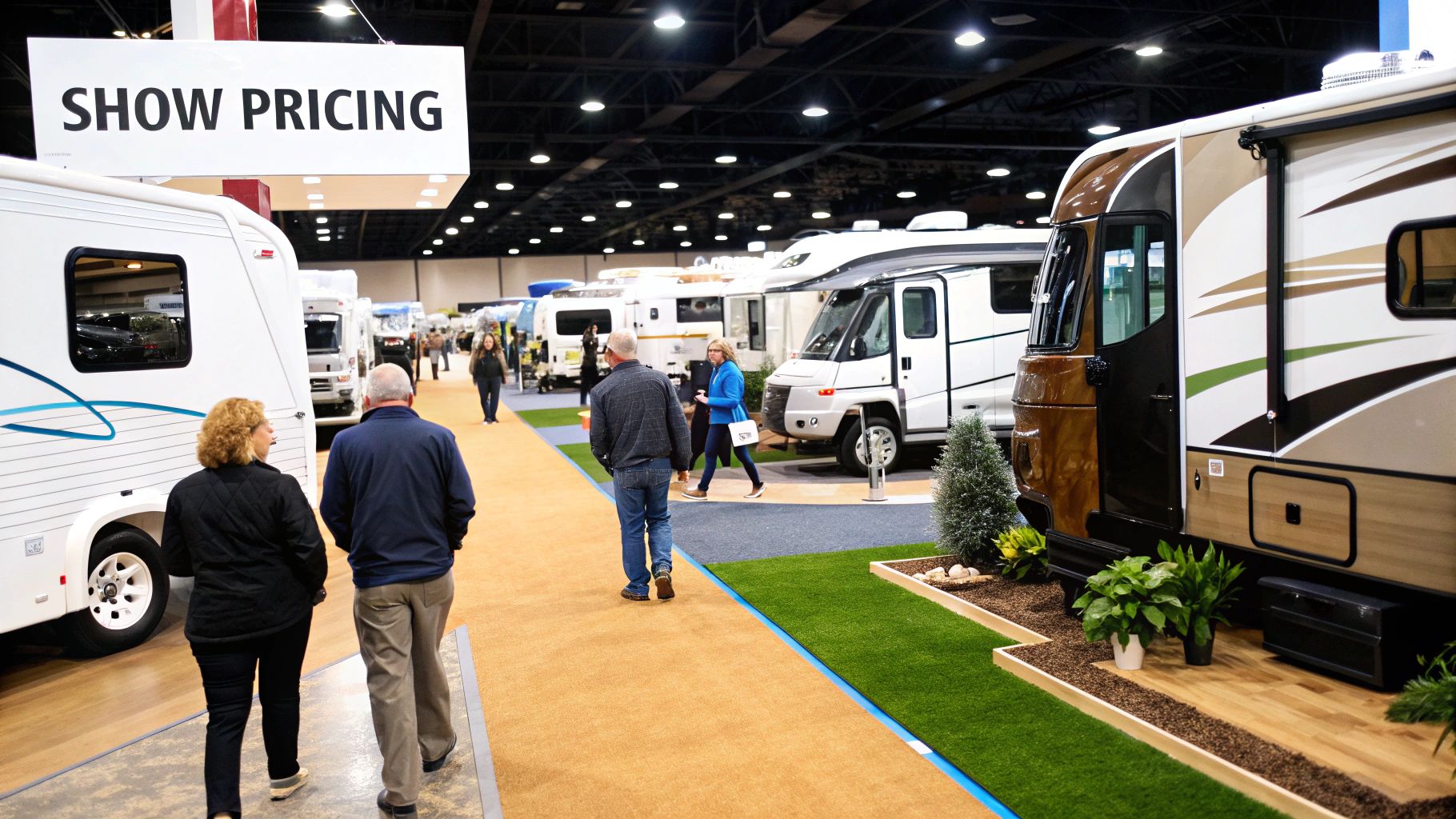
While timing the seasons is a solid strategy, one of the absolute best opportunities for a bargain is at an RV or boat show. These events are far more than just a place to wander around and check out the latest models. They are high-energy, competitive sales arenas where dealers from across the region gather under one roof with a single mission: to move a lot of inventory, fast.
That intense competition is your secret weapon. When you have dozens of dealers in one location, they're all vying for your attention and your business. This pressure cooker environment often results in special "show pricing" and package deals you just won't see on a typical dealership lot. It’s the Super Bowl of RV and boat sales, and every dealer is there to win.
But to come out on top, you have to show up with a game plan. Walking in without one is a surefire way to get overwhelmed by the sheer number of rigs and the fast-talking salespeople.
Success at a show is all about preparation. Doing your homework beforehand is the only way to cut through the chaos and zero in on what truly matters. Think of it less like a casual Sunday browse and more like a focused mission to find your perfect vehicle at the best possible price.
Here's how to get ready before you even leave the house:
-
Secure Financing First: This is non-negotiable. Get pre-approved for a loan from your own bank or credit union before you go. This sets a hard budget and gives you the power to say no to a dealer's financing, which might not be as favorable.
-
Research Your Targets: Don't just show up to "look around." Have it narrowed down to two or three specific makes and models you're serious about. Learn their floor plans, common features, and what they typically sell for. This way, you'll know a genuine deal the second you see it.
-
Be Ready to Commit: The most aggressive deals at these shows are often fleeting. If you find the right RV or boat at the right price, be prepared to put a deposit down to lock it in. When you’ve done your research, you can make that move with total confidence.
At an RV show, dealers are forced into direct, real-time competition with the guys in the next booth over. This creates an environment where they're pressured to put their best foot forward immediately, often leading to their most aggressive pricing right from the start.
Once you're there, it’s time to put the competitive atmosphere to work for you. Don't hesitate to talk to multiple dealers who are selling the same or similar models you're interested in.
Casually let them know you're comparing offers. Just the knowledge that you're talking to their competitor down the aisle is often enough to make them sweeten the pot on the spot.
This is also one of the few places you can chat directly with representatives from the manufacturers themselves. They're usually on hand and can answer the kind of in-depth technical questions about build quality and features that a salesperson might not know.
By showing up prepared and using the competitive energy to your advantage, you can turn the high-pressure vibe of a show into the best time to buy an RV and drive home with a deal you can brag about.
While following the seasons and model release dates is a smart strategy, the absolute best time to buy an RV is often dictated by much bigger economic forces.
Think of the RV and boat market like a giant pendulum. It swings between periods of high demand where sellers call the shots, and periods of oversupply where buyers are in the driver's seat. Knowing which way that pendulum is swinging can save you a fortune.
For example, a sudden surge in popularity—like the one we saw with the rise of remote work—can cause manufacturers to crank up production to an incredible degree. They build and ship thousands of units to meet what seems like endless demand. But what happens when that initial rush starts to fizzle out?
Suddenly, dealership lots are overflowing with inventory that just isn't selling. For the patient buyer, this is where the real opportunity begins.
When the industry overcorrects for a spike in demand, it creates a widespread buyer's market that can last for months, or even a couple of years. This isn't just one dealership trying to move a few old models; it's a nationwide trend.
Dealerships all over the country find themselves under immense financial pressure to sell off this surplus inventory. This forces their hand, leading to aggressive, across-the-board discounts you wouldn't see otherwise.
These market conditions give you a negotiating position that’s far more powerful than any typical seasonal sale. You're no longer just bargaining on a single vehicle; you're taking advantage of a fundamental imbalance between supply and demand that's shaking the entire industry.
A surplus of RVs and boats from previous boom years can lead to some of the most significant discounts you'll ever see. Dealers must clear this "aged inventory" to stay financially healthy, creating a perfect storm for buyers who know how to spot the trend.
So, how do you spot these moments? Start by keeping an eye on business news and industry reports. When you start reading headlines about slowing RV shipments after a period of massive growth, that's your signal. It’s a strong sign that dealers' lots are packed to the brim.
The long-term outlook for the global RV market is strong. The North American market alone is projected to hit $31.45 billion by 2030, with a compound annual growth rate of 7.99%. But that long-term growth doesn't prevent short-term slumps.
A glut of inventory from previous boom years puts direct downward pressure on today’s prices. You can get more details by looking into the latest RV sales trends and market forecasts.
By paying attention to these bigger economic stories, you start to see the entire forest, not just the few trees at your local dealership. This broader perspective is the key to timing your purchase perfectly, letting you step into the market just as the pendulum swings firmly in your favor.
After digging into seasons, sales cycles, and market trends, you probably still have a few questions rattling around. That’s completely normal. Buying something as significant as an RV or a boat always brings up a handful of "what ifs."
Let's tackle some of the most common questions I hear from buyers. Think of this as your final gut-check before you dive into the shopping process, making sure you've covered all your bases.
This is a great question, and the answer for used RVs is a little different than for new ones. While fall and winter are hands-down the best time to buy a new RV, the used market marches to a slightly different beat.
The sweet spot for finding the best selection of used RVs is actually in the early spring. It sounds backward, I know, but think about it from an owner's perspective. Over the winter, families decide they need a new layout or more features for the upcoming season. Come spring, they trade in their old rigs to upgrade.
This wave of trade-ins floods dealership lots with pre-owned inventory from around March to May. Prices might be a little firmer than in the dead of winter, but the sheer number of options gives you a much better chance of finding the perfect used model for your needs and budget.
When it comes to used RVs and boats, spring gives you the best selection as owners trade up. But for the absolute best price, late fall is still king, as both private sellers and dealers are desperate to avoid winter storage costs.
You've seen the ads for Memorial Day, Fourth of July, and Labor Day extravaganzas. While you can definitely find some decent discounts during these events, they rarely represent the absolute rock-bottom prices you'll see in the true off-season.
Here’s how to think about it: those holidays happen smack in the middle of peak buying season for RVs and boats. A "sale" price in May might seem attractive, but it's usually just a small discount off an already inflated spring price tag. The biggest savings are always found when demand is at its lowest.
That's not to say a holiday sale is a bad idea. If you need a vehicle for a summer trip and can't wait, it's a good opportunity. Just be aware that the deals you'll find from October to January will almost always be better. The real magic happens when there’s no holiday rush—just a dealer who needs to clear a unit off their lot.
Where you live has a massive impact on what the "off-season" actually looks like. The October-to-February window is a solid rule of thumb for much of the country, but you need to tweak it based on your local climate.
-
Northern States (like Minnesota or Maine): The camping and boating season is short and sweet. This means the off-season kicks in earlier, sometimes as early as late September, and the winter slowdown is much more severe. This can lead to some seriously deep discounts if you’re willing to brave the cold.
-
Southern & Sun Belt States (like Florida or Arizona): Here, the whole idea of an "off-season" is a bit blurry since outdoor recreation can be a year-round thing. The best time to buy an RV is often in the late summer (August and September). The scorching heat keeps most buyers at home, right before the winter "snowbird" season picks up.
The simple trick is to pinpoint when the fewest people in your area are thinking about camping or boating. That lull in local demand is your personal golden ticket to walk into a dealership and negotiate a fantastic deal.
Ready to find the perfect RV or boat for your next adventure? At SearchShop.com, we provide the tools you need to research, compare, and find thousands of new and used recreational vehicles. Analyze prices, read reviews, and shop with confidence by visiting SearchShop.com today.