Finding the right RV really comes down to one thing: matching the rig to your life. It's not about finding some mythical "perfect" vehicle. It’s about figuring out which type of RV best fits your travel style, your budget, and who you're bringing along for the ride.
Are you a solo explorer, a family of weekend warriors, or a full-time nomad? The answer will point you in the right direction.
Choosing an RV is a huge decision, and it's okay to feel that way. It's a major investment in a lifestyle of freedom and exploration. The market is exploding right now—it's projected to hit an incredible USD 217.23 billion by 2034 as more and more people hear the call of the open road.
All that growth means you have more options than ever, which can be both a blessing and a curse. To keep from getting overwhelmed by endless floorplans and flashy features, the best place to start is by matching your personal travel style to a broad RV category.
Think of it like choosing the right tool for a job. You wouldn't bring a sledgehammer to hang a picture frame, right? In the same way, a massive Class A motorhome probably isn't the best fit for someone who wants to get off the beaten path and explore tight, winding backroads.
The perfect RV isn’t the one with the most bells and whistles. It's the one that just fits—the one that makes traveling easier, not more complicated. Your ideal rig should feel like a natural extension of your home and your adventurous spirit.
To get you started, we’ve put together a simple matchup guide. It’s a cheat sheet designed to connect common traveler profiles with the RVs that are practically built for them. Find your tribe below and see which rigs you should be looking at first.
This quick-reference table is a great starting point. It’s designed to help you immediately see which RV classes are a natural fit for your travel needs and lifestyle.
| Traveler Profile |
Best RV Types |
Key Advantages |
| The Solo Adventurer |
Class B (Camper Van), Small Travel Trailer |
Easy to drive, park anywhere, and fuel-efficient for spontaneous trips. |
| The Weekend Family |
Class C Motorhome, Pop-Up Camper |
Balances sleeping space and drivability for quick getaways and campground fun. |
| The Full-Time Couple |
Fifth Wheel, Class A Motorhome |
Offers residential-style living with ample storage and comfort for long-term travel. |
Think of this table as your first filter. Once you've identified a category or two that seems right, you can dive deeper into the specific models and features that will make your adventures unforgettable.
Walking onto an RV lot for the first time can be overwhelming. You'll hear salespeople throwing around terms like "Class A," "fifth wheel," and "camper van," and it can feel like trying to learn a new language. But it's actually pretty simple once you grasp the basics.
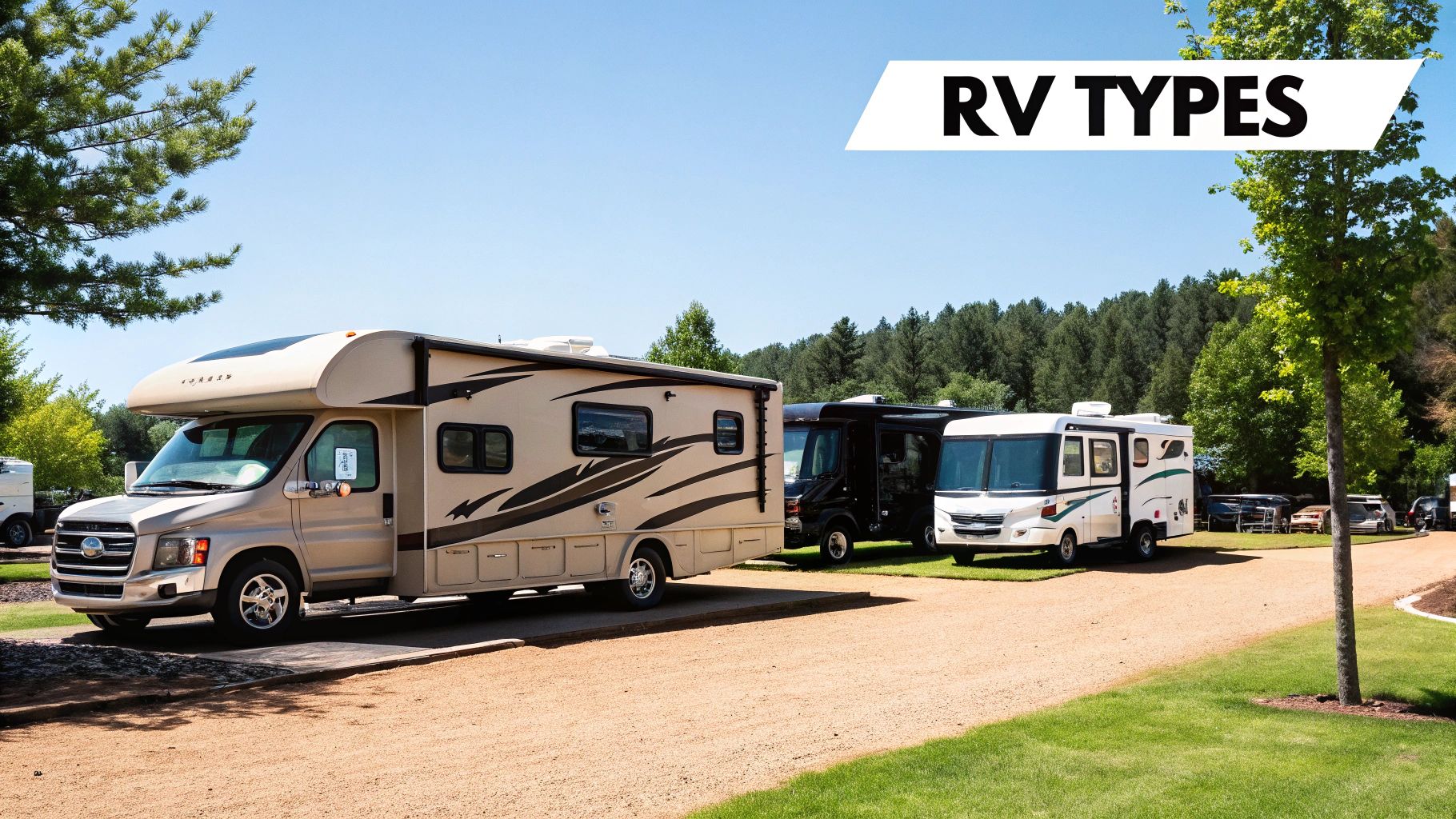
All RVs fall into two main families: motorhomes (the kind you drive) and towables (the kind you pull behind a truck or SUV). That's it. Understanding this fundamental difference is the first, most important step toward figuring out which rig is right for you.
Motorhomes are the all-in-one solution. The living area is connected directly to the driver's cab, which is a game-changer on the road. Need to grab a snack or use the bathroom? Just pull over and walk back—no need to step outside, which is a lifesaver in a rainstorm or on a long travel day.
They generally come in three flavors:
- Class A Motorhomes: These are the rockstars of the RV world, the big, bus-style rigs you see cruising down the highway. Built on a heavy-duty chassis, they're packed with residential-style amenities, cavernous storage bays, and layouts that feel like a small apartment. Think of a Class A as a true "house on wheels," perfect for full-timers or anyone who refuses to compromise on comfort.
- Class B Motorhomes (Camper Vans): At the other end of the size spectrum are Class Bs. Built on a standard van chassis, they're nimble, stealthy, and a breeze to drive. You can park one in a normal parking space, making them fantastic for exploring cities or tucking into tight, remote campsites. They're a favorite among solo travelers and couples who prioritize mobility over square footage.
- Class C Motorhomes: The "just right" option for many. You can always spot a Class C by the signature bunk or storage area that extends over the cab. Built on a truck chassis, they strike a great balance between living space and maneuverability, offering a far more intuitive driving experience than a giant Class A. This makes them an incredibly popular choice for families.
Towable RVs don't have their own engine; you hitch them to your truck or SUV. The biggest advantage here is flexibility. Once you get to the campground, you can unhitch the trailer and you've got your regular vehicle free for running errands, grabbing dinner, or exploring tight mountain roads where you'd never dream of taking a motorhome.
- Travel Trailers: This is by far the most diverse category. You can find everything from tiny, minimalist teardrop campers that a small SUV can pull to massive, 35-foot bunkhouse models for the whole family. They connect to a standard ball hitch, making them compatible with a huge range of tow vehicles.
- Fifth Wheels: These are the titans of the towable world. They require a heavy-duty pickup truck and connect to a special jaw hitch mounted in the truck bed. This setup creates an incredibly stable and secure towing experience, eliminating much of the sway you can get with a travel trailer. Their signature split-level design often includes high ceilings and a residential feel that's second only to a Class A motorhome.
- Pop-Up Campers (Folding Trailers): Lightweight and low-profile, these trailers have soft, canvas sides that collapse for towing. They're easy to pull with smaller vehicles and store in a standard garage. Pop-ups give you an experience that feels closer to traditional camping but with the comfort of a real bed and basic amenities to keep you off the ground.
You'll notice that towables dominate the roads and campgrounds in the U.S. Their affordability and the flexibility of having a separate vehicle make them the go-to for countless families and weekend warriors. You can dive deeper into U.S. RV market trends on market.us.
The infographic below breaks down the two core cost centers you need to plan for—it's not just about the initial price tag.
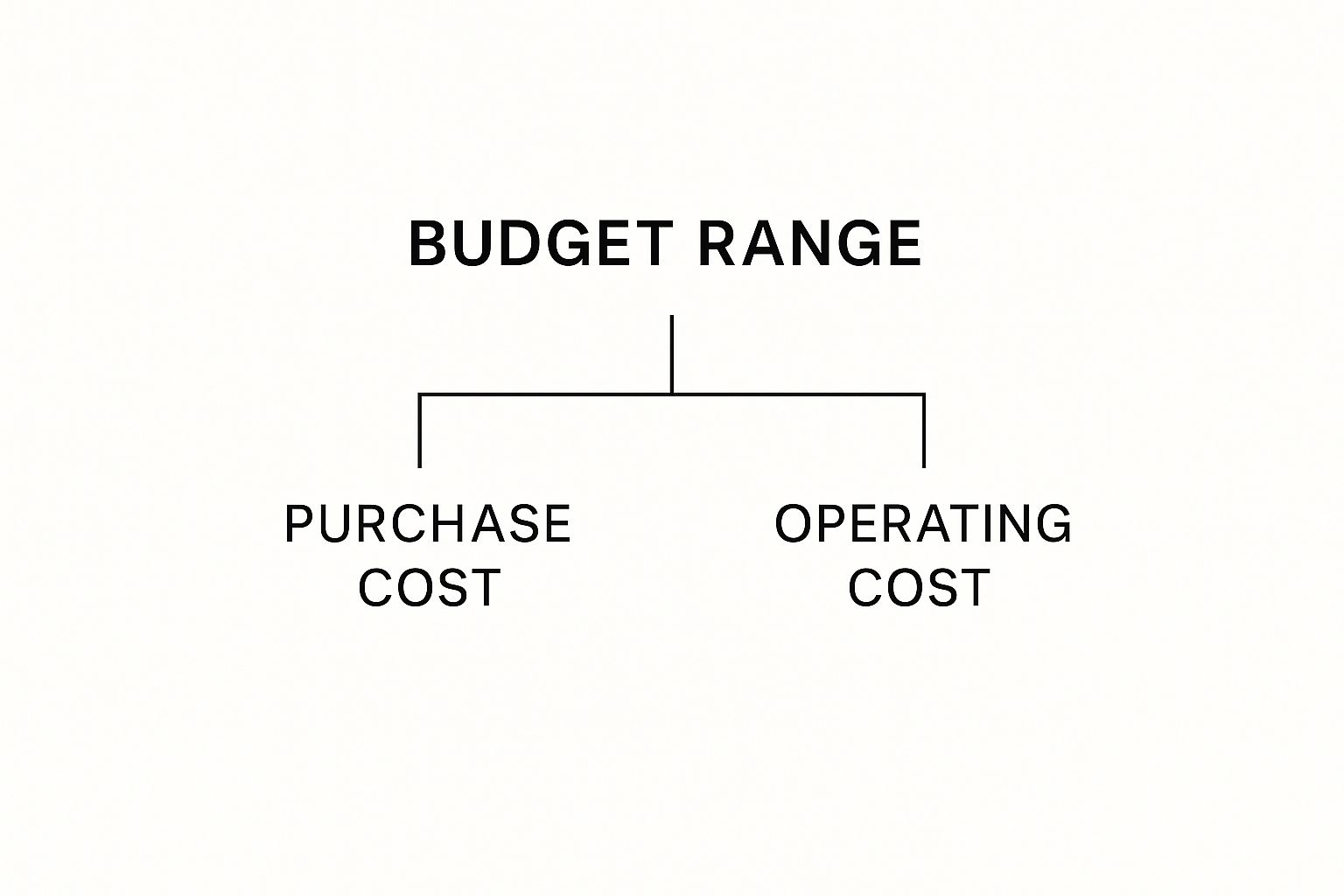
As you can see, the true cost of ownership includes ongoing expenses like fuel, insurance, and maintenance, which can vary wildly between different RV types.
To really understand the trade-offs, it helps to see the core differences side-by-side. This table breaks down what you get—and what you give up—with each style.
| Feature |
Motorhomes (Class A, B, C) |
Towables (Trailers, Fifth Wheels) |
| Convenience |
Unbeatable on-the-go access. Stop and use facilities instantly. |
Requires getting out to access living space. |
| Setup/Teardown |
Generally faster. Push-button leveling and slide-outs. |
Slower. Involves hitching, unhitching, and manual setup. |
| Local Exploration |
Need to tow a separate car ("toad") or break camp to explore. |
Excellent. Unhitch at camp and use your truck/SUV freely. |
| Driving Experience |
Driving your home. Can be intimidating for beginners (especially Class A). |
Requires learning to tow, back up, and manage sway. |
| Maintenance |
Two systems to maintain: engine/chassis AND the "house." |
Simpler. Only the "house" systems require regular upkeep. |
| Initial Cost |
Typically higher due to the integrated engine and drivetrain. |
Generally more affordable for comparable living space. |
| Best For |
Travelers who move frequently and value on-road convenience. |
Campers who set up a "base camp" and explore from there. |
Ultimately, there's no single "best" choice, only the best choice for you.
The decision between a motorhome and a towable really boils down to one question: What does your ideal trip look like?
If you're a road-tripper at heart, someone who envisions moving every few days to see as much as possible, the sheer convenience of a motorhome is tough to beat. The speed of setting up and breaking down camp means more time enjoying your destination.
On the other hand, if you're the type who likes to plant roots for a week or more and truly soak in an area, a towable is probably your best bet. The freedom to unhitch and have your vehicle for day trips to trailheads, beaches, or town is a huge quality-of-life perk. This decision is the foundational first step in finding the perfect RV for your adventures.
Finding the right RV has less to do with engine specs and floorplans and more to do with how you actually want to travel. It's easy to get wowed by features on a showroom floor, but the real question is, "how does this fit my life?"
Are you picturing quick weekend getaways to a favorite lake, or are you dreaming of a months-long odyssey across the country? The answer completely changes what you'll need. Think of it like buying shoes: you wouldn't wear hiking boots to the beach or flip-flops to climb a mountain. Your RV has to be the right gear for the adventures you have planned.
Let’s dig into the most common types of RVers. See if you can spot yourself in one of these profiles—it's the first step to narrowing down your search.
If you live for Friday afternoons and three-day weekends, you're a Weekend Warrior. Your trips are short, sweet, and packed with activity. You're likely heading to a state park, a music festival, or a family gathering a few hours from home.
For you, time is the most valuable currency. You need an RV that’s easy to grab and go, simple to set up, and just as easy to put away on Sunday night. This isn't about luxury living; it's about having a hassle-free launchpad for adventure.
What Matters Most to Weekend Warriors:
- Easy to drive and park: You’ll be dealing with tight campground roads and crowded gas stations. Smaller Class C motorhomes, nimble camper vans (Class B), or a lightweight travel trailer are your best friends.
- Quick setup and teardown: The less time you spend leveling jacks and extending awnings, the more time you have for fun. Look for simple, straightforward systems.
- Low maintenance: You want to spend your weekends relaxing, not troubleshooting a complex electrical system. Simplicity is a huge plus.
The perfect rig for a Weekend Warrior is all about maximizing fun and minimizing friction. It's your escape pod—ready to roll the moment you get home from work.
The Cross-Country Adventurer thinks in terms of weeks and months, not days. You’re planning the big one: the epic summer road trip, the snowbird escape to warmer climates, or maybe you're a remote worker exploring the U.S. one national park at a time.
You'll be covering thousands of miles and living in your RV for extended periods. That means you need a rig that's both a comfortable ride on the highway and a comfortable home when you get to camp. It's all about finding that perfect balance between road-readiness and livability.
What Matters Most to Cross-Country Adventurers:
- Driving comfort: Long days on the interstate can be grueling. A big Class A motorhome with a commanding view of the road or a heavy-duty truck paired with a stable fifth wheel makes a world of difference in driver fatigue.
- Ample storage: You're packing for different seasons and longer stays. Generous basement compartments for chairs and grills, plus plenty of interior cabinet space, are essential.
- A real living space: After a six-hour drive, you need more than just a place to sleep. A comfy sofa, a kitchen you can actually cook in, and a decent bed are non-negotiable. Slide-outs are a game-changer, transforming a hallway into a living room with the push of a button.
For the Full-Time RVer, this isn't a trip—it's your address. The RV is home, and it has to perform like one every single day, through rain, shine, and snow. This is the big leagues, where durability, four-season comfort, and residential features are everything.
This decision is a huge one. You aren't just buying a fun toy; you're choosing your primary residence. It has to be built for the long haul.
What Matters Most to Full-Time RVers:
- Four-season capability: This is non-negotiable. You need excellent insulation, an enclosed and heated underbelly to protect your water tanks from freezing, and dual-pane windows to handle extreme heat and cold.
- Maximum storage: You have to fit your entire life in here. Fifth wheels are often the top choice for their massive storage bays and house-like closets, though large Class A coaches are also great contenders.
- Residential amenities: Features that seem like luxuries to others are necessities for you. Think a full-size refrigerator, a washer and dryer hookup, a dedicated desk space, and a bathroom that doesn't feel like an airplane lavatory.
- Build quality and durability: Constant use puts a lot of stress on an RV. Investing in a rig with a rock-solid frame, high-quality appliances, and a reputation for reliability will save you endless headaches down the road.
Once you figure out which of these descriptions sounds most like you, the overwhelming world of RVs suddenly becomes much more manageable. Knowing yourself is the best tool you have for finding the perfect rig.
Let's talk money. I know, it's not the most exciting part of dreaming about the open road, but getting this right from the start is the difference between a joy-filled adventure and a stress-inducing money pit. The price you see on the dealer's website or on that shiny rig at the RV show? That's just the down payment on your new lifestyle.
To truly figure out what you can afford, you have to look at the total cost of ownership. The sticker price is the headline, but the ongoing expenses are the real story. Think of it like buying a boat—the purchase is one thing, but the slip fees, fuel, and upkeep are what determine if you can actually use it.
One of the first forks in the road you'll encounter is whether to buy a factory-fresh RV or a pre-loved one. This isn't just about personal preference; it's a massive financial decision.
A brand-new rig is tempting. You get the latest tech, a full warranty, and the pure bliss of knowing you're the first one to sleep in that bed. But there's a huge catch: depreciation. The second you drive a new RV off the lot, it can lose 20% or more of its value. In just a few years, it might be worth half of what you paid.
On the flip side, a used RV lets someone else take that initial depreciation hit. You get more bang for your buck, and the previous owner absorbed that painful first-year value drop. The trade-off? You're inheriting a history. The warranty is likely gone, and there could be hidden issues waiting to pop up. It's the classic dilemma: pay more upfront for peace of mind or save on the purchase and hold some cash back for potential repairs.
This is where so many new owners get into trouble. The purchase price is a one-time event, but the expenses below show up month after month, year after year. You have to bake them into your budget.
The sticker price is just the tip of the iceberg. The true cost of an RV is the sum of all its parts—insurance, storage, fuel, and maintenance. Ignoring these is like planning a voyage without accounting for the cost of food and water.
Here’s a realistic breakdown of the expenses you need to plan for:
- Insurance: This is non-negotiable. Coverage for a big Class A diesel pusher can easily run $1,500 to $4,000+ per year. A modest travel trailer might be more in the $300 to $900 range. It all depends on the rig's value, type, and your driving record.
- Storage: Unless you've got a massive driveway or dedicated RV pad, you'll need to pay to park it somewhere. A basic outdoor lot could be $50 a month, while a secure, climate-controlled indoor spot could push $450+ a month.
- Fuel: Don't underestimate this one—it's a budget killer. That beautiful Class A motorhome probably gets a gut-wrenching 6-8 miles per gallon. A cross-country trip can easily cost thousands in fuel alone. Even a capable truck will see its MPG plummet when towing a heavy fifth wheel.
- Maintenance & Repairs: An RV is basically a house that endures a constant earthquake every time you drive it. Things will break. You need an annual budget for routine upkeep like resealing the roof, plus a healthy emergency fund for when an appliance gives out. And tires? A new set can cost anywhere from $500 to $4,000.
- Campground Fees: Where you park for the night costs money. Private resort-style campgrounds can be $40 to well over $150 per night, especially in popular destinations.
When you add these ongoing costs to a potential loan payment, you get the real monthly cost of that RV. Doing this math upfront ensures your new life on the road is one you can actually afford to enjoy.
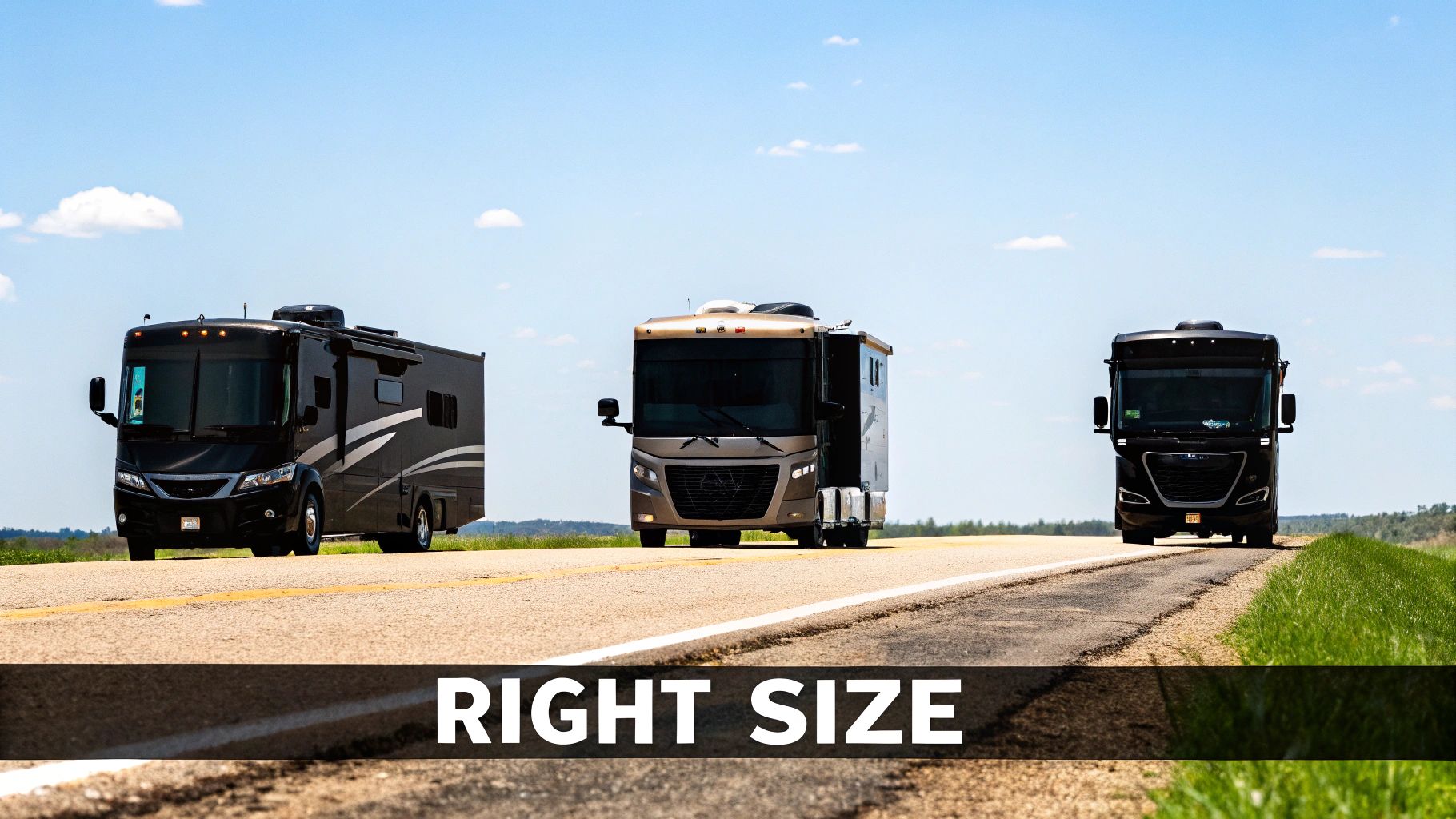
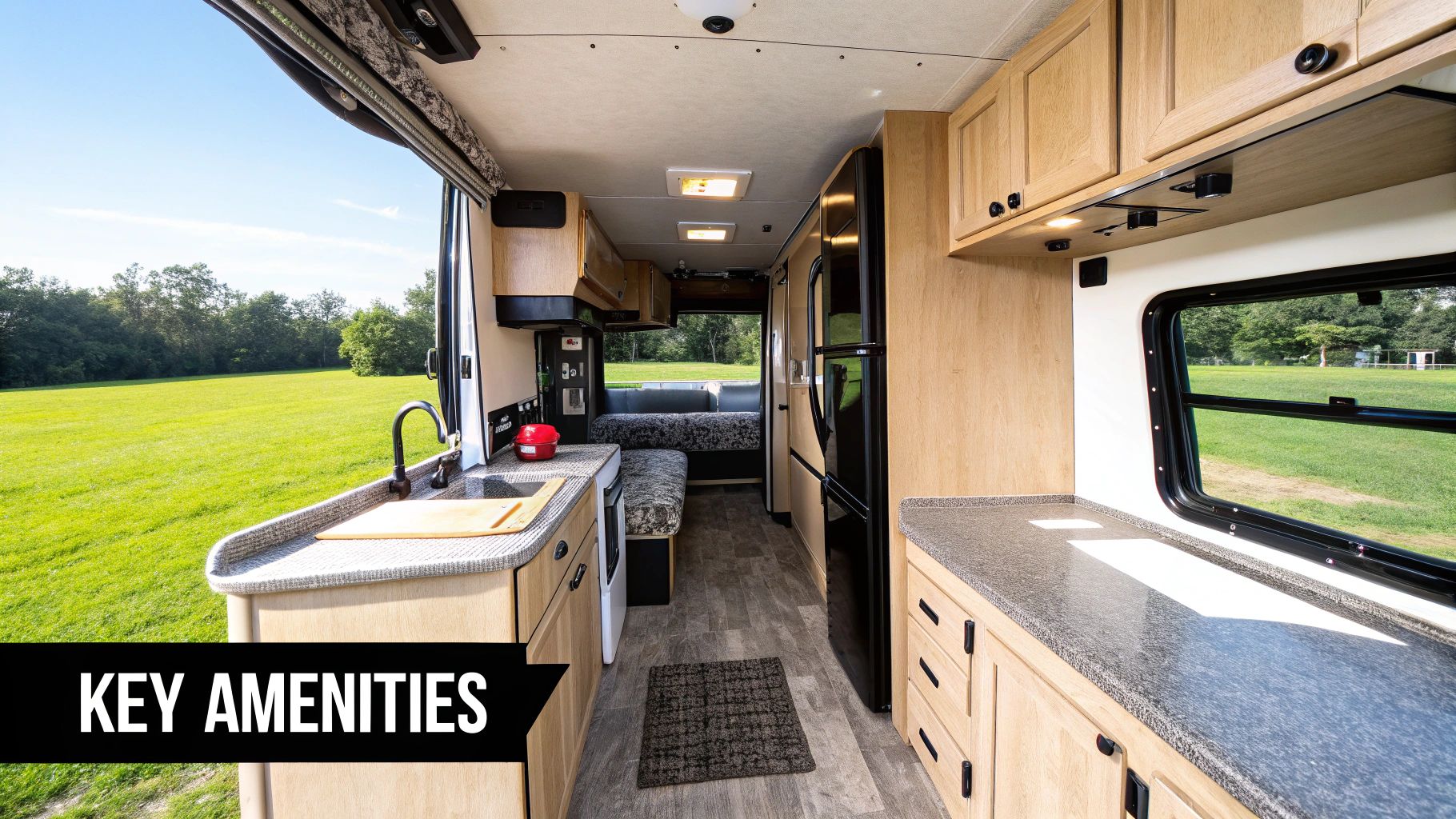
If the type of RV you choose is the skeleton, then the features and floorplan are its heart and soul. This is where you’ll actually live—cooking meals, waiting out a rainstorm, or crashing after a long day of exploring. A layout that doesn't fit your lifestyle can quickly turn a dream adventure into a daily frustration.
Think of an RV floorplan like the layout of a tiny home on wheels. Every single square inch matters. The flow from the kitchen to the living area to the bedroom has a massive impact on your day-to-day comfort. To really answer "what RV is right for me?", you have to look past the shiny exterior and truly picture yourself living inside the space.
A good floorplan is about so much more than just cramming in a bed and a stove. It’s about creating a space that works with your personal rhythm. Are you a passionate cook who needs real counter space? A tiny galley kitchen will feel like a prison. Do you work from the road? A dedicated dinette or desk area is probably a non-negotiable.
The layout is what makes an RV feel like a home. I remember walking into a Class A motorhome that had no slide-outs, and it felt incredibly claustrophobic. We knew right then and there that an open, spacious feel was a top priority, which meant slides were a must-have for us. Figure out your own deal-breakers before you even start looking.
The most important feature of any RV isn't the engine or the brand name—it's how the layout makes you feel. Your rig should be your sanctuary, not just a vehicle. A functional floorplan is the foundation of a happy life on the road.
No single feature has changed RV design more than the slide-out. With the push of a button, these sections of the RV wall extend outward, dramatically expanding your interior living space once you're parked. It's a game-changer.
Slides can turn what feels like a narrow hallway into a comfortable living room or make space for a luxurious king-sized bed. But they come with trade-offs. Slide-outs add significant weight, introduce mechanical complexity, and create another potential spot for water leaks if the seals aren't maintained.
You also have to think about access when the slides are in. Some models completely block the path to the bathroom or refrigerator during travel days. That's a huge pain when you just want to pull over for a quick lunch. Always, always walk through an RV with the slides retracted to see if it’s still usable for a quick roadside stop.
Beyond the big picture, the specific layouts of your core living areas will shape your daily experience. It’s time to get honest about what truly matters to you.
- The RV Kitchen (Galley): Is cooking a passion or just a necessity? "Rear kitchen" models often provide the most counter space and storage. Mid-ship galleys are more common but can sometimes feel like a walkway. A good "work triangle" between the sink, stove, and fridge makes all the difference.
- Bedroom Configurations: Do you need a walk-around queen or king bed, or can you live with a corner bed that’s a pain to make? For families, bunkhouse models are fantastic, giving kids their own dedicated sleeping nooks.
- Wet Bath vs. Dry Bath: This is a critical distinction, especially in smaller RVs. A dry bath is what you're used to at home, with a separate, enclosed shower. A wet bath, on the other hand, combines the toilet and shower into a single waterproof room to save space. Yes, that means everything gets wet when you shower.
New technology is also changing the game, with smart home controls, better Wi-Fi options, and integrated solar power making rigs more capable than ever. The industry is also slowly moving toward more sustainable options, including electric RVs, to meet changing demands. You can get a better sense of these trends and how they're transforming the RV market by checking out this report on straitsresearch.com.
Ultimately, picking the right features and floorplan comes down to a bit of honest self-reflection. When you can clearly visualize your daily routines and know what you can—and can't—live without, you'll find a layout that truly feels like home, no matter where you decide to park it.
Alright, you’ve done the hard work. You’ve sifted through countless options, walked through dozens of floorplans, and now you have a contender—an RV that feels like it could be "the one."
Now for the most important step before you sign on the dotted line: the hands-on inspection and test drive. This isn't just kicking the tires. It's your final chance to uncover any hidden problems that could turn your dream into a money pit.
This is where you need to get nitpicky. A thorough inspection now can save you a fortune in repairs later. Open every single cabinet door, press every button, and don’t be afraid to get on your hands and knees for a look underneath.
Your number one mission is to hunt for signs of water damage. Water is the mortal enemy of an RV. Keep an eye out for tell-tale stains on the ceiling, feel for any soft spots in the floor (especially around corners and windows), and trust your nose—a musty smell is a huge red flag. Water damage can lead to structural rot, which is a nightmare to fix.
After your water-damage hunt, it’s time to test every single thing that can be turned on, pushed out, or switched on.
- Appliances: Fire up the fridge (on both gas and electric settings), light every stove burner, and pop something in the microwave.
- Plumbing: Turn on the water pump and test every faucet. While they're running, peek under the sinks for any drips. Don't forget to flush the toilet.
- Electrical: Flick every light switch, test all the outlets (a cheap outlet tester is great for this), and run any slide-outs or awnings in and out a few times.
- HVAC: Crank up the air conditioner until it blows cold, then switch over to the furnace to make sure it produces heat.
If a seller says an appliance “just needs a little TLC,” treat that as a warning. Assume it's broken. If it doesn't work perfectly during your inspection, you'll be the one paying to fix or replace it.
Driving a big rig, or even towing one, is a world away from driving your car. You have to be comfortable with how it handles on the road.
During the test drive, pay attention to everything. How does it brake? Does it feel like it’s being pushed around by the wind? Can you hear any strange rattles, whines, or clunks? This drive is all about seeing if you feel confident and in control.
If you’re looking at a used RV, getting a professional inspection is a must. Seriously, don't skip this. A certified RV inspector is your impartial expert. They'll climb on the roof, get under the chassis, and check all the systems you can't, providing a detailed report. That report is the ultimate peace of mind, letting you make your final choice with absolute confidence.
Even with a solid plan, a few questions always seem to hang in the air when you're zeroing in on the perfect RV. Getting those last uncertainties cleared up can be the final step that lets you buy with total confidence. Let's tackle some of the most common ones I hear from buyers.
This is probably the number one question on every newcomer's mind, and the answer is a relief: probably not. For the vast majority of RVs and in most states, your standard driver's license is all you need. That holds true for even the largest motorhomes and heaviest trailers.
However, there are a few exceptions. A handful of states require a special license for vehicles over a certain weight, usually 26,000 pounds. Since these rules are state-specific and can change, your best bet is to check your local DMV's website. A quick search will give you the definitive answer and ensure you're road-legal from day one.
Hands down, it's buying an RV that doesn't match their actual travel habits. People get starry-eyed thinking about that epic, once-in-a-lifetime cross-country journey and buy a massive 40-foot motorhome. But then they find themselves mostly taking weekend trips to state parks where a big rig is a nightmare to park and maneuver.
The biggest mistake is shopping for the one dream trip you might take someday, instead of the dozen trips you'll actually take this year. Be honest about how you will use the RV 90% of the time.
This gap between the dream and the reality leads to a lot of frustration. Suddenly, the vehicle feels too big, too expensive, and too hard to drive. The whole point of answering "what RV is right for me?" is to be brutally honest about your real-life plans, not just your bucket list.
If you're looking at a travel trailer or fifth wheel, this isn't just