

If you’ve started searching for a Leprechaun by Coachmen for sale, you’re already on the right track for a solid, feature-rich Class C RV. The Leprechaun has been a favorite among RV shoppers for decades, and for good reason—it hits that sweet spot between comfort, value, and road-ready performance that travelers of all types are looking for.
Why the Coachmen Leprechaun Is Such a Popular Choice for RV Shoppers
When you start researching Class C motorhomes, the Coachmen Leprechaun name will pop up again and again. It's no accident. For over 50 years, Coachmen has been building a rock-solid reputation for practical, dependable RVs. The Leprechaun line is really the heart of that legacy, showcasing a commitment to quality that veteran RVers respect and new buyers can count on.
You can think of the Leprechaun as the trusty family station wagon of the RV world. It's not trying to be the flashiest rig at the campground, but it absolutely delivers on its core promise: to be a safe, functional, and comfortable home on wheels. That no-nonsense approach makes it a smart purchase for families ready to make memories or couples who want a reliable vehicle for their adventures.
A Long History of Reliability and Value
One of the first things people notice about the Leprechaun is its build quality. Coachmen doesn't cut corners; they use proven construction methods and durable materials to make sure these RVs can stand up to thousands of miles of real-world travel. This focus on longevity means a well-cared-for Leprechaun tends to hold its value better than many of its competitors, which is a huge plus for any major purchase.
This visual really gets to the heart of what the Leprechaun is all about: reliable comfort for the open road.
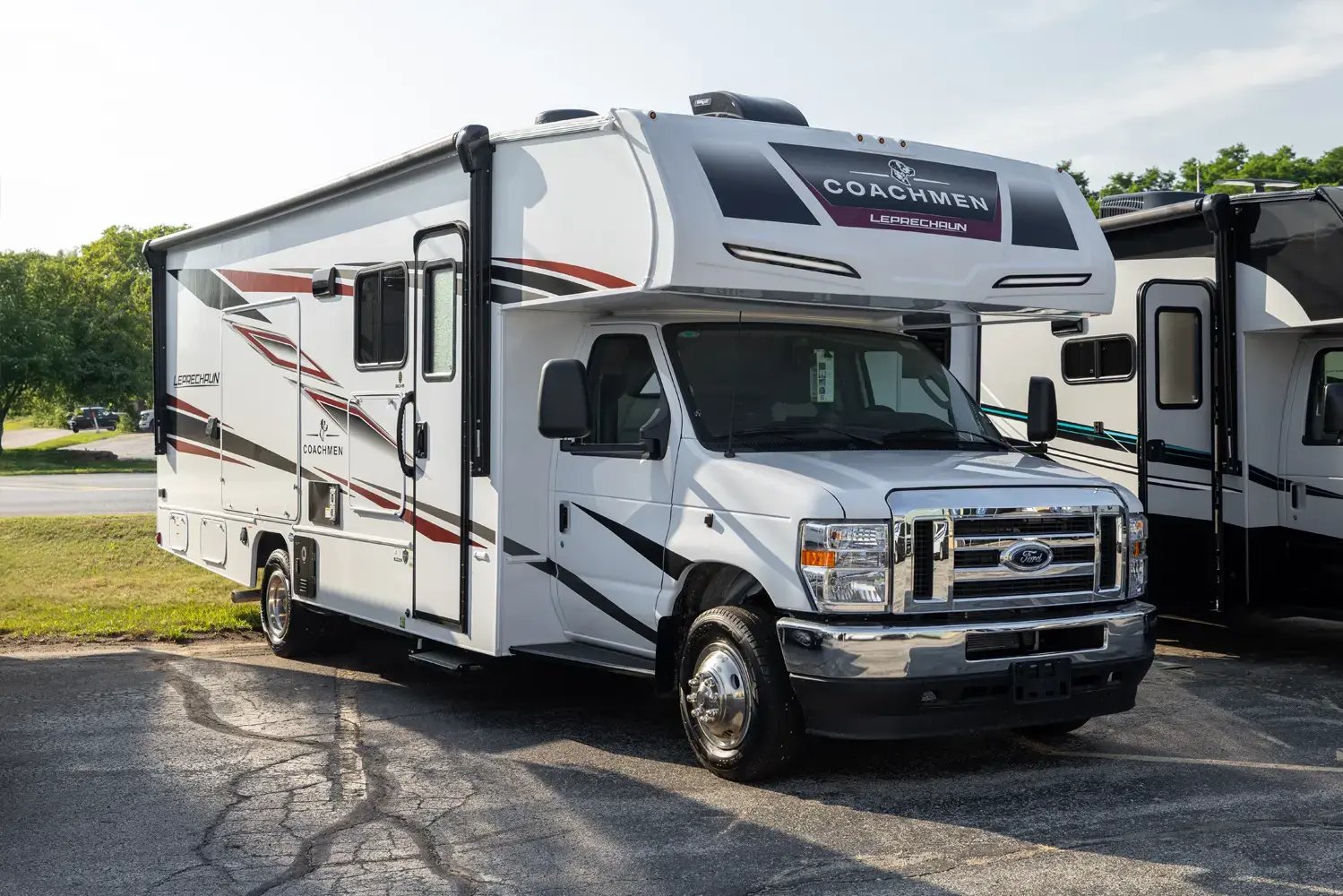
It perfectly captures that feeling of freedom and relaxation that comes from knowing you're traveling in a vehicle you can trust.
Modern Power Under the Hood
While the Leprechaun has a classic appeal, Coachmen hasn't let it fall behind the times. They're constantly updating it to meet modern RVer's expectations. Take the 2025 lineup, for instance. Models like the 260DS and 260MB are built on the tough Ford E-450 chassis, which comes with a beefy 7.3L V8 engine. We're talking up to 350 horsepower and 468 ft-lbs of torque—plenty of muscle to confidently handle steep mountain passes and long highway cruises. You can dig into these specs over on JD Power's RV listings.
Think of this guide as your roadmap to finding the perfect Leprechaun by Coachmen for sale. We're going to walk through everything you need to know to make a smart, confident buying decision.
By the time you're done reading, you won't just be scrolling through listings. You'll be able to evaluate them like a seasoned pro, armed with the knowledge to spot the right model, floorplan, and price for you.
Here’s a quick look at what we'll cover to get you ready:
-
Decoding the Models: We'll break down the differences between popular floorplans like the 260DS and 260MB.
-
Pricing Insights: Get a feel for what drives the price of new and used models so you know what to expect.
-
The Ultimate Inspection Checklist: A hands-on list of exactly what to check when you're looking at a Leprechaun in person.
-
Finding the Best Deals: Learn where to look for the best listings and how to negotiate a great price.
Decoding the Leprechaun Models and Floorplans
If you’ve ever stepped inside an RV, you know one thing instantly: the floorplan is everything. It's what turns a vehicle into a home-on-wheels, and picking the right one is easily the biggest decision you'll make when you find a Leprechaun by Coachmen for sale. A good layout doesn't just fit your family; it has to fit the way you travel.
Coachmen understands this, which is why the Leprechaun lineup is so diverse. Think of it like house hunting. The needs of a solo RVer are worlds apart from a family of five, and a weekend adventurer wants a different setup than someone living on the road full-time. Let's dig into some of the most popular models to see how their designs play out in the real world.
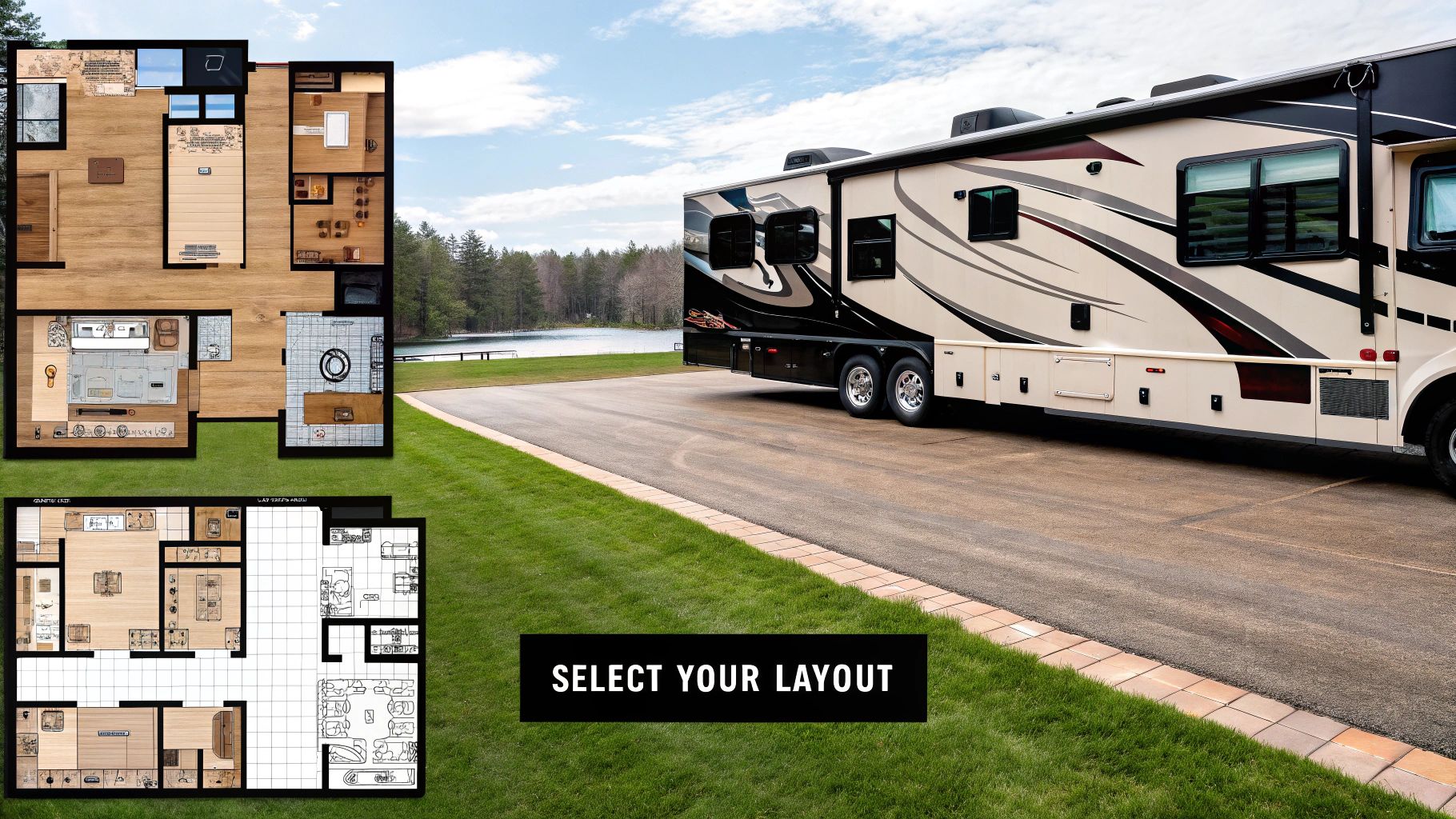
The Workhorse Models: 260DS and 260MB
You’ll see the 260DS and 260MB models pop up constantly in for-sale listings, and for good reason—they’re incredibly popular. Though their names are similar, their internal philosophies are completely different, showing just how well Coachmen caters to specific travel styles.
The Coachmen Leprechaun 260DS is all about space, earning its nickname as the "dual slide" model. It has two separate slide-outs—one in the bedroom and another in the main living area. This design makes a massive difference, opening up the interior to create a roomy feel that’s perfect for families or anyone who just hates feeling boxed in. The bedroom slide usually houses a walk-around queen bed, while the main slide expands the dinette and sofa area, making it a comfortable spot for everyone to hang out.
On the other hand, the Coachmen Leprechaun 260MB is a master of flexibility. Its secret weapon is a space-saving Murphy bed. By day, the bed folds neatly into the wall, giving you a comfortable sofa and a wide-open living room. At night, it transforms into a bedroom. It’s a brilliant design that makes the RV feel so much bigger than it is, making it a favorite for couples or solo travelers who want more daytime living space.
The choice between a 260DS and a 260MB really comes down to your lifestyle. Do you want a dedicated, separate bedroom (260DS), or would you rather have a multi-functional living area that feels huge during the day (260MB)?
Understanding Key Features and How They Affect You
Beyond specific models, you’ll see certain features across the Leprechaun family. Knowing what they actually mean for your day-to-day life on the road is crucial when you are shopping.
-
Slide-Outs: These are basically room extensions that push out when you're parked, giving you a ton more interior space. A single, deep slide can make a living room feel palatial, while multiple slides can add room in both the bedroom and living areas. The trade-off? A little more weight and another mechanical system to maintain.
-
Sleeping Configurations: From the classic over-cab bunk (always a kid favorite!) to queen beds, Murphy beds, and dinettes that convert into sleepers, you have options. Think about who you will be traveling with. A Murphy bed is great for two, but if you have kids, a model with dedicated bunks is a sanity-saver.
-
Kitchen Layouts: An "L-shaped" counter gives you more room to chop and prep, while a straight galley kitchen is more compact. Some models even come with an outdoor kitchen, which is an absolute game-changer for families that love cooking outside without making a mess inside.
-
Bathroom Styles: You'll typically find two kinds. A "split bath" has the shower separate from the toilet and sink, which is great because two people can get ready at once. The "all-in-one" bathroom is more traditional and compact.
Coachmen Leprechaun Model Feature Comparison
To really see how these differences stack up, it helps to put them side-by-side. This chart breaks down some of the most common models you'll find when searching for a Leprechaun by Coachmen for sale, highlighting who each one is really built for.
|
Model |
Chassis |
Sleeping Capacity |
Key Feature |
Ideal For |
|---|---|---|---|---|
|
260DS |
Ford E-450 |
6-8 |
Dual slide-outs for maximum interior space. |
Families needing separate living and sleeping zones. |
|
260MB |
Ford E-450 |
5-6 |
Murphy bed that converts to a sofa. |
Couples or solo travelers who value daytime living space. |
|
270QB |
Ford E-450 |
6-8 |
A simple, open layout with a rear queen bed and no slides. |
Buyers prioritizing simplicity, less weight, and a lower price point. |
|
319MBF |
Ford E-450 |
7-8 |
Bunkhouse floorplan with a separate room for kids. |
Large families or those who travel with guests frequently. |
At the end of the day, the only way to truly know is to get inside a few. Walk through them and imagine your daily routine. Where will you make coffee? Where will the kids sleep? Is there enough storage for your gear? Answering those simple questions will quickly point you to the Leprechaun by Coachmen for sale that’s the perfect fit for your adventures.
What to Expect for Leprechaun Pricing and Value
Talking money when it comes to RVs can feel like trying to hit a moving target. Search for a Leprechaun by Coachmen for sale, and you'll see a dizzying range of prices. Let's cut through the noise and break down what actually goes into that final price tag, so you can set a realistic budget and know a good deal when you see one.
Think of an RV's price as a mix of different factors. The sticker price, or MSRP, is just a suggestion—a starting point for negotiation. The price you'll actually pay is a totally different story, shaped by the model year, mileage, its overall condition, and any optional features the first owner decided to add.
The Gap Between MSRP and What You Actually Pay
Here’s a little secret of the RV world: almost no one pays the full Manufacturer's Suggested Retail Price. That's especially true for brand-new models. Dealers are always running promotions, offering manufacturer incentives, or clearing out last year's inventory. Plus, how well you negotiate can shave thousands off the final number.
Take the new 2025 models, for example. You might see a brand-new 2025 Leprechaun 260MB with a sticker price (MSRP) of $159,871, but the dealer is advertising it for $104,995. That massive difference isn't a typo; it’s your negotiating playground. You can check out more examples of current pricing models on various RV listing sites to get a feel for the market.
Key takeaway: The gap between the MSRP and the dealer's asking price is your biggest leverage. Treat the "sale" price as the real starting line for your negotiation, not the inflated MSRP. Your job as a buyer is to figure out the fair market value before you even step onto the lot.
The Big Factors That Drive the Price
A few key things will always move the needle on a Leprechaun's price. Keep these in mind as you browse listings, and you'll be able to spot a gem from an overpriced rig in a heartbeat.
-
Year and Miles: Just like a car, newer RVs with fewer miles on the odometer will cost more. But don't overlook a slightly older model! A well-maintained, low-mileage Leprechaun from a few years back can be an incredible value.
-
Condition, Condition, Condition: This is the big one for any used vehicle. An RV with a spotless interior, a solid roof with no hint of leaks, and a well-serviced engine is worth a lot more than one that’s been neglected. Water damage is the ultimate deal-breaker for most experienced buyers.
-
Upgrades and Options: Did the original owner spring for solar panels, a beefier suspension, or a top-of-the-line entertainment system? Those add-ons cost them real money, and they'll bump up the value and the asking price.
-
Where It's Located: Believe it or not, geography matters. You might find a rig is priced higher in a hot vacation spot like Florida or Arizona compared to the same model sold in the Midwest, simply due to local demand.
Using Depreciation to Your Advantage
Every new vehicle starts losing value the second it drives off the lot, and RVs are no different. We call this depreciation. While that sounds like a downer, a smart buyer can actually turn it into a major win.
A Leprechaun by Coachmen for sale that's just two or three years old has already taken its biggest financial hit. This means you get a nearly-new RV with modern features for a fraction of the original cost. The first owner absorbed that steep drop in value, leaving you with a fantastic, road-ready rig at a much more palatable price.
The trick is to find one that's been obsessively cared for. If you focus on a unit with a solid maintenance history, you’re buying value, not inheriting someone else's problems. A gently used Leprechaun can be one of the smartest buys you can make in the RV world.
Your Essential Pre-Purchase Inspection Checklist
You've found an RV online that looks perfect—the right layout, the right price. It's an exciting moment, but now comes the most important part of the entire process: the in-person inspection. This isn't just kicking the tires; it's a deep dive that can save you from a world of future headaches and costly repairs.
A thorough inspection of any Leprechaun by Coachmen for sale is your best defense. Think of yourself as a detective, looking for clues that tell the real story of how this RV has been lived in and cared for. We'll walk through exactly what to look for—from the roof down to the chassis.
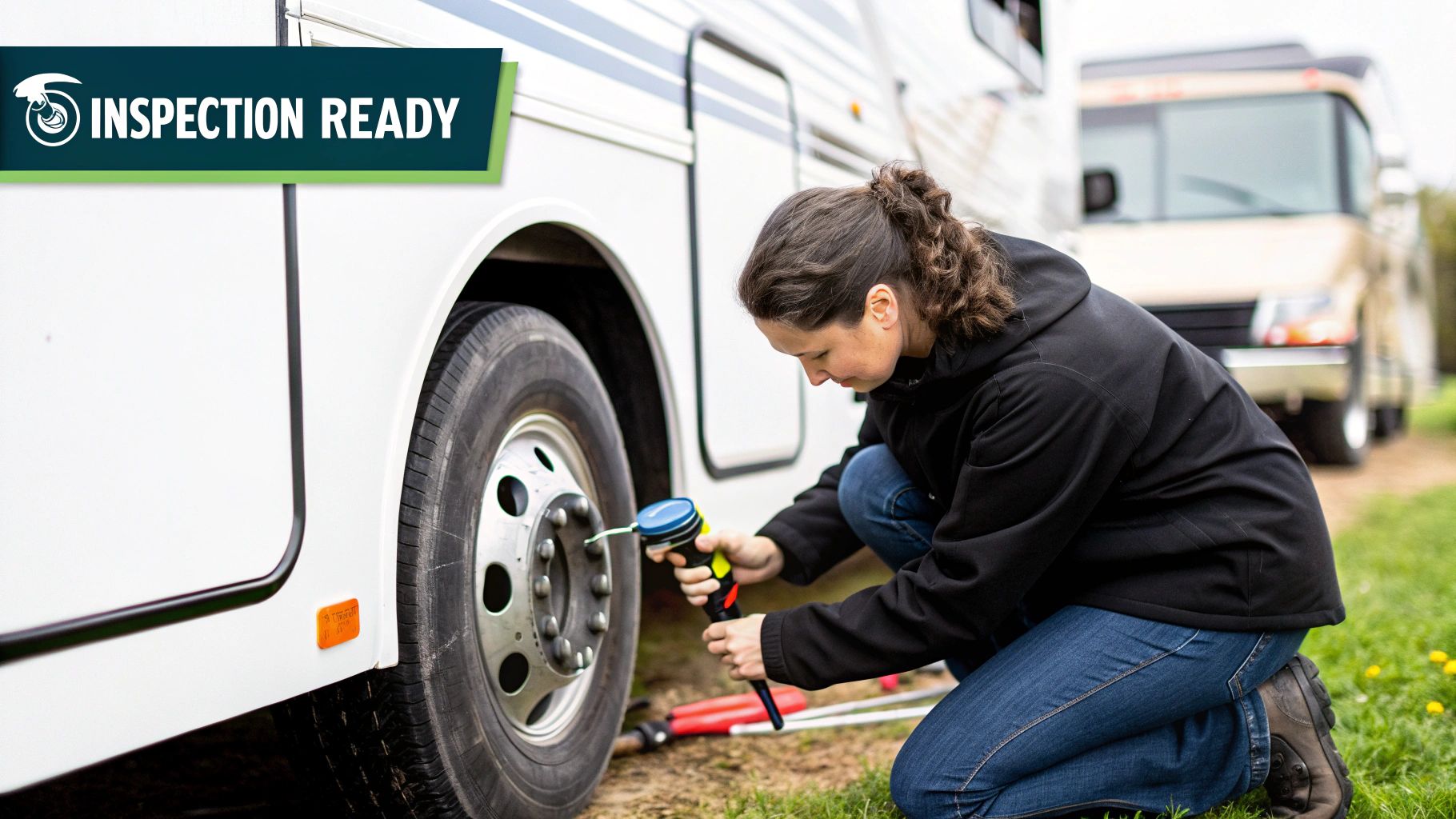
Before you go, take a look at the latest models on the official Coachmen website. Knowing what a new Leprechaun looks and feels like gives you a powerful baseline for judging the condition of a used one. You'll be able to spot wear, modifications, or potential damage much more easily.
Exterior Walk-Around: The First Line of Defense
Your inspection starts the second you lay eyes on the coach. The exterior is the RV's armor, and any chinks in it can lead to major problems down the road. You’re looking for signs of how it was stored and maintained.
-
Roof and Sealants: This is priority number one. Get on a ladder (safely!) and examine every inch of the roof. The sealant around vents, the A/C unit, and along the seams must be pliable and intact. If it's cracked, brittle, or peeling away, that’s a flashing red light for potential water intrusion.
-
Sidewalls and Decals: Scan the fiberglass sidewalls for any waves, bubbles, or ripples. This is called delamination, and it’s a classic sign that water has gotten behind the wall—a very expensive fix. Faded or cracked decals can also tell you if the RV has spent its life baking in the sun.
-
Tires: Tread depth is only half the story. Find the DOT date code on the sidewall—it’s a four-digit number. For example, "3521" means the tire was made in the 35th week of 2021. RV tires often age out before they wear out. If they're more than 5-7 years old, you should budget for a new set, no matter how good they look.
Interior Deep Dive: Uncovering Hidden Issues
Step inside and use all your senses. Your nose is one of your best tools—a musty, damp smell is a huge red flag for hidden mold or water damage. From there, your mission is to test every single thing that moves, heats, cools, or turns on.
My number one rule for any RV inspection is simple: If it’s supposed to slide, turn, light up, get hot, or get cold, you test it. Never, ever take the seller's word for it. Verify everything yourself.
Work your way methodically from the front of the RV to the back so you don't miss anything.
-
Hunt for Water Damage: Check ceilings for any staining, especially around vents and skylights. Look inside every cabinet. Push firmly on the walls and walk every inch of the floor, feeling for soft, spongy spots that indicate rot.
-
Run All Appliances: Fire up the refrigerator on both propane and electric modes (it takes time, so do this early). Blast the A/C, then run the furnace. Light every burner on the stove and test the microwave.
-
Test the Plumbing: Turn on the water pump and run every faucet (hot and cold). Check for good water pressure. While the water is running, open the cabinets under the sinks and look for drips. Flush the toilet and make sure the bowl holds water.
-
Work the Slide-Outs: Run every slide-out all the way out and all the way back in, at least twice. Listen for grinding, popping, or jerking noises. It should be a smooth, consistent operation.
Mechanical and Chassis Assessment
Finally, it's time to look under the hood. Even if you aren't a mechanic, you can spot obvious problems. Peek underneath the engine for any signs of fresh fluid leaks. Pull the dipstick to check the engine oil.
And don't forget the generator! Start it up and let it run for a solid 15-20 minutes with a heavy load on it (like running the air conditioner) to ensure it can perform under pressure.
A test drive is non-negotiable. Get it on the highway to feel how it handles, brakes, and accelerates. If anything in the mechanical inspection feels off, don’t hesitate to hire a certified RV inspector. The few hundred dollars you spend could easily save you thousands in the long run.
How to Find the Best Leprechaun RV Deals
With your inspection checklist in hand, you're ready to start shopping. Finding a great deal on a Leprechaun by Coachmen for sale is all about knowing where to look and using the right tools to give yourself an edge. Your search will generally take you down one of three roads: the big national dealerships, smaller local dealers, and private party sales.
Each path has its own landscape. National chains boast a massive selection and often roll out the red carpet with warranties and financing, but their prices can be pretty firm. Your local dealer, on the other hand, might offer a more personal touch and have a solid reputation in the community. Private sellers are where you'll often find the lowest prices, but be prepared—these deals carry more risk and you’re the one responsible for all the paperwork.
Mastering Online Marketplaces
The internet has completely changed RV shopping. Now, a massive nationwide inventory is just a click away. Instead of hopping between a dozen different dealer websites, you can use an aggregator like SearchShop.com to see listings from all over the country in one place.
The trick is to be methodical. Don't just browse aimlessly. Dive into the advanced search filters to pinpoint the exact Leprechaun model, floorplan, and price point you’re after. The real game-changer? Set up instant alerts. Think of it as your personal RV scout, working 24/7. The second a Leprechaun that fits your criteria hits the market, you’ll get a notification. In a market where the best deals disappear fast, being first in line is a massive advantage.
Don't just search; strategize. Setting up precise alerts for your desired floorplan and budget on a major listing site is the single most effective way to find a great deal before anyone else does.
Vetting Sellers and Navigating the Sale
Whether you're talking to a dealership or an individual seller, a little bit of homework can save you a world of headaches. For a dealer, a quick search for online reviews will tell you a lot about their reputation for customer service and transparency. If you're buying from a private owner, ask questions. What's the RV's story? Where are the maintenance records? Why are they selling?
Right now, it's a good time to be a buyer. While the market is evening out after a recent drop, dealer lots are still well-stocked with both new and used rigs. That means you have options, which gives you leverage to find the right Leprechaun by Coachmen for sale at a price that makes sense. You can get a better sense of the market and learn more about the state of the RV industry by checking out the latest reports.
When you're ready to talk numbers, use what you found during your inspection and market research to negotiate. And when it comes time to close the deal, especially with a private seller, play it safe.
-
Handle Titles Carefully: The deal isn't done until you have the clear title in your hand. Double-check that the VIN on the title is an exact match for the one on the RV.
-
Use Secure Payment: Don't show up with a briefcase full of cash. A cashier's check or a trusted escrow service creates a paper trail and protects everyone involved.
-
Get It in Writing: A simple bill of sale is a must for a private purchase. It should clearly state the price, terms, and that the sale is "as-is."
Getting Your Financing and Insurance in Order
You’ve found the perfect Leprechaun by Coachmen for sale—that's the exciting part! But the final steps, financing and insurance, are what actually get you the keys. It’s easy to feel a little overwhelmed by the paperwork, but thinking it through ahead of time will save you headaches and money down the road.
Think of financing as the financial blueprint for your RV purchase. It’s not just about getting a loan; it’s about getting a good loan. The single best thing you can do is get pre-approved for financing before you start talking numbers with a seller or dealership.
Walking into a dealership with a pre-approval from your own bank or credit union gives you a huge advantage. It proves you’re a serious buyer and sets a concrete budget. Most importantly, it gives you a real interest rate to compare against whatever the dealer offers. This instantly puts you in a stronger negotiating position.
Nailing Down the Right RV Loan
When you apply for a loan on a motorhome like the Leprechaun, lenders are going to look at a few key things. Knowing what they're looking for helps you put your best foot forward.
-
Credit Score: This is the big one. Lenders see a high credit score—usually 700 or above—as proof that you're a reliable borrower, and they'll reward you with their best interest rates.
-
Down Payment: The more you can put down upfront, the less risk the bank takes on. A down payment of 10% to 20% is pretty standard for RV loans and helps bring down your monthly payments.
-
Debt-to-Income Ratio (DTI): This is just a simple calculation of your monthly debt payments divided by your monthly income. Lenders use it to make sure you can comfortably handle another loan payment.
-
Loan Term: Unlike car loans, RV loans can be stretched out over 10, 15, or even 20 years. A longer term gets you a lower monthly payment, but be careful—you'll end up paying significantly more in interest over the life of the loan.
It's easy to get fixated on the monthly payment, but don't fall into that trap. Always compare the Annual Percentage Rate (APR) and the total loan cost. A slightly higher payment on a shorter loan could easily save you thousands in the long run.
Insuring Your Home on Wheels
Once you have the loan figured out, it's time for insurance. Insuring an RV is a different beast than insuring your daily driver. You need a policy that protects you on the highway and acts like a homeowner's policy when you're parked at a campsite. Your standard auto insurance just won't cut it.
A real RV insurance policy bundles in specialized coverages that are built for the RV lifestyle. Getting this right from the start is non-negotiable.
Key Coverages for Your RV Policy
As you shop for quotes, make sure these specific protections are included. They’re what truly safeguard your Coachmen Leprechaun.
-
Total Loss Replacement: This is a lifesaver for new RVs. If your Leprechaun is totaled in its first few years, this coverage helps you buy a brand new, similar model, not just its depreciated cash value.
-
Personal Effects Coverage: This covers all the stuff you bring with you—laptops, clothes, camping chairs, you name it. Your homeowner's policy might cover some of it, but this is designed specifically for what's in your rig.
-
Vacation Liability: Think of this as homeowner's liability for your campsite. If a guest gets injured in or around your parked RV, this coverage steps in to protect you.
-
Full-Timer Coverage: Planning on living in your RV for six months or more a year? You'll need this. It's a more robust liability and contents package that essentially functions like a true homeowner's policy.
By getting your financing and insurance lined up thoughtfully, you can close the deal on that Leprechaun by Coachmen for sale with complete confidence. You'll know your new home-on-wheels is protected, both financially and physically, before you even hit the road.
Answering Your Final Coachmen Leprechaun Questions
As you get closer to choosing the right Leprechaun, a few practical questions always seem to pop up. Let's tackle the common ones I hear from buyers so you can feel completely confident in your purchase decision.
Think of this as the final checklist before you buy.
What Kind of Gas Mileage Can I Realistically Expect?
This is probably the most common question buyers have, and for good reason! Realistically, you should plan on getting between 8 and 12 miles per gallon in a Coachmen Leprechaun.
Of course, that number isn't set in stone. Your actual MPG will depend on a few things: the chassis (Ford vs. Chevy), how you drive, whether you're climbing mountains or cruising on flat highways, and how much gear you've packed. These Class C RVs are built with powerful V8 engines designed for hauling and reliability, so fuel efficiency isn't their primary mission.
Is the Leprechaun a Good RV for Winter Camping?
Absolutely, but with one major caveat. You'll need to find a model that has the optional cold-weather package, often called a "four seasons" package.
This isn't just a marketing gimmick. A true four-seasons package adds critical upgrades like heated and enclosed holding tanks to prevent freezing, beefed-up insulation, and sometimes even dual-pane windows. Without these features, you're risking a nasty surprise with frozen pipes and serious damage in cold weather.
Always double-check that a specific Leprechaun is factory-equipped for winter use before you start dreaming of a snowy campsite.
What's Involved in Maintaining a Leprechaun?
Keeping a Leprechaun in top shape is a lot like maintaining a house and a car at the same time. Staying on top of a few key tasks will prevent most major issues down the road.
Here are the non-negotiables:
-
Roof Maintenance: This is the big one. Get up there regularly to inspect the seals around your vents