Finding the perfect Class C RV for sale involves navigating a market rich with options, offering a stellar balance of home-like comfort, versatile living spaces, and a driving experience that’s far less daunting than larger motorhomes. These vehicles, built on conventional truck or van chassis, are distinguished by their iconic cab-over bunk, providing additional sleeping or storage without compromising maneuverability. Whether you're a first-time RVer or a seasoned traveler looking to downsize, a Class C offers a compelling blend of spaciousness and ease of handling, making it a popular choice for adventurers seeking a true home-on-wheels without the bulk of a Class A.
When you start searching for a Class C RV for sale, you're usually after that sweet spot—the perfect mix of homey comfort and easy handling. If that’s what you’re looking for, you’re in the right place. Think of the Class C as the Goldilocks of the motorhome world; it’s more spacious than a campervan but a whole lot less intimidating to drive than one of those massive bus-like Class A rigs. Unlike a Class A motorhome, which can feel like you’re piloting a city bus, a Class C handles more like a large pickup. For anyone used to driving a truck or even a large van, that familiar feel dramatically shortens the learning curve. It’s a huge plus for newcomers and even for seasoned RVers who want something a bit more manageable. To explore different motorhome classes, check out our RV Motorhome Class A for Sale Your Ultimate Buying Guide.
Picture the different motorhome classes as a family of vehicles. The Class C would be the dependable, do-it-all SUV. It’s built on a standard truck or van chassis, which you can immediately spot by the distinctive bunk or storage area that juts out over the driver's cab. This clever design creates a true hybrid, giving you a comfortable living space bolted to a familiar, truck-like driving experience.
Class C RV: A motorhome built on a cutaway chassis from a commercial van or truck, featuring a distinctive cab-over bunk or storage area above the driver's compartment. This design combines the drivability of a large truck with the amenities of a small apartment.
That space hanging over the driver’s cabin is the most iconic feature of a Class C motorhome. It’s what everyone pictures. But it's more than just a look—this "cab-over" area is a game-changer for the entire floor plan.
This versatile space is one of the main reasons people hunt down a Class C. It can be a primary queen-sized bed, a cozy sleeping loft for the kids, or a massive "attic" for stashing all your gear. It basically adds a whole extra room without making the RV any longer.
Beyond the cab-over, Class C RVs typically feature a robust chassis, commonly from manufacturers like Ford (E-Series or Transit), Chevrolet (Express), or Mercedes-Benz (Sprinter). Each chassis offers distinct advantages, from powerful gasoline engines to fuel-efficient diesel options, impacting driving dynamics, towing capacity, and overall fuel economy. Understanding these chassis differences can greatly influence your choice, especially when considering long-term travel plans and potential maintenance.
Step inside, and a Class C feels like a self-contained apartment on wheels. The layouts are smartly designed to make the most of every last inch, creating separate, dedicated zones for living. It’s a huge upgrade from the all-in-one space of a smaller campervan. You’ll almost always find:
- A dedicated bedroom: Usually tucked away in the back for a bit of privacy and a quiet night's sleep. Many models offer queen-sized beds, and some even include walk-around space.
- A real kitchen (or galley): Kitted out with a refrigerator, stove, sink, and microwave so you can cook actual meals on the road. Larger models might even include an oven or ample counter space.
- A private, enclosed bathroom: Complete with a toilet, sink, and, more often than not, a separate shower stall. Some premium models feature dry baths with separate showers.
- A dinette or lounge area: Perfect for dining, working, or simply relaxing, often convertible into additional sleeping space.
It's this blend of drivability, clever design, and home-like amenities that makes the Class C RV such a runaway favorite for families, couples, and solo travelers. This rising interest in a mobile lifestyle is why the global Class C motorhomes market, valued at around $2 billion in 2023, is expected to climb to $3.5 billion by 2032. You can learn more about the market growth for these versatile RVs and see what's driving the demand.
If you've started looking at listings for a Class C RV for sale, you've probably noticed just how popular they are. It seems like everyone from young families to retired couples is hitting the road in one, and there's a good reason for that. They strike a fantastic balance between comfort, practicality, and ease of driving that just works for both land and water enthusiasts.
Think of it this way: a Class C gives you dedicated living spaces—a real bedroom, a functional kitchen, and a private bathroom—without making you feel like you're trying to maneuver a city bus. This design hits the sweet spot. It's roomy enough for long getaways but still nimble enough to handle most campgrounds and city streets without causing a panic. For anyone new to the RV world, the fact that it drives more like a large truck than a commercial vehicle is a massive confidence booster. This ease of operation, combined with comprehensive amenities, makes it an ideal entry point for RV ownership.

To give you a clearer picture, here’s a quick breakdown of what defines a Class C RV.
| Feature |
Typical Specification |
Primary Benefit |
| Chassis |
Built on a truck or van chassis (e.g., Ford, Chevy, Mercedes) |
Familiar, easier driving experience and simpler maintenance. |
| Signature Profile |
Distinctive "cab-over" bunk or storage area above the cockpit |
Maximizes sleeping capacity or storage without increasing length. |
| Size |
Generally 21 to 35 feet in length |
A great compromise between spacious living and maneuverability. |
| Sleeping Capacity |
Comfortably sleeps 4 to 8 people |
Ideal for families, groups, or couples who want extra space. |
| Amenities |
Full kitchens, bathrooms with showers, slide-outs |
Offers all the core comforts of home while on the road. |
These features come together to create a rig that feels both capable and comfortable, which is why so many people start—and stick with—the Class C. Their versatility means they can be used for weekend trips, extended vacations, or even full-time living, adapting to various lifestyles and travel needs.
The real magic of the Class C lies in its incredibly flexible and family-oriented layouts. That classic cab-over bunk is a game-changer. It can be the kids' favorite sleeping loft, a primary bed for a couple, or simply a massive "attic" to stash all your camping gear, outdoor toys, and even fishing rods. This one feature adds a ton of usable space without making the RV any longer.
On top of that, many models now come with slide-outs that completely transform the interior. At the push of a button, a whole section of the wall glides outward, turning a cozy living room into a spacious lounge or opening up the kitchen for easier meal prep. It's this adaptability that makes a Class C feel like a compact, road-ready vehicle one minute and a comfortable, stationary home the next. For those interested in exploring specific models, you might find valuable insights in our Finding a Dynamax RV for Sale: Your Ultimate Buyer's Guide, as Dynamax offers popular Class C options.
As you look through different listings, really study the floor plan. Ask yourself how a slide-out might change the feel of the main living area. Think about how you’d actually use that cab-over space—is it for sleeping, storage, or a reading nook? Getting this right is key to finding the perfect fit.
This is the big one. Deciding whether to buy a brand-new motorhome or a pre-owned model is one of the first and most important forks in the road on your journey. Your choice will shape everything from your initial budget and ongoing maintenance to the kinds of features you get to enjoy.
Truthfully, there’s no single right answer here. It all comes down to what fits your adventure plans and your wallet.

The allure of a new motorhome is undeniable. You get that full factory warranty, all the latest bells and whistles, and the simple joy of knowing you’re the first one to call it home on the road. Plus, you get to pick the exact floor plan and finishes you want from day one.
For many, buying new is all about peace of mind. A comprehensive manufacturer's warranty typically covers the chassis, coach, and major appliances for at least the first year. That’s a huge safety net that protects you from surprise repair bills, which can be a real comfort for first-time vehicle owners. Financing a new RV can also be easier, often coming with lower interest rates and longer loan terms, making monthly payments more manageable. Furthermore, dealers frequently offer incentives or customization options for new purchases, allowing you to tailor your RV before it even leaves the lot.
New models also come loaded with modern tech that just makes life easier and safer:
- Up-to-Date Tech: Think advanced driver-assist systems (e.g., lane-keeping assist, adaptive cruise control), slick infotainment units with smartphone integration (Apple CarPlay/Android Auto), and more efficient appliances that sip power.
- Better Efficiency: Many new RVs are built with improved insulation, energy-efficient LED lighting, and some even come with factory-installed solar packages ready to go, promoting boondocking capabilities.
- Your Personal Touch: You get a clean slate—no need to live with someone else's questionable design choices or DIY modifications. You can choose your interior finishes, fabric colors, and optional extras directly from the manufacturer.
- Latest Safety Features: Modern safety standards often mean new RVs come equipped with features like rearview cameras, side-view cameras, and enhanced braking systems as standard.
On the flip side, the biggest reason to look for a used Class C RV for sale is the incredible cost savings. New vehicles, whether RVs or boats, lose a significant chunk of their value in the first few years. When you buy used, you let the original owner take that huge financial hit.
Letting the first owner absorb the steepest depreciation can easily save you tens of thousands of dollars. That’s cash you can pour back into your travel fund, use for personalized upgrades, or just keep as a rainy-day fund.
A well-cared-for used model can be a fantastic investment. Market data from early 2025 indicated that the used Class C market was stable, following predictable seasonal pricing without any major value drops. You can dive deeper into the numbers with these 2025 RV sales reports on Bishs.com to see the trends for yourself. Beyond the price, used RVs often come with proven reliability (if well-maintained), and any initial manufacturing kinks have likely been resolved by the previous owner. You might also find a wider variety of unique or custom layouts that are no longer offered in new models.
When you start looking at a Class C RV for sale, the first thing you see is the sticker price. It's a big number, but it’s just the starting point. To make a smart buy and avoid surprise expenses down the road, you really need to understand the full financial picture.
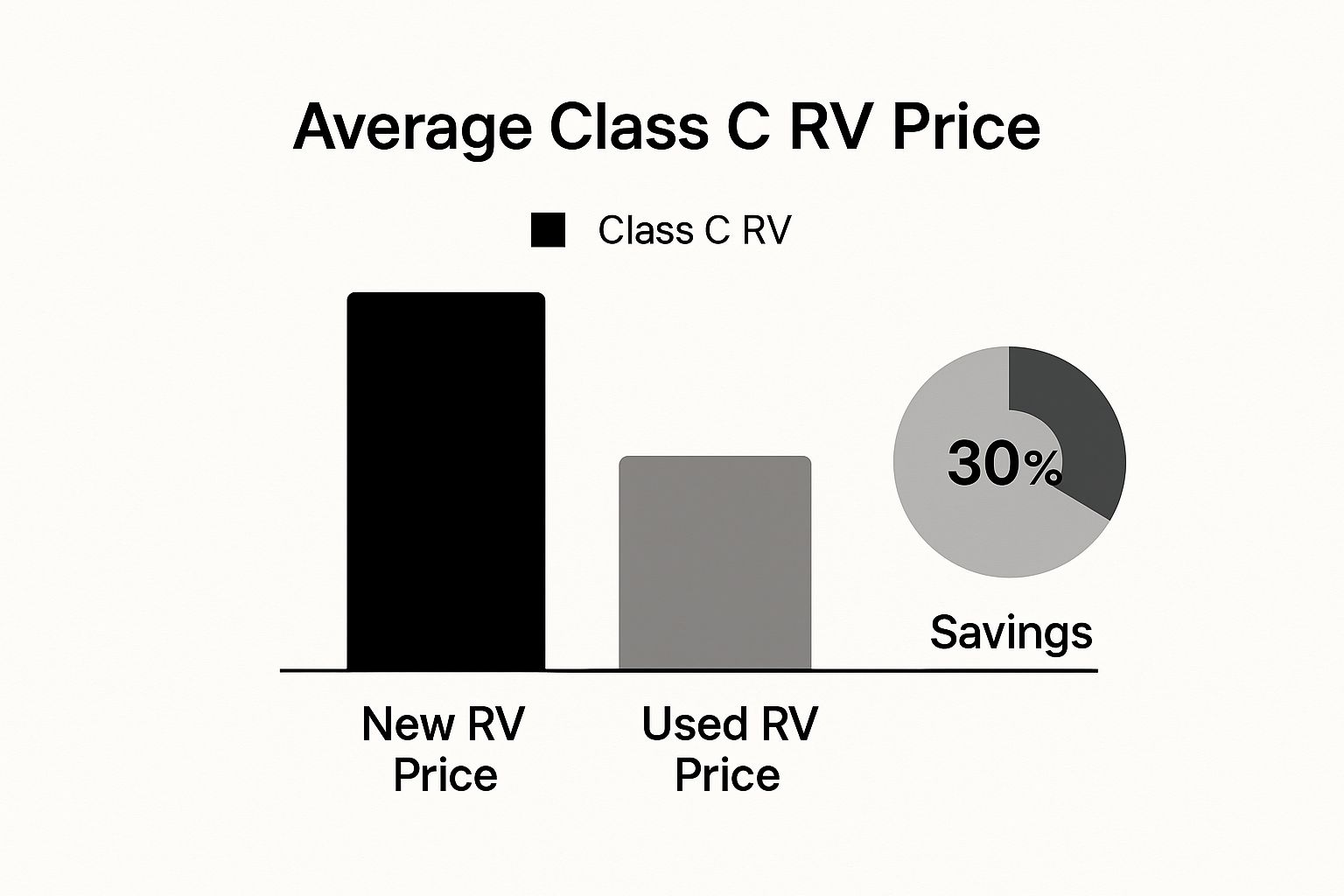
So, what should you expect? A brand-new Class C motorhome can run you anywhere from $80,000 to over $200,000. If you're looking at a well-cared-for used model, that range typically drops to between $40,000 and $100,000.
What causes such a wide gap? It really boils down to a few key things: the manufacturer's reputation, the rig's overall length, how luxurious the amenities are, and whether it has a gas or diesel engine. A long diesel pusher with high-end finishes and multiple slide-outs will always be at the top end of that price scale. Brands known for their luxury and innovation, like certain Dynamax models, will naturally command higher prices.
This table gives you a quick snapshot of the upfront savings you can get by choosing a used RV instead of a brand-new one.
| RV Condition |
Typical Price Range |
Key Considerations |
| New |
$80,000 - $200,000+ |
You get the latest features, a full warranty, and that new-RV smell. However, it comes with a higher initial cost and faster depreciation. |
| Used |
$40,000 - $100,000 |
The biggest benefit here is avoiding the steepest depreciation. You get more vehicle for your money, but a thorough inspection is crucial. |
That initial purchase price is just your ticket to the recreational lifestyle. The true cost of ownership is an ongoing commitment, and budgeting for these recurring expenses is what makes it a joy instead of a financial headache.
Think of these as the predictable costs you'll need to work into your budget:
- Insurance: RV insurance is crucial and can vary widely based on the vehicle's value, your driving record, and how often you plan to use it. Expect to pay anywhere from a few hundred to over a thousand dollars annually.
- Fuel: Class C RVs, while more fuel-efficient than Class A models, still consume a fair amount of gas or diesel. Budget for fuel costs based on your travel plans and the RV's estimated MPG (typically 8-12 MPG for gas, 12-18 MPG for diesel).
- Maintenance and Repairs: Just like any vehicle, RVs require regular maintenance (oil changes, tire rotations, roof inspections, appliance checks) and can incur unexpected repair costs. Setting aside an annual budget for this is wise.
- Storage: If you don't have space to park your RV at home, you'll need to budget for storage fees, which can range from $50 to $200+ per month depending on location and whether it's covered or uncovered.
- Campground Fees: Unless you plan to boondock exclusively, campground fees are a major recurring expense. These can range from $25 per night for basic sites to $100+ for resort-style parks with full hookups and amenities.
- Depreciation: While less severe after the initial drop, RVs continue to depreciate. This is an important consideration for resale value.
- Registration and Taxes: Annual registration fees and potentially property taxes (depending on your state) will add to the overall cost.
- Upgrades and Accessories: You'll likely want to personalize your RV with accessories like solar panels, upgraded batteries, better leveling systems, or interior décor, all of which add up.
Considering these additional expenses helps create a realistic financial plan, ensuring your RV adventures remain enjoyable and stress-free. Don't forget to research financing options as well; RV loans typically have longer terms than car loans but may require a larger down payment.
Successfully finding a Class C RV for sale that meets your needs requires a structured approach. From defining your priorities to signing the final papers, each step is crucial for a smooth and satisfying purchase.
Before you even start browsing listings, take time to clarify what you truly need and want in an RV. Consider:
- Travel Style: Are you a weekend warrior, a long-term traveler, or a full-timer? This impacts the importance of storage, tank capacities, and overall durability.
- Passenger Capacity: How many people will regularly travel and sleep in the RV? This determines the minimum number of beds and seatbelts required.
- Length and Maneuverability: Will you primarily stick to state parks (which often have length restrictions) or prefer wide-open spaces? Shorter Class Cs (21-25 feet) are easier to drive and park, while longer ones (30-35 feet) offer more living space.
- Amenities: Prioritize your must-have features – do you need a separate shower, an outdoor kitchen, specific entertainment options, or robust off-grid capabilities like solar?
- Towing Needs: Do you plan to tow a car (toad) or a boat? Ensure the Class C's Gross Combined Weight Rating (GCWR) and hitch capacity can accommodate your needs.
- Budget: Establish a clear budget not just for the purchase price, but also for ongoing costs like insurance, fuel, maintenance, and storage.
Once you have a clear idea of your requirements, it's time to start the hunt. Your options include:
- RV Dealerships: Offer a wide selection of new and used models, financing options, and often provide warranties and after-sales service. However, prices may be higher.
- Private Sellers: Often provide better deals on used RVs, as you avoid dealer markups. The downside is less protection, and the process requires more due diligence from the buyer. Websites like RVTrader.com, Facebook Marketplace, and local classifieds are great resources.
- RV Shows: Excellent for seeing many models in one place, comparing features, and often taking advantage of show-specific discounts.
- Online Marketplaces: Dedicated RV sites and general classifieds are invaluable for comparing models, prices, and connecting with sellers nationwide.
When searching online, be sure to use specific keywords like "Class C RV for sale near me," "used Ford E450 RV," or "diesel Class C motorhome" to narrow down your options. For general research and more specific model guides, explore our more rv guides section.
Never buy an RV without a thorough inspection and a test drive. For used RVs, a professional RV inspection by a certified technician is highly recommended. This can uncover hidden issues with the engine, chassis, plumbing, electrical systems, and structural integrity that a casual walk-through might miss. The cost of an inspection is a small investment compared to potential repair bills.
During your test drive, pay attention to:
- Handling: Does it pull to one side? Are the brakes responsive? How does it corner?
- Engine Performance: Listen for unusual noises, check acceleration, and ensure smooth gear changes.
- Visibility: Are the mirrors adequate? Do you feel comfortable with the blind spots?
- Interior Noise: How much road noise and rattling do you hear?
Don't be afraid to test all appliances, slide-outs, and systems during the inspection. Ensure the air conditioning blows cold, the furnace heats, and all water systems (fresh, grey, black) function correctly. This meticulous approach helps ensure you drive away with a reliable RV, ready for countless adventures.

