
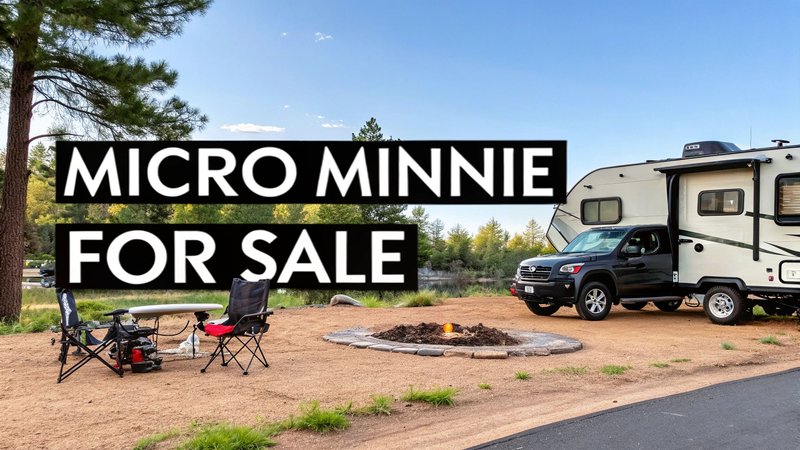
So, you’re searching for a “micro minnie winnebago for sale.” Great choice. You’re looking at more than just a travel trailer; you’re on the trail of a rig that unlocks a more flexible, accessible kind of adventure. These compact campers have a stellar reputation for a reason, blending a lightweight design with an impressive feature set that appeals to both seasoned RVers and folks just getting started.
What's the Big Deal About the Micro Minnie?
Before you get lost in online listings, let’s talk about why this specific model has such a loyal following. The Micro Minnie isn’t just about being small. It’s about smart, intentional design that crams a surprising amount of comfort and convenience into a package that won’t give you a headache to tow.
The biggest draw for many is right there in the name: Micro. Most of these models are easily towed by mid-size SUVs and smaller trucks. That’s a huge plus. It means you probably don't have to go out and buy a massive, gas-guzzling tow vehicle just to get into the RV lifestyle.
All the Fun, None of the Fuss
Winnebago has been doing this a long time, and they’ve perfected the art of putting big features in small spaces. Step inside a Micro Minnie, and you’ll find things you’d expect in a much larger trailer—a full kitchen, a dry bath (meaning a separate shower, not a wet-room combo), and genuinely comfortable sleeping spots.
They’re also masters of storage. You’ll find clever cabinets, under-bed compartments, and other nooks and crannies to stash your gear so the living space doesn't feel cluttered. This efficient layout is a huge part of its charm.
Think about the practical side, too. A smaller rig makes life on the road so much easier. You can navigate tight gas stations without holding your breath or back into that perfect, secluded national park campsite that bigger RVs have to drive right past. That maneuverability seriously cuts down on travel stress and opens up a world of new places to stay.
The real magic of the Micro Minnie is its perfect balance. It delivers the freedom and comfort of a bigger travel trailer but keeps the towing and handling simple enough for just about anyone to manage.
Real-World Perks for Every RVer
This thoughtful design translates into real savings and a better experience on the road. A lighter trailer is a less thirsty trailer, meaning your tow vehicle uses less fuel. Over a long cross-country trip, that adds up fast.
Here’s a quick rundown of the benefits you'll actually feel:
-
Less Stress Behind the Wheel: A lighter, narrower body makes it a breeze to handle, whether you're on the interstate or a winding country road.
-
More Camping Options: Its smaller footprint means you can fit into spots that are totally off-limits to the big rigs.
-
Lower Fuel Bills: Simple physics—pulling less weight means better gas mileage for your truck or SUV.
For couples or small families who want to get out and explore without committing to a massive fifth-wheel or Class A motorhome, the Micro Minnie hits that sweet spot of comfort, capability, and value.
Finding Your Perfect Micro Minnie Floorplan
When you hear "Micro Minnie," don't picture just one trailer. It's actually a whole lineup of smartly designed travel trailers, each with a unique layout. Nailing down the right floorplan is probably the most critical choice you'll make for your long-term camping enjoyment. This isn't just about picking a model number; it's about matching the RV's living space to your actual travel style.
A couple heading out for quick weekend getaways has totally different needs than a family of four packing up for a summer road trip. The right layout just feels right—it's intuitive and comfortable. The wrong one, on the other hand, can turn into a daily puzzle of moving things around just to have enough space.
Digging Into the Details
Each Micro Minnie floorplan is built with a specific kind of camper in mind. Some prioritize sleeping space with dedicated bunks, while others focus on an open living area for couples. It's these intentional design choices that make all the difference.
This image gives you a good look at how features like slide-outs, bunk beds, and even the placement of the kitchen can completely change the feel and function of the trailer.
To help you visualize the options, here’s a quick comparison of some of the most popular Micro Minnie models. Think about how you and your family would actually use the space day-to-day.
Micro Minnie Floorplan Comparison
|
Model |
Best For |
Sleeps |
Key Feature |
|---|---|---|---|
|
1700BH |
Small Families |
Up to 5 |
Bunk beds in a compact, no-slide layout. |
|
1720FB |
Couples |
Up to 3 |
Front walk-around queen bed and a spacious rear bathroom. |
|
2100BH |
Families Needing Space |
Up to 5 |
Bunk beds and a slide-out for a roomy dinette area. |
|
2108TB |
Traveling Friends/Couples |
Up to 3 |
Flexible twin beds that convert to a king. |
|
2306BHS |
Larger Families/Groups |
Up to 7 |
Bunk beds, a slide-out, and an outdoor kitchen. |
As you can see, the "best" model really comes down to who's traveling with you and what you value most—be it sleeping arrangements, living space, or outdoor amenities.
A Tale of Two Trailers: Bunks vs. Open Space
Let’s get practical and compare two common scenarios. The 2100BH is a go-to for families, and for good reason. It has dedicated bunk beds, which means the kids get their own zone. Trust me, having that separate space is a game-changer on a rainy day, and it keeps you from having to convert the dinette into a bed every single night.
Now, a couple would probably look at those bunks and just see wasted space. For them, a model like the 1720FB is a much better fit. It puts the focus on a dedicated front queen bed and a more open, efficient living area for two. The Winnebago Micro Minnie 1720FB is a fantastic lightweight option for anyone who wants to keep things simple.
With an MSRP around $40,458 and a length of just over 20 feet, its no-slide design means fewer moving parts and less to worry about. You can learn more about the specs of this specific floorplan on the official Winnebago site.
To Slide or Not to Slide?
This is one of the biggest debates when shopping for any travel trailer. A slide-out dramatically expands your interior living space when you’re set up at a campsite, making a small trailer feel surprisingly large. But that extra room comes with a trade-off: it adds weight, introduces more mechanical complexity, and creates another seal you need to maintain.
A floorplan without a slide-out offers simplicity and lighter weight, ideal for those who prioritize ease of towing and minimal setup. A model with a slide offers a more residential feel, perfect for longer stays or families needing extra room to spread out. Your choice depends entirely on how you plan to camp.
Deciding Between a New vs. Used Micro Minnie
So, you're set on a Micro Minnie. Great choice. Now comes the first big fork in the road: do you buy a brand-new one right off the lot, or do you hunt for a pre-loved gem?
There’s nothing quite like that new-RV smell. A factory-fresh model gives you the latest features, the peace of mind of a full warranty, and a completely blank slate. You don't have to wonder about how the previous owner treated it because you're the previous owner.
On the flip side, the case for buying used is incredibly strong, and it boils down to one word: value. RVs depreciate fastest in their first couple of years. By buying used, you let the first owner take that big financial hit for you. This often means you can get a nearly-new, tricked-out model for the price of a basic new one.
The Financial Realities
Let’s talk numbers, because they tell a big part of the story. The price tag for a Micro Minnie can swing wildly, from around $19,995 for an older used trailer to over $48,401 for a loaded new model. The average price you’ll see out there is typically somewhere around $32,379. That gap between the low and high end is exactly where savvy buyers find amazing deals.
If you want to get a feel for the current market, it's worth browsing some listings. You can find more details about Micro Minnie listings on Autotrader to see what different years and floorplans are going for right now.
Remember, the sticker price isn't the whole picture. Many used trailers come with pricey upgrades already installed—things like solar panels, better batteries, or beefier tires. Those are extras you won't have to pay for out of pocket.
Your decision ultimately hinges on your priorities. If you value a full warranty and the latest features above all else, new is the way to go. If your budget is the primary driver and you're comfortable performing a thorough inspection, a used Micro Minnie offers exceptional value.
Weighing the Risks and Rewards
Buying used isn't without its homework, of course. You absolutely have to do your due diligence. A thorough inspection is non-negotiable, as you're trying to make sure you aren't inheriting someone else's problems. A new RV, by contrast, gives you the confidence that everything works perfectly, all backed by Winnebago.
Here’s a real-world example: Imagine a family eyeing the popular 2100BH bunkhouse model. By choosing a two-year-old version, they could easily save thousands over buying new. Better yet, the previous owner might have already installed a great solar charging system, saving them another grand or two.
That's money that goes straight into their travel budget for gas, campground fees, and experiences. For many RVers, that's a trade-off they're more than happy to make.
Your Pre-Purchase Inspection Guide
So you've found a promising Micro Minnie Winnebago for sale online. Great! But seeing pictures on a screen is one thing; making sure it's a solid investment in person is a whole different ballgame. This is where you need to get your hands dirty. A thorough inspection is your single best tool to avoid buying a money pit and gives you serious leverage to negotiate the price or the confidence to walk away.
Don't just give it a quick walk-around. You need to get up close and personal, starting with the exterior. Look past that shiny gel coat, because the real story is in the details.
What to Look for on the Outside
Your first stop should be the roof. Seriously. Get up there (safely, of course) and crawl around. Check the sealant around every single vent, the skylight, the TV antenna—anything that pokes through the roof. You're looking for cracked, peeling, or separated sealant. This is the number one entry point for water, which is the absolute arch-nemesis of any travel trailer.
Once you’re back on solid ground, crouch down and look at the tires. Don’t just check the tread depth; that can be misleading. Find the DOT date code stamped right on the sidewall. RV tires almost always age out before they wear out. If those tires are more than five to seven years old, they're a safety hazard and a big-ticket replacement item you'll need to budget for.
Now it's time to test everything that moves:
-
The Awning: Roll it all the way out and back in. Does it glide smoothly, or does it catch and groan? Inspect the fabric itself for any rips, mold, or serious sun rot.
-
Stabilizer Jacks: Crank every single jack down to the ground and then back up. They should move without a fight. A jack that gets stuck is a huge pain when you're trying to set up camp.
-
Storage Bays: Pop open every single exterior compartment. Feel around in the corners for any dampness or signs of old water intrusion. Make sure all the latches work and close securely.
A detailed exterior inspection tells you so much. Sure, faded decals might just be from the sun, but cracked roof sealant and ancient tires often point to bigger neglect and are guaranteed future expenses.
Stepping Inside: The Hunt for Hidden Problems
Once you move inside, your main mission is to become a water detective. This is where you have to trust your senses. The first thing you should do is take a deep breath. A musty, damp smell is the classic sign of hidden moisture somewhere.
Next, get hands-on. Press firmly on the walls and floors, paying close attention to the corners, the areas under windows, and the inside of all the cabinets. You're feeling for any spots that are soft, spongy, or warped. These are huge red flags. Visually scan the ceiling and around all the vents for any discoloration or water stains. Water is sneaky, so a small stain in a front corner could be from a leak all the way at the back of the roof.
Finally, you need to test everything. Don't be shy—you're about to spend a lot of money.
Turn on the AC, fire up the furnace, and light up every burner on the stovetop. Make sure the fridge gets cold on both electric and propane. Go into the bathroom, flush the toilet, and run the water in the sink and shower. While the water is running, look in the cabinets underneath for any drips. Flick every light switch and plug a phone charger into every outlet.
If the seller seems reluctant or makes excuses for why you can't test something, that's your cue to be very, very suspicious.
Talking Dollars and Cents: The Price and Financing Game
Finding the right Micro Minnie is a huge win, but that sticker price you see? Think of it as a starting point, not the finish line. Getting from the exciting "I found it!" moment to actually hitching it up involves navigating the real-world costs and figuring out the smartest way to pay for it all.
Let's be real: the final number will almost always be higher than what you see listed online. It's easy to get blindsided by the extras that pop up when you're signing the papers—dealer prep fees, documentation charges, taxes, and title costs. Dealers will also likely pitch you on extended warranties or protection packages. Some of these are fixed costs, but others are absolutely negotiable.
Cracking the Code on the Final Price
When you're looking at a Micro Minnie Winnebago for sale, a perfect example is the ever-popular 2100BH model. I've seen dealers list a new one for around $27,995, which is a massive drop from the MSRP of $50,374. That huge gap tells you there's plenty of wiggle room.
With good credit and a decent down payment, that $27,995 price tag could work out to a monthly payment starting around $241. You can dive into how new model pricing breaks down to get a feel for what the market is doing right now.
This is where your power as a buyer comes in. Remember that pre-purchase inspection you did? Use what you found. Pointing out old tires or a finicky water heater isn't just nitpicking; it's building a solid case for a lower price.
Sorting Out Your Financing
Once you've shaken hands on a price, it's time to figure out how to pay. Most people finance their RV, which feels a lot like a car loan, but there are a few important twists.
An RV loan is a long-term relationship. Don't get fixated on just the monthly payment. The interest rate and the length of the loan are what really matter. A tempting low payment stretched over 10 or 15 years can cost you thousands more in the long run.
You generally have three paths you can take to get a loan:
-
Dealer Financing: This is the path of least resistance. The dealership handles everything, which is undeniably convenient. Just know that their rates might not be the best deal you can get.
-
Your Bank or Credit Union: This is often your best bet. Your own bank or a local credit union, especially if you have a good history with them, can usually offer much better interest rates.
-
Specialty RV Lenders: These folks live and breathe RV loans. Because it's all they do, they sometimes have more flexible terms and options built specifically for RV buyers.
Here's a pro tip: walk into the dealership with a pre-approval letter from your bank or credit union. It instantly shows them you're a serious, qualified buyer and gives you a rock-solid interest rate to hold up against whatever they offer. It’s the best negotiating tool you have.
Common Questions About Buying a Micro Minnie
Once you start seriously shopping for a Micro Minnie, you'll find a few questions keep coming up. Getting solid answers to these common queries is a huge part of feeling confident when you finally pull the trigger. So, let's get into what people are really asking.
Unsurprisingly, one of the very first concerns is always about towing. After all, if you can’t tow it, you can’t own it.
What Kind of Vehicle Do I Need to Tow a Micro Minnie?
Here’s the good news: most Micro Minnie models have a Gross Vehicle Weight Rating (GVWR) somewhere between 4,000 and 7,000 lbs. That’s a sweet spot that opens up a lot of possibilities. Many mid-size and full-size SUVs can handle that, as can just about any pickup truck on the market.
The non-negotiable rule, though, is to check your own vehicle’s specific tow rating. You'll find it in the owner's manual. Make sure that number is comfortably above the GVWR of the Micro Minnie you’re looking at, giving you a safe buffer for all your gear.
Are There Common Issues to Look for in Used Models?
When you’re kicking the tires on a used rig, your number one enemy is water. Nothing will destroy a travel trailer faster than water damage, so you have to be vigilant.
Meticulously check around all windows, roof vents, and the corner seams inside cabinets. Even a small, faint stain can indicate a much larger problem hidden within the walls or ceiling.
Beyond looking for leaks, you'll want to test every single appliance. Don't take the seller's word for it—turn on the fridge, fire up the furnace, and run the water heater. And don't forget the tires! It's not just about tread depth; check the sidewalls for age-related cracks. RV tires often dry rot long before they go bald.
What Is the Real Difference Between a Micro Minnie and a Minnie?
This one comes up all the time. The difference really boils down to size and weight, which stems from a different design philosophy.
The Micro Minnie was built to be narrower—typically 7 feet wide—and lighter. The whole point is to make it easy to tow with a wider variety of vehicles. The standard "Minnie," on the other hand, is a full 8 feet wide. That extra foot provides a noticeable amount of interior space but also demands a more capable tow vehicle. The "Micro" is your clue that it's built for nimbleness and accessibility.
Ready to find the perfect RV or boat for your next adventure? At SearchShop.com, we offer a huge selection of new and used vehicles with the tools you need to research prices, read reviews, and find your ideal match. Explore thousands of listings and start your journey at https://www.searchshop.com.
Shop Winnebago Micro Minnie listings here!