When you hear the name Lance, you're hearing about a legacy. For serious RVers, Lance travel trailers have long been synonymous with top-tier quality, lightweight construction, and true four-season capability. Their roots are in the rugged truck camper market, and that DNA shines through in every floor plan they design—smart, efficient, and built to last.
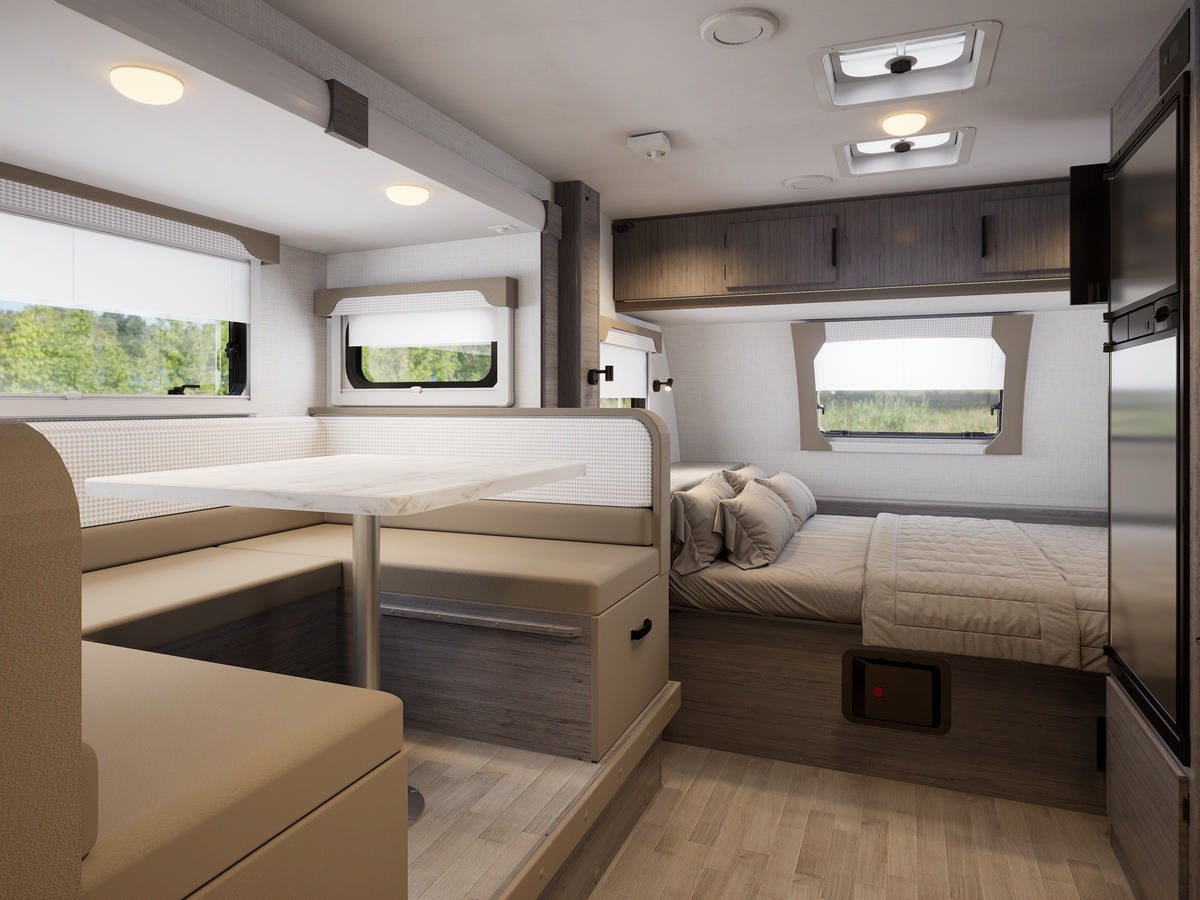
Before we get into the nitty-gritty of specific layouts, it’s worth taking a moment to appreciate what makes a Lance a Lance. This isn't just about assembling campers; it's about a nearly six-decade commitment to setting the industry standard for intelligent design and rock-solid reliability.
Lance Camper Manufacturing got its start back in 1965, carving out a reputation as the premier builder of truck campers. They didn't just participate in that market; they owned it, capturing an incredible 38% of all truck camper sales in the U.S. by 2013. That background is crucial because it taught them how to build incredibly durable and efficient living spaces designed for tight quarters. When they expanded into travel trailers in 2009, they brought that entire philosophy with them. You can find some great historical context and discussions on their build quality over on the Good Sam community forums.
Moving from truck campers to towables felt like a natural next step for Lance, and it allowed them to apply their hard-won expertise to a new platform. This heritage is exactly what sets their travel trailer floor plans apart from so many others on the lot.
-
True Four-Season Camping: We're not just talking about extra insulation. Every Lance is built for year-round adventure, with ducted heat that warms the enclosed holding tanks and keeps water lines from freezing.
-
Lightweight without the Compromise: They build with high-tech materials like welded aluminum frames and Azdel composite walls. This keeps the weight down for easier towing but doesn't sacrifice an ounce of strength.
-
Built with Precision: Lance uses CNC machinery and CAD software in their manufacturing process. That means every joint, every cut, and every component fits together perfectly, creating a tighter, more structurally sound trailer.
What does this all mean for you? It means that no matter which floor plan you choose—a nimble little trailer for solo trips or a spacious layout for the whole family—you're getting a camper that was engineered for longevity and real-world use, not just for the showroom floor.
In this guide, we'll break down the different Lance travel trailer floor plans and match each one to the kind of camping you love to do. Once you understand the core principles behind the brand, you’ll really start to appreciate the thoughtful details that make every model a truly reliable home on the road.
Before we start picking apart specific Lance travel trailer floor plans, it helps to understand what makes them tick. Every Lance trailer, no matter the size, comes from the same school of thought. It's a design philosophy built on three core ideas: keep it light, make it a true four-season camper, and use every single inch of space wisely.
This isn't just marketing fluff. Lance got its start building truck campers, where every ounce and every inch is critical. That DNA is baked into their travel trailers. They pull it off with smart materials like welded aluminum frames and Azdel composite wall panels. This combo shaves off a ton of weight—making them easier to tow—without compromising the strength you need for the long haul.
Lance’s dedication to quality really shines in how they put these trailers together. They use high-tech CNC machines to cut every single component, which means everything fits together perfectly. The result is a tighter, stronger build that just feels solid.
Plus, every floor plan is mapped out with advanced CAD software before a single piece is cut. Engineers figure out where every screw and wire goes ahead of time, which eliminates a lot of the guesswork that can plague other RVs.
When you take one of these on the road, you can feel the difference. You get fewer rattles and a sturdier structure that’s clearly built to handle thousands of miles, not just a few weekend jaunts to the local state park.
If there's one thing that truly sets Lance apart, it's their commitment to genuine four-season capability. This isn't just a marketing sticker they slap on the side; it’s a whole system designed to keep you comfortable whether it's scorching hot or freezing cold.
Here’s what makes it work:
-
Heated & Enclosed Underbelly: They run heat ducts directly into the insulated underbelly. This keeps your holding tanks, gate valves, and water lines from turning into a solid block of ice.
-
Serious Insulation: We're talking block foam insulation in the walls, ceiling, and floor. It creates a great thermal barrier that keeps the cold out and the heat in (or vice versa in the summer).
-
Dual-Pane Windows: This optional upgrade makes a huge difference. It drastically reduces heat loss and helps prevent that annoying window condensation on chilly mornings.
All this means you can confidently book that late fall trip or get a head start on the season in early spring. You’re not limited to fair-weather camping like you are with most other trailers. Keeping these core ideas in mind gives you the right context for seeing the smart, subtle advantages you’ll find in every Lance floor plan we're about to compare.
When you start digging into Lance travel trailers floor plans for solo trips or a couple's getaway, you'll quickly discover their compact models. These are the nimble, efficient options that deliver serious comfort without the hassle of a massive rig. We're talking trailers under 20 feet that are masters of smart design, making them a breeze to tow and perfect for anything from a last-minute weekend escape to a longer, more minimalist adventure.
The first big question you’ll face in this size class really boils down to your sleeping setup. Are you someone who needs a dedicated, walk-around queen bed ready to go at all times? Or do you prefer the flexibility of a convertible dinette that opens up your living space during the day? Your answer here will dramatically change how you use and feel inside the trailer.
A floor plan with a permanent bed, like you’ll find in the Lance 1475, means your sleeping space is always waiting for you. It’s a fantastic choice for anyone who values a great night's rest and can’t be bothered with making and unmaking a bed every single day. The trade-off, of course, is that a good chunk of your floor space is always a bedroom, which can sometimes squeeze the living or kitchen areas a bit.
On the flip side, models designed around a big U-shaped dinette that converts to a bed are all about maximizing daytime living space. This setup creates a wonderfully open, airy feel that’s perfect for lounging, getting some work done, or even having another couple over for drinks. The catch? It means you have a daily ritual of converting your dining area into your bedroom and back again, which isn't for everyone.
This image really captures how Lance manages to pack a cozy, almost residential feel into even their smallest trailers.
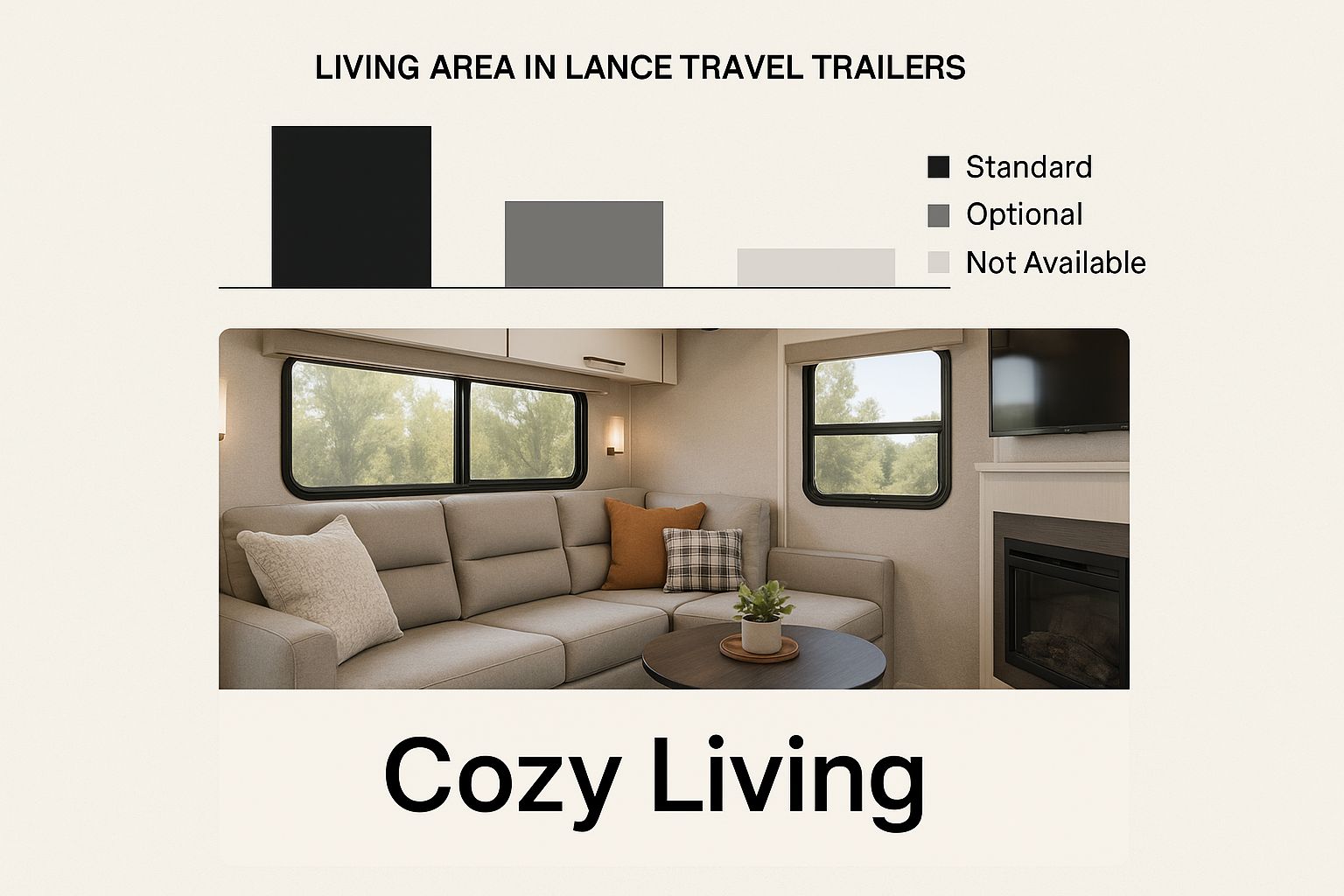
It just goes to show that smart design and quality finishes are what truly make a small space feel like home.
The next major fork in the road for smaller Lance travel trailers floor plans is the bathroom. You'll find two main options: a wet bath or a dry bath.
A wet bath is an all-in-one solution, combining the toilet and shower into a single waterproof space. It’s a brilliant design for saving space, freeing up precious real estate for a bigger kitchen or more storage cabinets. For travelers who see the bathroom as purely functional, it’s an incredibly practical choice.
Then there’s the dry bath, which gives you a separate shower stall, keeping the toilet and vanity area completely dry. This feels much more like the bathroom you have at home and is a feature many couples insist on for daily comfort. Models like the Lance 1575 often squeeze in a dry bath, sometimes with a small slide-out, to create an interior that feels surprisingly roomy.
It really is a personal call. If your top priority is maximizing every inch of living and kitchen space, the wet bath is a smart, space-saving design. But if the comfort of a conventional bathroom routine is a deal-breaker for you, then a dry bath is absolutely worth the space it takes up.
Here’s a quick look at how some of the most popular compact models stack up.
|
Model
|
Overall Length
|
Sleeping Capacity
|
Slide-Outs
|
Ideal Use Case
|
|
1475
|
19' 8"
|
2-3
|
No
|
Couples who want a dedicated bed without a slide.
|
|
1575
|
20' 5"
|
2-3
|
Yes
|
Those seeking a dry bath and extra room from a slide.
|
|
1685
|
21' 0"
|
2-5
|
Yes
|
Couples needing more seating or space for a guest.
|
|
1985
|
23' 8"
|
4-5
|
Yes
|
Families or couples wanting a walk-around queen bed.
|
Ultimately, the right compact floor plan really hinges on how you travel. Think about a typical day on the road for you. Are you spending most of your time inside cooking and relaxing, or is the trailer mainly a home base for your outdoor adventures? Answering that simple question will point you directly to the perfect layout for your next journey.
Once your family starts growing, your needs on the road change in a big way. This is exactly where the mid-size Lance travel trailer floor plans step up, moving past the efficient little campers built for two and into layouts designed for more people, more gear, and more life.
These models are the sweet spot for small families or anyone who likes to bring friends along. Lance does a fantastic job of balancing a roomier interior with their famous lightweight construction, so you aren't suddenly towing a monster.
The biggest difference you'll notice in this category is the bunkhouse. It's a game-changer. Instead of converting a dinette every night—and losing your main hangout spot—a dedicated bunk area gives kids (or guests) their own permanent, private space. After a long day of hiking or swimming, having separate zones for everyone to retreat to is priceless.
Take a look at a floor plan like the Lance 2185, and you'll see what I mean. These models often stick a bunkhouse in the rear, sometimes with its own little wardrobe, creating a true kids' zone. This simple design choice keeps the main living area from becoming a chaotic mess and gives the adults their space back in the evenings.
Of course, more people means more cooking. Mid-size Lances come through with bigger galleys to handle it. You get more counter space for chopping veggies, larger refrigerators that can actually hold a week's worth of food, and usually a three-burner range with an oven. This is the difference between making simple camp food and being able to cook real family meals without feeling cramped.
The magic in these designs is how they give a family everything they need without becoming a chore to tow. Lance uses smart slide-outs and clever multi-use spaces to create a comfortable rig that’s still manageable on the road.
More people also means more stuff. There's just no way around it. Mid-size Lance floor plans tackle this head-on with smart storage. We're talking deeper overhead cabinets, pass-through exterior bays for bulky gear like camp chairs and beach toys, and dedicated pantries. On a week-long trip, having a designated spot for everything is what keeps a trailer feeling organized and livable.
This commitment to smart, versatile layouts is why Lance gets so much respect in the industry. They have a knack for building floor plans for all kinds of RVers, from solo travelers to growing families, which taps right into the demand for more personalized campers.
Earning awards like the Consumer Digest 'Best Buy' isn't just about good marketing; it confirms their designs work in the real world. For a family investing in a home-on-wheels, that kind of proven reliability is a huge deal. You can get a better sense of their reputation and award-winning approach on their website.
It’s easy to get caught up in picking the perfect layout from the wide range of lance travel trailers floor plans, but that’s only half the story. The other, more critical piece of the puzzle is making sure your truck or SUV can actually handle the trailer you choose. Getting this wrong isn't just an inconvenience—it's downright dangerous.
Before you set your heart on a particular model, you have to get honest about what your vehicle can do. This all comes down to a few key numbers you simply can't afford to overlook. Let's cut through the jargon and focus on what really matters for a safe tow.
First things first, find your vehicle's maximum tow rating. This is usually in the owner’s manual or on the manufacturer's website and represents the absolute heaviest trailer your vehicle can pull. But here's the golden rule: never, ever tow at your vehicle's max limit. For a real-world safety buffer, you'll want to keep your trailer's weight at or below 80% of your vehicle’s maximum capacity.
Next, you need to get familiar with two key trailer weights:
-
Gross Vehicle Weight Rating (GVWR): This is the big one. It's the maximum a trailer can weigh when it's fully loaded with water, propane, food, clothes, and all your gear. This is the number you should always use.
-
Tongue Weight: This is the downward force the trailer's hitch puts on your tow vehicle. For stable, sway-free towing, it needs to be between 10% and 15% of the trailer's total weight.
A classic rookie mistake is to only consider a trailer's "dry weight" (how much it weighs empty from the factory). Always base your calculations on the GVWR. That's the only way to account for a real-world trip and give yourself a proper safety margin.
This focus on lighter, more towable trailers has been a cornerstone of Lance's approach for years. When they shifted into travel trailers back in 2009, it was partly to meet the demand for ultralight designs that didn't require a massive truck. They’ve since refined their floor plans to balance sought-after features with towability, offering models from 20 to 30 feet to suit a variety of tow vehicles. You can read more about Lance's strategic growth on RVNews.com.
So, how does this translate to the real world? Let's talk specifics.
A smaller Lance model, like the popular 1475, has a GVWR of around 4,500 lbs. This makes it a fantastic match for many mid-size SUVs or a light-duty truck like a Ford Ranger or Toyota Tacoma.
But as you step up to a mid-size family floor plan like the 2185, the GVWR jumps to nearly 7,000 lbs. Now you're firmly in half-ton truck territory. You'll need something like a Ford F-150, Ram 1500, or Chevy Silverado 1500 to handle that weight safely, especially when you encounter crosswinds or steep mountain passes.
By starting with your vehicle’s limits, you can quickly narrow down the list of lance travel trailers floor plans that are a safe and perfect fit for your adventures.
Even after staring at spec sheets and floor plans for hours, you probably still have some nagging questions. It's one thing to see features on paper, but how do they actually hold up on the road? When you're looking at a premium brand like Lance, you want to know if the real-world experience matches the reputation.
Let's dive into some of the most common questions people have before buying a Lance. We'll cover what "four-season" really means, how reliable their slide-outs are, and whether "lightweight" is just code for "flimsy." Getting these answers will help you feel confident that you're making the right choice.
The term "four-season" gets tossed around a lot in the RV world, but Lance actually backs it up with some serious engineering. It’s not just about slapping some extra insulation in the walls—it's a whole system designed to keep you comfortable and your trailer functional when the temperature plummets.
It all starts with rigid foam block insulation in the walls, ceiling, and floor, creating a solid thermal barrier. But the real magic is in how they protect your water systems. Lance fully encloses their holding tanks and runs ducted heat from the furnace around them. This is what stops your tanks from turning into a giant ice block, a trip-ending problem in many other trailers.
Here's what really sets Lance apart: their system doesn't just protect the tanks. It also keeps the gate valves and PEX water lines from freezing. That comprehensive protection is the difference between a true four-season RV and one with a simple "arctic package."
When you add options like dual-pane windows to cut down on heat loss and condensation, you get a trailer that's truly ready for anything. Whether you're chasing summer sun or snowy peaks, the camper stays comfortable and functional, which is why so many people pick Lance for year-round adventures.
Slide-outs are fantastic for creating extra living space, but they can also be a notorious source of leaks and mechanical failures if they're not built well. Thankfully, Lance has earned a solid reputation for engineering some of the toughest and most reliable slide-out systems you can find.
Their secret is using top-notch components and building the slide mechanism directly into their "LanceLock" interlocking aluminum frame. This makes the entire structure incredibly rigid, preventing the kind of flexing and alignment problems that cause so many issues in other trailers.
Of course, any mechanical system needs a little TLC—you'll want to keep the seals clean and the tracks lubricated. But owners consistently report years of smooth, trouble-free operation from their Lance slide-outs. That peace of mind is a huge plus when you're thinking about the long-term ownership of an RV.
It's a fair question. Usually, when something is lighter, it's not as tough. But with Lance, that's definitely not the case. They build lightweight trailers that are incredibly durable by using smarter materials and modern construction, not by cutting corners.
Instead of the heavy wood framing that can rot over time, Lance uses a welded aluminum frame. This gives the trailer immense strength at a much lower weight, and it's completely immune to water damage.
For the walls, they skip the standard luan plywood and use Azdel composite panels. Azdel is a total game-changer. It's about 50% lighter than wood, it can't rot or mold, and it even provides better insulation and sound dampening.
By combining an aluminum skeleton with a composite skin, Lance creates a trailer that's a dream to tow without sacrificing an ounce of the structural integrity you need for years on the road. It’s the perfect example of working smarter, not harder, to get better performance.
Ready to find the perfect layout for your next adventure? At Searchshop, we make it easy to compare various lance travel trailers floor plans side-by-side. Explore our extensive inventory of new and used models, get dealer reviews, and find financing options all in one place.
Start your journey today by browsing our selection at https://www.searchshop.com/rv.