Before you even think about scrolling through listings, let's talk about the most important part of buying a used RV: the prep work. Getting this right is the difference between finding the perfect adventure rig and ending up with a costly mistake parked in your driveway.
Success isn't about finding the shiniest motorhome; it’s about finding the right one for you.
Step 1: Matching Your Travel Dreams to the Right RV
The first step in learning how to buy a used RV has nothing to do with engines or floor plans. It’s all about a little honest self-assessment. A smart purchase, whether it's an RV for the road or a boat for the water, starts with a clear picture of your real-world travel style, not just a postcard-perfect vacation fantasy. This groundwork is what prevents that sinking feeling of buyer's remorse down the road.
And right now is a fantastic time to be a buyer. The market is absolutely flooded with options. Recent data shows that used RV listings on major platforms have skyrocketed, climbing by a massive 25.5% year-over-year as of April 2025. You can read more about this surge in used RVs and what it means for buyers. While all this choice is great, it makes this initial planning phase more crucial than ever.
Define Your Travel Style and Needs
First things first: get brutally honest about how you’ll actually use your recreational vehicle.
Are you plotting epic, months-long cross-country treks? Or are you a weekend warrior, happy to hit state parks a few hours from home? Your answer completely changes what kind of rig will work for you.
To get started, ask yourself a few key questions:
Who’s coming along? A solo traveler's needs are a world apart from a family of five with a golden retriever. Think realistically about sleeping space, elbow room, and storage for everyone's stuff.
What’s your camping vibe? Do you see yourself at full-hookup resorts with Wi-Fi and a pool, or are you itching to go boondocking off-grid? This dictates your need for big water tanks, solar panels, and a generator.
How big can you go? A massive Class A motorhome handles like a city bus, while a small travel trailer is a completely different experience. Be honest about what you're comfortable driving or towing.
Understanding the Different RV Types
With a clearer picture of your needs, you can start to zero in on the right type of RV. Each class comes with its own unique set of pros and cons, especially when you're buying used.
Choosing the right type of RV is the single most important decision you'll make. It affects everything from your budget to your driving comfort and where you can camp. To help you sort through the options, here’s a quick breakdown of the most common types and who they’re best for.
Matching RV Type to Your Travel Style
RV Type
Best For
Typical Price Range (Used)
Key Consideration
Class A Motorhome
Full-timers, large families, and luxury travelers wanting residential amenities.
$50,000 - $150,000+
High fuel and maintenance costs. Can be challenging to drive and park.
Class C Motorhome
Families and couples who want a balance of space and maneuverability.
$30,000 - $80,000
The cab-over bunk is great for kids or storage, but can feel cramped for tall adults.
Class B (Camper Van)
Solo travelers, couples, and adventurers prioritizing mobility and stealth camping.
$40,000 - $100,000+
Limited space and amenities. Best for those who pack light and spend time outdoors.
Travel Trailer
Budget-conscious buyers and those who already own a capable tow vehicle.
$10,000 - $50,000
Requires a properly matched truck/SUV. Towing can be intimidating for beginners.
Fifth Wheel
Long-term travelers seeking a home-like feel with spacious, multi-level layouts.
$20,000 - $90,000
Requires a heavy-duty truck with a specific hitch. Taller profile can limit routes.
This table should give you a solid starting point. Remember, the goal is to find the category that best aligns with your travel plans before you start falling for specific models.
I see it all the time: new buyers get a massive 40-foot rig for a few weekend trips a year. They quickly discover it's a nightmare to park, a pain to maintain, and a gas-guzzler. My advice? Match your purchase to the 80% of your planned usage, not the 20% dream trip you might take once.
Look Beyond the Sticker Price
Finally, let’s talk money. The price on the windshield is just the beginning—you have to budget for the total cost of ownership. These "hidden" expenses can quickly turn a great deal into a financial headache if you aren't prepared for them.
A realistic budget must account for these ongoing costs:
Insurance: This varies wildly by RV or boat type, its value, and your driving history. Get quotes early.
Maintenance: You need to set money aside for routine engine service, new tires (which are expensive!), and checking roof seals annually.
Repairs: Things will break. It’s not a matter of if, but when. A healthy repair fund is non-negotiable on a used RV.
Storage: Can you park it at home? If not, you could be looking at a few hundred dollars a month in storage fees.
Fuel: RVs and boats are thirsty. Don't let fuel costs catch you by surprise—factor them into your trip planning.
Alright, you've figured out what kind of recreational vehicle you want. Now for the fun part: the hunt.
Finding the right used RV or boat is all about knowing where to look and, more importantly, how to look. The market is huge, from sprawling dealership lots to a single listing on Facebook Marketplace. Each has its own rhythm, its own pros and cons. Your job is to become a savvy shopper who can spot the promising options before you even leave the house.
Dealerships vs. Private Sellers
This is your first big fork in the road. Do you go with an established dealer or buy directly from an owner? There’s no single right answer here—it really comes down to your budget, how comfortable you are with mechanical stuff, and your appetite for risk.
Going through a dealership feels more structured. They handle the paperwork, often have financing ready to go, and might even throw in a limited warranty. That convenience comes at a price, of course. Dealers have overhead, so you'll almost always pay more. But a reputable dealer has a name to protect, which usually means they've at least given the vehicle a once-over.
Private sellers, on the other hand, are where you can find the real deals. They aren’t trying to turn a profit; they just want to sell a rig they don't use anymore. The huge advantage here is that you get to talk to the person who actually lived with the RV or used the boat. They know its history, its quirks, and what's been fixed.
Keep this in mind: a private sale is almost always "as-is." Once the cash is exchanged and the title is signed, that RV is yours, problems and all. There's no customer service line to call if you find a leak on the drive home.
Mastering the Online Search
These days, the search for a used RV starts on your couch. Sites like RV Trader, Facebook Marketplace, and even Craigslist are packed with options. But you have to learn to sift through the listings with a critical eye to separate the gems from the junk.
Here’s how to sharpen your online search skills:
Get Specific with Filters: Don't just type "travel trailer" and start scrolling. Use every filter you can find: length, weight, number of slides, price, and year. This immediately cuts out the noise.
Become a Photo Detective: Look past the pretty sunset in the background. Zoom in. Do you see any bubbling on the siding? That's delamination. Check the corners of the slide-outs for water stains. How old do the tires look? A seller who posts 50 crystal-clear photos is telling you they have nothing to hide. Three blurry pictures? That's a red flag.
Read Between the Lines: Vague phrases like "needs a little TLC" can mean anything from a broken cabinet latch to a completely rotten floor. I always look for listings that give real details—what's been upgraded, why they're selling, and a clear maintenance history. A well-written ad is often the sign of a well-cared-for rig.
The shift toward private sales has been massive. In 2025, as the market has adjusted, peer-to-peer private RV sales have jumped by an incredible 111% year-over-year. This shows that more and more buyers are finding great value by dealing directly with owners. If you want to dive deeper, you can discover more insights about the used RV market trends on bishs.com. This makes getting good at navigating the online marketplaces more important than ever.
The Pre-Visit Homework
Before you burn a Saturday driving three hours to see an RV, spend ten minutes on the phone. A quick call can tell you everything you need to know and save you a world of frustration. Have your questions ready before you dial.
My Go-To Questions for Any Seller
Are you the original owner? If not, how long have you had it?
Where was it stored when you weren't using it? Under a cover? Indoors? Just sitting out in the sun?
Any known leaks, past or present? Any signs of water damage at all?
When were the tires replaced? (I don't care about tread depth; I want the date code on the tire itself.)
Do you have the service and maintenance records?
Finally, and this is non-negotiable, run a vehicle history report with the VIN. This can uncover a salvage title, flood damage, or a rolled-back odometer that a seller conveniently "forgot" to mention. Pair that report with a quick Google search for "[RV Make and Model] common problems," and you'll walk into that inspection armed with exactly what you need to know.
Alright, you’ve found a rig that looks promising. Now comes the most critical part of the entire process: getting your hands on it and doing a deep-dive inspection. This is where you separate the gems from the money pits. A thorough once-over is what stands between you and a nightmare of hidden repairs that can cost you thousands.
Think of yourself as a detective. Every seal, every surface, and every system has a story to tell about how that vehicle was used and maintained. You don't need to be a certified mechanic, but you absolutely need to be methodical. The biggest problems love to hide in plain sight.
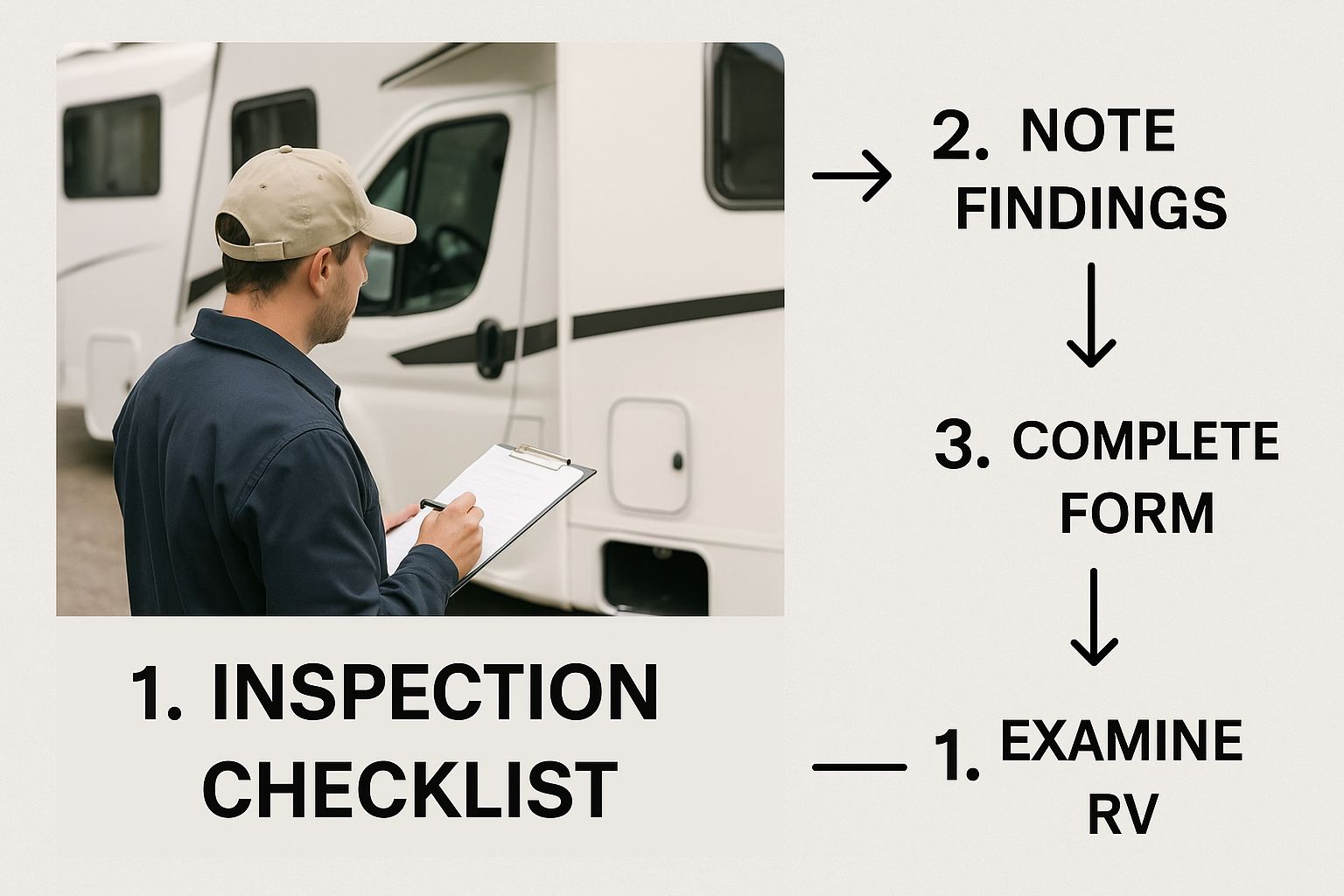
This visual gives you a great roadmap for how to tackle the inspection, breaking down the key areas to hit.
It’s a solid starting point that shows you should always start with the exterior shell before you even think about stepping inside.
Start With The Exterior Shell
Your inspection has to start on the outside, focusing on the RV’s first line of defense against the weather. Get up on a ladder and look at the roof—this is where the most catastrophic issues are born. You're hunting for any cracks, bubbles, or gaps in the sealant, paying extra attention to the areas around vents, the AC unit, and any skylights.
Next, walk the perimeter and inspect the walls. Squat down and look along the sides for any signs of delamination. It looks like a bubble or a wave in the fiberglass siding and it's a giant red flag. It means water has penetrated the wall, a repair that can easily run into the thousands.
Then, check the tires. Don’t just glance at the tread. You need to find the DOT date code stamped on the sidewall. RV tires almost always age out before they wear out. If they're more than five to seven years old, they're a safety hazard and a big-ticket replacement you'll need to factor into your offer.
Follow The Scent Of Water Damage
Water is the single greatest enemy of any recreational vehicle, whether it's an RV or a boat. It causes rot, invites mold, and can completely compromise the structure. Your most important mission during an inspection is to sniff out any evidence of leaks, past or present. This is the #1 reason people get burned when learning how to buy a used rv.
Seriously, use your nose. Does it smell musty, damp, or like it's been bombed with air freshener? Any of those smells could mean someone is trying to hide something.
Here's where to look for the physical clues:
Ceilings and Corners: Scan the entire ceiling, especially around vents. Open every cabinet and closet and check the upper corners for stains, discoloration, or soft spots.
Under Sinks and in Bays: Grab a good flashlight and crawl into the storage bays. Get on your hands and knees to look under the kitchen and bathroom sinks. You're looking for water stains, warped wood, or any active drips.
Around Windows and Doors: Press firmly on the walls around every single window and door frame. If it feels soft, spongy, or gives way at all, that's a classic sign water has seeped in and rotted the wall from the inside out.
A tiny, faded water stain might look like no big deal, but it's just the tip of the iceberg. Where there's a little visible damage, there's often a whole lot more you can't see. Never, ever ignore signs of water intrusion.
Test Every Single System And Appliance
Once you’ve cleared the exterior and hunted for water damage, it's time to test everything. And I mean everything. Don't just take the seller's word for it. Insist that they have the RV connected to shore power and city water. If that’s not possible, make sure the generator, batteries, and fresh water tank are ready to go.
Go through this list methodically:
Electrical: Plug a phone charger or small device into every outlet. Flip every single light switch. Test both the 12V system (lights, fans running off battery) and the 120V system (outlets, AC running off shore power or generator).
Plumbing: Turn on the water pump. It should build pressure and then shut off. If it keeps kicking on and off when no faucets are running, you’ve got a leak somewhere. Run water in the sinks, flush the toilet, and turn on the shower.
Appliances: Fire up the fridge and make sure it gets cold on both propane and electric. Test the furnace and the air conditioner. Light all the burners on the stovetop and see if the oven works. Don’t forget the microwave.
Slides and Awnings: This is a big one. Run every slide-out all the way out and all the way back in, multiple times. Listen for weird grinding noises or jerky, hesitant movement. Do the same for all awnings.
During this process, you may come across some serious warning signs. The table below outlines some of the most critical red flags, what they mean, and how you should react.
Critical Inspection Red Flags
Red Flag Symptom
What It Likely Means
Potential Repair Cost
Action to Take
Soft spots on floor/walls
Water intrusion has caused wood rot.
$2,000 - $15,000+
Proceed with extreme caution. This often indicates widespread, hidden damage. A professional moisture test is essential.
Bubbles/waves in siding (delamination)
The fiberglass has separated from the wood substrate due to a failed seal and water damage.
$3,000 - $20,000+
This is a major structural issue. Unless you're getting an incredible deal and plan for the repair, it's often best to walk away.
Musty or strong chemical smells
Active mold/mildew or a desperate attempt to cover up the smell of water damage.
Varies widely
A huge red flag. Uncover the source before proceeding. Mold can be a serious health hazard.
Tires older than 7 years
Tires have aged out and are at high risk of a blowout, regardless of tread depth.
$1,500 - $4,000+
This is a non-negotiable safety issue. Plan to replace all tires immediately and factor this cost into your offer.
Jerky or noisy slide-out operation
The slide mechanism is failing, out of alignment, or has a bad motor.
$1,000 - $5,000+
Do not buy the RV without a firm diagnosis and repair quote from a qualified RV technician.
Recognizing these red flags is your best defense against buying an RV that will drain your bank account and ruin your travel plans.
The Case For A Professional RV Inspection
Feeling a bit in over your head? That's totally normal. A proper inspection is a massive job. This is exactly why hiring a certified professional inspector is one of the smartest moves you can make.
An inspector from an organization like the National RV Inspectors Association (NRVIA) has the training and specialized tools to find things you'd miss. They use moisture meters to detect hidden leaks, pressure test the propane lines for safety, and run a fine-toothed comb over every system.
You’ll get a detailed report—often 30-50 pages long with pictures—that documents every single issue, big or small. This report is your ultimate bargaining chip. It gives you unbiased, expert leverage to negotiate a lower price for repairs or, just as importantly, the confidence to walk away from a potential disaster. A few hundred dollars for an inspection can literally save you thousands in the long run.
Negotiating the Price and Securing Financing
So, you’ve found the one. It passed your inspection, you can already picture yourself at that perfect campsite, and you’re ready to buy. Hold on. Finding the right rig is only half the battle—getting it for the right price is what turns a good find into a great deal.
This is where you switch gears from inspector to negotiator. A little bit of homework here can literally save you thousands of dollars, and it all starts before you even talk numbers.
Get Your Financing Lined Up First
Never, ever start talking price until you have your money sorted out. Walking into a negotiation, whether with a private seller or a dealership, with a pre-approval letter in hand changes the entire dynamic. It immediately signals that you're a serious, qualified buyer who's ready to close the deal.
Don't just default to the dealership's financing department. They can be convenient, but you'll almost always find a better deal by shopping around yourself.
Here’s where I’d look:
Credit Unions: My first stop, always. They’re member-owned and typically offer fantastic rates on recreational loans without the high-pressure sales tactics.
Your Personal Bank: You already have a relationship here, which can sometimes translate into better terms and a much simpler application process.
Specialized Lenders: These companies live and breathe recreational vehicles, including RVs and boats. They can sometimes offer longer loan terms, which can be a useful option for lowering your monthly payment.
Getting pre-approved for a loan does more than just give you buying power. It sets a hard ceiling on your budget. This is crucial—it keeps emotion in check and gives you the confidence to walk away if the price isn’t right.
Figure Out What the RV Is Actually Worth
You can't make a smart offer if you're just guessing. The seller’s asking price is their wish list; your offer needs to be grounded in reality.
Your best friend in this process is NADAguides. This is the industry-standard resource for determining the wholesale and retail values of used RVs and boats based on their exact year, make, model, and included options. Look it up, print it out, and bring it with you.
Next, do your own market research. Spend an hour scrolling through RV Trader and Facebook Marketplace, looking for comparable models in your area. Having a few real-world examples to go along with the official NADA value gives you a rock-solid, data-driven basis for your negotiation.
How to Negotiate Like a Pro
Good negotiation isn’t about being confrontational; it’s about having a calm, fact-based conversation. And your single greatest tool is the inspection you just completed.
Instead of just saying, "Your price is too high," you can be specific. For example, if you noticed the tires are nearing their expiration date, you could say: "We really love this rig, but a full set of new tires is going to run about $2,500. I've had to factor that immediate, necessary expense into my offer." See the difference? It's not an opinion, it's a fact. It's objective and almost impossible to argue against.
It also pays to know which way the market is blowing. For example, the market has cooled off a bit from its recent peak. Early 2025 data shows that new travel trailer sales are down 13.25% and fifth wheels have dropped 9.69%. You can discover more about the state of the RV industry on statisticalsurveys.com and see these trends for yourself. Knowing this tells you it’s more of a buyer’s market for certain types of RVs, which gives you a bit more leverage.
When you make your first offer, start reasonably below your target price to give yourself some wiggle room. With dealerships, remember they almost always have more flexibility than they let on. Be polite, be firm, and most importantly, be completely willing to walk away. The power to say "no thanks" and leave is, without a doubt, your ultimate advantage.
Finalizing the Purchase and Taking the Keys
You’ve shaken hands on a price, and the excitement is real. This is that moment where the dream of hitting the open road finally starts to take shape. But learning how to buy a used RV isn’t quite over. The last hurdles—the paperwork and getting ready for ownership—are just as critical as the inspection itself. Nailing this part ensures a smooth, legal transfer and sets you up for an amazing first trip.
This final stage is all about being diligent. It's so easy to get swept up in the moment and just rush through the paperwork to get the keys in your hand. Trust me, a small oversight here can turn into a massive headache down at the DMV. Slow down, be methodical, and double-check every single document before any money changes hands.
The Essential Paperwork Checklist
Never, ever hand over a check without the right documents in front of you. Every piece of paper serves a real legal purpose, protecting both you and the seller. Insist on seeing everything, and don't fall for excuses about missing items.
Here’s your non-negotiable document list:
The Title: This is the big one. Make sure the seller's name is on it and that the VIN (or HIN for a boat) exactly matches the one on the vehicle. If you're buying from a private party, you want to see a "free and clear" title with no lienholders listed.
Bill of Sale: A formal, written receipt is a must. It needs to include the date, sale price, full names and addresses for both of you, and a detailed description (year, make, model, VIN/HIN). Both you and the seller have to sign it.
Lien Release Form: If the seller had a loan, you absolutely need this official document from their bank. It's the proof that the loan is paid off and the lender has no claim on the vehicle. Do not buy an RV or boat without it if a lien is shown on the title.
Pro tip: Take a clear picture of the seller’s driver’s license. It’s a simple way to verify their identity matches the name on the title and gives you some recourse if any issues with the paperwork pop up later.
From Title Transfer to Insurance
Okay, you've got the signed title and bill of sale. The vehicle is yours... but you can't legally use it just yet. The next move is making it official with the state. This usually means a trip to your local DMV to formally transfer the title into your name, pay the sales tax, and get your new license plate and registration.
Before you even head to the DMV, call your insurance agent. You’ll need to have an active insurance policy in place before they'll register the vehicle. And don't just add it to your auto policy; RVs and boats have unique needs. A good policy should cover more than just collisions—think personal contents, campsite liability, and emergency roadside or on-water assistance.
Your First Steps as an RV Owner
Congratulations, you have the keys! Before you start mapping out that cross-country epic, there are a few immediate things you should tackle. Think of this as setting the stage for safe and stress-free travels down the road.
Your first weekend with the new rig should be what we call a "shakedown trip." This isn't a vacation; it's a test run. Go to a nearby campground for a night or two with the sole purpose of using every single system. Run the water heater, test the furnace, use the slides, flush the toilet—everything. You’ll be surprised by the little quirks you find when you’re actually living in the space for a day.
This is also the time for some immediate maintenance and safety prep.
Fluid and Filter Change: Unless the seller handed you receipts showing it was just done, get an oil change for both the engine and the generator.
Safety Gear Check: Stock your vehicle with the essentials. That means a new fire extinguisher, a working carbon monoxide detector, a well-stocked first-aid kit, and fresh batteries in the smoke detector.
Tire Pressure Check: Get a quality pressure gauge and inflate all tires (including the spare!) to the manufacturer's recommended cold psi. You'll find this number on a sticker, usually inside the driver’s side door jamb or on the RV's exterior.
Have a Few Lingering Questions?
Even with a detailed checklist and a game plan, buying a used RV always seems to stir up some last-minute questions. It's totally normal. Getting a handle on these common sticking points can be the difference between a great purchase and a costly mistake. Let’s walk through some of the most frequent things buyers ask.
What’s Considered “High Mileage” on a Used Motorhome?
This is a classic question, but the answer isn't as straightforward as it is with a car. For a motorhome, mileage tells only a fraction of the story. Honestly, an RV that's been consistently on the road and well-maintained is often in far better shape than a low-mileage "garage queen" that’s been sitting for years. Inactivity is the enemy of an RV; seals dry up, engines get sluggish, and systems seize from disuse.
If you need a rough guideline, think of it this way:
Gas Engines: If you find one under 50,000 miles, that’s generally considered low and a fantastic find.
Diesel Engines: These beasts are built to run. A well-cared-for diesel pusher with under 100,000 miles is just getting broken in and has a ton of life left.