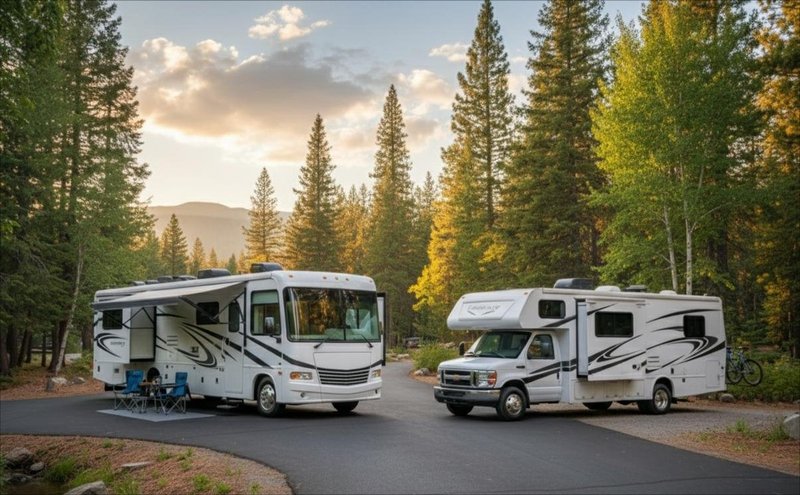
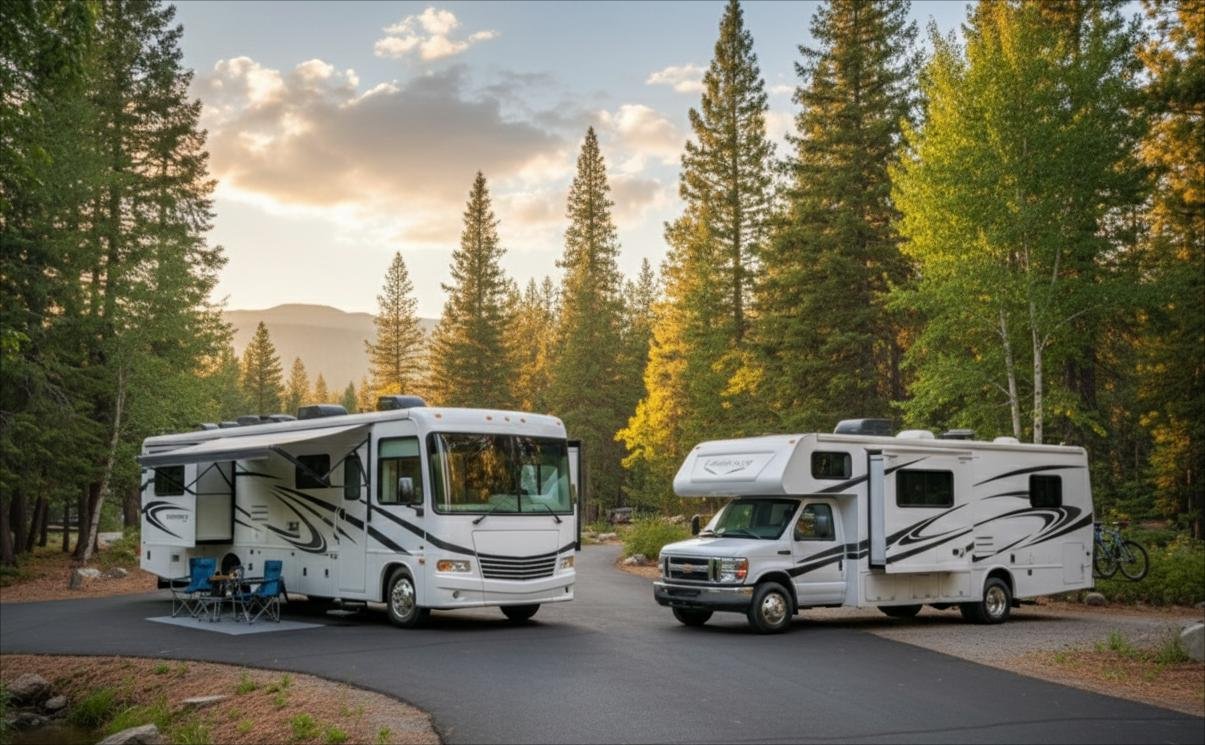
When you're trying to decide between a Class A and a Class C motorhome, it really comes down to what you value most on the road. If you're dreaming of a residential-style experience with maximum space for full-time living or long, rambling cross-country tours, a Class A is your rolling luxury home. On the other hand, if you need something that's easier to drive, fits into more campsites, and comes with a friendlier price tag, the Class C is the go-to choice for families and weekend adventurers.
Class A vs Class C: A Quick Comparison
Picking the right motorhome class is probably the biggest decision you'll make at the start of your RV journey. Both get you out on the open road, but they're built for very different kinds of travel. Getting a handle on these core differences will make it much easier to choose the rig that truly fits your lifestyle.
Let's break down what really sets them apart.
Chassis and Build: A Class A is built from the ground up on a purpose-built, heavy-duty frame, much like a commercial bus. This allows for those huge, open floor plans. A Class C starts with a van or truck chassis (think Ford, Chevy, or Mercedes-Benz), with the "house" part built onto the back—that iconic over-cab bunk is the dead giveaway.
Target User: Class A motorhomes are a favorite among snowbirds, full-timers, and anyone who refuses to compromise on comfort and amenities. The Class C, with its practical design and familiar driving feel, tends to attract families, first-time RVers, and those who want a nimble rig for state and national parks.
Overall Experience: Stepping into a Class A feels like walking into a high-end condo. Driving a Class C feels more like handling a large moving truck, which is a much more familiar experience for most people.
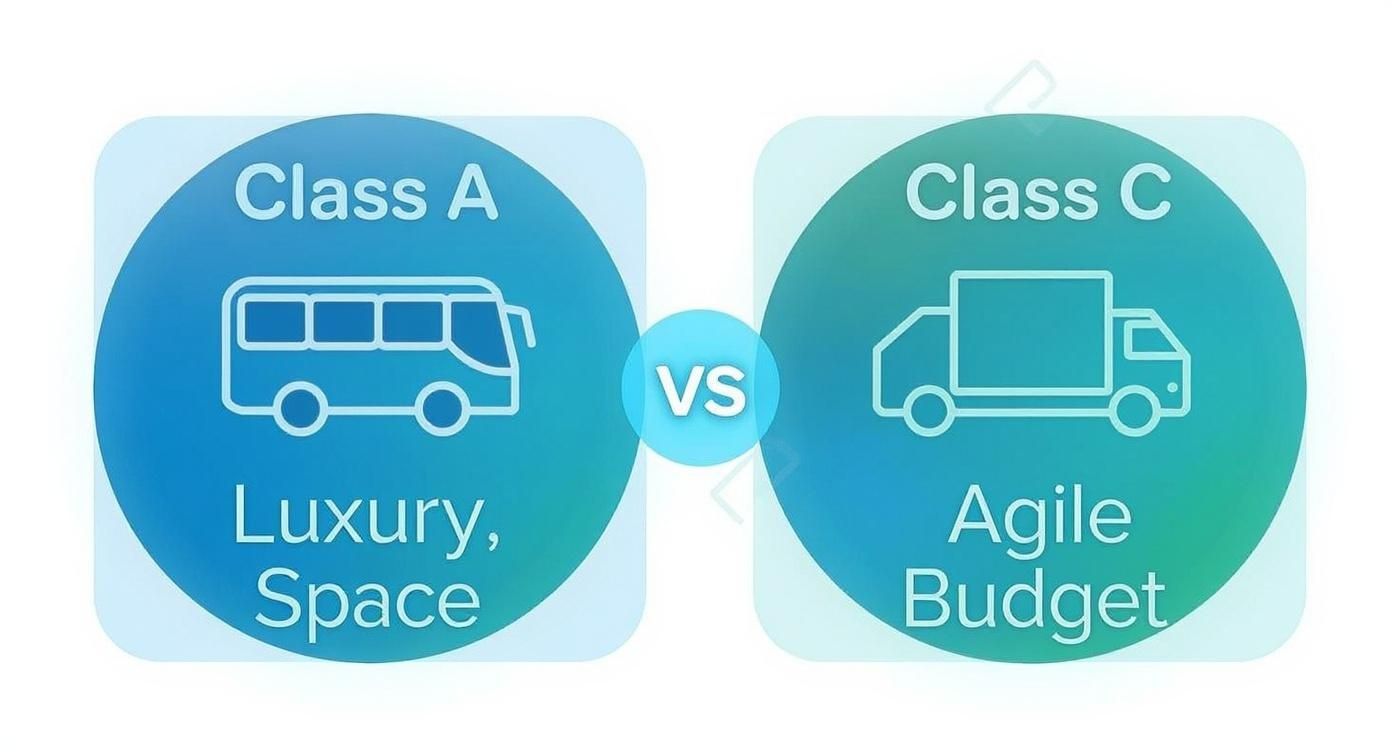
This infographic does a great job of showing these key differences visually. You can immediately see the trade-off between the sprawling, home-like feel of a Class A and the more compact, versatile nature of a Class C.
Ultimately, your choice is about priorities: do you want a spacious basecamp or a nimble adventure vehicle? For a broader look at all the options out there, our guide explaining RV classes for beginners explained is a great resource to get you up to speed.
Class A vs Class C At a Glance
To make things even clearer, here’s a quick side-by-side look at the key stats. This table offers a snapshot of the key distinctions between Class A and Class C motorhomes, helping you quickly identify which type aligns with your needs.
Feature
Class A Motorhome
Class C Motorhome
Foundation
Heavy-duty bus or commercial truck chassis
Cutaway truck or van chassis
Typical Length
26 to 45 feet
21 to 35 feet
Price Range
Higher (often starting over $100,000)
More affordable (typically $60,000 - $120,000)
Living Space
Expansive, open-concept residential feel
Compact, efficient layouts with an over-cab bunk
Storage
Abundant basement and interior storage
Good, but generally less than a Class A
Driving Feel
Similar to driving a large commercial bus
Similar to driving a large truck or van
Ideal Use Case
Full-time living, long-term cross-country travel
Family vacations, weekend trips, national parks
Best For
Couples or travelers prioritizing luxury and space
Families and adventurers needing flexibility and value
As you can see, the choice isn't just about size—it's about how you plan to travel and what you need to feel comfortable along the way.
How Each Motorhome Class Is Built
To really get to the heart of the Class A vs Class C motorhome debate, you have to start at the foundation. How these rigs are built from the ground up defines almost everything about them—from how they handle on the road to what you can do with the interior space. We're not just talking about different floor plans on a similar frame; these are two completely different construction philosophies.
This fundamental difference is exactly why a Class A feels like you’re driving a rolling condo, while a Class C feels more like a super-sized, familiar truck.
The Ground-Up Build of a Class A
A Class A motorhome starts its life on a specially designed, heavy-duty chassis. Picture the massive frame of a commercial bus or an 18-wheeler, and you’re on the right track. RV manufacturers get this bare-bones chassis—basically just the frame, engine, and wheels—and then build the entire coach on top of it. The walls, the floor, the roof, everything is constructed right onto that frame.
This unified construction is what makes the signature features of a Class A possible:
The Panoramic Windshield: Since there's no separate truck cab, designers can install a massive, single-piece windshield. The view is incredible.
A Seamless Living Area: The cockpit is completely integrated into the living space. This creates a huge, open-concept feel that flows from the driver's seat all the way to the back bedroom.
Expansive Basement Storage: The elevated frame leaves a ton of room underneath for huge pass-through storage bays. For full-timers, this space is an absolute game-changer.
This bus-style foundation creates a solid, residential-feeling vehicle designed for serious comfort on long trips.
The thing to remember about a Class A is that it's a single, cohesive unit built from the chassis up. The driving and living areas aren't two separate things bolted together; they're designed as one integrated space from the very beginning.
The Body-On-Frame Design of a Class C
Class C motorhomes, on the other hand, use what’s called a cutaway chassis. This means the RV manufacturer starts with a vehicle that’s already half-built: the front end of a van or truck, complete with its own cab, engine, and dashboard. You'll recognize the chassis names—they're often a Ford E-Series, a Chevrolet Express, or a Mercedes-Benz Sprinter.
The RV builder then takes this front section and attaches a custom-built living box to the back. It’s this two-part construction process that gives the Class C its most defining visual cue.
The hallmark of this design is that classic over-cab bunk or entertainment center. That space exists because the living quarters are built up and over the original truck cab, creating a perfect spot for an extra bed or storage. For many people, this makes for a much less intimidating driving experience, since you’re sitting in a familiar Ford or Chevy cockpit. It also creates a clear separation between the "driving" zone and the "living" zone.
The True Cost of Owning Each RV Type
When you're weighing a class a vs class c motorhome, the sticker price is just the tip of the iceberg. It’s easy to get caught up in the initial cost, but the real story of what you'll spend unfolds over years of ownership.
While the average selling price for a motorhome recently hovered around $62,412, that number doesn't tell you much about these two specific classes. A brand-new Class A motorhome often starts north of $100,000, and it's not uncommon to see luxury models pushing past the $300,000 mark. In contrast, you can get into a new Class C for a much more manageable $60,000 to $120,000, which explains why they're so popular.
Ongoing Expenses That Add Up
The day you drive it off the lot is just the beginning. The long-term, recurring costs are where you'll really feel the financial difference between these two RVs, and it’s where the Class C often pulls ahead for budget-conscious buyers.
Let’s break it down:
Fuel Efficiency: This is a big one. A hulking Class A is thirsty, typically getting just 6-10 miles per gallon. The smaller, more aerodynamic Class C does quite a bit better, usually achieving 10-14 MPG. On a long road trip, that difference adds up to serious savings at the pump.
Insurance Premiums: Insuring a high-value Class A is almost always going to cost more than insuring a Class C. The higher the replacement cost, the higher your premium will be. Simple as that.
Maintenance and Repairs: Both need regular care, but the systems on a Class A—think hydraulic leveling systems, massive slide-outs, and complex electronics—can be more complicated and expensive to fix. Servicing a Class C's van or truck chassis is often more straightforward and less costly because mechanics are so familiar with them.
Every RV depreciates, but how much and how fast can vary. Since you’re starting with a much higher price tag on a Class A, the dollar amount you lose in the first few years is naturally going to be bigger.
The market for used Class C motorhomes is consistently strong. Their broad appeal to families and first-time RVers creates steady demand, which helps them hold their value better and makes them easier to sell when you’re ready for a change.
Thinking about the long game is smart. You need to look beyond the initial price to determine your vehicle's true worth down the line. A Class C’s lower entry cost and wider audience of potential buyers often make it a more stable financial investment.
When it comes to the class a vs class c motorhome debate, the total cost of ownership tells a clear story: a Class A is a luxury purchase with premium costs to match, while a Class C delivers a practical and more accessible RV experience for a much wider range of budgets.
How They Handle on the Road
The second you slip into the driver's seat, you'll immediately understand the most fundamental difference between a Class A and a Class C. This isn't just about which one is bigger; it's about two completely different philosophies of driving. One puts you high above the traffic with a panoramic view, while the other feels more grounded and familiar, which can be a real confidence-booster for anyone new to RVing.
The on-road experience is a huge factor in the class a vs class c motorhome debate. In a Class A, you're in a cockpit, plain and simple. It feels like you're piloting a tour bus. You sit way up high, looking out through a massive, single-piece windshield that gives you an incredible command of the road. This high perch is amazing for soaking in the scenery on the open highway, but it can feel a little daunting in tight spots.
A Class C, on the other hand, drives more like a big truck or a U-Haul. You're in a standard automotive cab—usually built by Ford or Mercedes-Benz—and it just feels instantly recognizable. The sightlines, the mirrors, and the turning radius are all more manageable when you're trying to navigate a gas station or a crowded campground.
Handling and Maneuverability
When you get down to the nitty-gritty of handling, each class comes with its own set of challenges and perks. The long wheelbase on a Class A gives you a beautifully smooth and stable ride on the interstate, but its sheer size means you have to be "on" all the time.
Catching the Wind: Those big, flat sides on a Class A act just like a sail. A strong crosswind will push you around, and you'll find yourself making constant steering corrections to stay in your lane.
City Driving Stress: Trying to pilot a 40-foot coach through city traffic is not for the faint of heart. You're constantly scanning for narrow lanes, low-hanging tree branches, and tight turns.
The Parking Problem: Forget about pulling into a grocery store parking lot for a quick stop. Most errands in a big rig mean unhooking your towed "toad" vehicle or calling an Uber.
The Class C is just so much more agile. Because it's built on a truck chassis, it has a tighter turning radius, which makes a world of difference when you have to make a U-turn or back into a tricky campsite. It's still a big vehicle, no doubt, but its more compact footprint takes a lot of the stress out of just getting from point A to point B.
The real difference in drivability is spontaneity. A Class C lets you pull into that interesting-looking roadside diner or explore a small town on a whim. A Class A requires a whole lot more logistical planning.
Power, Brakes, and Special Licenses
Beyond just steering, the physics of operating these vehicles are miles apart. A fully-loaded Class A can easily top 30,000 pounds, and that kind of weight changes everything.
Your braking distance is going to be way, way longer than in your car, so you learn to leave a huge cushion of space in front of you. Acceleration is also a much slower, more deliberate process, especially when you're pulling a long, steep mountain pass. This is where the big diesel pusher Class A models really earn their keep, providing the massive torque needed to haul that much weight uphill.
Weight isn't just a performance issue; it's a legal one, too. Many states require a special non-commercial driver's license for any vehicle with a Gross Vehicle Weight Rating (GVWR) over 26,000 pounds. A lot of Class A motorhomes cross that line, meaning you might have to get a new license, which could involve a written and a skills test. Nearly all Class C RVs, however, fall well below that weight limit, so anyone with a regular driver's license can legally drive one off the lot.
Evaluating Interior Layouts and Livability
When you step inside a motorhome, the whole class a vs class c motorhome debate gets real. This is the moment you stop looking at spec sheets and start picturing yourself actually living on the road. The layout and feel of the interior will make or break your long-term happiness with any rig.
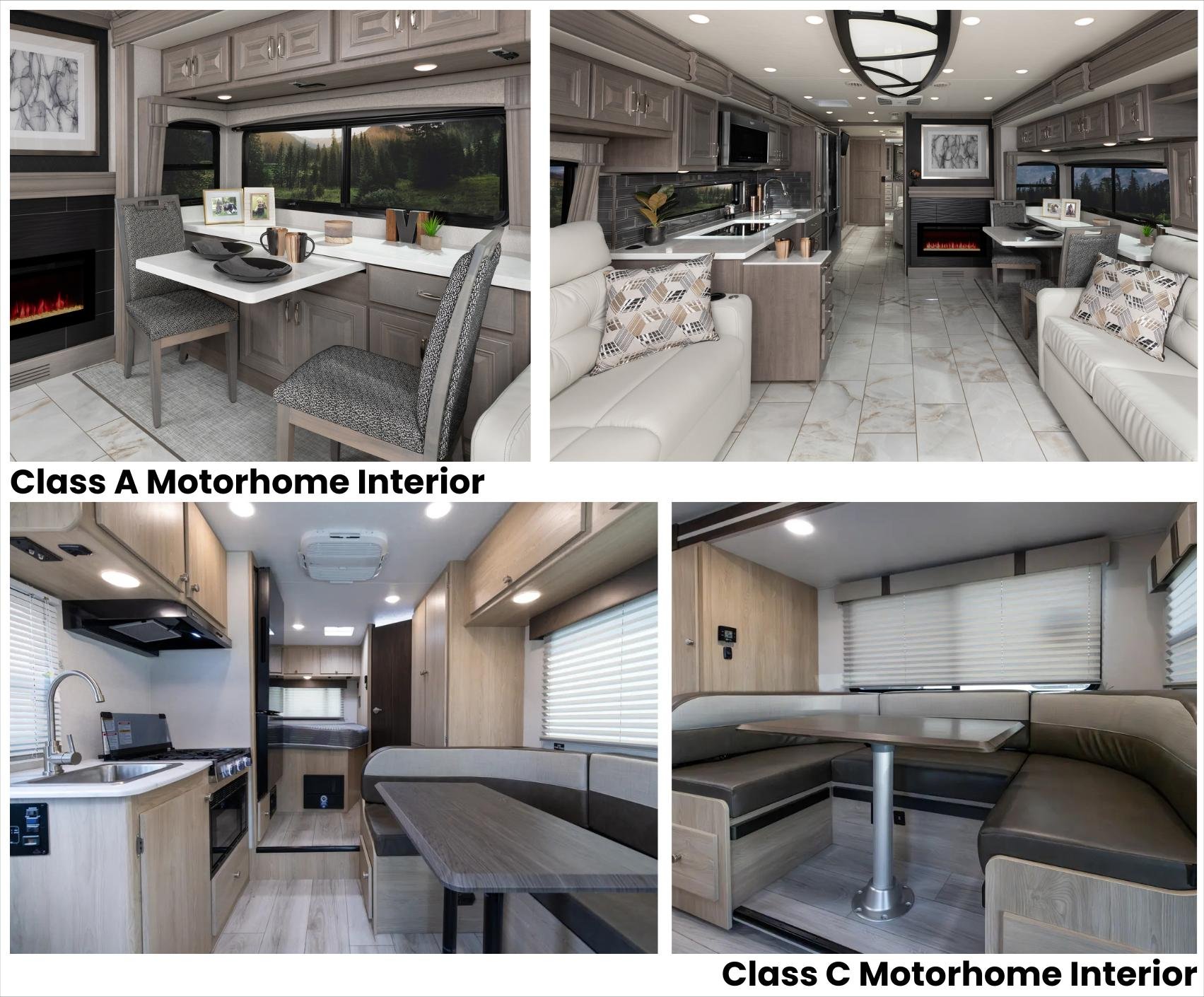
A Class A is engineered from the ground up to feel like a house on wheels. Because it’s built on a dedicated bus-style chassis, designers can create wide-open floor plans that flow straight from the massive front windshield to the master bedroom in the back. You'll find features that truly blur the line between a vehicle and a luxury condo.
On the other hand, a Class C is a brilliant lesson in space optimization. It packs an incredible amount of utility into a smaller package, with a layout that naturally creates distinct, separate zones for living, sleeping, and driving.
The Residential Feel of a Class A
The first thing you notice inside a Class A is the incredible sense of space. It's often magnified by multiple, deep slide-outs that can transform a hallway into a full-blown living room with the push of a button. These rigs are for people who refuse to compromise on comfort.
Full-Size Amenities: It’s not uncommon to find a residential refrigerator, a true king-size bed you can walk around, and even a stackable washer and dryer. Kitchens often come with islands, pantries, and acres of counter space.
Luxury Finishes: You’ll see higher-end materials throughout, like solid-surface countertops, porcelain tile floors (sometimes heated), and real hardwood cabinetry.
Abundant Storage: Beyond the massive "basement" storage underneath, the interiors are packed with deep pantries, huge wardrobes, and endless overhead cabinets. It's a full-timer's dream.
The core idea behind a Class A is to build a mobile residence that feels just as open and comfortable as a stationary home. It’s why they remain the top choice for people living on the road full-time.
This is why so many couples and retirees gravitate toward them. For a closer look at what makes an RV truly livable long-term, you can explore some of the best motorhomes for full-time living. You’ll see how these residential features make all the difference when your home is on the move.
The Smart and Versatile Class C Layout
A Class C tackles the livability question with a focus on smart, versatile design. The layout is naturally segmented by the truck cab up front, but for many owners, that’s actually a huge plus.
The most iconic feature, of course, is the over-cab bunk. This unique space is a total game-changer, especially for families, and can be used in a few different ways:
A dedicated sleeping loft for kids or guests.
A giant "garage" for storing bulky gear like folding chairs, totes, and sporting equipment.
An entertainment hub, often housing a large TV.
This separation of space is what makes the Class C so practical. The cockpit is its own zone, distinct from the living area, and that bunk provides bonus space without cluttering up the main floor. While the kitchen appliances might be a bit smaller and the counters more compact, modern Class Cs with slide-outs feel surprisingly spacious. They make every inch count with clever solutions like under-dinette storage and creative cabinetry, giving weekend warriors and adventuring families a perfectly functional and comfortable base camp.
Choosing the Right RV for Your Travel Style
All the specs and features in the world don't mean much without context. The best way to settle the class a vs class c motorhome debate for yourself is to honestly picture your ideal trip and see which rig fits that vision. Your travel style is the single most important factor here.
A motorhome should make your journey better, not more complicated. When you match the vehicle’s strengths to your own travel habits, you’re not just buying an RV—you’re investing in years of incredible experiences.
The Full-Timer and Snowbird Scenario
Let's say you're selling the house to hit the road for good. Or maybe you're a snowbird, planning to spend six months of the year chasing the sun. Your RV isn't just a vacation vehicle; it's your home. For this lifestyle, the Class A motorhome is the undisputed champion.
Living on the road demands residential comfort and serious storage. You need space for all four seasons of clothes, your favorite kitchen gadgets, and all your hobby supplies. A Class A’s massive basement storage is an absolute necessity, giving you room for everything without cluttering up your living space.
In this context, the open-concept living area, full-size appliances, and perks like a washer and dryer aren't just luxuries—they are essential for long-term livability. And that panoramic view from the driver's seat makes a long day on the highway feel less like a chore and more like a scenic tour. For anyone whose trips are measured in months or years, the Class A is purpose-built to be a home on wheels.
The National Park Adventurer and Family Vacation
Now, let's paint a different picture: a two-week family trip to explore Yellowstone and the Grand Tetons. You’ll spend your days hiking and your evenings by the campfire. Here, maneuverability and practicality are everything. This is where the Class C motorhome really shines.
Many national and state parks have length restrictions, often capping RVs at around 35 feet. A Class C slips right into those coveted, scenic spots that a larger Class A simply can't access. Its nimble handling and familiar truck-like feel also make navigating winding park roads or crowded visitor center parking lots far less stressful.
For families, that over-cab bunk is a game-changer. It gives the kids their own dedicated sleeping area, which means everyone gets a little personal space after a long day of adventuring. This go-anywhere attitude makes the Class C the perfect base camp for adventure-focused travel.
The core difference comes down to this: A Class A is your destination, a comfortable home you bring with you. A Class C is your adventure vehicle, the tool that gets you closer to the action and simplifies life on the move.
Market Trends Reflect Shifting Priorities
Looking at recent market data, it’s clear that consumer preferences are shifting, especially with the current economic climate. Class A motorhomes, being the largest and most expensive, have seen a noticeable decline in sales. This points to a growing sensitivity around high financing costs and general economic uncertainty.
In contrast, the Class C market has been remarkably resilient. One report showed that while new Class A sales dropped by 15.9% in a single year, the market for used Class C units actually grew by 7.75%. During one recent month, manufacturers shipped 1,994 Class C units compared to just 603 Class A units—that's more than three times as many. This trend suggests a strong consumer shift toward the affordability and versatility that Class C motorhomes offer to a much broader audience. You can dig deeper into current sales trends in the motorhome market for more insights.
Even after laying out all the differences, you probably still have some questions kicking around. That's perfectly normal. Choosing between a Class A and a Class C is a huge decision and a major investment, so you want to be sure about every detail before you take the plunge.
Here are a few of the most common questions we get from people trying to make that final call.
Which Motorhome Is Better for a Family with Kids?
For most families, the Class C is the clear winner. The biggest reason is that iconic bunk area over the driver's cab. It’s a game-changer when you're traveling with kids, giving them a dedicated space to sleep or play. Having that separate zone is worth its weight in gold for keeping the peace on a long road trip.
Beyond that, Class C interiors are often designed to be a bit more durable—they're built to handle the wear and tear that comes with family life. Their smaller footprint also makes it much easier to squeeze into those beautiful, but tight, national park campgrounds that are perfect for family adventures. When you factor in the lower price point, the Class C just makes more practical sense for a growing family’s budget.
Do I Need a Special License to Drive a Class A Motorhome?
This is a critical one, and the answer is: it depends. The deciding factor is the motorhome’s Gross Vehicle Weight Rating (GVWR), which is the total weight the vehicle can safely handle. In many states, you’ll need a special non-commercial license if the GVWR is over 26,000 pounds.
A lot of Class A motorhomes, particularly the big diesel pushers, sail right past that weight limit. That means there's a good chance you’ll need to get a license upgrade, which could involve another written exam, a vision test, and a new driving test. On the other hand, almost every Class C motorhome on the market falls comfortably under that 26,000-pound threshold, so you can drive one off the lot with your standard license.
Always check the GVWR of the specific motorhome you’re looking at and then look up the licensing rules for your state. Don’t ever assume your standard license is good enough for a large Class A.
Which RV Has Better Resale Value?
While every vehicle depreciates, the market tends to be kinder to the Class C when it comes to resale value. It really just comes down to simple supply and demand. Class C motorhomes appeal to a much wider audience—first-timers, young families, and people looking for an affordable way to travel. That creates a bigger pool of potential buyers, which keeps demand strong in the used market.
The market for a used Class A is much more specialized. You're mostly looking at experienced, full-time RVers who are prepared for the higher running costs and larger size. Since the buyer pool is smaller, selling a Class A can take longer, and it might not hold its value quite as well. A well-cared-for Class C is generally an easier asset to sell.
Can I Boondock or Camp Off-Grid in a Class A Motorhome?
You absolutely can, but you'll have some real limitations to think about. Class A RVs are often fantastically equipped for living off-grid, with huge freshwater and waste tanks, powerful generators, and plenty of battery storage. They're built for self-sufficiency.
The problem isn't the equipment inside; it's the vehicle itself. The sheer size, low ground clearance, and long wheelbase of a Class A make it tough to handle the unpaved, rutted dirt roads that lead to the best boondocking spots. One wrong turn or a steep dip in the road could easily lead to some expensive damage.
This is another area where the Class C shines. Its more manageable size and better ground clearance give you the confidence to explore a little further down that dirt road to find those truly amazing, secluded spots that a bigger rig just can't get to. When comparing the class a vs class c motorhome for off-grid freedom, the C’s agility is a huge plus.
Ready to find the perfect RV that matches your travel style? At Searchshop, we make the process easy. Explore a huge selection of new and used motorhomes and get all the information you need to buy with confidence.