If you’re hunting for the absolute lowest price on a boat, you’ll want to shop during the fall and winter. That’s when dealerships are most motivated to clear out last year's inventory, giving you some serious negotiating leverage. On the other hand, if you're after the latest models and the biggest selection, spring and summer are your prime time.
Figuring out the right time to buy a boat is a classic trade-off between price and selection. It’s a lot like planning a vacation on the water or booking a beach house—you can snag an incredible deal in the off-season, but you might have fewer options. Book during the peak summer rush, and you'll have your pick of everything, but it'll cost you.
The boating world works on a similar, predictable rhythm. Once the weather gets warm, everyone starts dreaming of days on the water. Demand skyrockets, and so do the prices. But as soon as the temperatures start to dip, so does the demand. Suddenly, dealers are much more open to a good deal to make room for the incoming new models.
Getting a handle on this annual cycle is your secret weapon. What’s more important to you? Are you laser-focused on getting the absolute lowest price possible, or is your heart set on the newest features and the perfect layout? Your answer will point you to the right time of year.
This chart gives you a clear picture of how boat prices ebb and flow with the seasons.
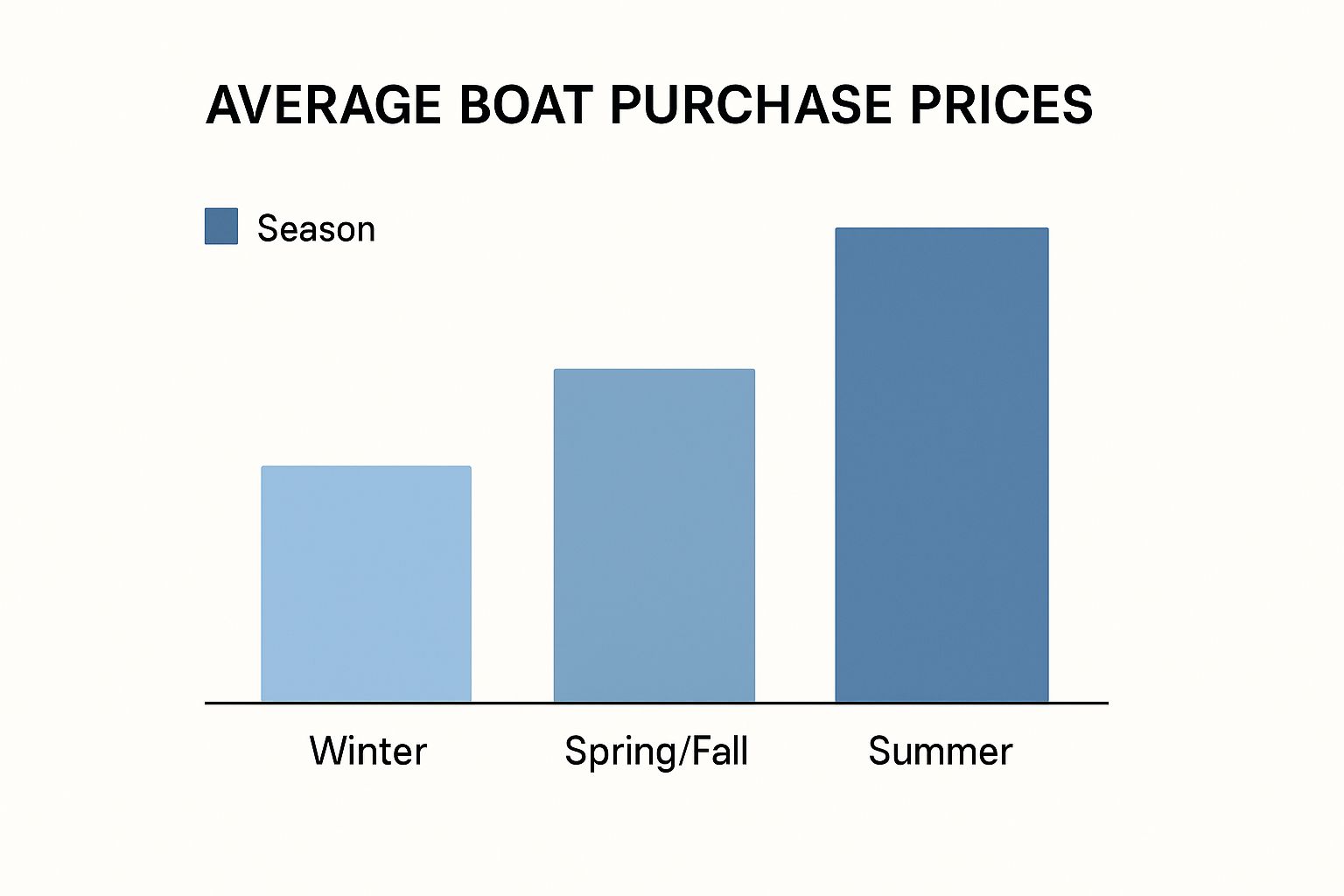
As you can see, the data doesn't lie. Winter is consistently the season for the lowest average prices, while summer hits the peak.
To make it even simpler, this table breaks down the advantages and disadvantages of buying a boat during each season. It’s a quick cheat sheet to help you decide which timeframe best suits your needs.
| Season |
Price & Deals |
Selection & Availability |
Best For |
| Fall (Sept - Nov) |
Excellent. Dealers offer deep discounts on last year's models. High negotiation power. |
Good, but shrinking. Best selection of used boats as owners sell before winter. |
Bargain hunters who want a great deal on a new, non-current model or a used boat. |
| Winter (Dec - Feb) |
The best. Lowest prices of the year. Dealers are highly motivated to sell. |
Limited. Selection is at its lowest, especially for new models. |
Price-focused buyers who are flexible on specific models and features. |
| Spring (Mar - May) |
Higher. Prices rise with demand. Fewer discounts are available. |
Excellent. The best selection of new 2026 models arrives. |
Buyers who prioritize choice and want the latest features and technology. |
| Summer (June - Aug) |
Highest. Peak season means peak prices. Little to no room for negotiation. |
Good, but popular models may sell out. Used inventory is low. |
Buyers needing a boat immediately for the current season and are willing to pay a premium. |
Ultimately, timing your purchase comes down to what you value most. Whether you’re aiming to save thousands or to snag the exact boat you’ve been dreaming of, understanding these seasonal shifts puts you firmly in control.
The boat market ebbs and flows just like the tide, driven by a predictable cycle of seasonal demand. It's a lot like trying to book a beach house—that same rental costs a fortune in July but is a bargain in October. The same forces are at play when it comes to boat prices.
As soon as the weather warms up in the spring and summer, everyone starts dreaming of getting out on the water. That daydream quickly turns into a shopping spree, and this massive surge in interest creates a classic seller's market. With a line of buyers out the door, dealers don't need to offer deep discounts, and your negotiating power is at its lowest.
This isn't just a gut feeling; the data proves it. A quick look at boat sales trend data shows that search interest and sales spike during the summer months, especially around August.
But what goes up must come down. As summer turns to fall and the boating season ends, the entire market flips on its head. This is when the buyer's market takes hold, and the advantage shifts squarely to you.
Between late August and November, the pressure is on the dealers. They have a showroom full of the current year's models and need to make space for the brand-new ones rolling in from the manufacturers.
This inventory pressure is your single greatest advantage. An unsold boat from the previous model year costs a dealer money in storage and interest, making them far more willing to negotiate a favorable price to move it off the lot.
This off-season window is your golden opportunity. By understanding these simple market rhythms, you can sidestep the peak-season prices that everyone else pays. While they’re putting their boats into storage for the winter, you could be closing a fantastic deal, ready to launch as soon as the next season begins.
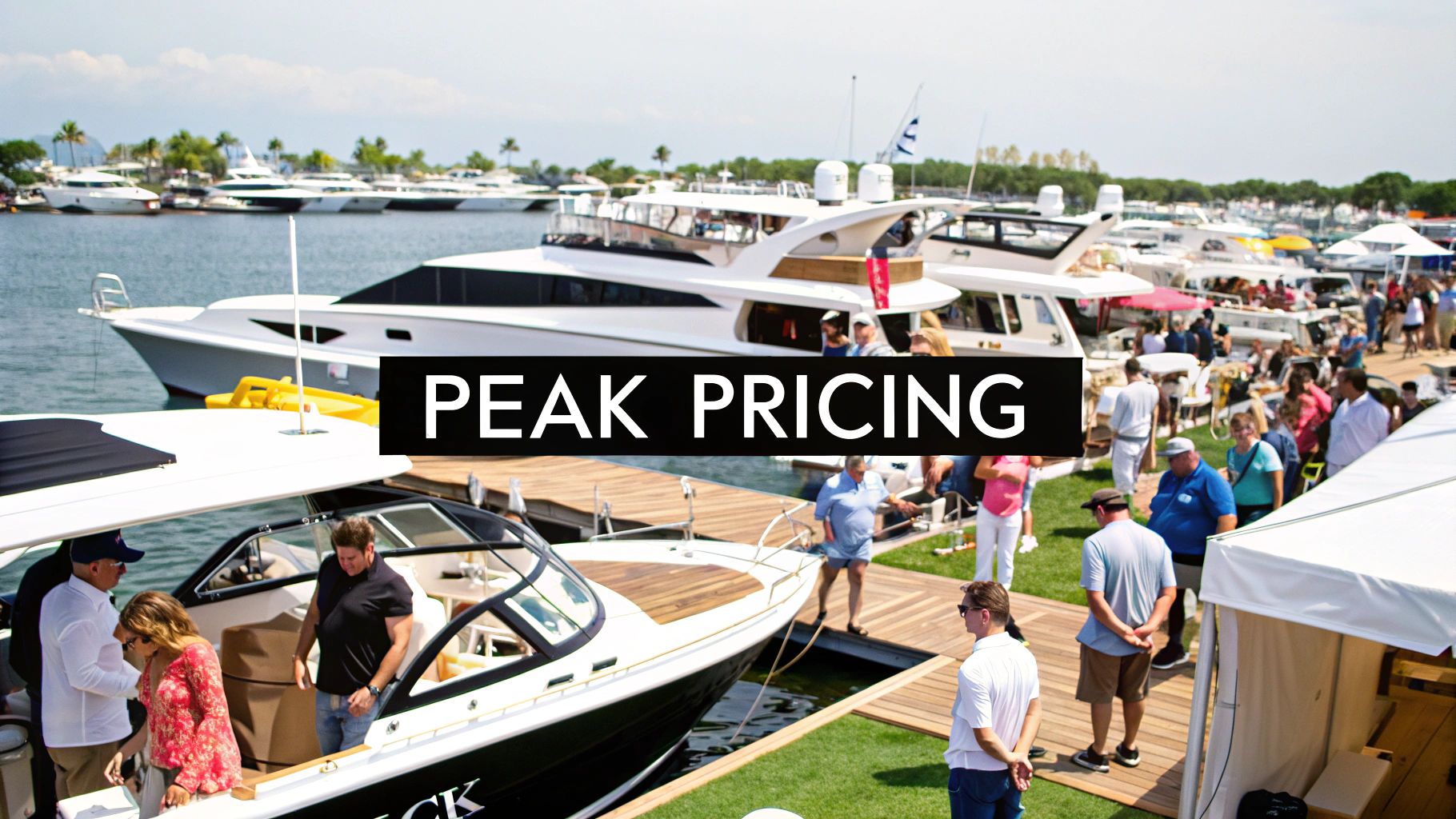
If there's one golden rule in boat shopping: patience pays off. The biggest rewards almost always go to buyers who can wait for the off-season. Fall and winter are a strategic paradise for buyers, a time when the entire market dynamic flips in your favor.
Simply put, this is the best time to buy a boat if getting the lowest possible price is your main goal.
Think about it from the dealer's point of view. As the boating season ends and the year winds down, they get hit with a perfect storm of pressures. They're staring down year-end sales quotas, trying to make space for next year's models, and dreading the cost of winterizing and storing a lot full of unsold inventory.
That pressure creates a huge psychological advantage for you at the negotiating table. An offer that a dealer might have laughed at in May suddenly looks pretty good in November when they're looking at another winter with that boat on their books.
Several factors come together during the colder months that make dealers far more flexible on price, giving you a serious edge.
- Hitting Annual Sales Goals: Most dealerships have sales targets set by the manufacturers. Hitting those goals can mean big bonuses and better incentives for the next year, so they get very motivated to close deals as December 31st approaches.
- Avoiding Storage Costs: A boat, especially a large one, isn't cheap to store. It takes up valuable real estate and costs money to winterize and maintain. Every boat you buy is one less they have to pay to keep all winter.
- Clearing "Old" Inventory: As soon as the calendar flips to January 1st, a brand-new boat from the current model year technically becomes "last year's model." This instantly drops its perceived value, and dealers want to move it before that happens.
The bottom line is simple leverage. In the off-season, an unsold boat is a liability for the dealer. By shopping when demand is low, you can turn their need to sell into thousands of dollars in savings for yourself.
Now, there are a couple of trade-offs. You might find that the selection of colors or specific layouts is a bit more limited than in the spring. You'll also need to have a storage plan ready to go the moment you buy.
For most people, though, these are minor hurdles well worth clearing for the substantial discount you can get.
While the calendar gives us a good roadmap for pricing, boat shows are a world unto themselves. They create their own micro-seasons of opportunity, cramming a ton of competition and special offers into a single weekend.
Think of it as a high-stakes, pop-up marketplace. Manufacturers and dealers are all under one roof, vying for your business, and that competition is your best friend. They often roll out exclusive "show pricing" and toss in freebies—like upgraded electronics or extended warranties—to sweeten the deal and get you to sign on the dotted line right then and there.
The trick is knowing how to spot a genuinely great deal versus just a clever sales pitch. A little prep work before you walk through the doors can make all the difference.
Walking into a boat show without a plan is a recipe for getting overwhelmed. To cut through the noise and find real value, you need to go in with a strategy.
- Do Your Homework First: Before you even leave the house, have a few makes and models in mind. Research their typical retail prices so you have a solid baseline. This is the only way to know if that flashy "show special" is actually a discount.
- Hunt for Leftover Models: This is a classic move. If a manufacturer is hyping up their brand-new, just-released model, make a point to ask about last year's version. Dealers are desperate to clear out that "old" inventory and will often offer deep discounts to move them.
- Get the Full Story on Pricing: When you see an attractive price tag, always ask, "What exactly does that include?" A great price can sour quickly once you add in the trailer, prep fees, and essential safety gear.
A boat show's biggest advantage is putting you in a position to comparison shop in real-time. You can walk from one brand to the next in minutes, talk to multiple dealers, and let them know you're doing it. That gives you negotiating leverage you simply don't have when visiting showrooms one by one.
If you treat the event like a mission to gather intel, not just a fun day out, you’ll be amazed at the deals you can uncover. You might just find that for you, the best time to buy a boat is on a Saturday afternoon at the convention center.
While the calendar is a great guide, it doesn't tell the whole story. The broader economy can create serious tailwinds—or headwinds—for boat buyers, shaking up everything from dealer inventory to how much wiggle room you have on the price tag. Keeping an eye on these larger market forces can help you spot incredible buying opportunities that others might miss.
Think of it like buying stocks. A smart investor doesn't just look at a company's past performance; they watch economic reports and market trends to predict what's coming next. It's the same for buying a boat. When the economy is humming along and people feel good about their jobs, they're much more likely to splurge on big-ticket items like a new boat. That surge in demand usually means prices stay firm and negotiations are tougher.
On the flip side, when consumer confidence takes a nosedive, expensive toys are usually the first thing people cut from their spending. This can create a buyer's market where dealers are much more motivated to make a deal, giving you an opening to score a fantastic price.
Don't forget that local economies, especially those driven by tourism, have their own unique rhythm. In popular vacation spots, the demand for boats skyrockets right before the tourist season kicks into high gear. This isn't just a small blip; it's a massive market driver.
The global recreational boat market is already huge, valued at USD 18.9 billion in 2023 and it's only getting bigger. A lot of that growth is tied directly to leisure and travel. In a big tourism year, demand for water sports boats in certain coastal areas has jumped by as much as 20%, with overall water-based activities climbing by up to 60% during the summer. You can read the full analysis on recreational boat market trends to dig deeper into these numbers.
This direct link between tourism and demand is a huge clue for timing your purchase. If you're shopping in a tourist hotspot, wait until after the season ends. That's when you'll find dealers looking to clear out their inventory before the long, quiet off-season.
Ultimately, finding the best time to buy a boat means looking at both the calendar and the economic forecast. When you combine your knowledge of seasonal cycles with a sharp eye on these bigger economic trends, you put yourself in the perfect position to buy the right boat at the right price.
When it comes to the used boat market, the timing is a little different, but the logic is pretty similar. If you're hunting for a pre-owned vessel, knowing the market's unique rhythm can save you a lot of money.
The real secret lies in understanding the mindset of a private seller. As the days get shorter and the boating season wraps up in the fall, owners are hit with the reality of winter storage fees, shrink-wrapping costs, and another round of maintenance. For many, selling the boat suddenly looks a lot more appealing than paying to keep it for another six months.
This creates a fantastic opportunity for buyers. A wave of private listings hits the market, giving you way more to choose from and a much stronger hand when it comes to negotiating a final price.
This end-of-season sell-off isn't just happening in private driveways. Dealerships also become goldmines for used boat deals around the same time.
- Trade-In Overload: Dealers spend all summer taking trade-ins from people upgrading to the latest models. By the time autumn rolls around, their lots are often packed with these pre-owned boats.
- The Big Clear-Out: Just like with their new inventory, dealers are eager to move these used boats before winter sets in. They need the space and the cash, which makes them highly motivated to make a deal.
The sweet spot for used boats is usually September through November. This is when you'll see the most private sellers looking to avoid winter costs and dealers anxious to clear out their trade-in inventory.
When you have more private sellers and more dealers all trying to sell at the same time, it naturally creates a buyer's market. Prices become more competitive, and sellers are more willing to talk. This makes the fall not just the best time to buy a boat if you're looking for something brand new, but also the perfect season to snag a great deal on a well-cared-for used boat.
It's natural to have a lot of questions when you're thinking about buying a boat. Getting solid answers to the big ones can make all the difference, helping you feel confident as you dive into the market.
Let's tackle a few of the most common questions we hear from aspiring boat owners.
You bet it is. The stretch from October through December is almost always the best time to find a great deal. Think of it like a car dealership at the end of the year—they're pushing hard to hit sales goals and make room for the next year's models. This principle applies to both boats and RVs.
This creates a perfect opportunity for buyers. Dealers are much more willing to negotiate on price and throw in extra perks to clear out their remaining inventory, especially on brand-new boats.
They do, but the story is a bit different. A new boat will take a significant hit in the first year, typically losing 10% to 25% of its value right off the bat. That part is pretty similar to driving a new car or boat off the lot.
However, after that initial drop, well-maintained boats from quality brands tend to hold their value surprisingly well. The depreciation slows way down, and a cared-for boat can be a solid asset for years to come.
While the initial depreciation feels steep, a quality boat's value often stabilizes much better than the average car's, making it a more durable investment over the long haul.
The sticker price is just the beginning. The real costs of ownership are the recurring expenses you'll need to budget for.
The big three are typically:
- Mooring or Storage: Where will you keep it? A slip at a marina or a spot in a dry-stack facility can be a major monthly or annual expense.
- Insurance: Just like a car, your boat needs to be insured, and the cost will vary based on its size, value, and where you use it.
- Maintenance: From engine tune-ups and oil changes to cleaning the hull, regular upkeep is non-negotiable for keeping your boat safe and preserving its value.
Don't forget about fuel, either. Depending on your engine and how much time you spend on the water, that can add up quickly. Factoring these costs in from the start is the key to enjoying your boat without financial stress.
Ready to find your perfect boat at the right price? At SearchShop.com, we offer a huge selection of new and used boats and RVs with transparent pricing and powerful tools to help you research and compare your options. Start your search and find your next adventure today.